• Your Path to Inner Growth and Compassion
    Oct 8 2025

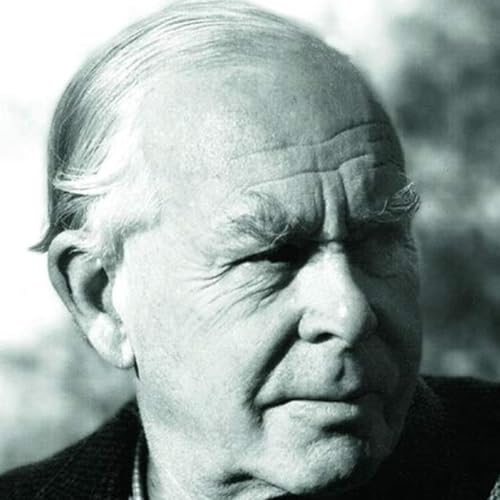
    Many people have discovered at some point that they often want to be the center of attention, feel offended easily, or need constant praise. These are narcissistic patterns – not as an insult, but as traits that can show you where to focus your growth. Imagine these behaviors as signals pointing to deeper feelings inside you. Carl Jung said, “Everything that irritates you about others can lead you to an understanding of yourself.” If someone else’s need to always be right drives you crazy, it might be reflecting something in you. Use these signs to begin noticing your own “shadow” – the parts of yourself you haven’t fully seen or accepted. This journey starts with self-awareness, not blame.


    Show More Show Less
    10 mins
  • Stop explaining yourself
    Sep 30 2025

    The Swiss psychiatrist Carl Gustav Jung once said, "I am not what happened to me, I am what I choose to become." This idea is at the heart of a widespread but often overlooked behavior: the constant urge to explain oneself.


    On the surface, justifying one's decisions, feelings, or moods seems polite. But Jung saw it as a deep psychological problem—a symptom of disconnection from ourselves. According to Jung, those who constantly explain themselves are unconsciously seeking the permission to exist that they never received in the past, often in childhood. In environments where feelings were dismissed as "exaggerated" or "nonsense," a person learns that their inner reality is valid only if others understand and accept it.


    This compulsion to justify is an attempt to avoid rejection and judgment. But the price is high: the loss of one's own psychological autonomy. Instead of acting from inner conviction, one acts merely to avoid being misunderstood. You live for the approval of others, betraying your own truth piece by piece. Jung called this state self-abandonment.


    The path to freedom lies in developing what Jung called "inner authority." This means recognizing your own experience as valid, regardless of whether others understand it or not. It's about having the courage to stand by your truth, even when it's uncomfortable or meets with incomprehension.


    When you stop constantly explaining yourself, something powerful happens. You send out a new message: "I know who I am, and I don't need permission for it." This silence is not an absence but a presence. It breaks old patterns in relationships. Superficial or manipulative connections fall apart because you no longer play the submissive role. Genuine, respect-based relationships are strengthened.


    Ultimately, everything changes when you stop explaining yourself. You give up the search for external validation and instead find inner strength and integrity. You are no longer perceived as someone asking for acceptance, but as someone who confidently takes their place in the world. The world begins to respect what you yourself no longer negotiate.

    Show More Show Less
    3 mins
  • The Attachment Theory- How Childhood Affects Life
    Sep 5 2025

    The attachment theory argues that a strong emotional and physical bond to one primary caregiver in our first years of life is critical to our development. If our bonding is strong and we are securely attached, then we feel safe to explore the world. If our bond is weak, we feel insecurely attached. We are afraid to leave or explore a rather scary-looking world. Because we are not sure if we can return. Often we then don't understand our own feelings.


    Image: https://en.wikipedia.org/wiki/John_Bowlby


    Taken from https://www.youtube.com/watch?v=WjOowWxOXCg

    Show More Show Less
    8 mins
  • Your True Self - Gabor Maté
    Sep 1 2025

    Dr. Gabor Maté dives deep into the human experience, revealing how many of us live under false perception about who we truly are as humans. Gabor Mate explains how these misconceptions shape our behaviors, our emotions—and even our feelings toward us. According to Dr. Maté, like in his book "When The Body Says No" our body is always speaking to us. Whether it whispers through discomfort or screams through illness, it’s trying to guide us back to our authentic and true selves.As I've always believed: when you're out of alignment with your true self, your body sends a message, either it whispers, talks, screams or slaps you.


    Taken from https://youtu.be/J7TGCSaJ3oY?feature=shared

    Show More Show Less
    10 mins
  • Nietzsche and Narcissism
    Aug 29 2025

    Nietzsche and Narcissism

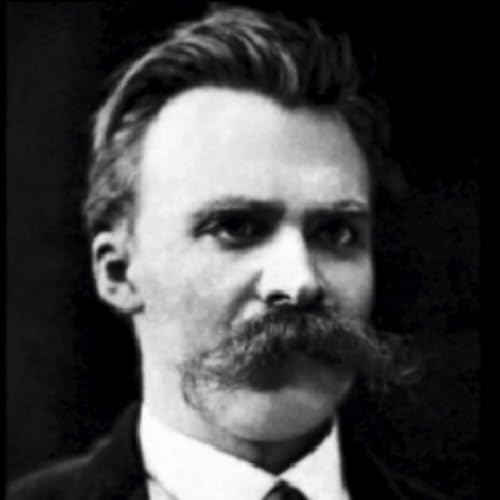
    Friedrich Nietzsche — a thinker who provokes, irritates, and fascinates. Was he a narcissist? Did he praise self-love and egoism? Or did he call for something deeper: a disciplined, honest self-becoming? What did Nietzsche actually say about self-love, self-exaltation, and the work of becoming — and how relate those ideas to the modern notion of narcissism. This is aimed at curious listeners — especially people who recognize narcissistic traits in themselves and want to reflect on them. Expect an accesible, story-like tone, with real Nietzschean lines woven in, and a clear, critical look at possible misunderstandings.


    Show More Show Less
    8 mins
  • The Prison of Narcissism - Eckhart Tolle
    Aug 28 2025

    Eckhart Tolle is a spiritual teacher and best-selling author. He is a German-born resident of Canada best known as the author of The Power of Now and A New Earth: Awakening to Your Life's Purpose. In 2008, The New York Times called Tolle, "the most popular spiritual author in the United States." In 2011, he was listed by Watkins Review as the most spiritually influential person in the world. Tolle does not identify with any specific religion, but he has been influenced by a wide range of spiritual works.This audio comes from Eckhart Tolle's podcast with Russell Brand.

    Taken from https://youtu.be/dLLB7daSttY?feature=shared

    Show More Show Less
    13 mins
  • Build a Strong Mind
    Aug 27 2025

    All types of Narcissists have a very weak self image. One important step in getting away from Narcissim is to replace that "strong" narcissistic facade (which covers up a weak self image) with a truly strong mind and self image. With that in place you can allow, even embrace criticism, discussions etc. without going into narcissistic attack mode.


    Whether you're dealing with self-doubt, setbacks, or lack of motivation, this guide will help you push through obstacles and come out stronger.


    Taken from https://youtu.be/cF5iP-P67fg?feature=shared

    Show More Show Less
    7 mins
  • Master Your Mind : 10 Buddhist Rules to Stop Overthinking
    Aug 26 2025

    Overthinking can feel like a maze—trapping us in endless loops of worry, doubt, and stress.But the wisdom of Buddhism offers powerful tools to break free and find peace. Follow these 10 Buddhist rules and start your transformation!Watch how your mind transforms. Break free and find peace!


    Taken from https://youtu.be/aS_SOlMT-r4?feature=shared

    Show More Show Less
    8 mins