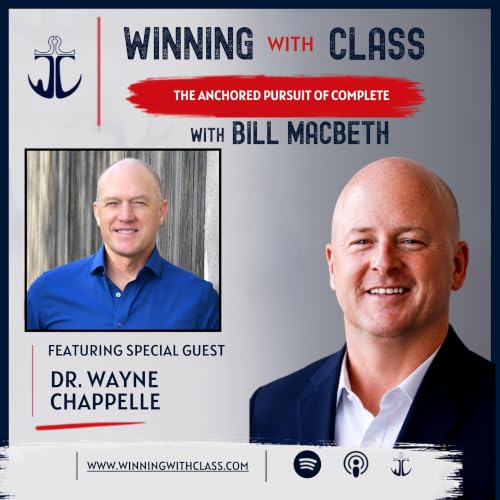
• Dr. Wayne Chappelle – Healing Our Hurting Minds
    Jun 26 2026
    Dr. Wayne "Dr. C" Chappelle is a licensed clinical psychologist and board‑certified specialist with more than two decades of experience helping people perform, lead, and thrive under extreme pressure. He currently serves as the Team Psychologist for the NBA's Oklahoma City Thunder, where he supports elite athletes in strengthening their mental resilience, emotional regulation, and competitive mindset. ​ For over 20 years, Dr. Chappelle has been a trusted psychological consultant to some of the most demanding military and government agencies —including Presidential aircrew, Special Operations forces, and senior military leadership. His work has included assessing and preparing personnel for high‑risk missions, briefing Pentagon officials on the psychological impact of dangerous operations, and shaping programs that strengthen the mental health and resilience of service members fighting terrorism across the globe. ​ In private practice, Dr. C works with executive leaders, high‑pressure professionals, and U.S. Olympic‑level athletes, helping them build the emotional, relational, and behavioral skills required to excel in the most competitive and consequential environments. ​ He is also featured in Heal Your Hurting Mind alongside pastor and best-selling author Craig Groeschel, whose personal candor and biblical insight pair with Dr. C's psychological expertise to offer a powerful, hope‑centered path toward healing and resilience. ​ At the center of his work is a simple mission: to help people adapt, grow, and stay grounded through life's most intense challenges. Known for his clarity, warmth, and practical wisdom, Dr. C blends deep clinical expertise with real‑world experience supporting individuals who carry extraordinary responsibility. ​ When he's not working with high-performing teams or speaking on leadership psychology, Dr. C spends his time with family and close friends—recharging through meaningful conversation, shared meals, and the kind of laughter that keeps life grounded. He believes strong relationships are the foundation of resilience, and he brings that same warmth and presence to the people he cares about most hope‑centered path toward healing and resilience. Takeaways: Profile of a Hero: Dr. Chappelle's study revealed some great traits in terms of what makes a hero. I liked all of his elements, but some of my favorites are: Passion with purpose - having a strong WHY is essential to carry through tough challenges. And most of the time – if not all of the time, those whys that are bigger than ourselves seem to help us endure more than any other. I like how he used the word conviction – such a strong word that describes the commitment to the WHY that will override anything that comes along which is uncomfortable. He mentioned the medic's motto of "so that others may live" which is about as strong a why as there is. Passion is great, but passion with a purpose is what will get us over the tough challenges. Let's all strive to have strong whys and then get truly convicted to them so that we can attack our pursuits with all we have. Tenacity – the notion of getting comfortable being uncomfortable. If you can get here, you can get to the level of unstoppable. Self-sacrifice – I like how Dr. Chappelle pointed out that life is about the impact we have on the world around us. Playing and living like this is an essential part of being elite. Diamond – Dr. Chappelle reminds us that a diamond is only a diamond if/when it endures intense heat and pressure. The result is something hard, tough, and beautiful. If we want to be elite, we need to lean into pressure instead of taking the easy way and avoiding it. I just heard Cincinnati Bengals QB Joe Burrow talk about this in a press conference as he challenged his team to take on pressure – mentioning that he LIKES pressure. He hasn't won a Super Bowl yet, but he's 5-2 in the playoffs so far…and this is a big reason why. Do ordinary with excellence every day: This goes to the consistent theme of intentionality with regard to the essentials. Dr. Chappelle tells the players on the Thunder to take care of their main tool – their bodies - with diet, rest, exercise, and recovery. We need to do the same with our bodies and as Dr. Chappelle says, add that same intentionality and pursuit of excellence with the mind and spirit as well. If we do this on a consistent basis…our potential is limitless. Heal Your Hurting Mind: The label: Instead of labeling ourselves with anxiety or other similar labels that have become way too common these days, I like how Dr. Chappelle provided us with the way we should all label ourselves – I'm a human with strengths and vulnerabilities and I'm in control. Spirituality: Last episode, Damon West said that we all need to be intentional about mind, body and spirit. Dr. Chappelle backed that up when he ...
    Show More Show Less
    1 hr and 20 mins
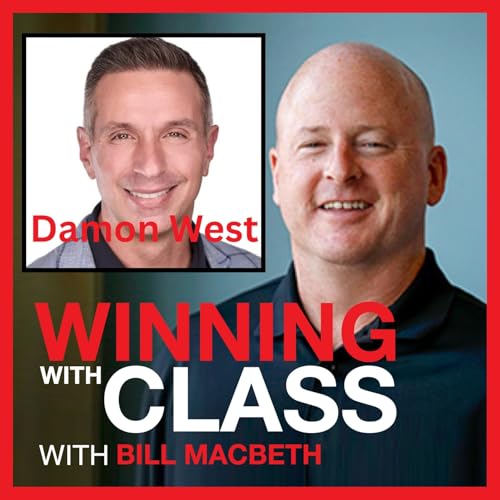
  • Damon West: From drug kingpin and life sentence to a new life of Massive Positive Impact
    Jun 12 2026
    Sentenced to sixty-five years in a Texas prison, Damon West once had it all. Damon West, M.S. Criminal Justice, is a college professor, internationally known keynote speaker and 3 x Wall Street Journal bestselling author. His bestselling business book, The Coffee Bean: A Simple Lesson to Create Positive Change, was listed by Forbes' in the "Top Twenty Books You Need to Read to Crush 2020." His autobiography, The Change Agent: How a Former College QB Sentenced to Life in Prison Transformed His World, vividly tells how he transformed the pot of boiling water that is a Texas maximum-security prison into a pot of coffee. At 20 years old, he was a Division 1 starting quarterback at the University of North Texas, when he suffered a career ending injury. He turned to hardcore drugs to cope with disappointments of life. After graduation, he worked in the United States Congress, was a national fundraiser on a U.S. Presidential campaign and eventually trained to be a stockbroker for United Bank of Switzerland (UBS). One day at UBS, he was introduced to methamphetamines; he became instantly hooked—and the lives of so many innocent people would forever be changed by the choices he made in order to feed his insatiable meth habit. After a fateful discussion during his incarceration with a seasoned convict, Damon had a spiritual awakening. He learned that, like a coffee bean changing with the application of heat and pressure, he was capable of changing the environment around him. Armed with a program of recovery, a renewed faith, and a miraculous second chance at life, Damon emerged from over seven years of prison a changed man. His story of redemption, grit and determination continues to inspire audiences today. The Coffee Bean message has inspired thousands. Damon's clients include hundreds of companies, such as Walmart, State Farm, Wendy's, Stryker, and sports teams like the Dallas Cowboys, Minnesota Timberwolves, Clemson, Alabama and Georgia. The U.S. Army has even incorporated the #BeACoffeeBean mindset into their resilience training. Damon's story has been featured both nationally and globally. He is passionate about the Coffee Bean message and loves sharing how it changed his life and how it can change yours, too. His most recent book, national bestselling Six Dimes and a Nickel, Life Lessons to Empower Change, introduces the principles and stories that allowed Damon West to rewrite his narrative and become one of the greatest underdog triumphs of all time. His Wall Street Journal bestselling book, The Locker Room: How Great Teams Heal Hurt, Overcome Adversity and Build Unity, is being optioned for film adaptation. His children's book, The Coffee Bean for Kids, is the genesis for Coffee Bean Clubs being started by students at schools all over America. Today, Damon lives a life of recovery and service, sharing his story all over the world. Of all the hats Damon wears, however, the two most important to him are being a husband to Kendell and a stepfather to Clara. Takeaways: The Darkest of Dark. Hopefully, none of us will ever have to face the type of environment that Damon had to face. In such an environment, survival would be an admirable goal. But remember all that Damon did in prison. He kicked a strong drug habit, he confirmed and brought his faith to a new level, and he sought to transform the environment around him – ALL while having to fight his fights while feeling the fear every single time. This goes to show that even if we've completely lost our way and find ourselves in a dark spot, anchorless – we can ALWAYS fight the good fight, get super intentional and turn things around – for ourselves and for those around us. The Uncommon Anchor. I think Damon did a good job of describing his uncommon anchor in the teaser at the start of this episode. He told us that we had to be intentional on a daily basis about our mental, physical, and spiritual well-being. Damon was also clear that his parents had given him this anchor with a solid upbringing. Damon didn't maintain it and so he lost it – leading to drugs, crime and eventually a life sentence. As we saw, Damon rebuilt his anchor. And so can we. But it's far better to avoid having to rebuild it by being massively intentional about our mental, physical, and spiritual selves on a daily basis. It may feel like we don't need it – like everything is good and going our way. That's exactly when we need to double down on strengthening our inner anchor based on the right things. So, when life punches – and it WILL punch – as it did with Damon's football career unexpectedly coming to an end – your anchor will be strong enough to keep you on a good path, instead of going sideways like Damon did for that rough period of his life. The Coffee Bean. First, what a great life lesson given by Damon's jail friend, Muhammad about being the coffee bean – ...
    Show More Show Less
    1 hr and 14 mins
  • Amy Morin: Mental Strength Training for Life
    May 27 2026
    Amy Morin is a licensed psychotherapist, a mental strength trainer, keynote speaker, award-winning host of the Mentally Stronger with Therapist Amy Morin podcast, and an international bestselling author of six books on mental strength, including the globally acclaimed 13 Things Mentally Strong People Don't Do. These books have sold over one million copies and have been translated into more than fifty languages. Her 7th book, The Mental Strength Playbook, just released in April of 2026. Her expertise has been featured by major outlets such as Good Morning America, Today, Oprah, Tamron Hall, and BBC and her TEDx Talk, The Secret of Becoming Mentally Strong, has been viewed over 24 million times. Amy's passion for teaching mental strength stems from a personal place. After enduring almost unimaginable loss of three loved ones in her twenties, she realized the traditional tools of therapy weren't enough to manage her grief. She's practiced therapy for over twenty years, and she's a sought-after speaker whose Ted Talk, "The Secret of Becoming Mentally Strong" is one of the most viewed talks of all time, with more than 25 million views. Amy lives on a sailboat in the Florida Keys. Books: 13 Things Mentally Strong People Don't Do. 13 Things Mentally Strong Women Don't Do. 13 Things Mentally Stron Parents Don't Do. 13 Things Strong Kids Do. 13 Things Mentally Strong People Don't Do Workbook. 13 Things Mentally Strong Couples Don't Do. The Mental Strength Playbook. Takeaways: Keep. Moving. Forward.: One of my favorite movie lines is from the last Rocky movie where the aging boxer tells his son about how life isn't about how hard you can hit – it's about how hard you can GET HIT and keep moving forward. Amy's hits were about has hard as life can punch. Losing a loved one is difficult. Losing THREE in a relatively short period of time, at a relatively young age, is almost unimaginable. Not only did she keep moving forward, but Amy also made a CHOICE to be mentally strong about it – and now she's as good a model of that as there is – and millions have benefitted from it. Life hits everybody. As Amy tells us, she seemingly had it all figured out and was set up for a great life path. Great parents. Solid faith. Solid education and training. Her own family off to a great start. Life would be "easy" right? The problem is – we are ALL susceptible to life's hits. Life doesn't discriminate when it takes its swings at people with adversity. What we CAN control is the extent to which the adversity affects us – and how long those effects stay with us. If we are ANCHORED to the right things, we will have the ability to handle the adversity and keep moving forward. When asked what made her sit down and write that list of 13 things mentally strong people DON'T do, Amy pointed to her parents and her faith – two very strong anchoring elements. When life punched – and kept punching Amy, "why me" was an option. This is an always-available option for all of us. However, if we want to keep moving forward – that's not going to help us. As we just discussed, it's a choice – and if we have the right anchor inside us, that choice will be easier to make. Mental strength. Amy explains mental strength as how we think, feel, and behave. She then went on to share that we have control over all of these. As Amy said, we can REFRAME our negative thoughts, we have WAY MORE control over our emotions than we think, and we can ALWAYS take ACTION – even when we don't feel like it. Amy also says this is a life-long thing – it's a PURSUIT. So, we have to be consistent with this choice. Finally, I love how Amy tells us to coach ourselves which is very empowering for ALL of us. One of the main aspects of this self-coaching is being intentional about assessing ourselves – how are we doing? How did I do today? You might even ask – did I win this day with class? Or did this day strengthen or weaken my ANCHOR? So, mental strength is within our control – and every day matters. Know your values and priorities. I liked how Amy challenges herself by asking – if people saw a snapshot of my life, would they know what my priorities are? This is a great takeaway for all of us. If people look at our lives will they know our values and priorities? Our standards? So, the first step is to explore and define your standards and priorities. Then, the second step is to LIVE according to your standards and priorities. As Amy showed us, as long as we're living our lives according to a strong set of standards and priorities – and we become anchored to them - we can live and even thrive no matter what life throws at us. The 13. You need to go get Amy's book so you can really dive into the full list of the 13 Things Mentally Strong People Don't Do and we hit on them briefly in our discussion. Some of my favorites: Mentally strong people don't get stuck in...
    Show More Show Less
    1 hr and 2 mins
  • Frank Martin: Coaching basketball and LIFE.
    Apr 6 2026
    Massachusetts head basketball Coach Frank Martin was named the 23rd head coach in men's basketball history in March of 2022. Martin brought 15 years of head coaching experience to Amherst after spending 10 seasons prior as the head coach at South Carolina, where he led the Gamecocks to the program's first ever NCAA Final Four in 2017. Martin began his 10-year run in Columbia, S.C. prior to the 2014-15 season and went on to match the program's record for wins in a season as his team finished the 2015-16 campaign with a 25-9 record. The squad rose to as high as 15th in the USA Today Coaches Poll following the Gamecocks' best start since the 1933-34 season. Under Martin, South Carolina broke the record for wins in a single season with 26 in 2016-17 on the way to the best NCAA Tournament run in program history. Martin led the Gamecocks to their first NCAA Tournament win since 1973 and to the program's first-ever Sweet 16, Elite Eight, and Final Four. The No. 7-seed squad defeated No. 2 seed Duke in the round of 32 and earned wins over Baylor in the Sweet 16 and Florida in the Elite Eight before falling to Gonzaga in the national semifinals. He was named the Jim Phelan National Coach of the Year. The Gamecocks were ranked in the AP Poll for nine weeks and the Coaches Poll for 10 weeks and finished as the No. 6-ranked team in the final USA Today Coaches Poll. Sindarius Thornwell was named a CBS Sports First-Team All-American and the NCAA East Regional Most Outstanding Player. Martin got his first head coaching opportunity at Kansas State in 2007-08 and brought the Wildcats to the NCAA Tournament in four of his five seasons at the helm. He guided the Wildcats to their first win over rival and No. 2-ranked Kansas since 1983 and took the team to its first NCAA Tournament since 1996. In 2009-10, Martin led Kansas State to a 29-8 record and an Elite Eight appearance. The Wildcats earned their first win over a No. 1-ranked team in Texas since 1994 and finished the year ranked inside the top 10 in both major polls. Kansas State went into the 2010 NCAA Tournament as the No. 2 seed and defeated North Texas, BYU and Xavier in postseason play. He was recognized as the Big 12 Coach of the Year. A Miami, Fla. native, Martin began his coaching career in the high school ranks in Miami, earning his first head coaching job at North Miami High School before moving to Miami Senior, where he led the team to three straight state championships. His first collegiate coaching job came in 2000 as he was named an assistant coach and recruiting coordinator at Northeastern University. From there, he joined Bob Huggins' staff at Cincinnati and was part of Huggins' coaching staff at Kansas State during the 2006-07 season. A fixture off the court and in the community, Martin and his wife, UMass track and field alumna Anya (nee Forrest), have hosted numerous philanthropic events and have been key investors in the UMass women's track and field program. In 2019, Martin was introduced into the Naismith Coaches Circle that was created by the Naismith Memorial Basketball Hall of Fame to recognize coaches who have impacted their communities, players, other coaches, and society in a positive manner. Martin earned his bachelor's degree in physical education from Florida International in 1993. He and his wife, Anya, have three children: Brandon, Amalia and Christian. Takeaways: Coach's anchor. From listening to him, it's clear to see what makes up Coach's anchor or internal foundation. Family – starting with his grandmother, a rock-solid work ethic, his faith and, related to and largely gained from his work ethic – a clear knowledge of how to treat people. It's not hard to see how Coach is so admired and respected. Don't worry about what you don't have. What a great lesson for us all. This one started with his grandmother – the source for a lot of his lessons as you heard. Coach Martin mentioned it in the context of telling young coaches to just take care of the job they have and not to worry about chasing that next job. He also mentioned that this came from growing up and building furniture with his grandmother, noting that they didn't have much at all – but they didn't know it because they just appreciated what they DID have. What a great lesson for all of us – especially in today's comparison world led by social media. We all need to stop, appreciate what we DO have and take care of the people around us NOW. Like Coach said, it's far better to do it this way and more often than not, ascension up that mountain will come. And, even if it doesn't, the genuine peace and fulfillment that comes from enjoying the journey and the people around you are worth it. Spirituality and the Pursuit of Complete. As you heard, Coach had a couple of amazing experiences that made it very clear to him that God has a plan for him. It's now very clearly a part of his life's pursuit of complete – a ...
    Show More Show Less
    1 hr and 9 mins
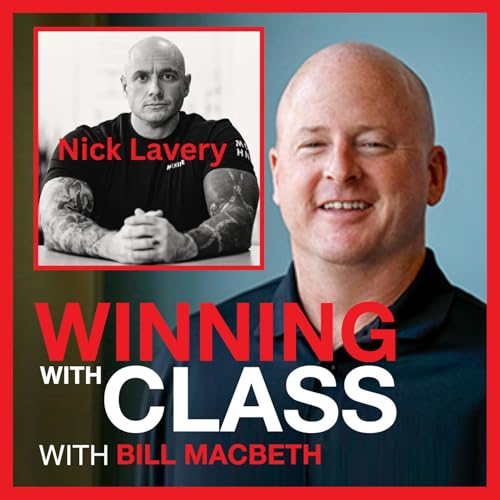
  • Nick Lavery: American Hero – Unstoppable Warrior
    Feb 23 2026
    Nick Lavery is the founder and CEO of Precision Components LLC, where he and Team Machine train, advise, enable, and inspire organizations and individuals to unlock capacity and increase capability. He is also the best-selling author of Objective Secure – the battle-tested guide to goal achievement. Nick is a warrior, leader, teammate, and most importantly, a proud husband and father of two boys. Nick enjoys reading, writing, lifting weights, Brazilian Jiu Jitsu, and shooting. Most significantly, however, he enjoys building forts, Legos, getting dirty, drawing and reading with his sons and traveling, eating dinner, and watching movies with his wife. Nick founded MCHN to build a community that embodies these same principles – where discipline, leadership, and resilience aren't just taught, but lived. Nick, born and raised in Massachusetts, is an active-duty Green Beret within The United States Army Special Forces. The Green Berets perform critical missions including direct action, counterinsurgency, foreign internal defense, special reconnaissance, and unconventional warfare. Nick is currently serving as a Special Forces Chief Warrant Officer and is widely recognized as an experienced subject matter expert in special operations, intelligence fusion, mission planning, and complex problem solving across all operational continuums. He is also the first amputee in military history to complete the Special Forces Warrant Officer Technical and Tactical Certification course, the Special Operations Combatives Program Instructor course, and the Special Forces Combat Diver Qualification course. In 2013, while deployed in Afghanistan, Nick and his detachment fell victim to an attack that ultimately resulted in the amputation of his leg. Following a year of surgeries and initial recovery including the use of a prosthetic at Walter Reed National Medical Military Center, he returned to his unit. Refusing military medical retirement, Nick set his sights on returning to operational status. In 2015, at the conclusion of a challenging, comprehensive assessment designed to evaluate Nick's abilities to operate, he returned to his detachment and was subsequently deployed once again to Afghanistan conducting full spectrum combat operations. Nick is considered the first Special Forces operator to return to combat as an above-the-knee amputee in military history. Nick's awards include the Silver Star, three Purple Hearts, three Bronze Stars, Bronze Star with "V" for valor, Defense Meritorious Service Medal, two Meritorious Service Medals, Joint Service Commendation Medal, Joint Service Achievement Medal, two Army Commendation Medals, Army Achievement Medal, the OSS Society Peter Ortiz Award, the Bruce Price Leadership Award, and the Special Operations Command Excalibur Award. Takeaways: How YOU Livin? When I hear Nick's story – the bravery, the courage and all the selfless sacrifice that he has endured and continues to endure for our country, this simple question comes to mind. "How you livin'?" The simple challenge that comes along with it is this: are we living in a way that is worthy of all that Nick has gone through? Would Nick be able to look at our lives and say to himself – "yep, that life is worth fighting for" or "yep, I'm proud to fight for him or her and the way they're living." This one is for all of us and it's especially good right now. There's a lot going on in this country – I think it's a great time for all of us to look in the mirror both individually and collectively and ask this question…and KEEP asking it to keep our pursuits on a good path. Character Reps. I like how Nick went out of his way to point out that he was not always the massive 6'5" warrior that he is today. In fact, for most of his childhood, he was the small, weak one who got picked on. However, he mentioned that each patch of difficult time served as a character rep that ended up adding to the toughness that embodies so much of who he is today. So, no matter how we struggle at times, let's remember that life has a way of throwing us these character reps – and if we can see it this way, we'll be stronger in the long run. TEAM First. Nick's story brings so many examples of an intense and high-level TEAM FIRST mindset. From the way he handled all of his injuries – refocusing his mission to that of getting back to his unit as fast as humanly possible, to the way he helped his teammate put his eye back into socket as he was bleeding from his own face, to the way he watched with pride when he thought he was dying as his young teammates fought off the enemy…It's just endless with Nick. And it shows that great things happen when we put the TEAM first. GRACE/FORGIVENESS/PERSPECTIVE. I thought it was a very powerful story regarding Nick getting his blood transfusion. After all he had survived on the battlefield, he almost died due to a blood transfusion that ...
    Show More Show Less
    1 hr and 15 mins
  • Patric Young – Turning Tragedy into Victory
    Jan 16 2026
    Patric Young is a basketball analyst, author, speaker, and philanthropist. Patric played for the University of Florida Gators from 2010-2014, playing for Hall of Fame Coach Billy Donovan, which included a Final Four appearance. Patric then played professionally in the NBA and then overseas from 2014-2020. In 2021, he transitioned into a college basketball analyst for the SEC Network, a position he holds currently. In the summer of 2022, Patric was involved in a single automobile accident which left him paralyzed from the waist down. Once a towering force on the court, Patric now had to face new challenges that initially tested his faith, resolve, and the very core of his identity. In 2023, Patric summarized his inspiring story in his book Sit to Rise, Turning Your Darkest Pain Into Your Brightest Victory. His story now serves as a beacon of hope, proving that in moments of vulnerability, we can discover newfound strength and unleash new levels potential within ourselves. Four months following his accident and while undergoing intensive therapy and treatment, Patric launched The Patric Young Foundation. With a mission to help those facing life-altering injuries, the foundation works to provide financial, emotional, and physical support to those who need it most. Determined to make a difference, Patric is working to be the best he can be for himself, his family and his new adaptive community. Takeaways: The DRIFT. This is a truly great LIFE lesson and one that is consistent with a lot of what we discuss on this show. Patric reminds us that we have to live intentionally, anchoring ourselves to the right identities. Anchoring? Sound familiar? As Patric said, if we don't, then – just like the ocean's tide takes kids playing in the waves – life will take us where it wants us to go, not where we want to go. Soon we end up in unexpected and most of the times, undesired places. We need to establish a strong identity, based on the right standards, principles, and priorities, and then go live a life with intention to maintain all of it every day. It's not easy. Just worth it. Your Reputation. Feeding off the point about The Drift, when we develop a positive identity, and live it consistently, it transforms into a positive reputation. That leads to others being drawn in – and increases our ability to make positive IMPACT, which is something that all humans are wired to seek. Being Coachable. We all need to be coachable. One simple reason is that great leaders and great teams simply don't have time for those who aren't. Patric mentioned how he got his wake-up call when Hall of Fame Coach Billy Donovan had to tell him he was going to have to leave if he didn't become more coachable. We need to always strive to find that balance of contributing our unique talents, while also maintaining the humility that acknowledges that we can always get better and grow – especially when it comes to what the TEAM needs. Success. Speaking of Billy Donovan, his description of success, as Patric relayed in our conversation, is simple, yet powerful. As Coach Donovan said, you "just have to live it." What a great reminder that we need to be thinking about success and our pursuit of it – all the time - in all that we do. Life is where you are. As we discussed, due to an infection, Patric was stuck in the hospital for an extended period of time following his accident. How did he handle it? By deciding that he was going to be as nice as he could possibly be to every single person with whom he came into contact. We have a chance to IMPACT everywhere, all the time. I like how Patric refers to the option of bitterness by saying "I just don't see the point in it." As we discussed, there were a couple of nurses who were positively impacted by Patric – opportunities that would've been lost if Patric had chosen bitterness. Because he chose positive instead, who knows who else may be impacted – through the stories those nurses tell their friends and families and beyond. Living FULL and DYING Empty. What a great way to think about life. This includes the notion Patric mentions of using trials and adversity as tools to develop us. It isn't always easy – Patric admitted there are good and bad days on his journey, of course. But, overall, with each challenge, he's getting better. And that allows him to keep living fully…I have no doubt that when it's all said and done, Patric's tank will be empty – all of it having been spent positively impacting a countless number of people. Links: Website: patricyoung.com Instagram: @patricyoung4 Foundation: py4foundation.org
    Show More Show Less
    1 hr and 5 mins
  • Molly Miller - Winning with Relentless Positive Energy
    Jan 2 2026
    On March 22, 2025, Molly Miller agreed to join Arizona State University as its next head coach of the women's basketball program. ASU hired a proven winner in Miller who guided Grand Canyon University to a 32-3 record last season which included a 30-game winning streak and GCU's first berth in the NCAA Women's Tournament. Miller went 117-38 (.760) at GCU and overall is 297-55 (.845) at the collegiate level that also included 180 wins in six seasons at her alma mater (Drury), where she served as an assistant coach and was a four-year letterwinner. Miller was the most sought after mid-major coach in America with numerous SEC Universities and others seeking her services. Molly and her husband, Derek have two children, Crosby and Cy. Takeaways: Positive Energy. For this, you simply need to take a look at Coach Miller's Instagram from the moment she took the job at Arizona State. She was simply everywhere – all the time. On campus. In the community. With current players. Former players and coaches. And more. I'm no expert on coming in to build a program, but I think it looks pretty much like this. And, as we discussed, she talked about how much fun she was having doing it all – it's hard not to follow a leader like this. Culture – This is talked about a lot these days, but that doesn't lessen its importance. I like how Coach Miller referenced culture as being a brand of habits the entire team lives out every single day that should carry over every year. She also mentioned that it was something she could work on quickly upon taking the job. The wins she promised would come, but she could start working on culture immediately – and she clearly did just that. When you do it the way she describes - in genuine way…like a family…the need to recruit your own players lessens. As we discussed, you end up with happy players – who will stay. CHARGE – What a great mantra and acronym that Coach Miller referenced as a foundation of her program. It's also fitting as she mentioned she loved the defensive side of the ball and taking charges is one of the toughest parts of that side. This one covers it all – Communication, Humility, Accountability, Respect, Gratitude, and the Energy, that Coach Miller takes to the next level. Again, this is a rock-solid foundation for Coach Miller's culture – and it sure seems to result in a lot of winning as well. Leadership – Coach Miller's style – a firm hand with a gentle heart as she described it. This seems to be a great way to describe the way she empowers the team by giving them the chance to embrace the opportunity they have to make their own mark on the program so long as they "take CHARGE" as we just described. Do this and she'll have their backs the entire way. She'll listen and do all she can to make their ride as good as it can be for them as individuals and as a team. Four pillars of the program – As a compliment to her CHARGE foundational theme, Coach Miller's 4 pillars further strengthen her program. The notions of teammate, manners, commitment, and communication – four non-negotiables that are essential for lasting success. I especially like the "manners matter" element. Manners really do matter – the seemingly little things of treating people all around you with good solid manners as we discussed – this is the "class" icing on the cake that will make all the winning truly last. Culture check – I love how this is a part of Coach Miller's program. Teams can do all they want in terms of building a great culture, but if they don't keep everybody accountable to it on a consistent basis, it will fade and cracks in its foundation will develop. Coach Miller does a great job of not only pointing out when the team is getting sideways in terms of culture but also explaining why and how it's happening. And her question of "does your audio match your video" is a great one for all of us – are our words matching our actions? And are they both in alignment with our culture? This one is a good one not only for team culture but also for the individual standards we set for ourselves – are we living those standards we set for ourselves? What a great way to stay on track. Finally, on this point – Coach Miller mentioning another fantastic question – are you a drain or a faucet in terms of the team's culture. Great reminder to always be the faucet – be the one who ADDs to the culture. Never be the one who takes away, lessens or drains it. 0-0 Mentality. Coach Miller has clearly had a ton of success in her career so far. One of the main reasons is the way of she's able to maintain a sharp focus for her teams – even when the wins are stacking up - by challenging them to focus as if their record is 0-0. And I love how she mentioned that she is sure to coach them through this process – she makes sure she explains the way behind the method – which makes it much ...
    Show More Show Less
    49 mins
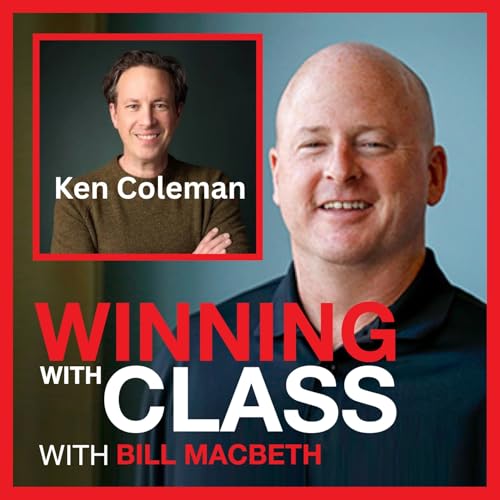
  • Ken Coleman – Finding and pursuing YOUR BEST PATH
    Dec 23 2025
    Ken Coleman has been called America's Career Coach, he's a 3x Best-selling author (Get Clear Career Assessment: Find the Work You're Wired To Do, From Paycheck to Purpose, and The Proximity Principle), and Ramsey Solutions personality known for his podcast/show, Front Row Seat, with Ken Coleman. Since the age of 16, Ken had planned a political future that would have him running for office, but that dream slowly died—leaving him confused and lacking confidence about his professional direction. After some deep soul searching and life mapping, Ken decided to get on the path to broadcasting. He didn't have a degree or any experience. His head told him it was too late and too risky to start over and completely change direction at this point, but his heart kept pulling toward the vision he couldn't stop thinking about. Thankfully, Ken's wife, Stacy, was all in, and they decided they were going to do whatever it took so he could pursue broadcasting. The clarity he had about the direction he was going gave him the confidence to move forward. Ken knew he was going to need to grow personally so he could advance professionally in uncharted waters. Ken signed up for a six-week broadcast school with people 10 years younger than him, and he covered high school football games on a country station at 11 p.m. on Friday nights. He worked for free several hours a week at a sports-talk station in Atlanta. He fought through imposter syndrome and humbling moments to gain as much experience as possible. He took on public speaking gigs, introduced mimes and balloon artists at a community event, worked on podcasts . . . And when Ken says podcasts, he means back when podcasts weren't cool—and he was doing it from a closet-sized sound booth with no air conditioning in the Georgia heat. Glamorous, right? Through strategic connections he had made along the way, Ken got an emcee role for a national leadership conference that gave him the opportunity to interview well-known athletes, leaders, authors and celebrities. One of the notable guests he interviewed was Dave Ramsey, which eventually led to their friendship and Ken joining the team at Ramsey Solutions. After three years of serving in multiple hosting roles, Ken got the chance to use all the career strategies he'd learned along the way to write three bestsellers and host a nationally syndicated radio show. And he still regularly co-hosts The Ramsey Show, the second-largest syndicated talk radio show in America. This has allowed Ken to fulfill the dream of broadcasting to encourage and equip people to be who they were born to be. At this point in his journey, Ken has had the opportunity to interview three presidents, heads of state, some of the top names in sports and entertainment, and a host of other leaders. Between interviewing leaders and coaching over 10,000 people who are working to level up their careers, he's gained a unique perspective on how you can get better, move up, and lead well. Ken wants you to bring the best version of you to work. So pull up your chair and take a front row seat to conversations meant to change the trajectory of your life. Takeaways: Finding YOUR Path. Ken points out that we all need to find the work – and life – we are meant to live by looking at our TALENTS, our PASSION, and our sense of MISSION. As Ken says, this leads to intrinsic motivation and ultimately to the FLOW he talked about. This should be the goal for all of us. Like hitting that golf ball or baseball as Ken and I discussed – when you barely even feel it – we should aim to get our careers and lives on THAT path…and the resulting potential is truly limitless.Self-awareness as a superpower. We can't reach this FLOW state unless we take a good long look at ourselves. Ken emphasizes figuring out how we're wired first, then building a career and life around that. Clarity is critical. Like Ken says – clarity creates confidence which is essential for us to fully pursue our own unique paths.Building YOUR career plan. For young people – or anybody looking to start a new career path – Ken provides a great way to establish the path and eliminate the fear that holds a lot of us back. We need to go with the four questions Ken gave us – what do I need to learn? What do I need to do to get there? What will it cost? And, finally, how long will it take? You might like the answers, and you might hate them. But, at least, as Ken points out – the fear that causes so many to be frozen or stuck, because they're overwhelmed by the unknown – will be gone.The Proximity Principle. Great summary from Ken for anybody looking to pursue a career path. As Ken said, in order for me to do what I want to do, I need to be around people who are doing it, and the places where it is happening. Basically, get in the game you are chasing by getting to know the people playing it and get on or at least close to the field where it is being played....
    Show More Show Less
    1 hr and 4 mins