• World Religions: The Differences - The #1 Thing That Makes Christianity Different
    May 10 2026

    Every major world religion answers the same question: How do I get right with God?

    And in almost every case, the answer is the same: Do more. Try harder. Earn it.

    Islam calls believers to the Five Pillars. Hinduism teaches karma — your actions determine your fate. Buddhism lays out the Eightfold Path as the road to liberation. And even much of what passes for Christianity today quietly whispers the same message: God loves you… but you need to hold up your end of the bargain.

    But what if the Gospel is saying something radically, scandalously different?

    In this episode, Beau and Jerry explore one of the most important distinctions in all of human religion: the difference between DO and DONE.

    Every other faith places the burden on the follower. Christianity alone says the work has already been completed — not by us, but for us. Jesus didn't say "It is nearly finished." He said "It is finished." (John 19:30)

    We open the Scriptures and the sacred texts of Islam, Hinduism, and Buddhism — and let them speak for themselves.

    In this episode, we cover:

    • The Quran on earning God's favor through deeds — Surah 23:102–103 (the weighing of good and bad deeds on Judgment Day)
    • The Bhagavad Gita on karma and duty as the path to liberation — Chapter 3:8–9
    • The Dhammapada on self-purification — verse 165: "By oneself alone is one purified"
    • What Paul says in Ephesians 2:8–9"It is the gift of God — not by works, so that no one can boast"
    • Why Ephesians 2:10 matters just as much — good works are our response to salvation, not the road to it
    • The difference between merit-based religion and grace-based relationship
    • Why so many Christians unconsciously slide back into "DO" thinking
    • What it means that Jesus is our righteousness — not a helper, but the entire foundation

    Key passages:

    • Ephesians 2:8–10 — Grace, faith, gift, and the proper place of good works
    • John 19:30 — "It is finished"
    • Romans 3:23–24 — Justified freely by grace
    • Titus 3:5 — Saved by mercy, not merit
    • Galatians 2:21 — If righteousness could be earned, Christ died for nothing
    • 1 Corinthians 1:30 — Christ as our righteousness

    One idea we keep returning to: Religion is humanity's attempt to reach up to God. The Gospel is God reaching down to us.

    Every other system says climb the ladder. Christianity says the ladder has already been climbed — on your behalf.

    If you've ever felt the exhausting weight of trying to be good enough, faithful enough, spiritual enough — this episode is for you.

    The goal isn't to do more. The goal is to receive what's already been done.

    #ThinkingFaithBroadcast #Bible #Apologetics #BiblicalTruth #GraceAlone #FaithAlone #Ephesians #ComparativeReligion #Christianity #Islam #Hinduism #Buddhism #DoVersusDone #MissionReconFilms #MissionRecon #KnokStudio #knok

    ▌ Produced by Knok Studio ▌

    ★★★★★ Knok Studio is an award winning non-profit studio that mobilizes talented film makers and connects them with non-profits who need media. ✞ http://Knok.org ★★★★★ ✙ ✙

    Here’s Beau on Facebook: https://www.facebook.com/share/1ArLszRTPV/?mibextid=wwXIfr

    Show More Show Less
    38 mins
  • Is it REALLY "God's Voice" Speaking to You? How to hear from God.
    Apr 22 2026

    Christians often say, “I feel like God is telling me…”

    But how do you actually know if it’s God?

    Is it a feeling? A thought? A voice?
    Or could it be something else entirely?

    In this episode, we open the Bible and take a closer look at one of the most important and often confusing questions for believers:

    How can you tell if it’s really God’s voice speaking to you?

    We’re not trying to create fear or make this overly complicated. And we’re not dismissing the fact that God can lead and guide His people. But we are asking a crucial question:

    How do we discern His voice correctly?

    As we discuss in our notes, not every impression, feeling, or thought comes from God — which is why Scripture calls us to test what we hear.

    So what does that actually look like?

    And how can Christians grow in confidence without being misled?

    In this episode, we cover:

    Why your first filter should always be Scripture — not feelings
    How prayer helps clarify, not replace, God’s Word
    Why seeking wise counsel from other believers matters
    What it means to “test the spirits” and why it’s necessary
    The danger of relying 100% on internal impressions
    How God’s voice will never contradict His written Word
    Why obedience (action) is a key part of discernment
    How to move forward wisely when you believe God is leading

    Some key passages we explore:

    2 Timothy 3:16–17 — Scripture as the foundation for truth and guidance
    1 John 4:1 — “Test the spirits”
    Proverbs 11:14 — Safety in a multitude of counselors
    James 1:5 — Asking God for wisdom
    John 10:27 — “My sheep hear my voice”

    One key idea we keep coming back to in this conversation:

    God’s voice is never disconnected from God’s Word.

    If something contradicts Scripture — it’s not from Him.
    If it bypasses wisdom and counsel — it should be questioned.

    Jerry brings us back again and again to a simple, practical process:

    Start with the Bible.
    Bring it to God in prayer.
    Seek wise counsel.
    Then take action.

    This isn’t about chasing feelings.
    It’s about developing discernment.

    If you’ve ever wondered, “Is this really God… or just me?” — this episode will help bring clarity.

    The goal isn’t to doubt everything.
    The goal is to test everything.

    And to follow God with confidence, not confusion.

    #ThinkingFaithBroadcast #Bible #Apologetics #BiblicalTruth #GodsVoice #Discernment #ChristianFaith #Scripture

    #MissionReconFilms #MissionRecon #KnokStudio #knok
    ▌ Produced by Knok Studio ▌
    ★★★★★
    Knok Studio is an award winning non-profit studio that mobilizes talented film makers and connects them with non-profits who need media. ✞ http://Knok.org

    ★★★★★
    ✙ ✙

    Here’s Beau on Facebook: https://www.facebook.com/share/1ArLszRTPV/?mibextid=wwXIfr

    Show More Show Less
    42 mins
  • TOP 5 most popular verses that people get wrong
    Apr 4 2026

    Christians often hear popular Bible verses quoted as if their meaning is obvious. You see them on coffee mugs, T-shirts, and social media — but many of these verses are taken out of context and misunderstood.

    So what’s actually true?

    In this episode, we open the Bible and take a closer look at one of the most important questions for growing believers:

    Are some of the most popular Bible verses being misused — and what did they originally mean?

    We’re not trying to criticize people or create arguments. And we’re not dismissing these verses either. Instead, we go back to Scripture itself and let the full context explain what God was actually saying.

    As we discuss in our notes , many commonly quoted verses are not wrong — but they are often incomplete when removed from their original setting.

    So what’s the real meaning behind them?

    And how should Christians understand them correctly?

    In this episode, we cover:

    Why many popular Bible verses are misunderstood when taken out of context
    What Philippians 4:13 really means (contentment in all circumstances, not unlimited achievement)
    Why Jeremiah 29:11 was written to Israel in exile — and what that means for us today
    What Jesus actually meant in “Do not judge” (Matthew 7:1–5) and how to judge rightly
    Whether Proverbs 22:6 is a promise or a principle about raising children
    What “God is love” (1 John 4) really means — and what it doesn’t justify
    The true meaning of “the least of these” in Matthew 25 and its connection to the gospel
    How context transforms our understanding of Scripture

    Some key passages we explore:

    Philippians 4:10–13 — Contentment in hardship and abundance
    Jeremiah 29:11 — A promise to exiled Israel, not a universal guarantee of prosperity
    Matthew 7:1–5 — Judging rightly, not hypocritically
    John 7:24 — “Judge with right judgment”
    Matthew 25:31–46 — The identity of “the least of these”

    One key idea we keep coming back to in this conversation:

    The problem isn’t the verses — it’s how we use them.

    When Scripture is taken out of context, it can be shaped to say almost anything. But when we read it carefully, we begin to see God’s actual message clearly.

    Jerry brings us back again and again to a simple truth:

    We don’t need new meanings — we need correct understanding.

    The Bible wasn’t written in soundbites.
    It was written as a unified story pointing to Christ.

    If you’ve ever quoted a verse and later wondered, “Is that really what it means?” — this episode will help bring clarity.

    The goal isn’t to tear down familiar verses.
    The goal is to understand them rightly.

    And to handle the Word of truth correctly.

    #ThinkingFaithBroadcast #Bible #Apologetics #BiblicalTruth #ContextMatters #ChristianFaith #Scripture #Faith

    #MissionReconFilms #MissionRecon #KnokStudio #knok
    ▌ Produced by Knok Studio ▌
    ★★★★★
    Knok Studio is an award winning non-profit studio that mobilizes talented film makers and connects them with non-profits who need media. ✞ http://Knok.org

    ★★★★★
    ✙ ✙

    Here’s Beau on Facebook: https://www.facebook.com/share/1ArLszRTPV/?mibextid=wwXIfr

    Show More Show Less
    34 mins
  • What Aren't Christians Following ALL the Rules in the Bible? Old Testament vs. New Testament
    Mar 4 2026

    Christians often hear people say, “The Old Testament laws don’t apply anymore.” Others insist that Christians should still follow them. So what’s the truth?

    In this episode, we open the Bible and explore a question that has confused many believers:

    If Jesus fulfilled the law… what parts still matter for Christians today?

    We’re not trying to create arguments between Christians. And we’re not ignoring the Old Testament either. Instead, we look at how Scripture itself explains the purpose of God’s law.

    The Bible shows us that the Old Testament law wasn’t all one category. It included civil laws, ceremonial laws, and moral laws — each with a different role in God’s plan.

    So what changed when Christ came?

    And what stayed the same?

    In this episode, we cover:
    - Why the Old Testament law was given to Israel in the first place
    - The difference between civil, ceremonial, and moral laws
    - How Jesus fulfilled the ceremonial system of sacrifices and temple worship
    - Why the civil laws were tied specifically to ancient Israel as a nation
    - Why the moral law continues, because it reflects God’s unchanging character
    - How Christians should understand commands like the Ten Commandments today
    - The difference between salvation by grace and obedience that flows from faith

    - Matthew 5:17 — “I have not come to abolish the Law or the Prophets but to fulfill them.”
    - Romans 6:14 — “You are not under law but under grace.”
    - Hebrews 10 — Christ as the final and perfect sacrifice.

    One key idea we keep coming back to in this conversation:

    Jesus didn’t erase God’s law — He fulfilled it.

    The ceremonial laws pointed forward to Christ. The civil laws governed ancient Israel as a nation. But the moral law reflects the timeless character of God, which never changes.

    Jerry brings us back again and again to a simple truth:

    God’s standards didn’t disappear when Jesus came — but our relationship to the law changed through the gospel.

    Christians are not saved by law-keeping. We are saved by grace through faith.

    But the moral law still shows us what a life that honors God looks like.

    If you’ve ever wondered how the Old Testament fits with the New — or how Christians should understand the law today — this episode will help bring clarity.

    The goal isn’t confusion.
    The goal is understanding the story of Scripture.

    And seeing how everything ultimately points to Christ.

    #ThinkingFaithBroadcast #Bible #OldTestament #NewTestament #LawAndGrace #Jesus #Apologetics #ChristianFaith #BiblicalTeaching

    #MissionReconFilms #MissionRecon #KnokStudio #knok
    ▌ Produced by Knok Studio ▌
    ★★★★★
    Knok Studio is an award winning non-profit studio that mobilizes talented film makers and connects them with non-profits who need media. ✞ http://Knok.org
    ★★★★★
    ✙ ✙

    Here’s Beau on Facebook: https://www.facebook.com/share/1ArLszRTPV/?mibextid=wwXIfr

    Show More Show Less
    33 mins
  • Aliens vs. Christians - Yes, there are "UAPs" in the Bible: So what should we do? - Demons, Angels
    Feb 24 2026

    Christians vs. aliens, UFOs, and UAPs.

    The government says they’re real. Pilots are seeing things. Congress is holding hearings. The language has shifted from “UFO” to “UAP.” But as Christians, the deeper question isn’t just Are they real? — it’s What are they?

    In this episode, we open the Bible and explore a perspective many believers have never seriously considered:

    What if some of these encounters aren’t extraterrestrial… but spiritual?

    We’re not chasing conspiracies. We’re not fear-mongering. And we’re definitely not encouraging anyone to seek out experiences. Instead, we ask:

    If spiritual beings are real — and Scripture clearly says they are — how should Christians respond?

    In this episode, we cover:
    - Why UAPs are suddenly mainstream news again
    - The difference between curiosity and spiritual discernment
    - Why Scripture tells us to test the spirits rather than chase experiences
    - Mission field stories where spiritual manifestations are far more open and common
    - The idea of spiritual geography and territorial influence (Daniel’s “Prince of Persia”)

    Ephesians 6:12 — “we do not wrestle against flesh and blood”

    Colossians 1:16 — Jesus created everything in heaven and on earth, visible and invisible

    Why not every supernatural encounter is from God

    The danger of seeking revelation outside of Christ

    How to keep your guard up without living in fear

    Jerry brings us back to Scripture again and again:

    Jesus is not threatened by anything in the heavens. He created it all. There is no rival cosmic civilization competing with Him.

    If there are spiritual beings interacting with humanity, the Bible already categories them: angels and fallen angels. Scripture gives us language for principalities, powers, rulers, and spiritual forces in heavenly places. The Bible even describes angelic conflict over regions and nations.

    So instead of asking, “Are aliens real?” we ask:

    What worldview best explains what we’re seeing?

    We also share honest mission experiences where spiritual manifestations are not rare, but culturally recognized — reminding us that Western materialism may blind us to realities the global church understands very well.

    Key idea from this episode:

    Not everything supernatural is extraterrestrial. And not everything spiritual is from God.

    Christians are called to discernment, not fascination.

    If you’ve been confused, curious, or even unsettled by the rise in UAP headlines — you’re not crazy for asking questions. But don’t let curiosity replace biblical grounding.

    The safest place to stand is under the authority of Christ.

    #ThinkingFaithBroadcast #UAP #Aliens #SpiritualWarfare #Discernment #Jesus #Bible #Apologetics #FaithAndCulture

    Here’s Beau on Facebook: https://www.facebook.com/share/1ArLszRTPV/?mibextid=wwXIfr

    Show More Show Less
    30 mins
  • My Friend is Gay... is he Going to Heaven? Can a LGTBQ be Christian?
    Feb 6 2026

    In today’s coffee shop episode of the Thinking Faith Broadcast, we tackle a question sent in by students: Can you be gay and a Christian? More specifically: Will LGBTQ people go to heaven if they claim to follow Jesus?

    We don’t claim to determine anyone’s salvation—but we do open the Bible and ask what Scripture says about sexuality, sin, love, and what it means to follow Christ in a culture where identity and feelings often define “truth.”

    In this episode, we cover:
    - Why the question is so present in middle school and high school right now
    - The difference between loving people and affirming every desire or behavior
    - Key Bible passages often brought into this conversation (Old & New Testament)
    - What the Bible means by “sin” (and why it matters)
    - The accusation: “Christians hate gay people”—and how to respond with clarity and compassion
    - The difference between attraction and behavior
    - Why Jesus’ model is grace + truth (forgiveness and transformation)
    - Practical discipleship: why community, confession, and bringing sin into the light matters

    We also share personal honesty about sexual sin and addiction—because this isn’t a “those people” conversation. It’s a human conversation. The invitation of Jesus isn’t “clean yourself up first,” it’s come to Him and let Him change you.

    If you’re wrestling with this topic personally, you’re not alone—and you’re not beyond hope. Our goal is to speak truth with love, and to point people to Jesus, who forgives and restores.

    Key idea from this episode:

    Love doesn’t always mean agreement. But biblical love always protects, tells the truth, and seeks another person’s good.

    ✅ Subscribe for more real questions from real students.
    💬 Drop a respectful comment: What question should we cover next?

    #ThinkingFaithBroadcast #Christianity #LGBTQ #Jesus #Bible #Apologetics #FaithAndCulture #YouthQuestions

    Here’s Beau on Facebook: https://www.facebook.com/share/1ArLszRTPV/?mibextid=wwXIfr

    Show More Show Less
    36 mins
  • Are Mormons Really that Different? - What Latter Day Saints Believe
    Jan 29 2026

    Top differences, spelled out in a highly listenable, fast-paced podcast.

    In this episode of The Thinking Faith Broadcast, Beau and Jerry Chevassus examine Mormonism (The Church of Jesus Christ of Latter-day Saints) alongside historic, biblical Christianity by comparing official LDS teachings with Scripture itself. The conversation focuses on doctrine — the things Christianity has always considered essential.

    Using LDS scriptures and authoritative writings (including Teachings of the Prophet Joseph Smith, Doctrine & Covenants, Journal of Discourses, and Mormon Doctrine), the discussion contrasts those claims with the Bible to explore where Mormon theology and Christianity fundamentally diverge.

    This episode covers core differences such as:

    • The nature of God: one eternal God vs. a plurality of gods
    • Whether God is an eternal Spirit or an exalted man with a physical body
    • Who Jesus is: eternally God or one of many gods
    • The Trinity vs. separate divine beings
    • Salvation by grace through faith vs. grace conditioned on personal righteousness
    • Human destiny: adoption as God’s children vs. humans becoming gods
    • Authority: Christ as the final revelation vs. the need for a living prophet

    Many conversations between Christians and Mormons stall because shared language hides deeply different meanings. This episode aims to bring those differences into the open — honestly, respectfully, and without pretending they don’t matter.

    Apologetics vs. Real-World Questions is where Christian faith meets honest, unscripted conversation.
    Not to win arguments — but to test whether Christianity actually holds up.

    Here’s Beau on Facebook: https://www.facebook.com/share/1ArLszRTPV/?mibextid=wwXIfr

    Show More Show Less
    41 mins
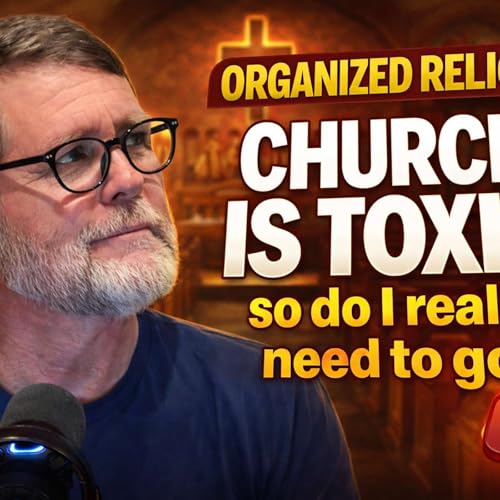
  • "Organized religion" & church is toxic or just boring - Do I really need to go to church to be a strong Christian?
    Jan 17 2026

    "Church is boring. And full of hypocrites. I'd much rather connect spiritually out in the wilderness. Or even sleeping in." Here's why church is important. BONUS: "What's up with our youth groups?" 70-75% of teens leave the church after graduating... is this a failure for youth departments in churches?

    Apologetics vs. Real-World Questions is where Christian faith meets honest, unscripted conversation.

    Hosted by Beau Chevassus, founder and president of Knok Studio (est. 2010), The Thinking Faith Broadcast exists to wrestle with the toughest questions people actually ask about Christianity—not the easy, pre-packaged ones. Beau brings the perspective of a filmmaker, missionary partner, and cultural observer who has spent over a decade amplifying the voices of God’s kingdom builders through epic, story-driven films produced alongside ministries and missionaries around the world.

    Joining him is Jerry Chevassus, Bible teacher and founder of Apologetics NW, whose life’s work centers on defending the Christian faith with clarity, humility, and intellectual honesty. Together, Beau and Jerry tackle objections, doubts, cultural pressure points, and misunderstood doctrines—head-on.

    This podcast isn’t about winning arguments.

    It’s about thinking clearly, asking better questions, and testing whether Christianity actually holds up in the real world.

    What You’ll Hear

    • Biblical apologetics explained in plain language
    • Tough questions about faith, doubt, suffering, science, and culture
    • Conversations shaped by Scripture, not slogans
    • Honest disagreement without fear or defensiveness
    • Faith that’s examined—not swept under the rug

    Whether you’re a believer, skeptic, deconstructing Christian, or just someone who refuses shallow answers, The Thinking Faith Broadcast invites you into thoughtful dialogue that respects both the mind and the soul.

    Here’s Beau on Facebook: https://www.facebook.com/share/1ArLszRTPV/?mibextid=wwXIfr

    Show More Show Less
    43 mins