Episodes

  • TGF 084 Trooper Chadwick LeCroy
    Feb 2 2026
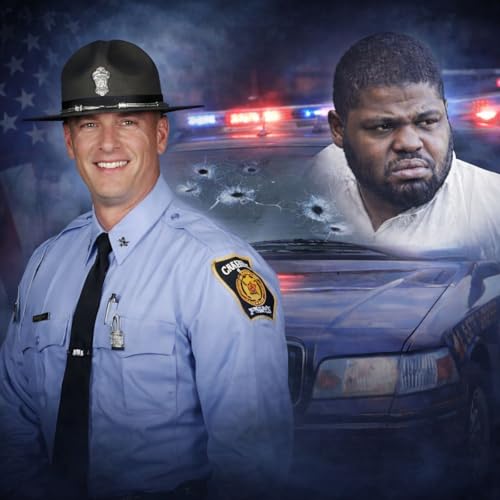
    This one is personal because I knew and worked alongside Trooper Chadwick LeCroy when I was an Atlanta Police Officer. Chad and I served together in Zone 2, and later I had the privilege of working with him when he joined the elite Georgia State Patrol Nighthawks DUI Task Force. He was one of the good ones – the kind of officer you wanted backing you up, the kind of man who made the badge mean something. On December 27th, 2010, Chad was murdered during what should have been a routine traffic stop. He pulled over a broken taillight on Bolton Road in northwest Atlanta.

    The driver was Gregory Favors, a thirty-year-old career criminal with eighteen prior arrests and ten felony convictions. Favors fled, crashed his car, and when Chad approached on foot – without drawing his weapon – Favors fired three shots through the passenger window. One bullet struck Chad in the neck. He died in the ambulance on the way to Grady Memorial Hospital. But here's what makes this case so infuriating: Gregory Favors should have been locked up. He'd been arrested just seventeen days earlier and was out on a nineteen-thousand-dollar bond despite pretrial services recommending he be held without bail. Three times in 2010, the system said he was too dangerous to release.

    Three times, judges ignored those recommendations. On the morning Chad was killed, Favors missed his court hearing. He should have been in jail, but instead he was free to murder a good man. The investigation was swift – dashboard camera footage captured everything. Favors stole Chad's patrol car, dumped it on Gun Club Road, and was arrested by Atlanta PD officers.

    After nearly four years of legal proceedings, he pleaded guilty to avoid the death penalty and received life without parole plus fifty-five years.

    Chad LeCroy was the first Georgia State Trooper killed by gunfire in thirty-five years. He left behind his wife Keisha, sons Bret and Chase, and a law enforcement family that still feels his loss. A bridge over the Chattahoochee River now bears his name, and a scholarship in his memory helps new troopers get their education.

    This is the story of how system failures cost a hero his life, and why there really are no such things as "routine" traffic stops.In memory of Trooper First Class Chadwick Thomas LeCroy, Badge #744.

    End of watch: December 27, 2010.
    Show More Show Less
    1 hr
  • TGF 083 Ottis Toole: The Redacted Report
    Jan 30 2026
    If you listened to Tuesday's episode covering the cold hard facts of the Ottis Toole case, you know the basics. His horrific childhood in Jacksonville's Springfield neighborhood. His partnership with Henry Lee Lucas. His six confirmed murder convictions. His confessions to the Adam Walsh killing. But the basics only scratch the surface of one of the most mishandled investigations in American criminal history.

    This episode of The Redacted Report digs into the dark corners that mainstream coverage leaves out. We expose the Jacksonville detective who was removed from the case after allegedly feeding Toole information about the Walsh murder in exchange for a promised book deal. We examine the controversial Luminol photograph that a retired detective claims shows Adam Walsh's face etched in blood on Toole's car floorboard, and why critics say the image was manipulated to show something that was never really there.

    We reveal the disturbing 1988 letter Toole sent to John and Revé Walsh demanding five thousand dollars in exchange for telling them where their son's body was buried. We play excerpts from the recorded prison phone calls between Toole and Lucas where the two killers casually discussed cannibalism and compared notes on their crimes. We revisit the seventeen-year-old Sears security guard whose decision to kick a group of children out of the store may have placed six-year-old Adam Walsh directly in the path of a predator.

    We also investigate the Jeffrey Dahmer connection that the Hollywood Police Department never adequately addressed. Two credible eyewitnesses independently identified Dahmer as a man they saw at the Hollywood Mall the same day Adam disappeared. Dahmer was living in South Florida at the time and had access to a blue van matching witness descriptions. When FBI Agent Neil Purtell interviewed Dahmer about the case, Dahmer's response haunted him for years.

    This episode examines why the case was closed using an exceptional clearance rather than an actual prosecution, what that administrative maneuver really means, and why Police Chief Chad Wagner admitted at the press conference that the magic wand piece of evidence simply does not exist.

    We discuss the other suspect nobody remembers, a man named Edward James who reportedly confessed to a cellmate and had new seat covers installed in his car weeks after the murder.

    The Ottis Toole case is a study in tunnel vision, lost evidence, competing agendas, and a justice system more interested in closing files than finding truth.
    Show More Show Less
    31 mins
  • TGF 082 Ottis Toole
    Jan 27 2026
    Ottis Elwood Toole claimed to have murdered over one hundred people. While that number remains disputed, what we know for certain is horrifying enough. Six confirmed kills. A partnership with fellow serial killer Henry Lee Lucas that terrorized the American South. And quite possibly the most infamous child murder in American history. Born in Jacksonville, Florida in 1947, Toole emerged from a childhood so brutal it defies comprehension. Sexual abuse by his father starting at age five.

    A mother who dressed him in girl's clothing and paraded him around as the daughter she wished she'd had. A grandmother who took him on midnight trips to rob graves. Every adult in his life either exploited him or looked the other way.None of that excuses what he became.

    Toole drifted through the 1970s leaving a trail of suspicion across multiple states. He was a suspect in murders in Nebraska and Colorado before fleeing back to Florida each time. In 1976, he met Henry Lee Lucas at a Jacksonville soup kitchen, and the two formed a killing partnership that would span years and cross state lines.

    But it was the 1981 murder of six-year-old Adam Walsh that would make Toole's name infamous. Toole confessed to abducting the boy from a Hollywood, Florida Sears store, then recanted, then confessed again. This pattern continued for years while the Hollywood Police Department systematically lost every piece of physical evidence that could have secured a conviction. The bloodstained carpet from his car. The machete. The car itself. All gone.

    Toole died in prison in 1996 without ever being charged in the Walsh case. It took until 2008 for police to officially name him as Adam's killer. This episode examines how a man with a lengthy criminal history and an IQ of 75 managed to evade justice for so long. We explore the systemic failures that allowed him to keep killing, the victims whose names deserve to be remembered, and the legacy of one father's grief that changed how America searches for missing children.

    The Jacksonville Cannibal is a story about monsters. But more importantly, it's a story about the cracks in our system that allow monsters to thrive.
    Show More Show Less
    1 hr and 20 mins
  • TGF 081 Susan Smith: The Redacted Report
    Jan 23 2026
    Earlier this week, you heard the facts about Susan Smith. You heard about the burgundy Mazda rolling into John D. Long Lake. You heard about Michael and Alex. But this episode goes deeper into the details that didn't make the nightly news.We start with Susan's father Harry, who shot himself in the driveway when Susan was six years old, just hours after telling her he loved her. We examine the arrival of stepfather Beverly Russell, a pillar of the community, a Christian Coalition leader, and a predator who began sexually abusing Susan when she was fifteen and continued until just weeks before the murders.

    We reveal that Susan's mother Linda knew about the abuse and chose to stay with Beverly anyway.We uncover Susan's suicide attempt at eighteen, when she reported the abuse to hospital staff and was sent back into the same home with almost no follow-up care. We trace her troubled marriage to David Smith, the affairs on both sides, and the pressure cooker of her relationship with Tom Findlay, the wealthy man's son who told her explicitly that her children were the obstacle to their future together.

    We break down the night of October twenty fifth, including the desperate phone calls Susan made searching for Tom, and the fact that she had visited that same boat ramp the night before. We examine the six minutes the car floated while Susan stood on the shore. We expose the lie about the traffic light at Monarch Mills, a sensor-activated light that couldn't have been red without another car present to trigger it.

    We explore the nine days of deception, Susan's bizarre behavior at parties, her continued calls to Tom Findlay, and the question she asked a reporter that revealed everything: "Did I come across as believable?"

    We cover Beverly Russell's extraordinary courtroom testimony admitting to years of abuse, and the jury's controversial decision to spare Susan's life.This is the full story. The uncomfortable truths. The redacted details that help explain, though never excuse, how a mother could do the unthinkable.
    Show More Show Less
    1 hr and 5 mins
  • TGF 080 Susan Smith
    Jan 20 2026
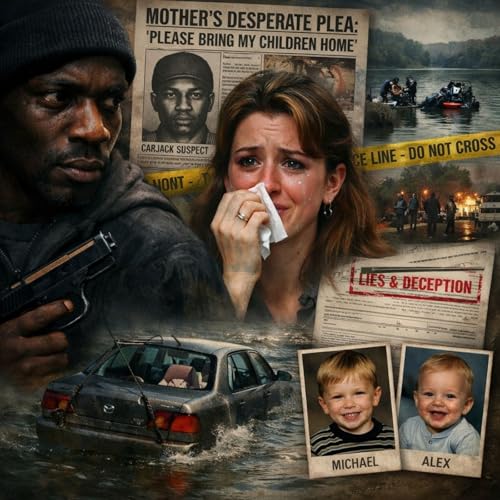
    On the night of October 25, 1994, Susan Smith stood on a boat ramp at John D. Long Lake in Union, South Carolina, and made a choice that would horrify the nation. She released the emergency brake on her burgundy Mazda Protégé and watched it roll into the dark water with her two sons still strapped in their car seats.

    Three-year-old Michael and fourteen-month-old Alex drowned in that lake while their mother ran to a nearby house and told a lie that would captivate America for nine days. Susan claimed a Black man had carjacked her at gunpoint and driven away with her children. She wept on national television, clutched her estranged husband David's hand, and begged for the safe return of her boys.

    The whole country searched for a phantom kidnapper while Michael and Alex lay dead at the bottom of that lake, one hundred and twenty-two feet from shore.In this episode, we trace Susan Smith's troubled life from the beginning. Her father Harry Vaughan killed himself when she was just six years old, leaving wounds that never healed. Her stepfather Beverly Russell, a prominent Republican and Christian Coalition member, began molesting her when she was fifteen and continued a sexual relationship with her into adulthood. Susan attempted suicide at thirteen and again at seventeen.

    She married David Smith at nineteen, already pregnant, and their marriage was plagued by mutual infidelity from the start.When Susan set her sights on Tom Findlay, the wealthy son of her boss at Conso Products, she believed he was her ticket to a better life.

    But Tom sent her a Dear John letter just eight days before the murders, telling her that while she had many good qualities, he did not want children. In Susan's fractured mind, her boys became obstacles to the happiness she craved.

    We examine the investigation that unraveled Susan's lies, from the traffic light that could not have turned red at an empty intersection to the polygraph that showed the highest level of deception when she was asked if she knew where her children were. We cover Sheriff Howard Wells obtaining her confession at a local church, the recovery of the boys' bodies with one small hand pressed against the car window, and the trial that exposed every dark corner of Susan's life. The jury convicted her in just two and a half hours but ultimately spared her from the death penalty.

    She was sentenced to life in prison with the possibility of parole after thirty years. Her time behind bars has been marked by affairs with prison guards, drug use, and self-mutilation. In November 2024, she faced her first parole hearing, where David Smith appeared wearing his sons' photograph and pleaded with the board to keep her locked up. They unanimously denied her release.

    This is the story of Michael and Alex, two innocent boys who deserved so much better than the fate their mother chose for them. And it is a story that still haunts America more than thirty years later.
    Show More Show Less
    1 hr and 38 mins
  • TGF 079 Adam Walsh: The Redacted Report
    Jan 16 2026
    On July 27, 1981, six-year-old Adam Walsh vanished from a Sears department store at the Hollywood Mall in Hollywood, Florida. Two weeks later, fishermen discovered his severed head in a drainage canal near Vero Beach. His body was never found. This case would transform America's approach to missing children forever, but the question of who actually killed Adam Walsh remains deeply contested to this day. In this episode of The Redacted Report, we go beyond the official narrative to explore the details that rarely make it into documentaries and news specials.

    We examine the seventeen-year-old security guard whose fateful decision to remove rowdy kids from the store left Adam alone and vulnerable in an unfamiliar parking lot. We dig into the explosive allegations that emerged during the Sears lawsuit, including claims made under oath by Adam's godfather Jimmy Campbell about a four-year affair with Revé Walsh and the family's alleged drug use.

    We trace the bizarre confession carousel of convicted serial killer Ottis Toole, who admitted to the murder dozens of times only to recant repeatedly, and whose partner Henry Lee Lucas was proven to be in a Maryland jail cell on the day of the abduction. We also investigate the controversial Jeffrey Dahmer theory championed by journalist Arthur Jay Harris and witnesses Willis Morgan and Bill Bowen, who independently identified Dahmer as the suspicious man they saw at the Hollywood Mall that day.

    Dahmer was living in Miami Beach at the time, working at Sunshine Subs just twenty minutes from where Adam disappeared, and had access to a blue van matching witness descriptions. Former FBI agent Neil Purtell, who interviewed Dahmer in prison, believes the serial killer's cryptic statement that "anyone who killed Adam Walsh could not live in any prison, ever" was essentially a coded admission of guilt. We examine the catastrophic failures of the Hollywood Police Department, including the lost bloodstained carpet from Toole's Cadillac, the missing machete, and the destroyed vehicle that might have provided the DNA evidence needed for a conviction.

    We question the controversial Luminol photograph that retired detective Joe Matthews compared to the Shroud of Turin, which critics dismiss as forensic pareidolia. And we explore how Police Chief Chad Wagner's 2008 decision to close the case through "exceptional clearance" satisfied the Walsh family but left many investigators and witnesses unconvinced.

    Through it all, we trace Adam's extraordinary legacy, from the Missing Children Act of 1982 to the National Center for Missing and Exploited Children to America's Most Wanted to the Adam Walsh Child Protection and Safety Act of 2006. John Walsh transformed unimaginable grief into systemic change that has protected millions of children and led to the capture of over twelve hundred fugitives.

    This is the Adam Walsh case as you've never heard it before. The official story says Ottis Toole was the killer. The evidence says something far more complicated.
    Show More Show Less
    1 hr and 13 mins
  • TGF 078 Adam Walsh
    Jan 13 2026
    On July 27, 1981, six-year-old Adam Walsh vanished from a Sears department store in Hollywood, Florida, and America was never the same. This episode of The Guilty Files Podcast examines one of the most infamous child abduction cases in American history, tracing every devastating detail from that summer afternoon at the Hollywood Mall to the sixteen-year investigation that would ultimately point to drifter and serial killer Ottis Toole.

    We explore the catastrophic failures in evidence handling that allowed a prime suspect to escape justice for decades, the heartbreaking discovery along the Florida Turnpike that confirmed every parent's worst nightmare, and the unprecedented transformation of a grieving father into America's most relentless victims' rights advocate.

    John Walsh channeled unimaginable loss into a crusade that created America's Most Wanted, helped establish the National Center for Missing and Exploited Children, and fundamentally changed how law enforcement responds to missing children cases across the United States.

    This true crime deep dive covers the investigation, the confessions, the controversies, and the lasting legacy of legislation born from tragedy, including the Adam Walsh Child Protection and Safety Act and the nationwide AMBER Alert system. From cold case breakthroughs to the modern fight against child predators, Adam's story remains a defining moment in American criminal justice history. Contains detailed discussion of child abduction, homicide investigation, and serial killer psychology.
    Show More Show Less
    58 mins
  • TGF 077 Ted Bundy: The Redacted Report
    Jan 9 2026
    In this episode, we go beyond the sanitized headlines and Netflix documentaries to examine the Ted Bundy case you were never supposed to know about, including the suppressed files, the buried reports, and the institutional failures that allowed one of America's most prolific serial killers to operate for years longer than he ever should have.

    We begin with Bundy's troubled origins at the Elizabeth Lund Home for Unwed Mothers, his violent grandfather Samuel Cowell, his grandmother's severe mental illness and electroconvulsive treatments, the family secret that made him believe his mother was his sister, and the chilling incident where three-year-old Ted placed butcher knives around his sleeping aunt's body while smiling.

    We examine the haunting case of eight-year-old Ann Marie Burr, who vanished from her Tacoma home in 1961 when Bundy was just fourteen years old and lived less than two miles away with a paper route through her neighborhood, and we discuss why the 2011 request to compare Bundy's DNA to evidence from that case was denied because his biological samples had been destroyed.

    We explore Bundy's work at the Seattle Crisis Clinic from 1971 to 1974, where he sat beside future true crime author Ann Rule taking calls from suicidal individuals while perfecting the manipulation techniques he would later use to lure women to their deaths, and we reveal his own admission that he learned how to sound caring even when he wasn't.

    We dive deep into the mathematics of murder and why the official victim count of thirty to thirty-six is almost certainly a fraction of the real total, with some investigators estimating the true number could exceed one hundred, and we examine the lost years between 1969 and 1973 when Bundy traveled extensively and left virtually no documented trail while young women matching his victim profile disappeared along the East Coast.

    We expose the systematic failures that allowed Bundy to keep killing, including Elizabeth Kloepfer's five separate reports to law enforcement that were ignored because detectives dismissed her as a hysterical woman, the nine months it took Utah authorities to arrest him after Carol DaRonch escaped his car with a handcuff still attached to her wrist, and the cross-jurisdictional catastrophe where police departments in four states refused to share information with each other. We reveal the truth behind both escapes, including the suspected accomplice inside the Aspen courthouse whose personnel file conveniently disappeared, the 1976 jail inspection report that identified the exact security weakness Bundy exploited in Glenwood Springs, and the fifteen-hour head start he received because holiday weekend staffing cuts reduced cell checks from hourly to every other hour.

    We uncover Bundy's carefully buried political career as a rising star in the Republican Party, his work on the Rockefeller presidential campaign, his security clearance to serve as a driver and bodyguard for Governor Daniel Evans, and how the party quietly scrubbed his employment records from their archives after his arrest.

    We examine what the jury never heard about the Chi Omega massacre, including how the bite mark evidence almost didn't exist because the attending physician failed to photograph the marks before they faded, the discrepancy in Nita Neary's eyewitness account that the defense never challenged, and the troubling theory that Kimberly Leach wasn't an aberration but a return to Bundy's true preference for younger victims. We analyze the death row interviews and the information Bundy provided about dump sites and victims that was never followed up by law enforcement, his manipulation of the Green River Killer investigation for his own benefit, and how his final interview with James Dobson blaming pornography contradicted everything he'd told forensic psychiatrists for years.

    We discuss the mystery of Carole Ann Boone's pregnancy on death row and the evidence that guards were bribed to allow physical contact during visits, the discredited science of bite mark analysis that formed the foundation of his Chi Omega conviction, and why the destruction of Bundy's DNA samples has prevented closure for families across the country whose daughters disappeared during the years he was active.

    We close with the questions that remain unanswered, the dump sites that were never searched due to budget cuts and political pressure, the hitchhiker victims along Interstate Five that were never officially linked to him, and the uncomfortable truth that many of the same institutional failures that allowed Bundy to kill for years still exist in our law enforcement system today.This episode contains discussions of violence, sexual assault, and crimes against children that some listeners may find disturbing.


    Show More Show Less
    1 hr and 10 mins