• How Alcohol Affects Your Energy and Mental Health
    May 26 2026

    Alcohol is often associated with relaxation, social connection, and temporary relief from stress. Yet beneath its short-term effects lies a complex relationship with both physical energy and mental health. Understanding how alcohol interacts with the body and mind is essential for anyone seeking balance, clarity, and long-term wellbeing. At Still Alchemy, the focus is on intentional living and mindful choices, and examining alcohol’s true impact is a key part of that journey.

    At first glance, alcohol may seem like it provides energy. After all, it contains calories—7 per gram, nearly as much as fat. However, these are “empty calories,” meaning they lack essential nutrients like vitamins, minerals, and protein. Instead of fueling the body efficiently, alcohol disrupts the body’s natural energy production processes.

    When alcohol enters the bloodstream, the liver prioritizes breaking it down over other metabolic functions. This means that nutrients from food are not processed as effectively, leading to reduced energy availability. Blood sugar levels can fluctuate, often dropping after drinking, which contributes to feelings of fatigue, irritability, and weakness.

    Additionally, alcohol interferes with mitochondrial function—the part of cells responsible for producing energy. Over time, this can lead to chronic tiredness and a general sense of low vitality, even in individuals who consume alcohol moderately.

    A More Conscious Approach:

    Reducing or eliminating alcohol can lead to noticeable improvements in both energy and mental health. Many people report better sleep, increased focus, improved mood, and greater emotional stability within weeks of cutting back.

    At Still Alchemy, the philosophy centers on transformation through awareness. Choosing to evaluate your relationship with alcohol is not about restriction—it is about alignment. It is about understanding what truly supports your energy, your clarity, and your sense of self.

    This approach encourages curiosity rather than judgment. How does alcohol make you feel the next day? Does it support your goals, or does it subtly work against them? These questions can guide more intentional decisions.

    Show More Show Less
    24 mins
  • Can Dance Be Healing?
    May 26 2026

    The Science Behind Movement and Emotional Release:

    There is a moment in dance — a split second between the first beat and the first step — where something ancient stirs inside the body. Before the mind can rationalize or resist, the body remembers. It remembers rhythm. It remembers release. It remembers that it was never meant to carry everything in silence. This is not poetic fantasy. This is physiology, psychology, and thousands of years of human wisdom converging on one profound truth: movement heals.

    Whether you are twirling alone in your kitchen at midnight or standing in a circle of strangers at a movement workshop, dance offers something that very few healing modalities can replicate — a full-body, full-soul invitation to feel, release, and be transformed.

    To understand why dance heals, we first need to understand where pain lives. Modern neuroscience confirms what ancient wisdom traditions have long known: trauma, grief, anxiety, and unprocessed emotion do not only exist in the mind. They live in the body. Muscles hold tension. The nervous system stores memory. The shoulders carry burdens that were never verbalized. The chest contracts around heartbreak. The hips — as somatic therapists consistently observe — are one of the primary storage sites for emotional residue.

    Dance works because it speaks the language the body already knows. When you move, you are not simply burning calories or improving coordination. You are creating a physiological environment in which stored emotional energy can finally move — literally — through and out of you.

    The American Dance Therapy Association defines dance and movement therapy as the psychotherapeutic use of movement to promote emotional, social, cognitive, and physical integration of the individual. This is not a fringe idea. It is a clinical discipline practiced in hospitals, rehabilitation centers, mental health facilities, schools, and wellness programs around the world.

    How Still Alchemy Holds Space for This Work:

    At Still Alchemy, we understand that transformation is never a single-channel experience. It does not happen only through insight, only through ritual, or only through conversation. It happens when all dimensions of the self are engaged — the mental, the emotional, the spiritual, and the physical. Our approach honors the body as a sacred instrument of knowing, not an afterthought to the inner work.

    The themes we work with at Still Alchemy — transmutation, the movement of energy through cycles and seasons, the release of what no longer serves, the embodiment of your truest self — are deeply resonant with what dance, at its best, offers. When you move your body with intention, you are doing alchemy. You are taking raw, unprocessed energy and transforming it into something new. You are working with your own inner elements and asking them to reorganize into something more aligned, more free, and more whole.

    Whether your journey with us involves Tarot as a mirror for your inner landscape, Astrology as a compass for understanding your cycles, or Life Coaching to anchor your intentions into action, the through-line is always the same: you are here to transmute. To evolve. To step more fully into who you actually are beneath the weight of what you have been carrying.

    Dance is one of the most ancient and immediate ways to access that process. You do not need to be graceful. You do not need an audience. You only need the willingness to move — and the trust that your body, in its wisdom, already knows what needs to come through.

    So dance. Not because you are good at it. Not because anyone is watching. Dance because your body is wise, your emotions deserve a channel, and because something in you already knows the way home.


    Show More Show Less
    20 mins
  • The Truth About Astrology: Identity, Illusion, and Interpretation
    May 25 2026

    Astrology has long fascinated people by offering insight into personality, behavior, and life patterns. It suggests that the positions of planets at the moment of birth shape who we are. While this idea feels compelling, astrology’s perceived accuracy often comes less from cosmic influence and more from human psychology and interpretation.

    One key reason astrology feels accurate is the Barnum effect—the tendency to accept vague, general statements as personally meaningful. Descriptions like “you are intuitive but sometimes guarded” apply broadly, yet feel specific. Combined with confirmation bias, people begin to notice behaviors that align with their sign while ignoring contradictions. Over time, astrology becomes a self-reinforcing narrative rather than an objective truth.

    Another overlooked factor is the zodiac system itself. Most modern astrology uses the tropical zodiac, which is based on seasonal cycles rather than the current positions of constellations. Due to Earth’s axial precession, the constellations have shifted over thousands of years. This means that many people are not aligned with the constellation traditionally associated with their sign. Rather than invalidating astrology, this reveals that it functions more as a symbolic system tied to human perception of time than a literal cosmic map.

    Astrology also influences how people understand identity. When taken literally, it can encourage fixed thinking—people may justify behaviors by attributing them to their sign. This limits personal growth and self-awareness. However, when approached thoughtfully, astrology can become a tool for reflection. It encourages individuals to question why certain traits resonate and to explore different aspects of themselves.

    The line between illusion and meaning is where astrology truly exists. Scientifically, there is no evidence that planetary positions determine personality or fate. In that sense, astrology is an illusion. Yet, like art or mythology, it holds meaning because people interpret it and find value in it. The danger lies in treating symbolic language as literal truth.

    Ultimately, astrology’s real power lies in interpretation. It does not define who you are but offers a framework for self-exploration. Its value depends on how it is used. When approached with awareness, astrology can inspire curiosity and deeper understanding rather than limitation.

    The truth about astrology is not that it is entirely real or false—it exists in the space between belief and perception.

    Show More Show Less
    20 mins
  • Living Through Global Uncertainty: A Nervous System Perspective on Collective Anxiety
    May 24 2026

    We are living in a time shaped by global instability. Ongoing geopolitical tensions, regional conflicts, rising political polarization, and unpredictable election cycles all contribute to a shared atmosphere of uncertainty. While these events are external, their impact is deeply internal. They shape how safe or unsafe the world feels in the body, often without us fully realizing it.

    From a nervous system perspective, uncertainty is not just an idea—it is a physiological experience. The human system is designed to detect safety and threat through continuous scanning. When the world feels unstable or unpredictable, the nervous system can shift into states of hypervigilance, tension, or emotional fatigue. This is not a personal flaw, but a biological response to perceived instability.

    In response to uncertainty, the mind often tries to create control. This can show up as overconsuming news, forming rigid beliefs, or mentally rehearsing worst-case scenarios. While these behaviors may feel productive, they are often attempts to regulate underlying nervous system activation. The body is seeking certainty in a world that does not always offer it.

    Collective fear also shows up in the body in subtle ways. Tightness in the chest, digestive discomfort, irritability, or a persistent sense of dread can arise even when there is no immediate personal threat. This happens because the nervous system is relational—it absorbs emotional cues from the environment, including media, conversations, and cultural tension. Over time, this can create a baseline of background anxiety.

    Grounding in this context is not about ignoring reality, but about building internal stability while engaging with it. The body is the most reliable anchor. Simple practices like slow breathing, feeling physical contact with the ground, or relaxing muscular tension help signal safety to the nervous system. These moments interrupt the cycle of collective overwhelm.

    At Still Alchemy, this perspective centers on collective nervous system regulation. We recognize that global instability is not only a political or social experience, but also an embodied one. The way we process uncertainty individually contributes to the wider emotional field we all share. Regulation becomes a form of participation in collective resilience.

    Staying grounded in uncertain times is not about eliminating fear, but expanding capacity. It is the ability to remain present with what is happening without becoming consumed by it. In this way, stability is not found in external conditions, but cultivated internally through awareness, connection, and embodied presence.

    Even in a world that feels unpredictable, the nervous system can learn to return to safety, moment by moment.

    Show More Show Less
    18 mins
  • Wim Hof Breathwork: Powerful Practice or Overhyped Trend?
    May 24 2026

    Wim Hof breathwork is a structured breathing practice designed to intentionally influence the body’s physiology, mental state, and stress response. Developed by Wim Hof, it combines controlled breathing cycles, breath retention, and often optional cold exposure to create a powerful internal shift in awareness and energy.

    At its core, the method involves deep, rhythmic inhalations followed by relaxed exhalations, repeated for multiple rounds. After these cycles, the practitioner holds their breath after exhaling. This combination of oxygen intake and breath suspension creates noticeable changes in how the body feels and functions.

    During the practice, oxygen levels temporarily rise while carbon dioxide levels drop. This shift affects blood chemistry and can lead to very distinct physical sensations. Many people report tingling in the hands, feet, or face, a sense of lightheadedness, waves of warmth, or bursts of energy. These effects are not imagined—they are direct physiological responses to changes in breathing chemistry.

    The breath retention phase is particularly important. As carbon dioxide gradually builds back up, the body experiences a strong urge to breathe again. This controlled stress response helps heighten awareness and creates a unique internal intensity that many describe as meditative or deeply focused.

    One of the key aspects of Wim Hof breathwork is its impact on the nervous system. The breathing cycles tend to stimulate the sympathetic nervous system, which is responsible for alertness and the “fight or flight” response. This is why practitioners often feel energized or even euphoric during the exercise. However, after the breathing session, the body often shifts into a calmer, more relaxed state, associated with parasympathetic nervous system activation. This back-and-forth dynamic between stimulation and relaxation is part of what makes the method so distinctive.

    People who practice Wim Hof breathwork regularly report a range of potential benefits, including increased energy, improved focus, enhanced emotional regulation, and a greater sense of mental clarity. Some also suggest it helps build resilience to stress by intentionally exposing the body to controlled discomfort and learning to remain calm within it.

    That said, the practice is not without risks. Dizziness, hyperventilation, or even fainting can occur if it is done improperly or in unsafe environments. It is recommended to practice seated or lying down, especially when first learning the technique, and to avoid situations where losing consciousness could be dangerous. Individuals with medical conditions should seek professional advice before practicing.

    Wim Hof breathwork sits somewhere between powerful tool and modern wellness trend. The physiological effects are real and measurable, but the intensity of personal experiences can vary widely. For some, it becomes a deeply transformative practice for awareness and stress management. For others, it is an interesting but occasional technique.

    Ultimately, its value lies in direct experience. It offers a structured way to observe the connection between breath, body, and mind, and to explore how intentional breathing can shift internal states in real time.

    Show More Show Less
    18 mins
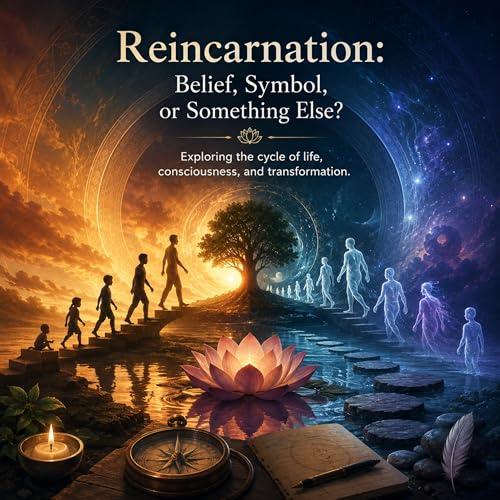
  • Reincarnation: Belief, Symbol, or Something Else?
    May 24 2026

    Reincarnation is the idea that consciousness continues beyond physical death and re-emerges in another form of life. Found across spiritual traditions like Hinduism and Buddhism, it raises a central question: does something essential about us persist beyond this lifetime?

    Traditionally, reincarnation is tied to cycles of existence. In Hindu thought, the soul moves through repeated lives shaped by karma, while Buddhism frames rebirth as a continuation of consciousness without a fixed self. Both perspectives emphasize that life is part of a larger unfolding process rather than a single, isolated event.

    Beyond literal belief, reincarnation can also be understood symbolically. It reflects the constant transformation we experience within a single lifetime. Identities shift, beliefs evolve, and old versions of ourselves fade as new ones emerge. In this sense, “rebirth” happens continuously, not just after death.

    At a deeper level, reincarnation connects to the mystery of consciousness. Science has yet to fully explain awareness, leaving space for philosophical exploration. Whether consciousness is bound to the brain or exists beyond it remains an open question, and reincarnation sits within that uncertainty.

    Psychologically, the idea may represent the mind’s way of expressing deep patterns, memories, or archetypes. What feels like a past life could reflect layers of the unconscious or shared human experience rather than literal memory.

    Ultimately, reincarnation exists between belief, metaphor, and mystery. It offers a framework for exploring identity, transformation, and continuity. Rather than demanding a single interpretation, it invites reflection on what it means to exist, to change, and to be aware.

    Within the Still Alchemy perspective, reincarnation aligns with inner transformation. It becomes less about what happens after death and more about how awareness evolves now. Each moment carries the potential for renewal, making life itself an ongoing process of becoming.

    Show More Show Less
    12 mins
  • The Hermetic Mirror: Ancient Wisdom and Modern Interpretation
    May 21 2026

    Hermetic philosophy is a timeless yet often misunderstood tradition attributed to Hermes Trismegistus, a symbolic fusion of the Greek Hermes and Egyptian Thoth. Emerging from Hellenistic Egypt, it blends mystical insight with early philosophical inquiry into reality, consciousness, and transformation.

    At its core, Hermeticism explores how reality is perceived rather than simply what reality is. It suggests that mind and world are deeply interconnected, and that awareness plays a central role in shaping experience. Instead of presenting rigid beliefs, Hermetic teachings function as symbolic guides pointing toward inner realization.

    The Hermetic texts, known as the Hermetica, are structured as dialogues and allegories rather than direct instructions. This symbolic language allows multiple layers of interpretation, making Hermetic philosophy both profound and adaptable across time.

    Modern interpretations often simplify Hermetic ideas into structured “laws” or principles. While these frameworks—such as correspondence, polarity, and mentalism—are widely used today, they are not explicitly laid out in the original texts in that form. This has led to debate over whether contemporary Hermeticism reflects ancient wisdom or modern reinterpretation shaped by self-help and metaphysical movements.

    Despite these differences, the essence of Hermetic philosophy remains consistent: transformation begins with awareness. By observing patterns in thought, emotion, and perception, individuals can begin to understand the deeper structures underlying experience. This process is often described as inner alchemy, where perception itself is refined.

    Rather than asking whether Hermeticism is purely ancient or modern, it may be more useful to see it as an evolving framework of understanding. Its value lies not in doctrine, but in direct exploration of consciousness and reality.

    About Us – Still Alchemy

    At Still Alchemy, we explore Hermetic philosophy as a living inquiry into perception, awareness, and transformation. Our approach focuses on direct experience rather than belief systems, encouraging reflection on how reality is interpreted moment to moment.

    Hermetic philosophy invites a deeper look at existence itself, where meaning is not given but discovered through awareness.

    Show More Show Less
    21 mins
  • Mirror Meditation-Between Reflection and Reality: A Visual Meditation on Presence
    May 21 2026

    This image presents a cinematic and introspective interpretation of mirror meditation, blending grounded stillness with subtle surreal elements. At the center of the composition, a woman sits quietly before an ornate antique mirror, her posture relaxed and inwardly focused. The environment is dimly lit, with warm, ambient tones that create a calm and contemplative atmosphere. Soft candlelight flickers nearby, adding a sense of ritual and presence, while natural textures—wood, fabric, and faint greenery—anchor the scene in something tangible and real.

    The mirror itself becomes the focal point, not as a literal portal, but as a symbolic threshold. Within it, the woman’s reflection begins to dissolve into a cosmic, mist-like field. Light particles and faint celestial patterns emerge, giving the impression of expansion beyond the physical form. However, this visual transformation doesn’t suggest escape into another world. Instead, it reflects the internal experience of perception shifting—where identity becomes less fixed and more fluid.

    Subtle geometric symbols and visual motifs surrounding the mirror reinforce themes of awareness, perception, and stillness. These elements evoke a sense of quiet inquiry rather than dramatic mysticism. The contrast between the grounded physical setting and the ethereal reflection illustrates the core idea of the piece: that what feels like something “beyond” is often a deeper awareness of what is already present.

    Typography integrated into the composition emphasizes key insights—such as the instability of perception, the illusion of identity, and the importance of presence over projection. These phrases guide the viewer without overwhelming the visual experience, allowing the message to remain contemplative rather than instructional.

    Overall, the image captures the essence of mirror meditation as a practice rooted not in fantasy, but in clarity. It visually communicates the transition from projection to presence, from distortion to awareness. Rather than presenting the mirror as a gateway to another dimension, it frames it as a tool for self-observation—where stillness reveals the subtle, shifting nature of how we see ourselves.


    Show More Show Less
    19 mins