Future Ventures: Scaling with Clarity cover art

Future Ventures: Scaling with Clarity

Future Ventures: Scaling with Clarity

By: Maxim Atanassov
Listen for free

Future Ventures: Clarity at Scale is the podcast for founders, operators, and investors who are building companies worth owning for the long term — and who need to think clearly about capital, structure, strategy, and growth to get there.


Each episode cuts through the noise around scaling: how to structure a deal, how to position a business for institutional capital, how to build operational leverage without losing control, and how to make the high-stakes decisions that compound in value long after the moment has passed.


Hosted by Maxim Atanassov — a four-time founder and the Managing Partner of Future Ventures Corp. Since 2018, FVC has invested in, incubated, and scaled companies across sectors — with a focus on platform opportunities that compound in value. Maxim's background spans executive leadership inside Canada's largest energy companies and senior advisory at Deloitte and EY. He's a CPA-CA who has sat at the table where capital gets deployed, governance gets built, and hard decisions get made. Now he helps founders get there faster.


New episodes every week. Subscribe wherever you listen.

© 2026 Future Ventures: Scaling with Clarity
Economics Leadership Management Management & Leadership Personal Finance
Episodes
  • Tom Milar — Turning Waste into Capital Building Circular Systems That Scale | FV Podcast Ep. 39
    May 21 2026

    Send us Fan Mail

    Tom Milar has spent over a decade building infrastructure for private companies — first through incorporation services out of Hong Kong and Las Vegas, and now through Eqvista, a valuation and equity management platform serving 23,000 startups. After a successful acquisition, Tom took five of his most important team members and set out to fix a problem he kept running into himself: founders were managing ownership and valuation off static PDFs and Excel sheets, working from data that was already months out of date by the time it landed. Eqvista's answer is a real-time valuation engine that now values $4 trillion in assets and gives founders, employees, and investors a live look at what their company is actually worth — like a stock ticker for private companies.

    This conversation matters because valuation sits underneath almost every consequential decision a founder makes — raising, hiring, issuing equity, planning an exit — and most founders are working with a number that's stale, opaque, or both. Tom brings a rare combination of product obsession and financial discipline to the table, having bootstrapped Eqvista to scale on roughly half a million dollars rather than chasing rounds. For any founder thinking about their cap table, their next raise, or how to give their team real liquidity, this episode is a clear-eyed look at where private markets are heading.

    Key Topics Covered

    • The problem with PDF valuations — Why the months-long lag between financials and a finished valuation report leaves founders making decisions on outdated numbers.
    • Real-time valuation at scale — How Eqvista's engine continuously values 20,000+ companies and the data behind a $4 trillion valuation engine.
    • Controlled tender offers and liquidity — How company-led tender offers let founders set the price and structure liquidity for employees and investors on their own terms.
    • Bootstrapped, product-led growth — Why a free cap table, paid valuations, and relentless customer support drove scale without heavy fundraising.
    • The most common cap table mistakes — What early founders get wrong with paid-up capital, adjusted cost base, and overcrowded cap tables.

    Key Insights

    1. Valuation is a byproduct, not the prize. Tom and Maxim align on the idea that a strong valuation flows from belief in the founder, the idea, and the market size — not the other way around. Founders who chase the number rather than the fundamentals are optimizing for the wrong thing.
    2. De-risk before you raise. Tom's view is that founders should build a product that works, reaches real revenue, and approaches profitability before going to investors — so capital becomes fuel for acceleration rather than a bet on whether the business works at all. He's openly skeptical of early-stage bridge rounds as a sign that the original plan stalled.
    3. The story behind the price is the product. What separates a defensible valuation from a guess is the ability to explain why the number is what it is. Eqvista's edge isn't just the figure it produces — it's the pricing narrative built on hundreds of billions in valued assets that auditors and shareholders can actually rely on.

    Links

    • Eqvista: https://eqvista.com/
    • Tom Milar on LinkedIn: https://www.linkedin.com/in/tomasmilar
    • Future Ventures Corp: https://ca.linkedin.com/company/future-ventures-corp

    About Tom Milar

    Tom Milar is the Founder and CEO of Eqvista, a platform for company valuation, equity management, and private-market liquidity serving 23,000 startups. Originally from the Czech Republic, he moved to Asia in 2009 and built incorporation-services businesses before launching Eqvista with a core team carried over from a prior successful exit. He is a product-first founder who scaled the company through bootstrapping, freemium adoption, and a real-time valuation engine that now values $4 trillion in assets.

    Show More Show Less
    48 mins
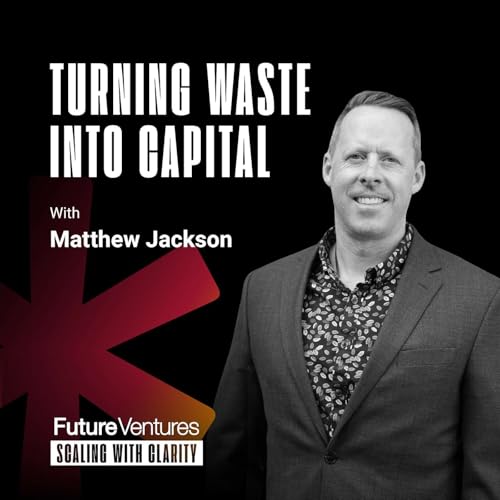
  • Mathew Jackson — Building Circular Systems That Scale | Future Ventures Podcast Ep. 12
    May 20 2026

    Send us Fan Mail

    Matthew Jackson is the co-founder and Chief Commercial Officer of Alimentary Systems, a New Zealand company rethinking how the world handles organic waste and sewage. An Edmund Hillary Fellow with a track record of building and scaling high-growth ventures across global markets, Matthew has helped drive billions in market value creation — including bringing Netflix to New Zealand and triggering a wave of industry convergence that reshaped the local media landscape. But what makes this conversation matter isn't the resume. It's the way Matthew thinks about impact, risk, and the responsibility of building something that outlasts you.

    This episode switches between two styles, which makes it interesting. First, it honestly tells the personal story of the founder — his childhood, losing his father at 15, studying process philosophy, and the daily habits that help him stay steady during tough times. Then, it explains one of the smartest business ideas we've discussed: a system that turns sewage and industrial waste into fertilizer, energy, and carbon credits, all at a lower cost than landfills. If you want to see what real product-market fit looks like — where investors, cities, residents, and the environment all benefit — this is a good place to start.

    Some of the key topics covered in this episode were:

    • From media changes to climate projects — Matthew's first business helped Netflix start in New Zealand, increased its value by $2.1 billion, and led to a lawsuit that taught him what true commitment costs.
    • The Alimentary Systems model — Why combining two waste streams into one unlocks five distinct revenue lines and a 2.4x value multiplier over the traditional landfill.
    • The economics of impact — How the company hits roughly 30% IRR while saving municipalities money and lowering household costs, proving environmental gains and returns aren't a trade-off.
    • Carbon credits as arbitrage — The four-year effort to get onto compliance markets, and why the same credit can sell for $45 in New Zealand or $127 into the UK.
    • Founder psychology — Managing ego, mental health, and presence as the real infrastructure behind sustained execution.

    Key Insights

    1. Being right and being effective are two different things. Matthew argues that when you treat the person across the table as the obstacle, your ego takes over, and progress stalls. Real change comes from meeting people where they are and moving forward together — not winning the argument.
    2. The term "risk-taker" is often misunderstood. What seems like bold risk-taking from the outside is usually careful planning—trying different approaches to reduce risks before making a big move. Matthew knows exactly what his current risks are, how much they cost, and has a clear plan for how to back out if needed.
    3. Capital allocation is the number one risk every company faces. Working on the right things with the wrong people — or pointing capital at the wrong priorities — is what sinks ventures. Helping founders sharpen their capital allocation framework is the highest-leverage support you can offer.

    Links & Resources

    • Alimentary Systems: https://www.linkedin.com/company/alimentary-systems/
    • Matthew Jackson on LinkedIn: https://nz.linkedin.com/in/matthewjackson
    • Future Ventures LinkedIn: https://ca.linkedin.com/company/future-ventures-corp

    About the Guest

    Matthew Jackson is the co-founder and Chief Commercial Officer of Alimentary Systems, where he's building circular waste-to-energy infrastructure across global markets. A four-time founder and Edmund Hillary Fellow, he has helped generate billions in market value, from pioneering media access in New Zealand to advancing climate-positive sanitation technology. He works closely with Indigenous communities on water security and is driven by a single conviction: that the best ventures make an impact and return the same thing.

    Show More Show Less
    1 hr and 13 mins
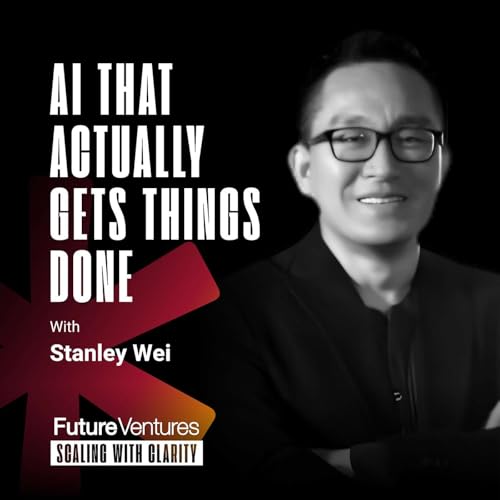
  • Stanley Wei — AI That Actually Gets Things Done: The Future of Autonomous Agents | FV Podcast E. 37
    May 20 2026

    Send us Fan Mail

    Stanley Wei is the Founder and CEO of Pine AI, an autonomous agent platform that doesn't just answer questions — it picks up the phone, fills out the forms, and gets things done on behalf of consumers. Pine negotiates bills, cancels subscriptions, files complaints, resolves disputes, and navigates insurance claims autonomously. Before launching Pine, Stanley held leadership roles at Gore and invested in AI through Hillhouse Capital, watching the space evolve from the early deep learning era through the DALL-E inflection point that convinced him AGI was no longer a question of if, but when.

    This conversation is important because Stanley is developing a seldom-touched part of the AI stack: the unstructured, voice-based interface between agents and the physical world. Most AI products operate in digital spaces, like drafting or querying databases, but Pine trains proprietary voice models on real phone calls. This enables agents to interrupt naturally, manage silences, negotiate, and complete tasks. Understanding this reveals the future of consumer AI and how to compete against giants like OpenAI and Anthropic.

    Key Topics Covered

    1. The Matrix thesis for voice agents — Why the phone call is the channel that lets AI cross from the digital world into the physical one, and why this is fundamentally different from what ChatGPT or Copilot do.
    2. Building an AI company in 2024 vs. now — How model capability went from "100% hike to build an agent" to "everything is possible" in roughly twelve months, and what that means for product velocity.
    3. The unsustainable economics of AI customer acquisition — Why building product is now the easy part, why only Google and Meta own the demand side, and why hitting critical user mass has become survival-level urgent.
    4. Defending against the LLM giants — Why Pine trains its own voice model bottom-up on proprietary phone-call data instead of building on top of OpenAI or Anthropic, and where the foundation labs leave room for vertical specialists.
    5. Running a company without meetings — How Stanley designed Pine to be agent-friendly from the inside out: no code ownership, async by default, agents talking to other people's agents to coordinate work.

    Key Insights

    1. The biggest barrier to consumer AI adoption is not capability — it's trust and education. Most consumers don't yet know what AI can do, don't believe it can do it, and have to be walked through all three layers (pain, solution, proof) before they will pay.
    2. The structural shift in the AI economy has happened on the supply side, not the demand side. Coding agents made it cheap to build, but they did not create new distribution channels — so growth, not product, is now the binding constraint for almost every AI company.
    3. People have found some of the coolest ways to use Pine that the team never planned for. For example, one user who was laid off in 2025 used Pine to make money by buying rental cars cheaply and selling them for more, earning $3,000 on one deal. Another user used Pine to cut down a $5,000 credit card bill to $1,500. The product allows users to do things the creators never expected.

    Links

    Pine AI: https://www.19pine.ai/

    Stanley Wei on LinkedIn: https://www.linkedin.com/in/stanleywei

    Future Ventures Corp: https://ca.linkedin.com/company/future-ventures-corp

    About Stanley Wei

    Stanley Wei is the Founder and CEO of Pine AI, an autonomous AI agent that takes action on behalf of consumers in the physical world — from negotiating bills to managing insurance disputes. Before Pine, he held leadership roles at Gore and was an AI investor at Hillhouse Capital, where he tracked the field through the deep learning era and the generative AI inflection point. He started Pine in 2024 out of personal frustration with the chores of being an international operator, splitting time between the US, Singapore, and the UK.

    Show More Show Less
    57 mins
adbl_web_anon_alc_button_suppression_c
No reviews yet