

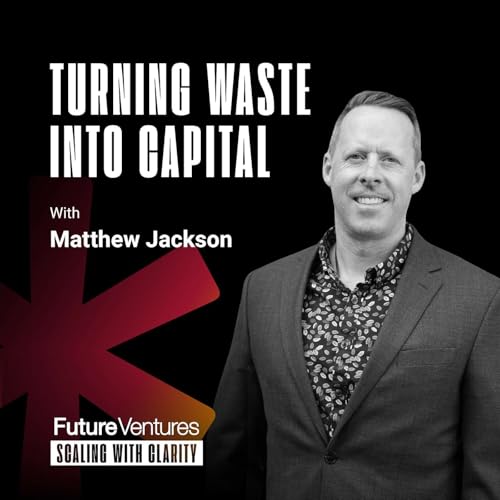
Mathew Jackson — Building Circular Systems That Scale | Future Ventures Podcast Ep. 12
Failed to add items
Add to basket failed.
Add to wishlist failed.
Remove from wishlist failed.
Adding to library failed
Follow podcast failed
Unfollow podcast failed

Mathew Jackson — Building Circular Systems That Scale | Future Ventures Podcast Ep. 12
-
Narrated by:
-
By:
Send us Fan Mail
Matthew Jackson is the co-founder and Chief Commercial Officer of Alimentary Systems, a New Zealand company rethinking how the world handles organic waste and sewage. An Edmund Hillary Fellow with a track record of building and scaling high-growth ventures across global markets, Matthew has helped drive billions in market value creation — including bringing Netflix to New Zealand and triggering a wave of industry convergence that reshaped the local media landscape. But what makes this conversation matter isn't the resume. It's the way Matthew thinks about impact, risk, and the responsibility of building something that outlasts you.
This episode switches between two styles, which makes it interesting. First, it honestly tells the personal story of the founder — his childhood, losing his father at 15, studying process philosophy, and the daily habits that help him stay steady during tough times. Then, it explains one of the smartest business ideas we've discussed: a system that turns sewage and industrial waste into fertilizer, energy, and carbon credits, all at a lower cost than landfills. If you want to see what real product-market fit looks like — where investors, cities, residents, and the environment all benefit — this is a good place to start.
Some of the key topics covered in this episode were:
- From media changes to climate projects — Matthew's first business helped Netflix start in New Zealand, increased its value by $2.1 billion, and led to a lawsuit that taught him what true commitment costs.
- The Alimentary Systems model — Why combining two waste streams into one unlocks five distinct revenue lines and a 2.4x value multiplier over the traditional landfill.
- The economics of impact — How the company hits roughly 30% IRR while saving municipalities money and lowering household costs, proving environmental gains and returns aren't a trade-off.
- Carbon credits as arbitrage — The four-year effort to get onto compliance markets, and why the same credit can sell for $45 in New Zealand or $127 into the UK.
- Founder psychology — Managing ego, mental health, and presence as the real infrastructure behind sustained execution.
Key Insights
- Being right and being effective are two different things. Matthew argues that when you treat the person across the table as the obstacle, your ego takes over, and progress stalls. Real change comes from meeting people where they are and moving forward together — not winning the argument.
- The term "risk-taker" is often misunderstood. What seems like bold risk-taking from the outside is usually careful planning—trying different approaches to reduce risks before making a big move. Matthew knows exactly what his current risks are, how much they cost, and has a clear plan for how to back out if needed.
- Capital allocation is the number one risk every company faces. Working on the right things with the wrong people — or pointing capital at the wrong priorities — is what sinks ventures. Helping founders sharpen their capital allocation framework is the highest-leverage support you can offer.
Links & Resources
- Alimentary Systems: https://www.linkedin.com/company/alimentary-systems/
- Matthew Jackson on LinkedIn: https://nz.linkedin.com/in/matthewjackson
- Future Ventures LinkedIn: https://ca.linkedin.com/company/future-ventures-corp
About the Guest
Matthew Jackson is the co-founder and Chief Commercial Officer of Alimentary Systems, where he's building circular waste-to-energy infrastructure across global markets. A four-time founder and Edmund Hillary Fellow, he has helped generate billions in market value, from pioneering media access in New Zealand to advancing climate-positive sanitation technology. He works closely with Indigenous communities on water security and is driven by a single conviction: that the best ventures make an impact and return the same thing.