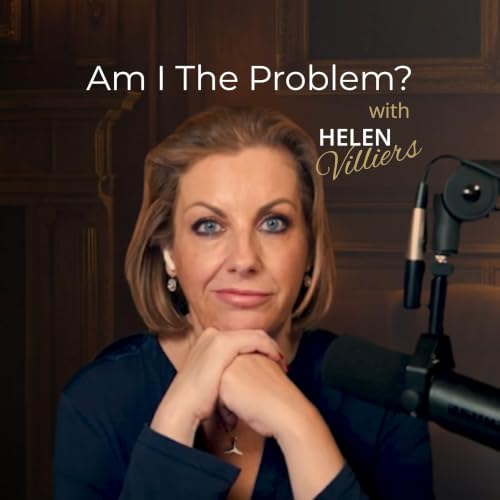
Am I The Problem? cover art

Am I The Problem?

Am I The Problem?

By: Helen Villiers MA
Listen for free

You grew up neurodivergent in a toxic household. Now you can't tell if you're the problem, if you're overreacting, or if the thing you're upset about is even a thing. You apologise for existing, you can't say no without a panic attack, and you genuinely don't know what you want for dinner. Am I The Problem? is a podcast for late-diagnosed ADHD and autistic adults working out what got installed wrong when neurodivergent wiring met an emotionally abusive or narcissistic family. Each week, host Helen Villiers takes one specific glitch, the apology reflex, the inability to know what you actually feel, the panic when you try to set a limit, and reverse-engineers it. What the neurodivergence is doing, what the trauma is doing, and what to actually do about it. Mostly no, you're not the problem. Sometimes, a bit. Either way, here's the mechanism. Helen Villiers is a psychotherapist with ADHD and co-author of You're Not The Problem. She specialises in adults raised by narcissistic and emotionally abusive parents, particularly those also navigating ADHD, autism, and late diagnosis. Topics include alexithymia, masking, the fawn response, executive function, emotional dysregulation, interoception, hypervigilance, people pleasing, learned helplessness, identity rebuilding after toxic parenting, and the specific challenges of parenting neurodivergent children when you're neurodivergent yourself. Is This A Thing? is the paid companion show, available on Apple Podcasts Subscriptions or included with Core tier membership and above inside The Hub, Helen's ND inclusive membership community for people recovering from emotional abuse, find it at liberationacademy.co.uk/the-hub. Released in seasons of 12 episodes. New episodes weekly while we're in one, breaks in between to come up with the next.

helenvilliersliberation.substack.comHelen Villiers
Hygiene & Healthy Living Personal Development Personal Success Psychology Psychology & Mental Health
Episodes
  • You Don't Know What You Actually Feel
    May 20 2026

    Someone asks how you feel and you deliver a flawless twelve-minute analysis of everyone else’s motivations. Or you say “fine.” Or you get nothing at all, just a blank where the answer should be.

    If you grew up in a toxic family and your brain is wired differently, there are specific, mechanical reasons why identifying your own emotions is so difficult. This episode takes that apart.

    Helen explains the three layers that stack on top of each other to produce this: alexithymia (a processing difference found at significantly higher rates in autistic and ADHD populations), trained emotional suppression from growing up in an environment where having feelings was punished, and the maintenance cycle that keeps the whole thing running on autopilot. She covers the research (Kinnaird, Stewart & Tchanturia on alexithymia prevalence in autism; Donfrancesco et al. on ADHD; Murphy & Brewer on interoception and emotional awareness) and explains why the standard advice doesn’t work for non-standard brains.

    The Rewire section offers four sequential strategies designed for brains that forget things, find social scripts impossible, or don’t process internal experience visually: body-state check-ins, pattern mapping, retroactive emotional identification, and vocabulary expansion. With specific adaptations for ADHD and autistic processing.

    This episode is first in the season because everything else depends on it.

    Resources mentioned:

    Plutchik’s Wheel of Emotions

    The Feelings Wheel (Geoffrey Roberts)

    Go deeper:

    The companion episode of Is This A Thing? takes the interoception piece from today’s episode and goes much further: how interoception works and doesn’t, why it presents differently in ADHD versus autistic brains, and what to do about it when standard body-based approaches assume a type of processing you don’t have. Available on The Hub: liberationacademy.co.uk/the-hub

    Aperio Profiles:

    Neurodivergent-informed cognitive and personality profiling for individuals, managers, and HR. Not a diagnosis. A functional map of how your brain actually works.

    aperioprofiles.co.uk


    This is a public episode. If you'd like to discuss this with other subscribers or get access to bonus episodes, visit helenvilliersliberation.substack.com/subscribe
    Show More Show Less
    29 mins
  • 40. Is It Autism or Trauma? (Replay)
    Jan 14 2026

    This week we're replaying one of our listeners' favourite episodes in which Patrick asks, is it autism or trauma?

    When we’ve grown up in chaos, it can be hard to untangle our trauma from who we truly are. In this episode, Patrick explores the tangled web of trust, identity, and survival after a lifetime shaped by narcissistic abuse - and a recent autism diagnosis that’s reframed everything.

    As he sits down with Helen, we witness a moving conversation about how trauma disguises itself in our thoughts, how autism and trauma intertwine, and how addiction can become a clever - if costly - coping mechanism. Together, they unpack people-pleasing, perfectionism, emotional disconnection, and the shame that lingers long after the abuse ends.

    This is an episode about rebuilding from the rubble, reclaiming joy, and learning to trust yourself again.

    If you would like to be a guest on The Liberation Effect, you can apply for one of our limited therapeutic sessions recorded for the podcast. Your identity is fully protected, and only twelve sessions are published each year: https://liberationacademy.co.uk/recorded-session-application/

    Grow, connect and thrive with The Hub: ⁠⁠https://liberationacademy.co.uk/the-hub/


    This is a public episode. If you'd like to discuss this with other subscribers or get access to bonus episodes, visit helenvilliersliberation.substack.com/subscribe
    Show More Show Less
    1 hr and 23 mins
  • 39. Leaving With No Resources
    Jan 7 2026

    In this solo episode, Helen responds to a listener who feels at breaking point in a relationship shaped by chronic stress, emotional withdrawal and fear. With two young children in the home, she explores the weight of being expected to absorb a partner’s distress, manage the emotional atmosphere, and question your own character for reacting to behaviour that feels unsafe. Losing patience is often framed as a personal failing, but this episode challenges that belief directly, reframing it as a signal that boundaries have been crossed for too long.

    Helen unpacks the difference between explanation and excuse, especially when stress is used to justify shutting down, lashing out or emotionally disappearing. She speaks to the impact on children, the danger of walking on eggshells, and how childhood trauma can make people more likely to self blame rather than name harm. The episode also addresses financial fear, preparation rather than panic, and the importance of protecting emotional safety without minimising reality. This is a compassionate exploration of accountability, patterns, and the right to stop tolerating what hurts.


    This is a public episode. If you'd like to discuss this with other subscribers or get access to bonus episodes, visit helenvilliersliberation.substack.com/subscribe
    Show More Show Less
    54 mins
adbl_web_anon_alc_button_suppression_c
No reviews yet