The Examined Life cover art

The Examined Life

The Examined Life

By: Kenneth Primrose
Listen for free

The Examined Life podcast explores the questions we should be asking ourselves with a range of leading thinkers. Each episode features a different interview, and appeals to those interested in wisdom, personal development, and what it might mean to live a good life. Topics vary from discussing the role of dopamine mining and status anxiety, to exploring the science of awe and attention.

© 2026 The Examined Life
Personal Development Personal Success Philosophy Social Sciences Spirituality
Episodes
  • Douglas Davies - Death and the myth of the individual
    Jun 29 2026

    What does death reveal about who we really are?

    This week I'm joined by Professor Douglas Davies, Director of the Centre for Death and Life Studies at Durham University and one of the world's leading scholars of death, ritual, and belief. His work spans decades and disciplines — from the anthropology of funerals to digital legacy, from woodland burial to the theology of grief — and his central conviction runs through all of it: the dead live within us, and recognising that can help us live better.

    We talk about the ways death strips away the myth of the self-made individual, revealing that we are fundamentally relational beings — shaped by the people, places, and memories we carry. Along the way, we cover the full arc of how societies and individuals make meaning in the face of mortality.

    We talk about:

    • Résumé virtues versus eulogy virtues — and why the gap between them matters
    • The concept of "dividual" personhood, and why the idea of a fixed, separate self breaks down when we actually look at how people live and grieve
    • How grief theory has shifted from letting go to continuing bonds — and what that means for how we mourn
    • Why funerals work: their role as social containers for emotion and meaning
    • The rise of celebration of life services and direct cremation, and what those trends tell us
    • Woodland burial, the scattering of ashes, and the pull of relational places
    • Dying alone, shame, dignity, and what COVID forced us to confront about community
    • Digital death platforms, online memorials, and why offline ritual still does something different
    • New body disposition options, including alkaline hydrolysis
    • Pets, suicide, and the ways love complicates every tidy theory of grief

    For further reading, Douglas's book Death, Ritual and Belief: The Rhetoric of Funerary Rites (now in its third edition) is a rich and authoritative guide to everything this conversation touches — available from Blackwell's and other independent bookshops.

    If this episode resonated with you, the best thing you can do is share it with someone. Word of mouth is genuinely how the podcast finds new listeners. And if you haven't already, leaving a review is hugely appreciated.


    Support the show

    Show More Show Less
    50 mins
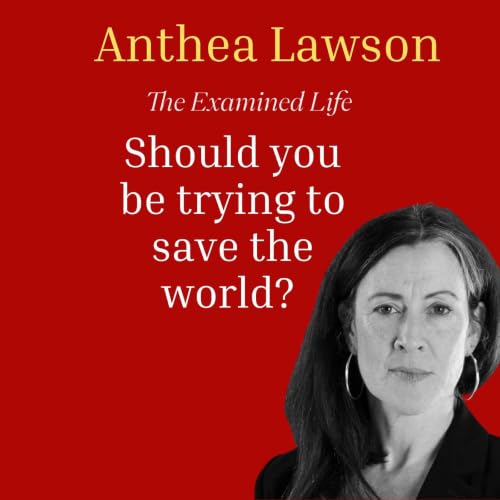
  • Anthea Lawson - Should we be trying to save the world?
    Jun 22 2026

    What does it mean to try to change the world — without losing yourself, or everyone else, in the process?

    This week I'm joined by Anthea Lawson: activist, writer, former journalist, and campaigner who has spent three decades working on issues from the arms trade to financial secrecy. Her new book, How Not to Save the World: Doing Good Without Annoying Everyone (Oneworld, 2026), is a candid and hopeful look at the traps that well-meaning people fall into — and how to find a better way through.

    We explore the hidden "save the world" script that pushes so many of us toward either frantic overwork or numb despair, and why both tend to backfire. Anthea maps out a third path — grounded in humility, relationship, and local people power — that turns out to be more effective, and more sustaining, than heroic effort alone.

    We talk about:

    • The two default responses when the world feels overwhelming: compulsion and shutdown
    • What "script messages" are, and how unconscious patterns quietly drive activism culture
    • How a genuine commitment to good can tip into righteousness that pushes people away
    • Why the protest voice often fails in everyday relationships — and what listening can do instead
    • How purity tests and perfectionism raise the barrier to entry and shrink movements
    • Overwhelm as a structural tactic that keeps communities divided and reactive
    • "I know better" dynamics, lived experience, and the legacy of class and white saviour thinking
    • Why meaningful change now requires people power over individual heroics
    • Antidotes: service, bridge-building, showing up without ego, and the value of genuine relationship
    • Regulating the nervous system through embodiment and co-regulation
    • Making space for grief — not as defeat, but as something shared that creates breathing room

    How Not to Save the World is available from independent bookshops — you can order it through Bookshop.org, which supports independent booksellers directly.

    Follow Anthea's writing and thinking on Substack at anthealawson.substack.com.

    If you enjoyed this episode, a rating or review goes a long way — and do sign up on Substack for This Examined Life, where you'll find updates, newsletters, and reflections between episodes.

    Support the show

    Show More Show Less
    52 mins
  • Gavin Francis - How should we live?
    Jun 2 2026

    Gavin Francis is a GP in Edinburgh, and also one of the best writers I know of on what it means to be a body moving through a life. In this conversation we got into territory I didn't quite expect — how much of modern spiritual hunger ends up in the consulting room, why a diagnosis can be both a relief and a trap, and what it actually looks like to help someone climb out of a dark period without reaching straight for a prescription.

    He has a ten-point list he shares with patients in despair. It's practical without being glib, and I think it's quietly one of the most useful things in this episode.

    We also talked about attention — how flow and deep engagement are being quietly eroded, what AI convenience might be costing us in terms of capability and friction, and why awe and equanimity aren't soft ideas but things that actually hold communities together.

    He's thoughtful, unhurried, and genuinely humble about what medicine can and can't do. I came away with a clearer sense of what flourishing actually means — which is not the same thing as happiness, and is worth distinguishing.

    If it resonates, please pass it on. You can find more conversations like this at This Examined Life — and if you'd like updates and new episodes delivered to you, sign up on Substack.


    Support the show

    Show More Show Less
    54 mins
adbl_web_anon_alc_button_suppression_t1
No reviews yet