• Plastic Free July
    Jun 30 2026

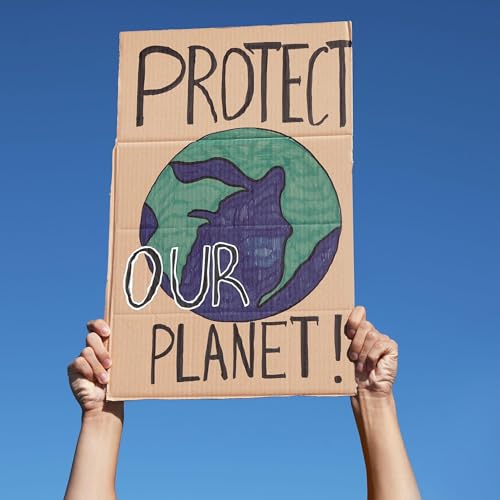
    What started in 2011 with just one woman and a small local government has exploded into a worldwide movement of over 174 million people. That movement is Plastic Free July.

    Yet 15 years after the challenge’s inception, plastic production continues to exponentially grow. It’s all-too easy to dismiss the challenge as little more than an opportunity to post a picture of a bamboo toothbrush on social media.

    But we aren’t just facing a litter problem anymore; we’re facing climate and health crises. A July that’s free of plastic is about building permanent habits, changing your relationship with “stuff,” and sending a clear message to corporations that you don’t want all this plastic junk.

    On today’s show, challenge leader Emily Emond joins us to share her top tips for cutting through the overwhelm and setting yourself up for success during Plastic Free July.

    Here's a preview:

    [6:15] Is Plastic-Free July beneficial, or purely performative?

    [9:00] On why using less plastic is supports your family’s health

    [13:30] Set yourself up for success: Five things you can do right now

    [23:00] Nothing changes if nothing changes!

    Resources mentioned:
    • Plastic Free July
    • Emily's challenge
    • This show is listener-supported. Thank you for supporting!
    • Join our (free!) Facebook community here.
    • Find your tribe. Sustainable Minimalists are on Facebook, Instagram + Youtube @sustainableminimalists
    • Say hello! MamaMinimalistBoston@gmail.com.

    Hosted by Simplecast, an AdsWizz company. See pcm.adswizz.com for information about our collection and use of personal data for advertising.

    Show More Show Less
    28 mins
  • What We Leave Behind
    Jun 23 2026

    Every week, we drag our trash bins to the curb, close the lid, and forget about them. But where does "away" actually go? And does the mere existence of waste "management" mean we can continue to consume more and more without major consequence?

    On today's show, author and sanitation worker Simon Paré-Poupart discusses what he's learned in his 20 years on the back of a Montreal haul truck. He's here to pull back the curtain on the grueling yet essential work of waste collection. He's also here to offer a sociological reflection on modern consumerism, systemic waste, and the human cost of hiding our cultural detritus.

    Here's a preview:

    [5:00] We didn't always have all this trash, and we didn't always have a need for "waste management"

    [12:00] A society's trash reveals an awful lot about a society. What does our trash reveal about us?

    [19:00] Recycling might give us a boost of moral satisfaction, but that moral satisfaction is ultimately just fuel to buy more stuff

    [22:00] On why waste management is integral to maintaining the status quo

    [27:30] The mere existence waste management is a symptom of this much larger problem

    Resources mentioned:

    • Trash! A Garbageman's Story
    • The Books Times Readers Are Most Excited About This Summer (via The New York Times)
    • Waste and Want: A Social History of Trash (by Suzanne Strasser)
    • Book Club! We're reading Beyond Decluttering: Forty Days to Simplicity Through Connection for our Wednesday, June 24 meeting at 7 pm EST. Join us! Details here.
    • This show is listener-supported. Thank you for supporting!
    • Join our (free!) Facebook community here.
    • Find your tribe. Sustainable Minimalists are on Facebook, Instagram + Youtube @sustainableminimalists
    • Say hello! MamaMinimalistBoston@gmail.com.

    Hosted by Simplecast, an AdsWizz company. See pcm.adswizz.com for information about our collection and use of personal data for advertising.

    Show More Show Less
    32 mins
  • Saying No To New
    Jun 9 2026

    New things are everywhere—and they’re causing us to disconnect from what we value most.

    In a world that constantly tells us that new is better, our relentless pursuit of material wealth is costing us money, time and happiness. Worse, when we define ourselves by what we own rather than who we are, we reduce our lives to a single, superficial dimension.

    On today’s show, New York Times journalist Eric Athas offers advice for stepping away from the cycle of constant buying, saying no to shallowness, and discovering the right kind of “new” in our lives.

    Here's a preview:

    [8:00] We're wired to become bored the familiar, and other truths to newness

    [16:00] Consumption has costs! (In fact, it robs us of our finite attention, dilutes our capacity for genuine enjoyment, and misaligns our pursuit of happiness.)

    [26:00] Musings on the ways in which overconsumption leads to superficiality

    [37:00] Put down the trinket! Redefining what it means to experience novelty, growth, and freshness without relying on a transaction

    Resources mentioned:
    • Saying No to New: Why New Things Are Stealing Your Time, Money, and Happiness―And How to Take Back Your Life
    • This episode is sponsored by Fearless Finance. Use code SUSTAINABLE to get $50 off your first meeting.
    • Book Club! We're reading Beyond Decluttering: Forty Days to Simplicity Through Connection for our Wednesday, June 24 meeting at 7 pm EST. Join us!
    • This show is listener-supported. Thank you for supporting!
    • Join our (free!) Facebook community here.
    • Find your tribe. Sustainable Minimalists are on Facebook, Instagram + Youtube @sustainableminimalists
    • Say hello! MamaMinimalistBoston@gmail.com.

    Hosted by Simplecast, an AdsWizz company. See pcm.adswizz.com for information about our collection and use of personal data for advertising.

    Show More Show Less
    42 mins
  • Plastic, Plastic Everywhere
    Jun 2 2026

    The plastic-drenched, disposable world we live in didn’t happen by accident. It was slowly, methodically built by Big Oil.

    They’re doing everything in their power to get people to use as much plastic as possible, all so they can make money from every single molecule they extract from the ground. And right now, they’re pouring billions of dollars into plans to double, or even triple, plastic production by 2050.

    This week, award-winning environmental journalist Beth Gardiner joins us to pull back the curtain on who’s behind all this plastic and why. We explore why production is skyrocketing despite consumer pushback, how the myth of recycling keeps us distracted, and why naming the real culprits is the first step toward true systemic change.

    Resources mentioned:

    • Plastic Inc: The Secret History and Shocking Future of Big Oil’s Biggest Bet
    • Beyond Plastics
    • This episode is sponsored by Fearless Finance. Use code SUSTAINABLE to get $50 off your first meeting.
    • This show is listener-supported. Thank you for supporting!
    • Join our (free!) Facebook community here.
    • Find your tribe. Sustainable Minimalists are on Facebook, Instagram + Youtube @sustainableminimalists
    • Say hello! MamaMinimalistBoston@gmail.com.

    Hosted by Simplecast, an AdsWizz company. See pcm.adswizz.com for information about our collection and use of personal data for advertising.

    Show More Show Less
    42 mins
  • Talking It Out
    May 19 2026

    Why aren't we talking about the elephant in the room?

    Broaching the topic of climate change can be socially awkward at best and polarizing at worst. In fact, psychology, evolutionary biology and modern day tribalism keep many of us tongue-tied.

    But staying quiet isn't an option. Breaking the silence around our warming planet is one of the most powerful tools we have for systemic change. On today's show, author and climate scientist Norm Leo offers a formula for unlocking more deeply human, empathetic, and impactful conversations about climate change.

    Resources mentioned:

    • This episode is sponsored by Fearless Finance. Use code SUSTAINABLE to get $50 off your first meeting.
    • Look At It This Way: Climate Solutions that will Benefit your Health and Wealth
    • Book Club! We're reading Beyond Decluttering: Forty Days to Simplicity Through Connection for our Wednesday, June 24 meeting at 7 pm EST. Join us!
    • This show is listener-supported. Thank you for supporting!
    • Join our (free!) Facebook community here.
    • Find your tribe. Sustainable Minimalists are on Facebook, Instagram + Youtube @sustainableminimalists
    • Say hello! MamaMinimalistBoston@gmail.com.

    Hosted by Simplecast, an AdsWizz company. See pcm.adswizz.com for information about our collection and use of personal data for advertising.

    Show More Show Less
    37 mins
  • The Unfollow Effect
    May 12 2026

    We've come a long way. But not necessarily in the right direction.

    From the the nostalgic days of AOL Instant Messenger to 2026's high-stakes, algorithmic landscape, constant connectivity has fundamentally shifted our attention spans, our peace of mind, and the way we show up for our families.

    Worse, the desire to show up online often takes us directly out of real life. It's no surprise, then, that we're feeling the mental and emotional weight of the "scroll".

    We don't have to throw our phones in a lake to find the reprieve we desperately need. On today's show author Emily Feldpausch argues that it isn’t about rejecting technology. It’s about reclaiming the intentionality that the algorithms try to take away.

    Here's a preview:

    [5:00] Reflections on the shift from the early days of AIM and MySpace to the current user experience that often feels designed against us

    [8:45] How being always on has eroded our collective sense of peace and altered the dynamics of modern family life

    [18:00] How to stop checking in and start being present

    [23:00] A candid look at 2026 internet culture, from shopping hauls to harmful beauty standards. Can we still find corners of the web that align with our true values?

    [27:00] Emily's personal strategies for maintaining phone boundaries to protect her mental space

    Resources mentioned:

    • This episode is sponsored by Fearless Finance. Use code SUSTAINABLE to get $50 off your first meeting.
    • Technology Is Getting Worse
    • The Unfollow Effect: Intentional Living in a Digital Age
    • Book Club
    • This show is listener-supported. Thank you for supporting!
    • Join our (free!) Facebook community here.
    • Find your tribe. Sustainable Minimalists are on Facebook, Instagram + Youtube @sustainableminimalists
    • Say hello! MamaMinimalistBoston@gmail.com.

    Hosted by Simplecast, an AdsWizz company. See pcm.adswizz.com for information about our collection and use of personal data for advertising.

    Show More Show Less
    36 mins
  • The Cost of Constant Connection
    May 5 2026

    In this era of relentless connectivity, taking an exit ramp from our digital lives has never looked more inviting. In fact, emerging science is now confirming what many of us feel: Smartphones are draining our cognitive reserves, shattering our focus, and keeping us in a state of low-level chronic anxiety.

    To see if there’s a better way, reporter Courtney Lindwall shelved her iPhone for a $45 Nokia flip phone. Courtney is on the show today to discuss the "dumb phone" movement, the logistical friction of navigating an app-dependent world, and why research says our brains are so desperate for a break.

    Here's a preview:

    [7:00] Continuous partial attention, instinctual muscle memory, and other ways in which our smartphones are working against us

    [9:00] Gray scale? screen limits? Here's why the tools and tricks don't work for the vast majority of us

    [14:00] Thoughts on our emotional attachments to our phones—and the emotional experiences they provide

    [22:00] The psychological benefits of embracing a bit more "friction"

    [33:00] Our brains are malleable, and we get used to a new normal quite quickly. Lean into that!

    Resources mentioned:
    • How an old-school flip phone changed my life (via Consumer Reports)
    • This detox may erase 10 years of social media brain damage, researchers say (via The Washington Post)
    • The Brick phone access blocker device
    • This show is listener-supported. Thank you for supporting!
    • Join our (free!) Facebook community here.
    • Find your tribe. Sustainable Minimalists are on Facebook, Instagram + Youtube @sustainableminimalists
    • Say hello! MamaMinimalistBoston@gmail.com.

    Hosted by Simplecast, an AdsWizz company. See pcm.adswizz.com for information about our collection and use of personal data for advertising.

    Show More Show Less
    40 mins
  • The Power of Place
    Apr 27 2026

    In a world obsessed with consumption, we may try to buy our way into a sense of belonging. But a true feeling of “home” isn’t found in the latest trends or newest decor. It’s actually built by aligning our spaces with our deepest, core needs.

    The link between our environment and our well-being goes far beyond aesthetics. On today’s show, author Leidy Klotz offers research-backed strategies for designing spaces that move beyond what’s “on-trend” and instead meet our core human needs of agency, growth, and connection.

    Resources mentioned:

    • Episode #184: In Defense of Subtraction
    • In a Good Place: How the Spaces Where We Live, Work, and Play Can Help Us Thrive (via Bookshop.org)
    • This show is listener-supported. Thank you for supporting!
    • Join our (free!) Facebook community here.
    • Find your tribe. Sustainable Minimalists are on Facebook, Instagram + Youtube @sustainableminimalists
    • Say hello! MamaMinimalistBoston@gmail.com.

    Hosted by Simplecast, an AdsWizz company. See pcm.adswizz.com for information about our collection and use of personal data for advertising.

    Show More Show Less
    36 mins