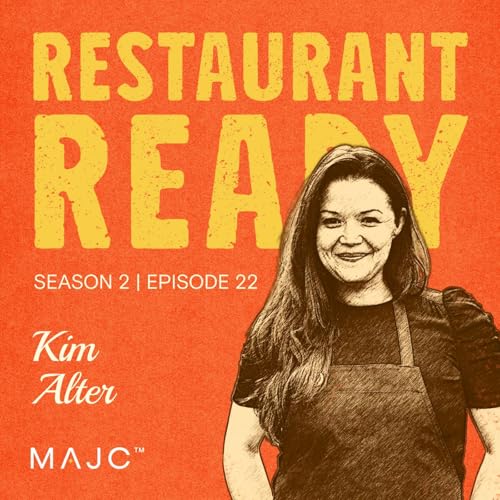
• Kim Alter on Building Depth Instead of Scale
    May 12 2026

    Kim Alter is a San Francisco-based chef and restaurateur, and the owner of Nightbird and Linden Room. Since opening Nightbird in Hayes Valley in 2016, she has built a refined, highly personal tasting menu restaurant around seasonality, precision, intimacy, and control. In this episode, Kim shares why restraint can be a smarter growth strategy than scale, how sustainability has to include staff, farmers, finances, and guests, and why building a durable restaurant often comes down to putting your head down, doing the work, and evolving with your community.

    Takeaways

    • Small restaurants can be financially strong when the model is controlled
    • Restraint can protect both experience and profitability
    • Independence slows growth but preserves decision-making power
    • Debt and outside capital can limit creative and operational freedom
    • A tasting menu restaurant can still serve a neighborhood
    • Sustainability has to include staff, farmers, costs, and community
    • Full utilization turns creativity into financial discipline
    • High-quality ingredients require stronger systems, not higher waste
    • Consistency matters even when the menu changes constantly
    • Staff benefits are part of sustainability, not separate from it
    • Mental health days, health insurance, and schedules shape performance
    • Personality fit matters as much as technical skill in a small team
    • Fine dining has to offer an experience, not just excellent food
    • Free labor and toxic discipline no longer belong in the model
    • Accolades matter less than bills paid and investors repaid
    • Depth requires evolution, gratitude, and daily work


    Want to connect directly with industry thought leaders like today’s guest?

    MAJC✨ has built a community of hospitality professionals, where insights and tools help drive sustainable, profitable businesses. To get early access to the MAJC✨ community, sign up at www.MAJC.ai.

    Show More Show Less
    39 mins
  • Sarah King on Why Great Restaurants Are Built by Great Managers
    May 5 2026

    Sarah King is the Chief People Officer at Darden Restaurants and an advisory board member at MAJC✨. Over the course of a decades-long career across restaurants, hotels, and resorts, she has focused on one central question: how do you build leaders who can create cultures where people actually want to stay? In this episode, Sarah breaks down why bad managers drive turnover more than bad companies, how compassion and accountability can coexist, and what operators can do right now to build stronger teams, reduce burnout, and create workplaces where excellence is sustainable.

    Takeaways

    • People do not leave bad companies as often as they leave bad managers
    • Leadership quality shapes culture before numbers reveal the damage
    • Connection, authenticity, and compassion are core leadership skills
    • Command and control leadership no longer works
    • Excellence and empathy are not in conflict
    • Clear expectations and regular feedback build stronger teams
    • Discretionary effort comes from feeling valued and supported
    • Favoritism destroys trust faster than most operators realize
    • High performers leave when mediocrity is tolerated
    • Culture is a set of repeated behaviors, not a slogan
    • Strong schedules should reflect team strengths and real life needs
    • Burnout costs more than hiring the extra support you need
    • Kindness is not weakness, it is a leadership tool
    • Technology should remove friction so leaders can focus on people
    • Training is one of the clearest ways to reduce early turnover
    • The future belongs to operators who act like talent architects

    Want to connect directly with industry thought leaders like today’s guest?

    MAJC✨ has built a community of hospitality professionals, where insights and tools help drive sustainable, profitable businesses. To get early access to the MAJC✨ community, sign up at www.MAJC.ai.

    Show More Show Less
    42 mins
  • Mark Bolchoz on Standards, Systems, and Building Something Real
    1 hr and 3 mins
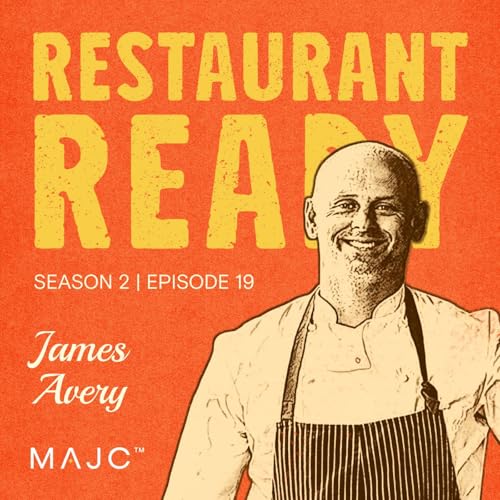
  • James Avery on Why Restaurants Can’t Run on Yesterday’s Wisdom
    Apr 21 2026

    James Avery is a chef, restaurateur, consultant, and founder of Nicely Done Hospitality Group and The Modern Brigade. After more than two decades in high-performance kitchens, opening and operating his own restaurants, and working alongside major names like David Burke, Michael Mina, and Gordon Ramsay, James now helps operators build businesses that are leaner, clearer, and more sustainable.

    In this episode, he shares why too many restaurants are still trying to run on outdated models, how discipline and systems create consistency, and why the future of the industry depends on better business thinking, healthier leadership, and teams that actually communicate.

    Takeaways

    • Too many restaurants are still trying to operate with outdated models
    • You cannot be everything to everyone and still stay sharp
    • Consistency comes from systems, not just talent
    • Cleanliness and organization reveal the true state of an operation
    • Managers need to understand their real job, not just survive service
    • Urgency is not the same thing as emergency
    • Discipline matters more than raw skill over the long term
    • Restaurants need fewer hours, tighter menus, and better labor design
    • Chefs must understand contribution margin, not just food cost
    • Financial literacy should be part of chef development
    • Owners need to share information instead of hoarding it
    • Strong teams come from communication and clarity
    • Operators should stop glorifying burnout as commitment
    • Fitness supports longevity, energy, and leadership presence
    • The best operators build systems that let others make decisions
    • Yesterday’s wisdom is not enough for today’s restaurant reality


    Want to connect directly with industry thought leaders like today’s guest?


    MAJC✨ has built a community of hospitality professionals, where insights and tools help drive sustainable, profitable businesses. To get early access to the MAJC✨ community, sign up at www.MAJC.ai.

    Show More Show Less
    49 mins
  • Alon Shaya on When Culture Becomes the Team’s Responsibility
    Apr 14 2026

    Alon Shaya is a James Beard Award-winning chef and restaurateur based in New Orleans, where he and his wife Emily lead Pomegranate Hospitality. After realizing that awards, acclaim, and full dining rooms could not compensate for a workplace that did not align with his values, Alon set out to build something different.

    In this episode, he shares how Pomegranate Hospitality was intentionally designed around mutual respect, psychological safety, and empowerment, why culture must be protected long before expansion begins, and how leadership means creating an environment where people feel both fulfilled and accountable.

    Takeaways

    • Core values must come before design, seats, and scale
    • A safe work environment requires systems, not just good intentions
    • Culture is not a box you check, it is daily work
    • The wrong manager can destabilize an entire restaurant
    • Turnover can be the cost of protecting your values
    • Teams become stronger when they are empowered to defend the culture
    • Respect must extend to how guests are managed, not just staff
    • Growth only works when bench strength already exists
    • Empowerment has to be built before expansion starts
    • Not every team member wants growth, and that is okay
    • Partnerships should support your life, not consume it
    • A profitable opportunity is not always the right opportunity
    • Leadership requires boundaries, clarity, and coaching
    • Fairness matters more than forcing equality
    • Psychological safety is often broken by small behaviors before big ones
    • The scenic route can build the strongest company
    • Food can be a tool for memory, healing, and historical connection

    Want to connect directly with industry thought leaders like today’s guest?


    MAJC✨ has built a community of hospitality professionals, where insights and tools help drive sustainable, profitable businesses. To get early access to the MAJC✨ community, sign up at www.MAJC.ai.

    Show More Show Less
    50 mins
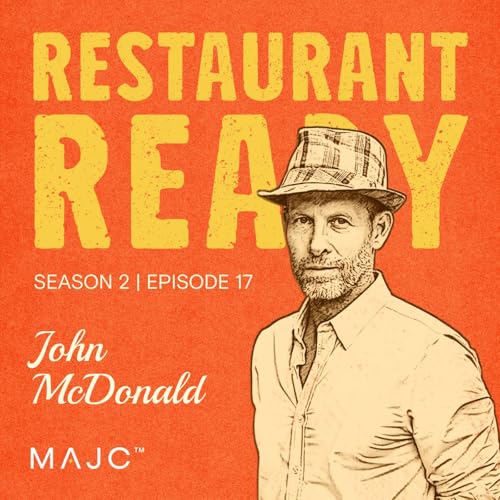
  • John McDonald on Why Busy Restaurants Still Barely Make Money
    Apr 7 2026

    John McDonald is the founder and CEO of Mercer Street Hospitality and one of downtown New York’s most seasoned restaurant operators. Over three decades, he has helped shape the city’s dining culture through concepts spanning nightlife, fine dining, neighborhood restaurants, and digital media. In this episode, he reflects on what it really takes to build longevity in hospitality, why consistency matters more than constant reinvention, and how shrinking margins have made restaurant success look far easier from the outside than it feels from the inside.

    Takeaways

    • Consistency is harder than creativity and more valuable in the long run
    • A great server or bartender can be the reason a guest returns
    • The best work is not always the most commercially successful
    • Not every expansion opportunity is worth taking
    • Scaling too fast can poison the businesses that already work
    • Corporate infrastructure becomes its own business once you grow
    • Restaurants today face much smaller margins than they did a generation ago
    • A restaurant that looks busy may still only be breaking even
    • Operators need strong HR systems before problems arise
    • Customers want better treatment of workers but often resist the prices that support it
    • Great restaurants improve constantly without feeling different to the guest
    • Momentum can hide mistakes, but only for a while
    • Longevity depends on staying relevant without losing your identity
    • Passion may get you into the business, but discipline keeps you there

    Want to connect directly with industry thought leaders like today’s guest?


    MAJC✨ has built a community of hospitality professionals, where insights and tools help drive sustainable, profitable businesses. To get early access to the MAJC✨ community, sign up at www.MAJC.ai.

    Show More Show Less
    41 mins
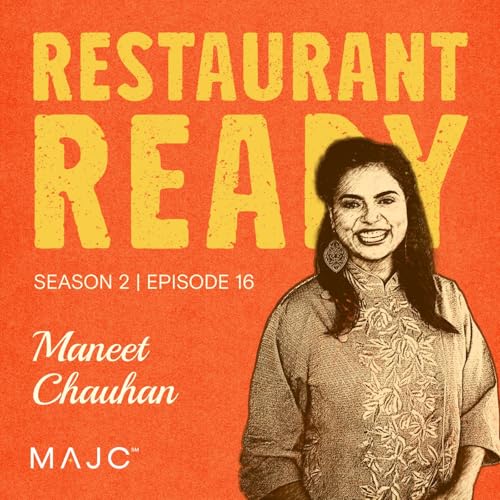
  • Maneet Chauhan on Why Ego Is the Enemy of Great Leadership
    Mar 31 2026

    Maneet Chauhan is an award-winning chef, restaurateur, author, television personality, and founding partner of Morph Hospitality Group in Nashville and Orlando. A longtime judge on Food Network’s Chopped and a two-time Tournament of Champions winner, Chauhan balances national visibility with the daily responsibility of running restaurants that sustain real households. In this episode, she shares why every restaurant must stand on its own financially, how stepping back can strengthen leadership, and why the greatest skill an operator can develop is humanity.


    Takeaways

    • If you will not wash dishes when needed, do not expect others to either
    • Scaling requires trusting your team to execute your vision
    • Do not drain a profitable business to prop up a struggling one
    • Approach restaurants as businesses, not only passion projects alone
    • Do your homework and know your numbers before opening
    • Surround yourself with people who understand finance
    • Step away before stress turns into damage
    • Nothing in a restaurant is life or death
    • Grace under pressure builds stronger culture
    • Protect your humanity as fiercely as your brand
    • Service excellence outlasts food trends
    • Build systems that can be repeated and improve those that cannot
    • Use technology to enhance efficiency

    Want to connect directly with industry thought leaders like today’s guest?

    MAJC✨ has built a community of hospitality professionals, where insights and tools help drive sustainable, profitable businesses. To get early access to the MAJC✨ community, sign up at www.MAJC.ai.

    Show More Show Less
    32 mins
  • Matt Jozwiak on Why Restaurants Are an Economic Engine for Communities
    Mar 24 2026

    Matt Jozwiak is the founder of Rethink Food, a chef-led nonprofit building a more sustainable and equitable food system by paying restaurants to cook for their communities. After training in some of the world’s most demanding kitchens, Jozwiak stepped away from the line to solve a problem he saw up close: community centers struggling to feed people while restaurants were underutilized and under-respected. In this episode, he breaks down why restaurants should be funded partners in food security, not unpaid stopgaps, and why the industry’s greatest asset is the intelligence and grit of its people.


    Takeaways

    • Restaurants are infrastructure, not just places to eat
    • Charity without compensation can close the very businesses trying to help
    • Paying restaurants for community meals strengthens local economies
    • Retention in restaurants is a business strategy, not a luxury
    • Turnover is more expensive than incremental wage growth
    • Restaurants operate with skill sets most corporate leaders underestimate
    • Simplification beats complexity in both kitchens and offices
    • Ghost kitchens often ignore administrative and training realities
    • Policy should empower small operators, not just large distributors
    • Tax credits can create systemic change beyond emergency grants
    • Restaurants are often exploited as community hubs without protection
    • Focus on building a strong business before trying to help outside
    • Restaurant experience is one of the best educations in leadership

    Want to connect directly with industry thought leaders like today’s guest?


    MAJC✨ has built a community of hospitality professionals, where insights and tools help drive sustainable, profitable businesses. To get early access to the MAJC✨ community, sign up at www.MAJC.ai.

    Show More Show Less
    43 mins