• When AI Content Stops Looking and Sounding Artificial | Jeanine Wright + Robert Scoble #663
    May 21 2026
    In episode 663 of the New Media Show, hosted by 2017 Podcast Hall of Famer Rob Greenlee, Rob talks with Jeanine Wright, CEO of Inception Point AI, and Robert Scoble, known as Scobleizer, Founder of AlignedNews.ai for a deep conversation about one of the biggest and most uncomfortable questions facing podcasting, video, social media, and the creator economy: what happens when AI-generated content stops sounding and looking artificial? I apologize for the lower audio quality of this episode, which was affected by recording source errors, and I used the best audio enhancement tools to improve it. AI-generated media is no longer just an experiment. It is becoming shows, hosts, voices, personalities, clips, channels, avatars, and soon, live interactive media experiences. Podcasting has always been built around voice, trust, authenticity, and human connection. But that foundation is now being challenged by AI-generated voices, cloned likenesses, synthetic video, autonomous podcasters, and AI systems that can research, write, produce, publish, and personalize content at a scale human creators cannot match. The conversation explores whether the podcasting/new media industry is reacting too broadly by labeling AI-generated media as “AI slop” while missing the bigger shift beneath the surface. Some AI content is low quality, deceptive, or spammy. Some AI content is becoming polished, useful, creative, and scalable. Some human-created content is also low quality, misleading, or poorly produced. The real issue may not be whether content is human-made or AI-made. The better question may be whether it is transparent, authentically-human, accurate, consent-based, valuable, and trustworthy. Jeanine joins Rob to discuss what Inception Point AI is building with AI-generated personalities, autonomous creators, synthetic audio, video characters, quality control systems, and AI-native media workflows. She explains why the future may include AI podcasters, AI influencers, AI brand personalities, and AI-generated shows that serve audiences in ways traditional human production cannot easily support. Robert brings a broader technology lens to the conversation, connecting AI-generated media to agents, real-time news systems, spatial computing, glasses, robots, synthetic people, and the next phase of human-computer interaction. He also discusses his own work using AI systems to read large volumes of AI industry activity and turn that into new forms of media intelligence. The conversation asks whether “AI slop” is a useful label or is becoming a way to dismiss an entire category before quality, ethics, and trust systems have had time to mature. Rob, Jeanine, and Robert also dig into the complicated issue of AI disclosure. Should every AI voice be labeled?Should AI-written scripts be disclosed?What about human voices reading AI-written material?What about cloned voices using human-written scripts?And if most media becomes materially assisted by AI, will audiences still care in the same way? The episode also explores the darker side of synthetic media, including unauthorized voice cloning, fake likenesses, impersonation, fraud, deceptive content, misinformation, platform abuse, and AI bias. The discussion makes a clear distinction between ethical AI-generated media and synthetic media designed to mislead audiences. This is not a simple pro-AI or anti-AI conversation. It is a discussion about the future of media trust. The bigger question is whether podcasting and new media should reject AI-generated content outright or help build better standards around disclosure, quality, consent, ownership, monetization, brand safety, platform rules, and audience transparency. The future may not be human versus AI. It may be human plus AI, human extended by AI, AI personalities supervised by humans, and audiences deciding what they trust based on usefulness, quality, transparency, and connection. Key Topics Covered AI-generated podcasts, video, and synthetic mediaWhy the phrase “AI slop” may be too broadHow AI-generated voices and video hosts are becoming more realisticThe difference between low-quality AI content and responsible AI mediaWhy podcasting is emotionally tied to human voice and trustHow AI personalities and autonomous podcasters are being createdWhat Inception Point AI is building with synthetic creatorsRobert Scoble’s view of AI agents, X, and real-time AI media systemsWhether audiences care more about quality than human authorshipWhy AI-generated content may outperform average human-created contentAI disclosure, labeling, and transparency challengesHuman voice, cloned voice, AI-written scripts, and hybrid productionFraud, fake voices, synthetic likenesses, and deceptive mediaAI bias, culture, representation, and training data concernsPlatform rules across YouTube, Apple Podcasts, Spotify, X, and social platformsThe rise of live AI-human-like media experiencesHuman creators using AI clones and brand ...
    Show More Show Less
    1 hr and 37 mins
  • Can Human Critics Improve Podcast Discovery? | Imran Ahmed, Great Pods #662
    May 7 2026

    In episode 662 from May 6th, 2026, of the New Media Show, hosted by 2017 Podcast Hall of Famer Rob Greenlee, he talks with Imran Ahmed, founder of Great Pods, for a deep conversation about one of podcasting’s longest-running controversies: Discovery.

    Podcasting has never had a shortage of content. The bigger challenge has always been helping listeners find the right shows and helping quality creators get noticed.

    • Charts often reward scale.
    • Algorithms can miss the human context.
    • Social media attention does not always create trust.
    • But human recommendations, professional reviews, and transparency. editorial signals may still play an important role.

    Imran joins Rob to discuss how Great Pods is building a podcast discovery and decision-making platform around critic reviews, ratings, attribution, podcast search, user reviews, badges, and curated discovery.

    The conversation explores why reviews differ from basic listener comments, why constructive criticism can help creators, and how professional critics can serve as trusted filters for listeners trying to decide what to hear next.

    Rob and Imran also dig into the broader evolution of podcasting, including the role of word-of-mouth discovery, the limits of podcast app charts, the rise of YouTube as a major discovery platform, and the ongoing tension around what defines a podcast in a world of audio, video, RSS feeds, platform exclusives, APIs, Netflix-style talk shows, and AI-generated content.

    The episode also connects Great Pods to larger trust and transparency issues in new media. As AI-generated shows, algorithmic recommendations, and platform-controlled discovery continue to grow.

    Rob and Imran discuss why human editorial judgment, clear labeling, attribution, and credible review systems may become even more important for listeners, creators, and platforms.

    Key Topics Covered

    • Podcast discovery in 2026
    • Why podcast charts and algorithms often fall short
    • The difference between reviews, ratings, and listener comments
    • Why constructive criticism can help creators improve
    • How Great Pods uses professional reviews and attribution
    • Why human critics can become trusted discovery filters
    • The role of word-of-mouth recommendations in podcast growth
    • Why YouTube has become a major podcast discovery platform
    • How video, RSS, APIs, and platform exclusives are changing podcast definitions
    • Why AI-generated content increases the need for labeling and transparency
    • How podcasters can use reviews, badges, backlinks, and SEO to build credibility
    • What creators should do to make their shows more discoverable

    Guest and Host Links

    Guest: Imran Ahmed, Founder of Great Pods

    • Great Pods: https://www.greatpods.co
    • Great Pods Blog: https://blog.greatpods.co

    Host: Rob Greenlee

    • New Media Show: https://newmediashow.com
    • Rob Greenlee: https://robgreenlee.com
    • Podcast Hall of Fame: https://podcasthall.com
    • Rob Greenlee on LinkedIn: https://www.linkedin.com/in/robgreenlee
    • Rob Greenlee Booking: https://calendly.com/robgreenlee

    The post Can Human Critics Improve Podcast Discovery? | Imran Ahmed, Great Pods #662 first appeared on New Media Show.

    Show More Show Less
    1 hr and 32 mins
  • Can Indie Podcasters and Media Creators Still Win? | Dave Jackson #661
    May 2 2026
    On Episode 661 of The New Media Show, host Rob Greenlee, 2017 Podcast Hall of Fame inductee, Chairperson of the Podcast Hall of Fame, and longtime new media executive, is joined by Dave Jackson, 2018 Podcast Hall of Fame inductee, founder of School of Podcasting, and Head of Podcasting at Podpage.com, for a deep conversation about whether independent podcasters and media creators can still win in today’s rapidly changing creator economy. This episode centers on a question many creators are quietly asking right now: Can indie podcasters still grow, monetize, and build trust in a market being reshaped by video, AI, platform control, and professionalized media production? Rob and Dave discuss the recent combination of Podpage and School of Podcasting, why podcast education matters more than ever, and how websites, email lists, communities, video, RSS, and AI-assisted workflows are becoming essential parts of a creator’s survival strategy. Dave joined Podpage as Head of Podcasting in 2024, and School of Podcasting has been helping creators launch, grow, and monetize podcasts since 2005. The conversation also moves into some of the biggest issues facing podcasting and new media in 2026, including AI-generated shows, human voice and video cloning, creator burnout, YouTube’s influence on podcast identity, Apple’s HLS video podcast direction, and why human trust may become the most valuable asset creators have left. Rob and Dave bring decades of experience to this discussion. Both have seen podcasting shift through multiple technology waves, from the early RSS era to platform consolidation, video podcasting, AI tools, and the rise of creator-led media. That history makes this episode a practical and honest look at what indie creators need to do now to stay relevant, trusted, and discoverable. What does this episode cover? Can independent podcasters still succeed in a noisier, more competitive market? What does “winning” even mean now: downloads, money, trust, community, authority, or sustainability? Why the Podpage and School of Podcasting connection matters for podcast education and creator websites Why podcasters need a home base beyond social platforms and YouTube How AI is changing show notes, images, writing, research, production, and creator workflows Why AI-generated content should not all be treated as spam, but fraud and abuse must be addressed How human storytelling, lived experience, and trust help creators stand apart from AI content Why video is becoming harder to ignore, but audio-only creators should not panic How YouTube has changed public perception of what a podcast is What Apple’s HLS video direction could mean for audio, video, RSS, and creator workflows Why websites, email lists, communities, and audience ownership still matter How indie creators can avoid burnout while adapting to new media expectations Key Takeaways: Indie podcasters can still win, but the definition of winning has changed. Creators need more than a microphone and a media host. They need clarity, a trusted point of view, a website, a distribution plan, and a realistic path to audience growth. AI is not going away. The smartest creators will learn how to use it without losing their human voice. Video will continue reshaping podcasting, but not every creator has to become a full-scale video studio overnight. Human-created content still has a powerful advantage when it is rooted in story, experience, transparency, and trust. Websites are becoming more important again because creators need a stable home base that is not controlled by a single platform. Podcast education matters because the barrier to starting is low, but the barrier to standing out is much higher. Guest Dave Jackson Founder, School of Podcasting Head of Podcasting, Podpage.com 2018 Podcast Hall of Fame inductee Author of Profit From Your Podcast Dave Jackson has been helping creators launch and improve podcasts since 2005 through the School of Podcasting. He is also Head of Podcasting at Podpage, where he supports podcasters using websites as a central hub for discovery, audience ownership, and long-term growth. (The School of Podcasting) Guest links: School of Podcasting: https://www.schoolofpodcasting.com/ Podpage: https://www.podpage.com/ Dave Jackson: https://davidjackson.org/ Podcast Consultant: https://www.podcastconsultant.com/ Host Rob Greenlee Host, The New Media Show Podcast Hall of Fame inductee Chairperson, Podcast Hall of Fame Founder, Trust Factor Lab and Adore Network Co-Founder, Passion Struck Network Host and show links: New Media Show: https://newmediashow.com/ Rob Greenlee: https://robgreenlee.com/ Podcast Hall of Fame: https://podcasthall.com/ Adore Network: https://adorenetwork.com/ Trust Factor Lab: https://trustfactorlab.com/ Passion Struck Network: https://passionstrucknetwork.com/ Rob on LinkedIn: https://www.linkedin.com/in/robgreenlee/ Bottom Line in this Episode: This episode answers a major creator economy ...
    Show More Show Less
    1 hr and 46 mins
  • Libsyn’s Next Chapter: Podcast Hosting, Video, Monetization, RSS and API | Brendan Monaghan #660
    Apr 23 2026
    “Podcast episode hosting used to be simple. You uploaded an audio file, generated an RSS feed, and distributed your show everywhere. That model still matters, but it is no longer enough for the modern creator economy.” In this Episode 660 of The Live New Media Show, from April 22nd, 2026, Host Podcast Hall of Famer and Former Libsyn VP Rob Greenlee shares a screen and microphone with Brendan Monaghan, President and CEO of Libsyn, to explore how podcast hosting is changing and what creators should expect from platforms in 2026 and beyond. This conversation gets to the heart of a major shift happening across podcasting and new media. Hosting companies are no longer judged only by whether they can deliver a clean RSS feed and reliable file storage. Creators now expect monetization, analytics, video support, workflow efficiency, AI-assisted publishing, broader distribution, and real help with audience growth. That larger shift frames the entire discussion between Rob and Brendan. Brendan explains that Libsyn still carries the legacy of being one of podcasting’s earliest and most important hosting platforms, but the company is now operating in a far more complex environment. Brendan points to Libsyn’s evolution from a technology-led hosting company into a broader creator platform that includes advertising and monetization infrastructure, especially after the company acquired businesses such as AdvertiseCast and Pair Networks. He argues that the modern hosting business must combine publishing, monetization, measurement, and simplicity for creators at every stage of growth. Rob pushes the conversation further by asking the bigger industry question: What should a podcast hosting company become now? That leads into a wide-ranging discussion about platform aggregation, creator workflows, newsletters, live events, merchandise, and the growing expectation that creators should be able to manage more of their media business from one place. Brendan makes the case that the future belongs to companies that can keep creators at the center while simplifying the growing complexity around distribution and monetization. A major part of the episode focuses on AI. Brendan breaks AI into three areas: how Libsyn uses it internally as a business, how AI can assist creators with production and publishing workflows, and how fully AI-generated content may affect the medium’s future. Rob adds a deeper perspective by arguing that AI podcasting is already becoming more competitive than many in the industry want to admit. The two discuss whether the market will ultimately decide what AI content succeeds, why “AI slop” may be too broad a label, and why trust and disclosure may become much more important as synthetic media becomes harder to distinguish from human-created work. The episode also dives into one of the most important strategic tensions in podcasting right now: RSS versus API publishing. Rob and Brendan both acknowledge that most creators care more about simple distribution than the underlying protocol, but they also recognize that this shift has major implications for openness, platform control, and long-term creator independence. Their exchange about Apple, Spotify, YouTube, and the shift toward more controlled video delivery models reflects a broader market reality: creators increasingly want to be everywhere, but the mechanics of getting there are becoming more fragmented and platform-specific. Another strong section of the conversation centers on video. Brendan says Libsyn intends to be a leader in video, while Rob raises a practical concern many creators are just beginning to feel: a show that works well on YouTube may not automatically translate well to an audio-first experience, and a show built for traditional audio may not fully satisfy video-driven discovery environments. That raises the possibility that creators will need to think more deliberately about format, audience expectations, and whether a single production workflow can truly serve all platforms equally well. The conversation becomes especially valuable when the two discuss metrics: Apple’s HLS direction, and what streaming-style delivery might mean for podcast measurement and advertising. They point to a future in which the industry may move closer to actual listening signals rather than relying so heavily on download-based assumptions. If that happens, it could affect CPMs, ad sales, programmatic video advertising, and the broader economics of the medium. Rob also frames one of the biggest unresolved questions in new media today: If AI-generated shows become easier, faster, and more polished, what will human creators need to do to remain distinct and trusted? The answer that emerges from this episode is not panic. It is focus, transparency, stronger format thinking, and a deeper commitment to serving audiences with clarity and value. That makes this episode less about Libsyn alone and more about the future structure of podcasting ...
    Show More Show Less
    1 hr and 1 min
  • Podcasting’s Multi-Format Future | Sharon Taylor #659
    Apr 16 2026
    Podcasting is entering a new phase, and this episode goes straight into the infrastructure, business models, and platform shifts shaping what comes next. On episode 659 of The New Media Show, Host and Podcast Hall of Famer Rob Greenlee shares the microphone with Sharon Taylor, Chief Revenue Officer at Triton Digital (Spreaker & Omny Studio), for a deep conversation about where the podcasting market is heading right now. Sharon brings years of experience from Omny Studio, Triton Digital, and Spreaker, making her one of the best people to help unpack what is changing across hosting, monetization, video, AI, advertiser demand, and measurement. We talk through why podcasting is not simply becoming video-first, even as video becomes a bigger part of how shows are discovered and monetized. Sharon makes a strong case that audio remains at the center of the medium, but the future is clearly becoming more multi-format. That means creators, publishers, and platforms need to think differently about how they distribute content, measure audience behavior, and build sustainable business models for both audio and video. A big part of this conversation focuses on Triton Digital’s role in the market today and why its combination of Omny Studio, Spreaker, and broader ad tech infrastructure makes it an important player in podcasting’s next chapter. Sharon explains the unique roots of Omny Studio as a platform built for large-scale broadcast and enterprise publishing needs, while Spreaker helped pioneer early podcast programmatic monetization for creators. That combination gives Triton a unique perspective on both professional publishing and creator-driven growth. We also spend time on Apple’s HLS video move and what it may mean for podcasting’s future. Sharon shares how Triton had already been preparing for a broader video environment and why Apple’s support for HLS is such a meaningful shift. We discuss how HLS could improve flexibility around delivery, ad insertion, and measurement, while still raising important questions about RSS, open distribution, and whether major platforms may slowly pull podcasting into more platform-specific publishing models over time. Another major topic in this episode is trust. From programmatic advertising to AI-generated content to labeling and transparency, Sharon and I explore how podcasting can continue to grow without losing the authentic connection that made the medium valuable in the first place. We both agree that podcasting still has enormous strength as an audio-led medium, but the industry is now balancing openness, innovation, and monetization in ways that will define the next few years. This is a wide-ranging and important discussion for anyone watching the evolution of podcasting, video, ad tech, platform power, and the future of open media. Topics covered – Why Triton Digital matters in podcasting right now – Sharon Taylor’s path from Omny Studio to Triton CRO – What Triton is seeing in audio versus video audience behavior – Why podcasting is becoming multi-format, not simply video-first – How Omny Studio and Spreaker fit different parts of the publishing market – What Apple’s HLS video move changes for publishers and hosting platforms – Why advertiser confidence and better measurement matter more than ever – The future of RSS, open podcasting, and platform fragmentation – How AI-generated content is affecting publishing growth and industry trust – Where Sharon sees the next big opportunities for podcast growth Guest Sharon Taylor is the Chief Revenue Officer at Triton Digital. She was appointed to the CRO role in August 2025 after helping lead Triton’s podcast and content delivery efforts. Before joining Triton, Sharon was CEO of Omny Studio and played a key role in building it into one of the leading enterprise podcast platforms before its acquisition by Triton Digital. Triton Digital: https://www.tritondigital.com/ Spreaker: https://www.spreaker.com/ Omny Studio: https://omnystudio.com/ Host Rob Greenlee is a 2017 Podcast Hall of Famer, Chairperson of the Podcast Hall of Fame, and leader behind Trust Factor Lab and Trust Creators Community at M3Linked. New Media Show: https://newmediashow.com/ Rob Greenlee: https://robgreenlee.com/ Podcast Hall of Fame: https://podcasthall.com/ Trust Creators Community: https://m3linked.com/ Supporters: Get a $10 StreamYard Video Recording and Live Streaming tool Discount using this LINK – https://streamyard.com/pal/c/5606177711325184 Podcasting pros use Podpage – Build a podcast or video show website that updates itself and showcases your show beautifully. Start for just $12/month! –>podpage.com?via=adoreThe post Podcasting’s Multi-Format Future | Sharon Taylor #659 first appeared on New Media Show.
    Show More Show Less
    1 hr and 3 mins
  • Local Podcasts in a Growing Video World | David Plotz #658
    Apr 11 2026
    If you are trying to understand where podcasting may still have real, untapped opportunities in 2026 and beyond, this is one of those conversations that point to an important answer: Local. On Episode 658 of The New Media Show, Host Podcast Hall of Famer Rob Greenlee shares a microphone and a video camera with guest David Plotz, founder and CEO of CityCast.fm and co-host of the Political Gabfest podcast from Slate, to: Explore what local podcasts can become in a media environment increasingly shaped by video, platforms, social discovery, and changing audience habits. The conversation starts with local audio, but it quickly opens into something bigger: trust, emotional connection, local relevance, and the question of whether city-based media may be one of the strongest growth areas left in podcasting. David frames City Cast as a network of daily local podcasts, newsletters, social content, and events, built around helping people feel more connected to the cities they live in. The real takeaway in this episode is that local podcasting is not simply a smaller version of national podcasting. It operates under a different set of strengths and constraints. Local Podcasting may never offer the same scale as national audio, but it can offer something more personal and durable: a trusted daily relationship grounded in place. That becomes a powerful differentiator at a time when many creators and media companies are chasing reach but struggling to build loyalty. David brings a rare combination to this topic because he is not just theorizing about local media from the outside. He has built and led major editorial organizations, co-hosted one of podcasting’s longest-running political shows, and is now running one of the clearest experiments in local podcast-first media. In the episode, he explains that podcasting’s deepest strength is not raw information delivery but feeling, intimacy, and connection. He argues that podcasting works when people are not just informed but emotionally connected to the speakers and the place being discussed. That idea becomes the foundation for how City Cast approaches local media. One of the most useful parts of this episode is hearing David describe what City Cast is actually trying to replace and what it is not. He makes clear that City Cast is not primarily a breaking-news operation. Instead, it builds on an existing local news ecosystem and tries to become the smartest, most interesting, and most delightful daily conversation about what matters in a city. That distinction matters. It means City Cast is not trying to be a direct substitute for newspapers or broadcast radio in every function. It is trying to become additive, conversational, and habit-forming in ways that better fit the strengths of podcasting. From there, the conversation moves into the central tension of the episode: if podcasting is so strong at local trust and emotional connection, why is local podcasting still so hard to scale? David is candid about the addressable audience being smaller, discovery being difficult, and the economics still being figured out. Those are not minor obstacles. They are the core business problem. City Cast’s challenge is not simply editorial quality. It is proving that local podcast audiences are valuable, engaged, and commercially meaningful enough to support a durable business. That leads directly into the video. One of the strongest strategic insights in the episode is David’s acknowledgment that City Cast did not lean into social and video early enough. He says plainly that the company is now correcting that. The reason is not that audio has failed. The reason is that discovery increasingly happens elsewhere. Younger audiences find local information through social media, YouTube, and short-form feeds. Audio may still be the best format for relationships and routines, but video and social are becoming essential for visibility, especially among younger audiences. A core theme in this episode is that the real opportunity may not be “local podcasts” as a narrow category, but local media brands built around podcasts. City Cast is already moving in that direction through newsletters, events, social distribution, and membership. David’s description of the “Neighbors” membership concept is especially revealing. It shows that the City Cast brand is not just about delivering content. It is about building a sense of mutuality, place, and civic belonging. That is a different ambition than simply growing downloads. It is also where local podcasting may have an edge over broader media. This episode ultimately lands on a simple reality: local podcasting is real, but it is not easy. Audio still has a unique role to play in building trust and connection, but it is no longer enough to rely on audio alone for growth and discovery. The winning local media brands may be the ones that understand how to keep audio at the center while surrounding it with the right mix of ...
    Show More Show Less
    59 mins
  • Apple Video Podcasts, RSS vs API, Rise of Synthetic Creators | Justin Jackson #657
    Apr 7 2026
    If you are trying to understand where podcasting is going in 2026 and beyond, this is one of those conversations that clarifies the whole board. On Episode 657 of The New Media Show, Host Rob Greenlee shares a microphone and a video camera with Justin Jackson, CEO and Co-Founder of Transistor.fm, to unpack two forces reshaping the medium at the same time: Apple’s push back into video podcasts using HLS streaming, and the accelerating rise of synthetic creators and human clones powered by AI. The real takeaway in this episode is that this is no longer just a podcasting story. It’s a media transformation story, and creators who treat it that way will have the advantage. Justin brings a rare combination to this topic because he is not just watching the ecosystem from the outside. He is building one of the most respected independent podcast hosting platforms and is deeply involved in coordinating the industry’s progress through the Podcast Standards Project. One of the most useful parts of this episode is hearing how standards actually get adopted. Podcasting has a coordination problem, and the only way the open ecosystem keeps evolving is when hosting providers, apps, and major platforms agree on what becomes “standard.” Justin explains why this work is slower than people want and why it matters, using real examples such as transcript support and creator-recommendation tooling via Podroll. From there, we go straight into the big shift: Apple leaning harder into video again, this time through HLS. The practical impact for creators is obvious. Video becomes easier to distribute, monetize, and measure across platforms. The strategic impact is bigger. Apple’s move creates a cascade effect. As more hosts build HLS workflows, those streams can increasingly appear not only within Apple’s experience but also through open standards like alternate enclosures, especially if apps continue to adopt them. Justin is bullish on RSS-based open podcasting surviving, not because it is nostalgic, but because consumer demand and creator distribution needs keep pulling it forward. A core theme in this episode is that creators and consumers decide what “a podcast” is, not the industry. Justin puts it plainly: if everyday listeners think podcasts are something they watch on YouTube, that belief drives behavior, and behavior drives platforms. This is why the listen-and-watch switching paradigm matters. Consumers want to start in audio and seamlessly jump into video. That pressure changes production habits over time, because the “audio from the video” becomes the default in many workflows. For some audio-first producers, that feels like a loss. For video-first creators, it is an opportunity to build a more fluid media experience that meets people where they are, whether they are watching closely or listening in the background. Rob and Justin also dig into a topic most platforms are not talking about enough: demographics and attention. Apple Podcasts remains a valuable audience, often older, higher-income, harder-to-reach, and premium-friendly. But YouTube and short-form feeds have already shaped younger consumer habits. Justin raises an interesting possibility that a backlash is forming among Gen Z against addictive, brain-rotting feeds. If that continues, there is a real opening for more mindful media experiences, which could benefit audio- and podcast-style consumption and even give Apple an unexpected positioning angle if they choose to lean into it. Then move into the other major shift: synthetic creators, AI cloning, and AI-generated media at scale. We talk about what is real, what is hype, and what’s already happening in the market. Justin’s perspective is grounded: audiences still choose what they care about, and a lot of AI-generated “slop” is being produced with no real demand. At the same time, I warn that this is the worst the tech will ever be, and that quality is moving fast. The deeper layer is that AI is already part of the content distribution pipeline, because algorithms decide what gets surfaced and recommended. As cloning and synthetic production improve, trust and identification become the bigger story. If people cannot tell what is real, standards for disclosure, verification, and labeling become essential to preserve credibility. This episode ultimately lands on a simple reality: creators do not need to panic, but they do need to adapt. Video is becoming a default entry point. RSS is still resilient, but platform native APIs are expanding. AI will increase volume, forcing platforms to filter more aggressively. The winning creators will be the ones who build trust, produce content people actually want, and package it so it travels across environments without losing the core promise that made the audience show up in the first place. Quick answers What does Apple HLS video mean for podcast creators in 2026?It signals a stronger platform push toward seamless listen-and-watch...
    Show More Show Less
    2 hrs and 11 mins
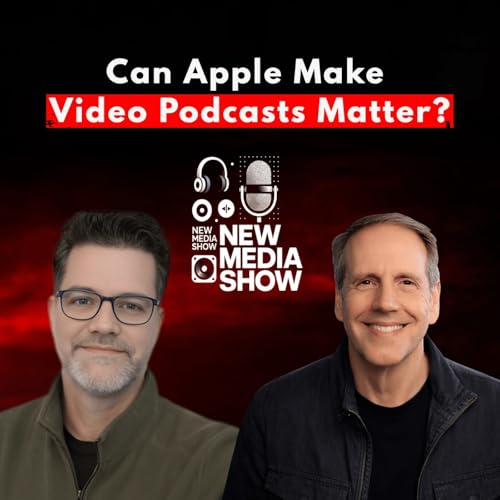
  • Can Apple Make Video Podcasts Matter? | Jay Nachlis #656
    Mar 25 2026
    In episode 656 of the New Media Show, Podcast Hall of Famer Rob Greenlee is joined by Jay Nachlis, Media Research VP at Coleman Insights. “It’s a timely and deeper conversation about Apple Podcasts moving more aggressively into HLS video streaming and what that really means for the future of podcasting, audience behavior, platform competition, and creator strategy in 2026.” This episode goes far beyond the Apple announcement itself. Jay brings a strong audience research and brand strategy perspective to the conversation, and together we dig into the real question behind all of this: will Apple’s push into video actually change listener and viewer behavior, or is this simply Apple trying to catch up to audience habits that are already being shaped by YouTube and Spotify? “Apple Podcasts still has major brand recognition in podcasting, but may face an uphill battle in the current environment where YouTube has become the default platform for video-based podcast discovery, and Spotify continues to build a more native monetization and creator ecosystem.” We talk about how audience habits often outweigh platform features, why consumer perception matters as much as technical innovation, and whether Apple can reclaim any meaningful momentum in a category it helped establish years ago. We also discuss how this shift is creating a more fragmented publishing environment for creators. Audio and video are no longer just different formats. They increasingly represent different user expectations, different discovery paths, and different monetization opportunities. “We discuss the growing need for creators to think strategically about separate audio and video feeds, platform-native publishing, HLS streaming delivery, audience experience, and the long-term risks of overreliance on closed ecosystems.” Jay and I also explore the broader competitive chessboard. That includes YouTube’s dominance in video & video podcast consumption, Spotify’s continued attempts to define its role in both audio and video, and even whether players like Netflix could successfully move into podcast-adjacent content formats. This episode is really about where podcasting is headed as a medium, not just one Apple feature update. If you are a podcaster, creator, media strategist, advertiser, or platform watcher trying to understand where podcasting, video, discovery, and monetization are all heading next, this is an episode you should not miss. Chapters: 00:00 Apple Video Podcast Push 00:47 Meet the Hosts 01:56 Apple Streaming Update 03:14 Early Podcasting Era 05:19 YouTube Spotify Takeover 07:05 Can Apple Compete 08:25 Research YouTube Wins UX 10:30 Awareness Drives Usage 12:07 Netflix Podcasting Fit 15:58 Discovery Algorithms Habits 18:10 Apple Video Hidden Toggle 19:26 Audio Quality vs Video 22:22 Brand Content Trust Matrix 24:05 Apple Podcasts Brand Gap 24:51 Differentiation Over Video 25:41 RSS and HLS Debate 27:09 Why Listeners Choose Apple 28:03 Zune Era Video Podcasts 30:07 YouTube Parallel History 30:59 Winning Tech Standards 33:16 Reaching Younger Audiences 36:48 Hosting Costs and HLS 39:05 Creator Burden of Video 41:20 Future Screens in Cars 43:23 Marketing and Discovery Fixes 45:35 Alternative Enclosures Path 46:49 Wrap Up and Where to Follow Guest Jay Nachlis LinksJay Nachlis LinkedIn: https://www.linkedin.com/in/jaynachlis/Coleman Insights: https://colemaninsights.com/Tuesdays with Coleman: https://colemaninsights.com/blog/ Host Rob Greenlee and Show LinksNew Media Show: https://newmediashow.com/Rob Greenlee: https://robgreenlee.com/Trust Factor Lab: https://trustfactorlab.com/Adore Creator Network: https://adorenetwork.com/Podcast Hall of Fame: https://podcasthall.com/Rob Greenlee YouTube: https://youtube.com/@robgreenleeRob Greenlee LinkedIn: https://linkedin.com/in/robgreenleeRob Greenlee Instagram: https://instagram.com/robwgreenlee The post Can Apple Make Video Podcasts Matter? | Jay Nachlis #656 first appeared on New Media Show.
    Show More Show Less
    48 mins