• The Trick Behind the AI Magic: Explain AI to Your Manager in Plain English
    May 30 2026

    This story was originally published on HackerNoon at: https://hackernoon.com/the-trick-behind-the-ai-magic-explain-ai-to-your-manager-in-plain-english.
    AI explained in plain English: the simple trick behind the magic, why it feels so powerful, and why it matters. A coffee-break read for managers and family.
    Check more stories related to machine-learning at: https://hackernoon.com/c/machine-learning. You can also check exclusive content about #artificial-intelligence, #large-language-models, #llms, #ai-explained, #generative-ai, #ai-agents, #ai-for-beginners, #how-does-ai-work, and more.

    This story was written by: @sebastianmartinez. Learn more about this writer by checking @sebastianmartinez's about page, and for more stories, please visit hackernoon.com.

    TL;DR: A 30-Second Coffee Chat AI Explainer - Not a magic mind, still amazing: This is a plain-English way to explain AI and LLMs to almost anybody. AI is a powerful text predictor that generates answers by guessing the most likely next token based on patterns learned from massive amounts of human writing. - Context & attention: Your prompt and conversation become part of the model’s context, the information it can currently see. A mechanism called attention helps it focus on the most relevant pieces of that context. - Why it feels intelligent: That simple trick can feel like understanding, especially at massive scale. It is powerful and useful, but also limited, because fluency is not the same as truth.

    Show More Show Less
    11 mins
  • AI Coding Agents for Teams: Building a Managed Runtime, Not Just More tmux
    May 30 2026

    This story was originally published on HackerNoon at: https://hackernoon.com/ai-coding-agents-for-teams-building-a-managed-runtime-not-just-more-tmux.
    A practical guide to running AI coding agents as a team: dev servers, durable tmux sessions, separate agent users, and controlled access.
    Check more stories related to machine-learning at: https://hackernoon.com/c/machine-learning. You can also check exclusive content about #ai-agents, #claude-code, #devops, #developer-tools, #tmux, #codex, #infrastructure-as-code, #coding-agents-for-teams, and more.

    This story was written by: @zakarov. Learn more about this writer by checking @zakarov's about page, and for more stories, please visit hackernoon.com.

    - agents live on dev servers, not laptops; - tmux keeps long-running sessions alive; - Eternal Terminal gives you a connection that survives drops; - each person has their own Linux user and runs agents under a separate Linux user; - agent permissions are trimmed to the bare minimum; - on top of tmux you build a session manager that lets leads see different people's sessions across different servers and attach to them; - control over who can see and connect to whose sessions should be flexible and obvious, with no shared keys and no root handed out; - events are logged and available for audit.

    Show More Show Less
    22 mins
  • How AI Quietly Changed Modern UX Patterns
    May 29 2026

    This story was originally published on HackerNoon at: https://hackernoon.com/how-ai-quietly-changed-modern-ux-patterns.
    A breakdown of the UX patterns AI quietly introduced into products like ChatGPT, Claude, Figma, Cursor, and Notion, and how they reshaped software.
    Check more stories related to machine-learning at: https://hackernoon.com/c/machine-learning. You can also check exclusive content about #ai, #ux, #product-design, #human-ai-interaction, #ai-ux-guide, #ai-in-ui-design, #ai-in-ux-design, #hackernoon-top-story, and more.

    This story was written by: @artemivanov. Learn more about this writer by checking @artemivanov's about page, and for more stories, please visit hackernoon.com.

    Software interaction changed more in the last two years than in the decade before — and most people didn't notice. The article maps the UX patterns that quietly took over: input became intentional (slash commands, selection-based actions, contextual suggestions instead of blank prompts); output became editable instead of regenerate-and-replace; AI moved to where work already happens (Copilot in code, Figma on canvas, Notion in docs); errors turned into conversations rather than dead ends; voice finally became operational; agents started navigating UIs on behalf of users; autonomy turned into a progression (human in/on/over/out of the loop); interfaces became generative and on-demand; and context emerged as the primary design material. The underlying shift: software is moving from task-driven to intent-driven, and design work is moving from static flows to systems that interpret intent, expose the right controls, and maintain trust under increasing autonomy.

    Show More Show Less
    14 mins
  • AI Doesn't Exist, and Poop Proves It
    May 29 2026

    This story was originally published on HackerNoon at: https://hackernoon.com/ai-doesnt-exist-and-poop-proves-it.
    AI is not alien or fake intelligence. It is accumulated human thought, culture, code, bias, and memory reflected back through machines.
    Check more stories related to machine-learning at: https://hackernoon.com/c/machine-learning. You can also check exclusive content about #ai, #artificial-intelligence, #philosophy, #technology, #future-of-ai, #ai-doesn't-exist, #accumulated-intelligence, #human-thought, and more.

    This story was written by: @akashi-ghost. Learn more about this writer by checking @akashi-ghost's about page, and for more stories, please visit hackernoon.com.

    Maybe AI is not artificial intelligence. Maybe it is accumulated intelligence: human thought, language, code, memory, bias, and culture compressed into machines and reflected back at us.

    Show More Show Less
    18 mins
  • How I Built an AI Study Buddy That Generates Notes, Tutorials, and Self-Validated Tests
    May 28 2026

    This story was originally published on HackerNoon at: https://hackernoon.com/how-i-built-an-ai-study-buddy-that-generates-notes-tutorials-and-self-validated-tests.
    Built an AI Study Buddy that generates clean notes, worked tutorials, and trustworthy practice tests from lectures, books and class photos using NVIDIA Nemotron
    Check more stories related to machine-learning at: https://hackernoon.com/c/machine-learning. You can also check exclusive content about #agentic-ai, #nvidia-nemotron, #multimodal-ai, #llm-evaluation, #ai-study-buddy, #educational-ai, #nemotron-omni, #vllm, and more.

    This story was written by: @amitshukla. Learn more about this writer by checking @amitshukla's about page, and for more stories, please visit hackernoon.com.

    This article documents a multimodal AI study pipeline built on NVIDIA Nemotron Omni and vLLM that converts textbooks, lecture videos, handwritten notes, and study-group chats into three synchronized outputs: organized notes, worked tutorials, and calibrated practice tests. The key technical idea is a self-evaluation filter where the same model both generates and validates questions, rejecting ambiguous, weakly grounded, or low-confidence outputs before they reach students.

    Show More Show Less
    6 mins
  • How AI Is Transforming Healthcare: And What Still Needs a Human
    May 28 2026

    This story was originally published on HackerNoon at: https://hackernoon.com/how-ai-is-transforming-healthcare-and-what-still-needs-a-human.
    From early cancer detection to drug discovery, AI is reshaping healthcare faster than regulation can keep up. A clear-eyed look at what's work
    Check more stories related to machine-learning at: https://hackernoon.com/c/machine-learning. You can also check exclusive content about #artificial-intelligence, #technology, #future-of-work, #ai-in-healthcare, #machine-learning, #healthcare, #ai, #ai-doctors, and more.

    This story was written by: @cloudsavant. Learn more about this writer by checking @cloudsavant's about page, and for more stories, please visit hackernoon.com.

    From early cancer detection to drug discovery, AI is reshaping healthcare faster than regulation can keep up. A clear-eyed look at what's work

    Show More Show Less
    24 mins
  • Building Governance-as-Code for Enterprise AI Systems
    May 27 2026

    This story was originally published on HackerNoon at: https://hackernoon.com/building-governance-as-code-for-enterprise-ai-systems.
    AI governance fails when it lives outside the stack. Governance-as-Code embeds enforceable, version-controlled controls directly into enterprise AI pipelines.
    Check more stories related to machine-learning at: https://hackernoon.com/c/machine-learning. You can also check exclusive content about #ai-governance, #governance-as-code-ai, #enterprise-ai, #responsible-ai, #ai-engineering, #policy-as-code, #ai-system-design, #ai-runtime-monitoring, and more.

    This story was written by: @tosin1. Learn more about this writer by checking @tosin1's about page, and for more stories, please visit hackernoon.com.

    Most enterprises have AI governance policies. Few enforce them in code. This article introduces Governance-as-Code, a practical engineering model for embedding enforceable controls directly into enterprise AI systems.

    Show More Show Less
    9 mins
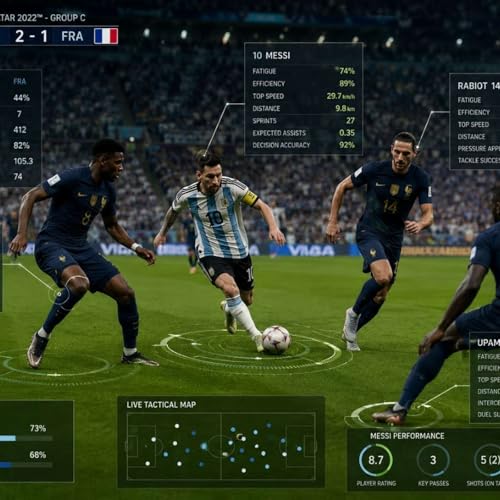
  • The 2026 World Cup’s AI Moneyball Moment Will Start With the Team Sheet
    May 27 2026

    This story was originally published on HackerNoon at: https://hackernoon.com/the-2026-world-cups-ai-moneyball-moment-will-start-with-the-team-sheet.
    This article explores how AI, live tracking, and sports analytics could reshape coaching and decision-making at the 2026 FIFA World Cup.
    Check more stories related to machine-learning at: https://hackernoon.com/c/machine-learning. You can also check exclusive content about #ai-in-football, #ai-sports-analytics, #ai-use-in-world-cup-2026, #football-ai-pro, #connected-ball-technology, #semi-automated-offside, #aws-match-facts, #hackernoon-top-story, and more.

    This story was written by: @bennydoda. Learn more about this writer by checking @bennydoda's about page, and for more stories, please visit hackernoon.com.

    This article argues that football is entering its own “Moneyball” era as AI systems, live tracking infrastructure, wearables, and multimodal analytics become increasingly embedded in elite competition. Using the 2026 FIFA World Cup as the focal point, it explores how machine learning could influence squad selection, substitution timing, tactical adjustments, and player monitoring, while also examining the infrastructure, governance, privacy, and ethical challenges emerging alongside the sport’s growing dependence on real-time data systems.

    Show More Show Less
    21 mins