Machine Learning Tech Brief By HackerNoon cover art

Machine Learning Tech Brief By HackerNoon

Machine Learning Tech Brief By HackerNoon

By: HackerNoon
Listen for free

Learn the latest machine learning updates in the tech world.© 2026 HackerNoon Politics & Government
Episodes
  • How AI Quietly Changed Modern UX Patterns
    May 29 2026

    This story was originally published on HackerNoon at: https://hackernoon.com/how-ai-quietly-changed-modern-ux-patterns.
    A breakdown of the UX patterns AI quietly introduced into products like ChatGPT, Claude, Figma, Cursor, and Notion, and how they reshaped software.
    Check more stories related to machine-learning at: https://hackernoon.com/c/machine-learning. You can also check exclusive content about #ai, #ux, #product-design, #human-ai-interaction, #ai-ux-guide, #ai-in-ui-design, #ai-in-ux-design, #hackernoon-top-story, and more.

    This story was written by: @artemivanov. Learn more about this writer by checking @artemivanov's about page, and for more stories, please visit hackernoon.com.

    Software interaction changed more in the last two years than in the decade before — and most people didn't notice. The article maps the UX patterns that quietly took over: input became intentional (slash commands, selection-based actions, contextual suggestions instead of blank prompts); output became editable instead of regenerate-and-replace; AI moved to where work already happens (Copilot in code, Figma on canvas, Notion in docs); errors turned into conversations rather than dead ends; voice finally became operational; agents started navigating UIs on behalf of users; autonomy turned into a progression (human in/on/over/out of the loop); interfaces became generative and on-demand; and context emerged as the primary design material. The underlying shift: software is moving from task-driven to intent-driven, and design work is moving from static flows to systems that interpret intent, expose the right controls, and maintain trust under increasing autonomy.

    Show More Show Less
    14 mins
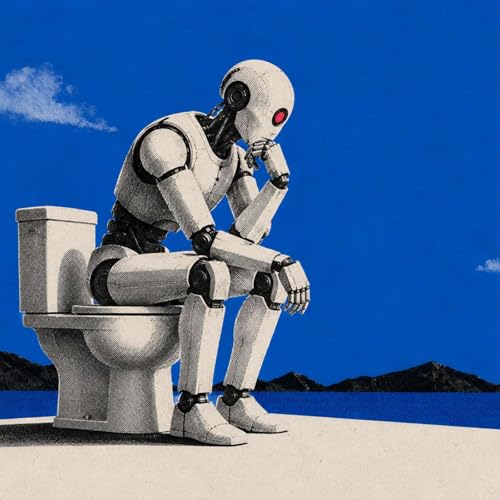
  • AI Doesn't Exist, and Poop Proves It
    May 29 2026

    This story was originally published on HackerNoon at: https://hackernoon.com/ai-doesnt-exist-and-poop-proves-it.
    AI is not alien or fake intelligence. It is accumulated human thought, culture, code, bias, and memory reflected back through machines.
    Check more stories related to machine-learning at: https://hackernoon.com/c/machine-learning. You can also check exclusive content about #ai, #artificial-intelligence, #philosophy, #technology, #future-of-ai, #ai-doesn't-exist, #accumulated-intelligence, #human-thought, and more.

    This story was written by: @akashi-ghost. Learn more about this writer by checking @akashi-ghost's about page, and for more stories, please visit hackernoon.com.

    Maybe AI is not artificial intelligence. Maybe it is accumulated intelligence: human thought, language, code, memory, bias, and culture compressed into machines and reflected back at us.

    Show More Show Less
    18 mins
  • How I Built an AI Study Buddy That Generates Notes, Tutorials, and Self-Validated Tests
    May 28 2026

    This story was originally published on HackerNoon at: https://hackernoon.com/how-i-built-an-ai-study-buddy-that-generates-notes-tutorials-and-self-validated-tests.
    Built an AI Study Buddy that generates clean notes, worked tutorials, and trustworthy practice tests from lectures, books and class photos using NVIDIA Nemotron
    Check more stories related to machine-learning at: https://hackernoon.com/c/machine-learning. You can also check exclusive content about #agentic-ai, #nvidia-nemotron, #multimodal-ai, #llm-evaluation, #ai-study-buddy, #educational-ai, #nemotron-omni, #vllm, and more.

    This story was written by: @amitshukla. Learn more about this writer by checking @amitshukla's about page, and for more stories, please visit hackernoon.com.

    This article documents a multimodal AI study pipeline built on NVIDIA Nemotron Omni and vLLM that converts textbooks, lecture videos, handwritten notes, and study-group chats into three synchronized outputs: organized notes, worked tutorials, and calibrated practice tests. The key technical idea is a self-evaluation filter where the same model both generates and validates questions, rejecting ambiguous, weakly grounded, or low-confidence outputs before they reach students.

    Show More Show Less
    6 mins
adbl_web_anon_alc_button_suppression_c
No reviews yet