Episodes

  • The Neobank of Insurance Playbook with Jacob Batist
    May 19 2026
    Episode #220: Jacob Batist — Launching the first new health insurance company in Canada in 70 years

    How a European challenger broke into a market controlled by three incumbents — without a CEO on the ground, without brand awareness, and without growth-at-all-costs spend.

    For founders and growth leaders entering markets dominated by entrenched incumbents, where trust is the real constraint and speed alone won't win.

    Jacob Batist is Head of Growth at Alan in Canada — the first new health insurance company to launch in the country since 1957. Backed by a European parent valued at over 5 billion euros, Alan competes against three companies that hold roughly 80% of policies. Jacob breaks down why their initial blitz strategy failed, the warm-first pivot they made instead, why they target 20–100 employee companies, and how they say no to revenue they're not ready for. Concrete detail: Alan can process claims in as little as 15 minutes and onboard employees same-day.

    What you'll hear
    • Why Alan positions itself as "the neo bank of insurance" and what that means operationally (sign-ups in minutes, claims in 15 minutes, one platform vs. multiple vendors)
    • The warm-first pivot: what they tried first, why it failed, and the four credibility levers (events, organic media, partnerships, in-person moments) they replaced it with
    • Why 20–100 employee companies are the sweet spot — and how Jacob says no to larger deals that would damage trust
    • How to balance European credibility with the local Canadian story without leaning too hard on either
    Chapters
    • 00:00 — Cold open and host intro: Canada's silent oligopoly
    • 04:28 — The "neo bank of insurance" positioning, in practice
    • 09:42 — Why 20–100 employee companies are the sweet spot
    • 11:56 — The warm-first pivot: why blitzing failed and what replaced it
    • 18:59 — Saying no to revenue you're not ready for
    • 21:27 — Lightning round and closing principle
    Links & resources

    Guest
    Jacob Batist — Head of Growth, Alan Canada
    Alan
    Jacob on LinkedIn

    About Frank Growth

    Frank Growth is a podcast about how companies actually grow—real operators, real constraints, real decisions. Hosted by Jason Shafton.

    Promotional links
    • Work with Winston Francois
    • Subscribe / Follow Jason
    Show More Show Less
    26 mins
  • Meet Your On-Demand Co-Founder with Wade Lowe
    May 12 2026
    Episode #219: Wade Lowe — Why GTM in the AI era is a Rubik's Cube

    The business takes on the personality of the founder. If there are problems, look at thyself.

    For founders running $5M–$50M companies trying to crack go-to-market when the playbook keeps changing.

    Wade Lowe is a 3x co-founder with two exits, focused on bootstrapping, AI, and mindset. He's led revenue at two Inc 500 companies (ranked 72nd and 23rd) and now embeds with founders as a co-founder on demand. Jason and Wade get into how to diagnose a stalled growth motion, why the operating model is the first thing to fix, and how to play where the smartest people aren't — equipment rental, construction, fuel. Wade is direct about the trade-offs he made to be present for his kids and the hard truth most founders resist hearing.

    What you'll hear
    • Why acquisition has to come before retention and expansion when budgets are tight
    • How Wade diagnoses the operating model first in every $5M–$50M company he embeds with
    • The Google AdWords inbound engine behind two Inc 500 companies — and why being first to a keyword segment was the unlock
    • How to evaluate talent quickly using soft-skill signals: response time, commitments kept, and whether someone proposes solutions or just critiques
    Chapters
    • 00:00 — Cold open: the business goes as the founder goes
    • 03:01 — GTM in the AI era: test, test, test
    • 06:22 — Playing where the smartest people aren't
    • 12:13 — What Wade diagnoses first in a $5M–$50M company
    • 17:17 — The hard truth founders resist hearing
    • 20:29 — One operating principle for cracking GTM
    Links & resources

    Guest
    Wade Lowe — 3x Co-Founder | 2x Exit | Bootstrapping | AI | Mindset
    LinkedIn

    About Frank Growth

    Frank Growth is a podcast about how companies actually grow—real operators, real constraints, real decisions. Hosted by Jason Shafton.

    Promotional links
    • Work with Winston Francois
    • Subscribe / Follow Jason
    Show More Show Less
    23 mins
  • The Sephora of Chocolate Strategy with Pashmina De Shon
    May 5 2026
    Episode #218: Pashmina De Shon — Why Friction Is The Moat In Craft Chocolate

    How a bootstrapped founder built a $3M+ craft chocolate marketplace by owning the operational pain everyone else outsources.

    For e-commerce operators, bootstrapped founders, and brands weighing the jump from DTC to physical retail.

    Pashmina De Shon is the founder of Bar and Cocoa, a curated marketplace for craft chocolate featuring 1,200 SKUs from 60 makers across 30 countries. After a decade running the business purely online, she recently opened a physical store in Greensboro, North Carolina. In this conversation, she breaks down why she runs her own warehouse instead of using a 3PL, how owning fulfillment keeps her waste rate at 2% versus industry norms of 10-12%, why the subscription model forced early clarity on curation, and what actually changes in the P&L when you move from DTC to brick and mortar.

    What you'll hear
    • Why "even Amazon doesn't ship chocolate" became both the warning and the opportunity
    • How owning fulfillment, FDA compliance, and temperature-sensitive shipping creates a moat competitors can't copy
    • The plateau that hit at scale — and the boring, decisive fixes that got Bar and Cocoa past it
    • How to think about retail economics as a marketing and retention channel, not just a sales channel
    Chapters
    • 00:00 — Cold open and Frank Growth intro
    • 02:45 — The thesis: why the easy e-commerce business is the shortest-lived
    • 07:12 — Owning fulfillment and a 2% waste rate vs. the 10-12% norm
    • 11:53 — Moving from DTC to physical retail: what changes, what stays
    • 14:10 — Educating the craft chocolate market while selling
    • 17:04 — Lightning round and three takeaways
    Links & resources

    Guest
    Pashmina De Shon — Founder, Bar and Cocoa
    Website
    Instagram
    LinkedIn

    About Frank Growth

    Frank Growth is a podcast about how companies actually grow—real operators, real constraints, real decisions. Hosted by Jason Shafton.

    Promotional links
    • Work with Winston Francois
    • Subscribe / Follow Jason
    Show More Show Less
    21 mins
  • The Swiss Army Knife Operator with Jeff Bishop-Hill
    Apr 28 2026
    Episode #217: Jeff Bishop Hill — How Swiss Army knife operators scale marketplaces

    What breaks first when a marketplace expands into new markets.
    This episode is for founders and operators balancing growth, ops, compliance, and enterprise sales at the same time.

    Jeff Bishop Hill breaks down what it takes to scale marketplaces when one operator is covering multiple functions at once. Drawing on his work across Soothe, Mercato, and Roo, he explains how to sequence market launches, what metrics actually matter, how to win enterprise accounts from the bottom up, and when to build compliance versus prioritize growth. He also shares where operators get expansion wrong, why supply is usually the first thing to break, and how Roo limited launches to about five markets per quarter to avoid doubling investment on failed rollouts.

    What you’ll hear
    • Why supply-demand balance and customer satisfaction matter more than a stack of dashboards
    • How Jeff sequenced new market launches using household income heat maps, logistics, and provider density
    • Why picking markets for “sex appeal” and expanding too fast leads to expensive mistakes
    • How to win larger enterprise accounts by starting with local users, proving value, and building up to procurement
    Chapters

    00:00 — Why glamorous market selection fails
    01:49 — Scaling marketplaces across multiple markets and countries
    04:01 — The only metrics that really matter (supply, demand, CSAT)
    05:14 — Fixing expansion strategy and sequencing markets
    09:02 — Winning enterprise accounts from the bottom up
    15:05 — Growth vs compliance and scaling tradeoffs

    Links & resources

    Guest
    Jeff Bishop Hill — Marketplace operator at Roo
    LinkedIn

    About Frank Growth

    Frank Growth is a podcast about how companies actually grow—real operators, real constraints, real decisions.
    Hosted by Jason Shafton.

    Promotional links
    • Work with Winston Francois: https://wf.team/podcast
    • Subscribe / Follow Jason: https://www.linkedin.com/in/jasonshafton/
    Show More Show Less
    21 mins
  • Why Your Lead Gen Keeps Failing with Matt Putra
    Apr 21 2026
    Episode #216: Matt Putra — Cracking paid lead gen for a services business

    How to lower lead costs by teaching instead of pitching.
    For service founders stuck with expensive, inconsistent lead flow.

    Matt Putra of EightX explains how he finally cracked lead generation for his fractional CFO business after spending $150,000 over 18 months on cold email, outbound, hiring, and agency support that did not work. The breakthrough came when he stopped trying to force a funnel and started running simple paid ads built around genuinely useful tools for e-commerce operators. He shares how a CAC spreadsheet offer dropped his cost per lead from $11,000 to $20, what his five-minute ads actually look like, and how he thinks about payback periods, inventory risk, and marketing spend across the brands he advises. The conversation also covers the operating cadence he uses to align demand, supply, and finance and why inventory strategy is often the biggest growth leak in e-commerce.

    What you’ll hear
    • Why lead gen for services often fails when the offer is not clear enough
    • How Matt structures five-minute paid ads around spreadsheets, tools, and AI workflows
    • Why cold email, outbound, and agency-led efforts underperformed for his business
    • How to use CAC, LTV, payback periods, and inventory analysis to make better growth decisions
    Chapters
    • 00:00 — The ad that dropped CPL from $11,000 to $20
    • 02:41 — The failed experiments: cold email, outbound, hiring, and agencies
    • 05:56 — What the ads look like and why they convert
    • 08:50 — The biggest financial mistake e-commerce founders make
    • 12:23 — Diagnosing growth problems and missed ROI
    • 14:15 — When to spend more on marketing and when to pull back
    Links & resources

    Guest
    Matt Putra — EightX
    Website
    LinkedIn
    Work with Winston Francois

    • Subscribe / Follow Jason
    Show More Show Less
    23 mins
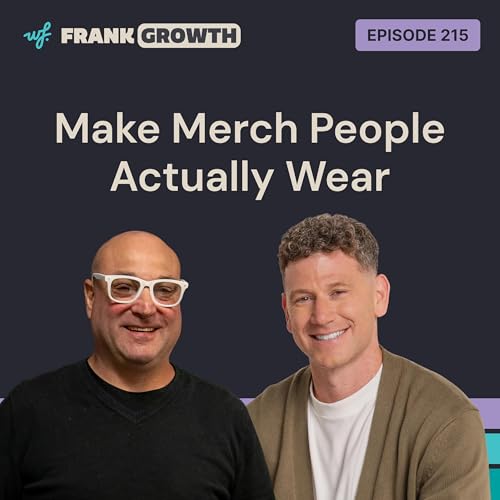
  • Make Merch People Actually Wear with Jay Sapovits
    Apr 14 2026
    Episode #215: Jay Sapovits — Turning branded merch into a strategic growth tool

    How to stop wasting money on swag that gets ignored.
    For founders and operators buying merch without a plan for impact.

    Jay Sapovits of Ink’d Stores explains how branded merchandise becomes useful when it starts with audience, objective, and distribution instead of a last-minute product order. He shares lessons from a failed fitness brand, a pivot into on-demand apparel, and the operating choices that helped build a $5M+ branded merchandise business. The conversation covers trade show strategy, on-demand merch economics, and why a $3 difference in shirt quality can determine whether something gets worn or turned into a rag. Jay also breaks down why distribution is the step most teams forget, even when the product itself is right.

    What you’ll hear
    • How to define strategic merch based on purpose, audience, and event
    • How on-demand merch stores reduce inventory risk and preserve cash flow
    • Why most swag fails: low-quality product choices, no planning, and weak distribution
    • How to use merch to drive trade show engagement and other measurable outcomes
    Chapters

    Timestamps

    • 00:00 — Why cheap swag gets wasted
    • 02:27 — What strategic merch actually means
    • 06:15 — The pivot from failed fitness brand to Inked Stores
    • 09:02 — Why quality, fit, and content determine whether merch gets used
    • 10:41 — How on-demand merch changes the unit economics
    • 18:11 — Why budget and distribution matter as much as the product
    Links & resources

    Guest
    Jay Sapovits — Ink’d Stores
    Email Jay
    LinkedIn

    About Frank Growth

    Frank Growth is a podcast about how companies actually grow—real operators, real constraints, real decisions.
    Hosted by Jason Shafton.

    Promotional links
    • Work with Winston Francois
    • Subscribe / Follow Jason
    Show More Show Less
    21 mins
  • Why Billionaires Pay Him a Retainer with Leigh Rowan
    Apr 7 2026
    Episode #214: Leigh Rowan — Building a premium service business without ads

    How to grow a premium service business through trust, referrals, and client retention.
    For founders and operators building high-touch services and trying to scale without paid acquisition.

    Leigh Rowan, founder and CEO of Savanti Travel, joins Jason Shafton to break down how he built a luxury travel management company serving ultra high net worth individuals, family offices, VC firms, and Hollywood entertainers without ever advertising. He explains how Savanti evolved from helping entrepreneurs unlock value from points and miles into a full-service travel business built around 24-7 support, personalization, and relationships. The conversation covers how his team uses CRM workflows, SOPs, and regular standups to deliver consistent service across five continents, how they ask for referrals after delivering concrete wins, and why they have fired clients worth as much as 25% of revenue to protect the team and the business. Leigh also shares that Savanti has saved clients more than $10 million by using points and miles more strategically.

    What you’ll hear
    • Why Savanti chose word of mouth over paid advertising and how that shaped client selection
    • How the team uses monday.com, SOPs, standups, and shared context to deliver high-touch service at scale
    • Why most people leave points and miles value unused and how Savanti turns those assets into real savings and better experiences
    • How Leigh thinks about referrals, client feedback, hiring for judgment, and protecting culture even when revenue is at stake
    Chapters

    Timestamps from transcript

    • 00:00 — What luxury travel management actually means
    • 03:22 — From points and miles to full-service travel support
    • 07:26 — The system behind saving clients money with loyalty assets
    • 11:42 — Why Savanti never advertised and how word of mouth compounds
    • 17:37 — Handling travel crises, hiring for judgment, and firing bad-fit clients
    • 21:05 — Client feedback, luxury as personalization, and how to grow by word of mouth
    Links & resources

    Guest
    Leigh Rowan — Founder & CEO, Savanti Travel
    Website

    About Frank Growth

    Frank Growth is a podcast about how companies actually grow—real operators, real constraints, real decisions.
    Hosted by Jason Shafton.

    Promotional links
    • Work with Winston Francois
    • Subscribe / Follow Jason
    Show More Show Less
    26 mins
  • Buy a SaaS, Skip the Startup with Doug Breaker
    Mar 31 2026
    Episode #213: Doug Breaker — Buying a SaaS instead of building from zero

    How to acquire a profitable SaaS with minimal upfront capital.
    For operators considering ownership but hesitant to start from scratch.

    Doug Breaker, CEO of Shoeboxed and former CEO of MD Hearing Aid, explains why he chose to buy a 20-year-old SaaS company instead of building one. After running an eight-figure DTC business, he acquired Shoeboxed using an SBA loan with only 5% down. He breaks down how he sourced deals, structured financing, evaluated distribution over tech, and identified upside in an under-marketed business with a million-person email list. The conversation covers the actual mechanics of SBA loans, due diligence priorities, and what it takes to stabilize and grow an acquired SaaS in the first 90 days.

    What you’ll hear
    • How SBA loans work for SaaS acquisitions and how he structured a 5% down deal
    • Why distribution, customer base, and cash flow mattered more than the product itself
    • Common mistakes operators make when evaluating build vs. buy decisions
    • How to approach your first acquisition and test interest before committing full-time
    Chapters
    • 00:00 — Why buying a SaaS beats building from scratch
    • 02:01 — From CEO-for-hire to buying Shoeboxed
    • 03:51 — How he sourced and evaluated acquisition opportunities
    • 04:41 — How SBA loans and deal structure actually work
    • 06:47 — First 90 days after acquiring a SaaS
    • 10:25 — Growth lessons and how to approach your first acquisition
    Links & resources

    Guest
    Doug Breaker — CEO, Shoeboxed
    Website
    LinkedIn

    About Frank Growth

    Frank Growth is a podcast about how companies actually grow—real operators, real constraints, real decisions.
    Hosted by Jason Shafton.

    Promotional links
    • Work with Winston Francois: https://wf.team/podcast
    • Subscribe / Follow Jason: https://www.linkedin.com/in/jasonshafton/
    Show More Show Less
    22 mins