• Internet Trolls Think They Can Say Anything; Here's Why They're Wrong (Ep. 342)
    Feb 20 2026

    Do people really think they have the right to be rude online? This episode is a raw, unfiltered look at what content creators actually deal with behind the scenes—and why sometimes, blocking is the only option.

    Follow Mary Jo Here: https://www.youtube.com/@MaryJoIrmen...
    Get the book: https://www.farmingwithoutthebank.com/book...

    In this episode, Mary Jo addresses the rising wave of internet trolls, negative comments, and online bullying. From accusations about insurance strategies and retirement planning to criticism about farming, excess money, and even parenting decisions, nothing seems off-limits for keyboard warriors.

    But here's the truth: creators have the right to protect their space.

    Mary Jo breaks down real comments she's received, explains the misconceptions around 401(k)s, Roth contributions, Medicare penalties, farming profitability, and the Infinite Banking concept—and shares why mindset matters more than ever.

    If you've ever wondered why creators delete comments or block followers… this episode explains it all.

    Key Takeaways:
    - You don't have the right to be rude just because you're online
    - Why creators delete and block negative commenters
    - How retirement withdrawals can increase Medicare premiums
    - The danger of assuming you "know it all" from one post
    - Why mindset—not circumstances—often determines financial outcomes
    - The real cost of online bullying for creators

    Chapters:
    (00:00) – Do You Have the Right to Be Rude?
    (02:00) – Why Are People So Angry Online?
    (07:15) – 401(k) Withdrawals & Medicare Penalties Explained
    (13:20) – "What Excess Money?" Farming & Financial Reality
    (17:50) – Charging Kids Interest & Financial Lessons
    (24:30) – "Why Isn't the Book Free?"
    (28:23) – Why I Delete & Block Trolls

    If you're here to learn and grow, thank you. Be part of the solution, have productive conversations, and scroll past what you don't agree with.

    Grab your copy of the book here:
    https://www.farmingwithoutthebank.com/book...

    Share this episode with someone who needs to hear it—and remember: be a good human.

    Show More Show Less
    13 mins
  • Universal Life Policies Are Collapsing | Here's Why (Ep. 341)
    Feb 13 2026

    🚨 Universal Life Insurance EXPOSED 🚨

    Is Universal Life, Indexed Universal Life, or Variable Universal Life really the powerful wealth tool it's marketed to be? In this episode of the Farming Without the Bank podcast, Mary Jo dives deep into why universal life policies often fail, drawing directly from Nelson Nash's Warehouse of Wealth and decades of real-world experience.

    👉 Follow Mary Jo Here: / @maryjoirmen

    👉 Get the book: https://www.farmingwithoutthebank.com...

    If you've ever been pitched an IUL with "great returns" and "no downside," this episode is a must-watch before you sign anything.

    Universal Life was designed as a "better mousetrap," but history shows a very different outcome. From rising costs of insurance to disappearing guarantees, Mary Jo breaks down why most UL, VUL, and IUL policies eventually collapse—often right when people need them most.

    Using Nelson Nash's insights and Todd Langford's Truth Concepts analysis, this episode explains how risk is shifted from the insurance company to you, the policyholder.

    🔑 Key Takeaways

    Why Universal Life policies often lapse between ages 60–80
    How non-guaranteed costs and mortality charges destroy cash value
    The "double pain" effect during market downturns
    Why caps, participation rates, and missing dividends matter
    How UL shifts risk from the insurer to the insured
    Why Whole Life offers liquidity, control, and guarantees

    ⏱️ Chapters

    00:00 – Why Universal Life Looks Good (At First)
    02:12 – The History of Universal Life Insurance
    05:35 – The Side Fund & Why It Falls Apart
    08:20 – Double Pain: Market Losses Explained
    11:11 – Caps, Participation Rates & Missing Dividends
    14:29 – Guarantees Can Change (And Disappear)
    18:36 – Why Whole Life Wins Long-Term

    📚 Resources Mentioned

    Warehouse of Wealth – Nelson Nash

    Truth Concepts Calculators – https://truthconcepts.com

    The Battle for the Soul of Capitalism – John Bogle

    Pirates of Manhattan I & II – Barry James Dyke

    Farming Without the Bank: https://farmingwithoutthebank.com

    📩 Ready to Learn More?

    📧 Email questions to: maryjo@withoutthebank.com

    📖 Read the book before scheduling an appointment
    📅 Let's see if Infinite Banking is right for you

    👉 Subscribe and share this episode with anyone considering an IUL or Universal Life policy.

    Show More Show Less
    23 mins
  • Insurance Premiums Are Destroying Farms—Here's What Actually Works (Ep. 340 )
    Feb 6 2026

    Insurance premiums doubling… tripling… and companies still denying claims. Should you just self-insure and be done with it—or will that decision wreck your finances when disaster hits?

    In this episode of Farming Without the Bank, we dig into Chapter 8: Building Your Warehouse of Wealth and talk about what self-insuring really looks like using cash value life insurance, and where it absolutely does not make sense to go it alone.

    🔍 What You'll Learn

    When it actually makes sense to self-insure vs. when you're just gambling

    How Nelson Nash used dividend-paying whole life to self-insure comp & collision

    Why auto and homeowners insurance costs are exploding (it's not just "greedy companies")

    The ugly side of health insurance: denials, subsidies, and better options people are using

    Why crop insurance is subsidized and what that means for your farm risk

    How to start building your own "warehouse of wealth" so you're less dependent on traditional insurance

    🧾 Key Takeaways

    Self-insuring is not "going naked." It means building a pool of capital (like cash value in whole life) large enough to handle losses without destroying your lifestyle.

    If you drop comp & collision but spend the premium, you're not self-insuring—you're just hoping nothing happens. That premium needs to be redirected into an asset (like whole life).

    Auto and home claims are more frequent and more expensive—sensors, cameras, tech, and repair costs all push premiums up.

    Some people can self-insure their home or health because they are debt-free, frugal, and have a plan for where they'd live or how they'd get care. Most people don't.

    Health insurance has become a racket for many: denials, crazy premiums, and poor care. That's why some are choosing health sharing or direct primary care subscription models.

    Crop insurance is subsidized because actuaries can't collect enough premiums to cover catastrophic events without help. And like it or not, everyone is getting some kind of subsidy (child tax credits, mortgage interest, etc.).

    You can choose to self-insure some things, but you must run the numbers and understand the risk, not just react to high premiums.

    ⏱️ Chapters

    (00:00) – Can You Really Self-Insure? (story + crop example)

    (00:46) – Nelson Nash on Self-Insuring Comp & Collision

    (02:54)– Why Auto Insurance Is So Expensive Now

    (06:01) – Self-Insuring Home & Health: Who Can Really Do It?

    (10:56) – Crop Insurance, Actuaries & Government Subsidies

    (16:23) – Final Thoughts & How to Run Your Numbers

    If you're tired of feeling trapped by rising insurance premiums and guessing about self-insuring:

    👉 Subscribe for more episodes of Farming Without the Bank
    📆 Read the book and book a call, and let's see what self-insuring could look like mathematically for your farm or ranch.

    💻 Work with Mary Jo:
    Get your copy of Farming Without The Bank, read it, and then schedule your appointment so we can look at what this strategy could mean for your operation and your numbers. No pressure, just a real conversation.

    📩 Have questions? Email Mary Jo: maryjo@withoutthebank.com

    Show More Show Less
    16 mins
  • Nobody's Coming to Save You Financially (Ep. 339)
    Jan 30 2026

    What happens when everyone expects someone else to pick up the bill?

    From a nightmare condo sale to health insurance chaos, this episode is a raw, unfiltered wake-up call on personal responsibility, money, and self-reliance.

    In this episode, Mary Jo shares a months-long real estate saga that exposed a deeper issue she's seeing everywhere—from first-time homebuyers and realtors, to health insurance, escrow accounts, and even parenting adult children.

    The common theme? Too many people are handing off responsibility—and expecting others to pay the price.

    This episode isn't about being harsh. It's about understanding how money actually works, why Infinite Banking is rooted in self-responsibility, and why depending on systems, banks, or government programs can leave you vulnerable.

    Key Takeaways:
    Why buyers asking for everything is a dangerous financial mindset
    How escrow accounts and employer benefits disconnect you from reality
    The real cost of "someone else will handle it"
    Why self-insurance and Infinite Banking go hand in hand
    What parents should (and shouldn't) subsidize for adult kids

    Chapters:
    (00:00) – A 20-Year-Old, Sourdough Bread, and Rent Reality
    (01:25) – The Condo Sale From Hell
    (04:10) – Buyers, Realtors, and Zero Accountability
    (09:20) – When You Can't Afford Repairs, You Can't Afford the House
    (16:45) – Health Insurance, Escrow, and Giving Up Control
    (21:45) – Generational Expectations & Entitlement
    (27:50) – Infinite Banking = Self-Responsibility

    If this episode made you uncomfortable, you probably needed it.

    Subscribe for more real conversations about money.
    Share this with someone who needs a reality check.
    Leave a comment (respectful ones get read).

    Links & Resources Mentioned:

    Get the book: https://farmingwithoutthebank.com...

    Email Mary Jo: maryjo@withoutthebank.com

    Show More Show Less
    27 mins
  • Windfall Alert: What Farmers Miss Every Single Year (Ep. 338)
    Jan 23 2026

    Is life insurance a luxury—or a necessity?

    In this episode of Farming Without The Bank (FWTB Ep. 338), Mary Jo breaks down Chapter 7 of Nelson Nash's Warehouse of Wealth and explains how Parkinson's Law silently destroys financial progress, especially when people experience windfalls of money.

    From selling land, paying off equipment, kids leaving the house, or daycare expenses disappearing—windfalls happen whether you notice them or not. The real question is: Where does that money go?

    Nelson Nash's real-life example shows how paying off a policy loan after a windfall can feel like backdating life insurance by 13 years at a better health rating—an advantage you can never recreate later. This episode challenges the belief that life insurance is optional and explains why end-of-life benefits and banking should be treated like fuel in a vehicle—non-negotiable.

    Key Takeaways:

    Why Parkinson's Law eats every "extra dollar" if you don't give it a job

    How windfalls (kids moving out, loans paid off, daycare ending) should be redirected

    Why delaying a policy creates massive inefficiencies later in life

    Why the end of life benefit for children is about time to mourn, not profit

    How farmers and ranchers must be in the business of banking, not just production

    Chapters:

    (00:00) – Life Insurance: Luxury or Necessity?

    (01:07) – Nelson Nash's Windfall & Backdated Advantage

    (03:10) – Kids Leaving Home = Hidden Windfall

    (04:42) – Parkinson's Law Explained

    (08:04) – Daycare, Sports & Missed Opportunities

    (09:43) – Death Benefit Is Non-Negotiable

    (12:29) – Building Banking Into Your Commodity Price

    📘 Grab your books
    📅 Schedule your appointment
    📊 Have all your numbers ready — personal, business, and farm

    👉 Website: https://farmingwithoutthebank.com?utm...

    If your information isn't ready, the meeting will be canceled—because clarity requires numbers.

    Show More Show Less
    14 mins
  • Corporations Don't Pay Taxes — You Do. Here's How. (Ep. 337)
    Jan 16 2026

    You've been told corporations pay taxes, but what if that's the biggest lie in the system? In this episode, Mary Jo breaks down who really pays for taxes, benefits, tariffs, and government programs—and why the consumer always ends up holding the bag.

    In Episode 337 of Farming Without the Bank, Mary Jo dives into Chapter 6 of Nelson Nash's Warehouse of Wealth: "Lies, Lies, and Lies."

    This episode exposes how taxes, Social Security, employee benefits, tariffs, credit card fees, and corporate expenses are never absorbed by businesses—they are passed directly to you, the consumer.

    From Social Security myths to corporate "tax hikes," from government spending to free coffee at the sale barn, this episode reframes how money actually flows through the economy and why financial literacy is so rare—and so dangerous to ignore.

    Key Takeaways:

    • Corporations do not pay taxes; they collect them from consumers
    • Employees pay 100% of Social Security, not "half."
    • All benefits, perks, and expenses are built into prices or wages
    • Government redistribution still starts with taxing the public
    • Business owners have tax flexibility, but consumers do not
    • Financial illiteracy keeps people trapped, believing money myths

    Chapters:
    (00:00) – The danger of financial lies
    (02:00) – Who really pays taxes?
    (05:00) – Social Security & employee benefit myths
    (08:30) – Why everything gets passed to the consumer
    (12:45) – Customer service, payroll, and business reality
    (17:45) – Government spending & redistribution myths

    👉 Want to truly understand money, taxes, and wealth?

    Email questions: maryjo@withoutthebank.com

    Get the books: https://farmingwithoutthebank.com/sho...

    Read Warehouse of Wealth by Nelson Nash.

    Share this episode with someone who still thinks corporations pay taxes!

    Link Mentioned:
    Farming Without the Bank:
    https://farmingwithoutthebank.com/boo...

    Show More Show Less
    23 mins
  • Your Biggest Problem Isn't What You Think It Is (Ep. 336)
    Jan 9 2026

    Everyone says farming and ranching are hard—but what if the real problem isn't expenses… it's how money is being used?

    In this episode, Mary Jo tackles the backlash around "excess money," breaks down why being debt-free isn't the same as being financially secure, and explains why cash flow—not comfort—is the real solution.

    👉 Follow Mary Jo Here: https://www.youtube.com/@MaryJoIrmen?sub_confirmation=1

    👉 Get the book: https://www.farmingwithoutthebank.com...

    In this candid rant-meets-masterclass, Mary Jo responds to critics who claim there's no such thing as excess money in agriculture. She explains why higher cattle prices create opportunities, and how most producers miss them by paying everything off instead of building systems that generate cash flow.

    Using real conversations with farm and ranch families, she walks through:

    Why paying off low-interest debt can actually hurt you

    How cash flow determines freedom, not net worth

    Why "passive income" is mostly a myth

    How money should move through your system differently

    This episode is a mindset shift for anyone stuck in the cycle of "it's hard" and ready to start asking better questions.

    ✅ Key Takeaways:

    • Cash flow is more important than being debt-free
    • Two people with the same income can have vastly different outcomes
    • Excess money isn't the problem—misuse of it is
    • Paying off everything can kill future opportunity
    • Money must keep moving to create income

    ⏱ Chapters:

    (00:00) – The "It's Hard" Victim Mentality

    (01:13) – What "Excess Money" Really Means

    (03:03) – Why Money Utilization Matters More Than Income

    (04:30) – Paying Off Debt vs Creating Cash Flow

    (07:57) – Why Being Debt-Free Isn't the Answer

    (09:15) – How Money Should Move Through Your System

    (13:00) – Opportunity Thinking vs Staying Stuck

    If this episode challenged your thinking:

    🔔 Subscribe for more farm and ranch financial strategy

    Need help thinking through your own cash flow strategy?

    📧 Email: maryjo@withoutthebank.com

    🔗 Link Mentioned:

    Becoming Your Own Banker by Nelson Nash (book referenced)

    https://www.farmingwithoutthebank.com...

    Show More Show Less
    15 mins
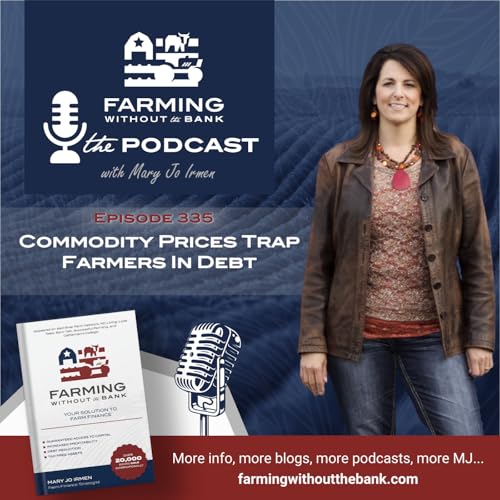
  • Commodity Prices Trap Farmers In Debt (Ep. 335)
    Jan 2 2026

    Most farmers still buy equipment the old way—cash or bank loans—losing years of compound growth. What if the problem isn't your policy… It's when the money runs through it?

    👉 Follow Mary Jo Here: https://www.youtube.com/@MaryJoIrmen?sub_confirmation=1

    👉 Get the book: https://www.farmingwithoutthebank.com...

    In this episode, Mary Jo breaks down the "before asset" idea: running money through your whole life policy before you buy equipment, cattle, or cover operating expenses. She explains why premium is what makes you money, why loans themselves don't, and how to think differently about "I can't make the payment this year" when you are the banker.

    Whether commodity prices are down or cattle checks are big, this mindset shift can change how you finance your entire operation.

    What you'll learn:

    Why paying a premium creates wealth, not just taking policy loans

    How to run purchases through your policy first without losing tax write-offs

    What to do in bad years when you can't make a full loan repayment

    Why life insurance is not an investment—and why that matters

    How negative thinking and "keyboard warriors" keep people broke

    A simple way to create your operating line inside the policy

    Chapters

    (00:00) – Policy loans vs bank loans: what really changes

    (00:46) – Premium as a "before asset," not an afterthought

    (02:31) – Why money should run through the policy before you buy

    (04:58) – Cash vs policy example: financing equipment the smart way

    (08:18) – "I can't make the payment!" and how flexibility really works

    (12:53) – Life insurance isn't an investment (and why that's good)

    (16:04) – Mindset, inflation, and the negative "keyboard warrior" trap

    👍 If this helped you think differently about your money, hit Like and subscribe for more real-world Infinite Banking conversations for farmers and ranchers.

    💬 Got questions about premiums, policy loans, or timing money through your policy?

    Drop a comment below or send Mary Jo an email—your question may end up in a future episode.

    🎧 Want more? Check out the Without the Bank podcast, where Mary Jo and Tarisa walk through Nelson Nash's books and real client scenarios in detail.

    Links Mentioned:

    Becoming Your Own Banker by R. Nelson Nash

    https://www.farmingwithoutthebank.com...

    Building Your Warehouse of Wealth by R. Nelson Nash

    https://www.farmingwithoutthebank.com...

    Mary Jo's book on Infinite Banking for farmers/ranchers

    https://www.farmingwithoutthebank.com...

    "Without the Bank" podcast

    https://www.withoutthebank.com/podcas...

    Show More Show Less
    18 mins