EVENTASTIC Conference registration is now OPEN! The world's largest event about EVENTS!
Free + Virtual! Save your spot! https://www.eventastic.com/
ㅤ
MASSIVE thank you to our Sponsor, Cvent!!
Cvent is an event marketing and management platform designed to help you plan, promote, and measure your events all in one place - whether they’re virtual, in-person, or hybrid.
Regardless of your size, check out Cvent today to get the tools you need to run smarter, more effective events.
Check out more at cvent.com/Jay
ㅤ
🔗 Links / Resources Mentioned
- Stephanie Baiocchi on LinkedIn
- endlesscustomers.com — IMPACT's Endless Customers System site, where you can find Stephanie's event
ㅤ
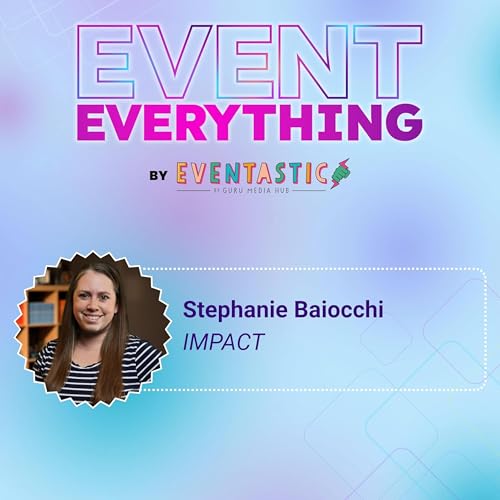
The question driving this episode sits right at the intersection of events and revenue: where do most companies go wrong when trying to use events to generate inbound sales? Kristin Nagle brings in Stephanie Baiocchi to answer it, and the answer cuts straight to the root. Most teams, whether they're hosting, attending, or sponsoring, show up without a documented process. That means follow-up decisions get made on the spot, contacts fall through the cracks, and no one knows who to call or when.
Stephanie walks through exactly what a documented process looks like: how to label attendees, when to act, and how to tie everything from booth design to printed materials back to one clear call to action.
ㅤ
👤 Guest Bio
Stephanie Baiocchi is Senior Director of Membership & Events at IMPACT, a sales and marketing coaching company built around the Endless Customers System™. She has nearly 20 years of experience in events, starting in campus activities and moving through HubSpot User Groups in Chicago to running IMPACT's sales and marketing training conference twice a year. She also serves on the Executive Board of the Ravinia Festival Associates Board.
ㅤ
✅ The Event Question
Asked by Kristin Nagle.
Where do most companies go wrong when trying to use events to generate inbound sales?
ㅤ
📌 What You'll Learn
- Whether you're hosting, attending, or sponsoring, the most commonly skipped step is building a documented process before the event, not scrambling to create one after.
- A documented process means deciding in advance how you'll label attendees who showed up and those who didn't, and what specific action follows each group.
- When the process is written down ahead of time, your team stops thinking of ideas on the spot and starts executing. That frees them up for real one-to-one follow-up and better conversations during the event itself.
- Everything at the event, whether it's booth design, a talk, or printed materials, should connect back to a specific call to action that lives inside that process.
- After the event, review the process, refine what didn't work, and use the same foundation next time.
ㅤ
🎭 The Ridiculous Question
Kristin asked Stephanie to pick one for herself and her attendees: unlimited coffee, free snacks, or bottomless cocktails.
Stephanie chose snacks. Her reasoning: snacks keep you going, especially at a single-track, all-day event where everyone's in the same room. Kristin followed up with a tip from a previous guest: hors d'oeuvres should be two chews, max. At events, you're always mid-conversation.


 6 mins
 May 13 20266 mins
 May 6 20266 mins
 13 mins
 14 mins
 Apr 15 202612 mins
 8 mins
 7 mins