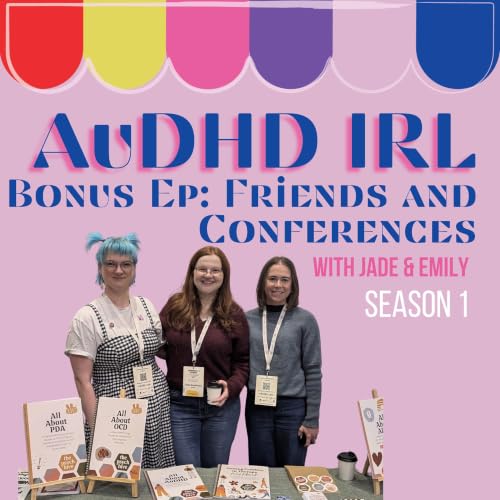
AuDHD IRL cover art

AuDHD IRL

AuDHD IRL

By: Bri Thomas
Listen for free

About this listen

AuDHD IRL (not a highlight reel) is a podcast about what it really looks like to be autistic + ADHD, beyond the hot takes, highlight reels, and productivity hacks. Each episode feels like a cuppa with someone a few steps ahead on the journey (who’s also tripped over it a few times). We talk honestly about it all, with laughter, swearing (tastefully), and a lot of self-compassion. This isn’t about fixing yourself. It’s about understanding your brain, finding language for your experience, and feeling less alone while you figure things out in real life. Come as you are. Stay as long as you like.Bri Thomas Personal Development Personal Success
Episodes
  • Ep6. AuDHD, the Tug of War, and Masking with Jess
    Feb 15 2026

    Overview: In this engaging conversation, Jess, a registered psychologist, shares her journey of discovering her autism and ADHD. She discusses her early career experiences, the importance of lived experience in psychology, and the challenges of masking in social situations. Jess emphasises the push-pull dynamic between autism and ADHD, exploring how it affects her daily life and interactions. The conversation highlights the significance of self-advocacy, understanding one's own needs, and the importance of going with the tussle in your own brain.

    Takeaways:

    • Understanding one's neurodivergent identity can lead to greater self-acceptance.
    • Masking is a common coping mechanism for AuDHDers.
    • The push-pull dynamic between autism and ADHD can be exhausting.
    • Self-advocacy is crucial in navigating social situations.
    • Community support enhances well-being for neurodivergent individuals.
    • Recognising bodily cues can help manage overwhelm.
    • It's important to lean into one's thoughts and feelings.
    • Working with the tug of war rather than fighting it leads to better outcomes.


    You can find Jess on instagram at @pinkzebra.psychology

    Show More Show Less
    40 mins
  • AuDHD, Food and All That Goes With It
    Feb 8 2026

    Keywords (Please consider this when listening to this podcast; make sure you're in an okay place to hear these topics): Food, AuDHD, eating disorders, ARFID, OCD, trauma, safety, nutrition, sensory processing, mental health.

    Overview: In this conversation, Margo White and Bri Thomas explore the intricate relationship between food, AuDHD, and safety. Margo shares her personal journey with eating disorders and how her experiences shape her professional practice as a nutritionist. They discuss the complexities of ARFID, the impact of trauma on eating, and the intersection of OCD and food. The importance of predictability and self-compassion in navigating these challenges is emphasised, along with the need for support and accommodations to foster happier relationships with food.


    Takeaways:

    • Food is a significant part of our lives and eating is deeply sensory.
    • ARFID presents differently in each individual, and there is no "one look".
    • Safety and predictability are crucial for AuDHD individuals.
    • Trauma can significantly impact one's relationship with food, and is remembered in the body.
    • Self-compassion is essential in navigating food challenges.
    • Understanding the intersection of OCD and ARFID is important.
    • Support and accommodations can help improve eating experiences.

    Margo can be found on Instagram at @margo_wholebodynutrition.

    Show More Show Less
    47 mins
  • AuDHD, Perfectionism & RSD
    Feb 1 2026

    In this conversation, Bri and Rosie (from Uniquely Wired) explore the themes of perfectionism and rejection sensitivity, particularly in the context of being AuDHD. Rosie shares her personal experiences as an autistic ADHDer and how these influence her life and work. They discuss the pressures of perfectionism, the emotional costs associated with it, and practical strategies for managing these experiences. The conversation emphasises the importance of self-compassion, understanding one's inner child, and the value of community support in navigating these challenges.


    You can find Rosie on instagram at @rosie.uniquelywired.


    Takeaways:

    • Perfectionism can lead to self-inflicted pressure and disappointment.
    • Rejection sensitivity often accompanies perfectionism, creating a cycle of anxiety.
    • It's important to recognise and validate one's feelings about grades and achievements.
    • Self-compassion is crucial in managing perfectionism and RSD.
    • Creating a rubric that includes personal values can help alleviate pressure.
    • Celebrating small wins and progress is essential for mental well-being.
    • Having supportive people around can help identify perfectionistic tendencies.
    • Exploring the origins of perfectionism can provide insight and healing.
    • It's okay to feel disappointed about unmet expectations; those feelings are valid.
    • Being gentle with oneself is a necessary part of the journey.
    Show More Show Less
    39 mins
No reviews yet