• Ep33. Entrepreneuring with AuDHD with Giarne Ashby
    10 Nov 2026

    Content warning: This episode has some swearing, and talks about shame, internalised ableism and online trolls.

    Have you ever done all the things an entrepreneur does without feeling allowed to call yourself one? Same, friend. Same.

    This week I’m joined by the wonderful Giarne Ashby. She’s an AuDHD occupational therapist, creator, resource maker and co-founder of an online community for ND folks, and she’s coming to us from Taribelang Bunda Country in the Bundaberg region of Queensland. We start with homemade earrings and clip-on glasses frames (dopamine dressing, obviously). Then we go deep into what it really means to bring your AuDHD brain to business.

    Giarne shares how sensing the world differently means we see the world differently, and why that’s exactly what makes ND people natural innovators. We talk about bamboo as the perfect picture of AuDHD: structure and flexibility, strong but bendy. Yes, there were panda puns. No, we’re not sorry.

    We also get real about the hard bits. There’s the shame that shows up when an idea doesn’t land and turns into “I am bad” instead of “that didn’t work”. There are trolls. And there are the hundreds of half-finished Canva files we both have. Giarne reads Teddy Roosevelt’s “man in the arena” quote (thank you, Brené Brown) and shares her whiteboard list of the five people whose opinions she actually listens to when shame gets loud.

    We finish with a rapid round of this or that, where Giarne breaks the rules beautifully, and a big invitation for anyone who quietly suspects they might be one of us. Spoiler: you probably are.

    Takeaways

    • Entrepreneurship is about creating, innovating and sharing the unique way you see the world. You don’t need a finished product to have an entrepreneurial spirit.
    • AuDHD brains thrive with bamboo energy: enough structure to hold us and enough flexibility to bend.
    • Your workplace’s “shoulds” (looking at you, 8:30am starts) can hide your real strengths, like pattern spotting, problem solving and seeing big picture and small detail at once.
    • Separate who you are from what you create. A product flopping is not a verdict on your worth.
    • Pick your arena people. Write down the handful of people whose feedback counts, and let the peanut gallery stay in the stands.
    • Online neurokin friendships are real friendships, and they can be your biggest cheerleaders.
    • Unfinished ideas aren’t failures. They’re a library you get to dip in and out of.
    • There’s no failure, only feedback. Then celebrate the wins, even the “I opened my emails today” ones.
    • Just start.

    Find Giarne: @giarneashby on Instagram, Giarne Ashby on Facebook, and at www.giarneashby.com.

    Daha fazlasını göster Daha Az Göster
    46 dk.
  • Ep31. AuDHD, Trauma & Dissociation with Jemma Mathers
    3 Nov 2026

    CONTENT NOTE: This episode talks about trauma, sexual violence (including statistics), consent, dissociation, grief and death, bullying, and family and domestic violence. Please check in with yourself before and while you listen, and pause whenever you need to. This is general information, not therapy.

    Season 2 is here! And what better way to kick it off than going all in, AuDHD style, with the wonderful Jemma Mathers.

    Jemma is an AuDHD, twice exceptional, queer accredited mental health social worker and EMDR consultant, and a proud mum of two oodles (semi-retired therapy dogs). She owns Bloom Wellbeing, a neuroaffirming trauma therapy practice, plus Wilde Consulting and the brand new Bloom & Co Virtual Assistance. She also has a deep love of wedge-tailedeagles, which I fully support.

    We talk about what actually counts as trauma, why “big T” and “little T” are really about what society thinks we’re allowed to grieve, and how a change of office pen can genuinely tip a neurodivergent nervous system over the edge. Jemma gives one of the clearest explanations of dissociation and plural systems I’ve ever heard, and the difference between dissociation and neurodivergent shutdown.

    Then we go to the big stuff: sexual violence, delayed processing, losing our words when we’re overwhelmed, and why so many autistic women carry shame that was never theirs to carry.

    In this episode:

    • Why trauma is as diverse as the humans whoexperience it
    • The problem with “match your reaction to thesize of the problem”
    • Dissociation as a clever, adaptive survivalstrategy
    • PTSD vs complex PTSD, and the role ofattachment wounds
    • The core beliefs we soak in from a world notbuilt for us, and whether they still help us now
    • Adapting trauma therapy (including EMDR andparts work) for AuDHD folk
    • Consent, delayed processing and loss of verbalcommunication
    • A “Jemma special”: could our hyperconnectedbrains explain why dissociation is so common for us?
    • If trauma therapy hasn’t worked for youbefore, please hear this: maybe it wasn’t the right therapist at the right time. Try again.

    Stick around for our first-ever “this or that” rapid round. Polyvagal theory or Polly Pocket theory? You’ll have to listen.


    Find Jemma

    Professionals: ⁠@wilde.consulting⁠or ⁠www.wildeconsulting.com.au⁠

    Everyone else: ⁠@bloom.well.being⁠


    Support: 1800RESPECT 1800 737 732 | Lifeline 13 11 14


    Connect with Bri

    ⁠⁠Website⁠⁠

    ⁠⁠Instagram⁠⁠

    ⁠⁠Facebook⁠⁠

    ⁠⁠LinkedIn⁠⁠


    AuDHD IRL

    ⁠⁠Podcast⁠⁠

    ⁠⁠Apple Podcasts⁠⁠

    ⁠⁠Spotify⁠⁠

    ⁠⁠Contact me⁠⁠


    Workbooks & Resources

    ⁠⁠Recovering Good Girls Workbook⁠⁠

    ⁠⁠Play Their Way Workbook⁠

    Go gently, friends. Long shower optional but encouraged.


    Daha fazlasını göster Daha Az Göster
    57 dk.
  • Ep32. Leadership and Building Safe Workplaces for Neurodivergent Folks with Annie Crowe
    3 Nov 2026

    CONTENT NOTE: This episode covers workplace discrimination, burnout, chronic illness, eating disorders, weight stigma and a brief mention of past trauma. There’s also some swearing. Look after yourself while you listen. This is general information, not legal or psychological advice.


    We started this one with a dance party, and honestly that set the tone.

    Annie Crowe is Autistic and ADHD and was diagnosed at 28, after a decade in corporate law and the public service. She founded Eating Disorders Neurodiversity Australia (EDNA), hosted her own podcast, and now works with organisations that are ready to go deeper than “intro to neurodiversity.” Most importantly, she’s the human to Moose, a standard poodle who made a guest appearance.

    We get into the invisible expectations that make workplaces so hard for us, like Friday drinks where skipping makes you “not a team player.” Annie talks about return-to-work processes meant to protect people that end up doing harm, and about her own experience of one that went badly. She also explains why she believes almost none of these barriers are our fault, even though so many of us blame ourselves.

    Then we tackle the big question: to disclose or not to disclose?

    In this episode:

    • Neuronormativity and the unwritten rules of work
    • Why reasonable adjustments and return to work plans so often go wrong
    • Annie’s number one tip: document everything (spoken like a true lawyer)
    • Testing the waters by sharing your preferences before you disclose
    • The “vulnerability tax” of disclosing at work
    • Why it’s okay to leave a job when you can’t keep fighting it
    • “Default to yes”: what good leadership looks like
    • Neuroneutrality, and why “superpower” and “I’m so sorry” can both miss the mark
    • Self-employment is a privilege, and why workplace reform matters

    Stay to the end for Annie’s takeaway. It’s the one I wish every neurodivergent worker could hear.

    Plus our “this or that” round, where Annie’s PDA flatly refuses to choose. Millions of tabs or one at a time? You already know.

    Find Annie

    Instagram: @_anniecrowe (where she’s most herself, plus Moose)

    LinkedIn (the corporate side).


    Connect with Bri

    Website

    Instagram

    Facebook

    LinkedIn


    AuDHD IRL

    Podcast

    Apple Podcasts

    Spotify

    Contact me


    Workbooks & Resources

    Recovering Good Girls Workbook

    Play Their Way Workbook


    Remember - It’s not you. You’re not alone.

    Daha fazlasını göster Daha Az Göster
    48 dk.
  • Ep30. AuDHD IRL Season Finale - Bri's wife interviews her
    19 Jul 2026

    Content warning: Casual swearing throughout, and a very enthusiastic dog.

    Summary: Season 1 has officially wrapped, and for the finale I handed the mic over to the person who knows me best: my wife, Beth. We recorded this one from our actual living room (dog included), and she grilled me on everything from my podcasting process to what it's really like living with someone whose interests take up "square footage" in every room of the house.

    We cover:

    • How I actually pick my guests (hint: you have to be AuDHD and genuinely obsessed with something)
    • The gear, the chaos, and why "episode one" is actually a five-minute trailer
    • A lightning round of season highlights, including my favourite line from the whole season (thank you, Morgz: "Grandma does not matter more than people")
    • What I'd do differently next time, including building an AuDHD advisory group for feedback
    • A sneak peek at Season 2
    • Beth's honest take on living with a monotropic brain and a hyperfocus project that ate six months of our living room


    This one's less interview, more the two of us being honest about what this season has actually been like. If you've made it through all 29 episodes plus the trailer, thank you. Tell me your favourite episode, your favourite moment, or what you want from Season 2. I read every single message.

    Takeaways:

    • Season 1 wrapped: 30 episodes (29 + trailer + bonus), 27 guests
    • Guest criteria: AuDHD + genuinely passionate about a topic
    • Season 2 is coming, with some new voices in the mix
    • Feedback keeps this show going, so reach out
    Daha fazlasını göster Daha Az Göster
    40 dk.
  • Ep.29 AuDHD, Burnout Prevention & Self-Compassion
    12 Jul 2026

    Content warning:

    Burnout, chronic health struggles, mental illness, brief references to domestic violence and the strain of single parenting.

    Summary:

    In this episode, Bri sits down with Dr Hayley D Quinn — mindset and wellbeing coach, speaker, author, former clinical psychologist, host of the Welcome to Self Unmasked podcast, and past president of Compassionate Mind Australia — to talk about burnout prevention and the power of a compassionate relationship with yourself. Hayley shares her late AuDHD diagnosis, her own significant burnout in 2016, and how discovering Compassion Focused Therapy (CFT) changed the way she relates to herself. Together, Bri and Hayley unpack the early warning signs of burnout, why neurotypical recovery advice ("just get out more") can push neurodivergent people further into burnout, and what real burnout prevention looks like: knowing yourself, building in breaks, and treating yourself the way you'd treat a small child you love. They dig into the three flows of compassion (giving, receiving, and self-compassion), why receiving is often the hardest one, and practical ways to start — hand-on-heart check-ins, compassionate letter writing, and asking yourself one simple question.

    Takeaways:

    • Burnout doesn't always look like collapse. It can look like "everything's fine at work" but nothing left for anyone once you're home, social withdrawal, or things that used to feel easy suddenly feeling hard.
    • Neurotypical burnout advice (get out more, push through, stay busy) can push neurodivergent people deeper into burnout — recovery has to be tailored to your neurotype.
    • There are three flows of compassion: giving it out, receiving it from others, and offering it to yourself. Most of us are strong on the first and shakiest on the other two.
    • A compassionate relationship with yourself isn't about letting yourself off the hook. It takes courage, wisdom, and strength.
    • Tone matters as much as words — "you're doing your best" lands completely differently depending on the warmth behind it.
    • If a coping strategy doesn't work, that's not failure. It's just data.
    • Try it: ask yourself "what's one small thing I could change, that I likely can change, to make my life more enjoyable?"

    Follow Hayley:

    • Dr Hayley D Quinn is at www.drhayleydquinn.com, on Instagram, Facebook & LinkedIn.
    • Hayley's podcast: Welcome to Self Unmasked
    • Hayley's book: From Self Neglect to Self Compassion (includes 8 guided compassion meditations via QR code)
    Daha fazlasını göster Daha Az Göster
    56 dk.
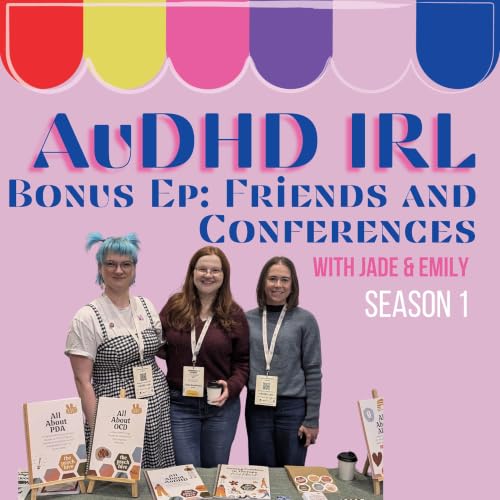
  • Bonus Episode: AuDHD, Friends and Conferences
    11 Jul 2026

    Content warning: brief mentions of trauma, PTSD, dissociative identity disorder, chronic illness and healthcare self-advocacy, and online hatred directed at trans people. Nothing graphic. Look after yourself!

    Summary:This one's a bit different. Bri grabbed Emily and Jade, her Psych Hive co-directors and real-life mates, for two quick check-ins recorded live from NATCA (the Neurodivergence Affirming Therapists Conference Australia) in Melbourne. Part one is end of day one, part two is the exhausted-but-glowing wrap after day two, where Jade and Bri also gave their own talk on self-care.

    Along the way: spirit animal introductions (Jade's a lemur, Emily's a cheetah, Bri's a labrador who eats shoes, don't ask), a mid-conference "missing person" scare, and a genuinely lovely rundown of what stuck with them from two days of neuroaffirming research and practice.

    Takeaways:

    Day one, the panel on neurodivergence and medical co-occurrences hit hard: capacity is finite, and the people with the most medical complexity carry the heaviest self-advocacy load. Systems like NDIS and Medicare help some, but the burden of proving your needs still falls on the most disabled.

    A talk on trans marginalisation and online hatred, and one on intergenerational trauma from undiagnosed neurodivergence, both circled the same idea: othering breaks connection, and disconnection is where distress grows.

    Research on masking and mental health found the harm isn't masking itself, it's what masking does to your sense of self: feeling "less than" and losing a clear identity. The quote that stuck: "I am wrong."

    Day two opened with Nick Walker's keynote touched on human flourishing and a genuinely useful reframe: instead of pathology paradigm versus neurodiversity paradigm, think pathology paradigm versus neuronormative paradigm. Some forms of neurodivergence (like PTSD) can genuinely benefit from treatment when the person wants that. Others (like autism) are actively harmed by attempts to cure them. ADHD medication got reframed as an accommodation rather than a cure, since the traits come straight back off it.

    A talk on echolalia reframed it as authentic communication rather than "just stimming", it can carry a feeling, a need, a want, or be a bid for connection. There's even a version where people echo movements or emotions, not just words.

    The through-line for both of them: connection, not categorisation, is what actually helps people flourish.

    They close with a quick word on Psych Hive resources (the OCD guide, the PDA parent guide, the AuDHD books for adults and for parents, free webinars and downloads) and two prize draws running through the AuDHD IRL and Psych Hive email lists. Jade and Emily will be back to talk about building a neuroaffirming practice and being allies.

    You can find Jade and Emily on instagram at @thepsychhive and their resources through the website www.thepsychhive.com.

    Daha fazlasını göster Daha Az Göster
    43 dk.
  • Ep28. AuDHD and Exploring Hormones with Samantha
    5 Jul 2026

    Content warning:

    This episode touches on sexual assault, postpartum rage, and suicide statistics (in the context of perimenopause research). Please look after yourself. If this isn't what you have capacity for today, keep scrolling.

    Show notes:

    This one is a hormone deep dive and it's some knowledge I wish someone had handed me years ago. I sat down (in person, so much fun) with Samantha Johnson, AuDHD lived experience educator and the brains behind Sam Attempts Motherhood, to talk about the wild ride of AuDHD plus hormones plus motherhood.

    Sam takes us right through the cycle: what oestrogen and progesterone are actually doing to your dopamine and your sensory system, why the days before your period can flatten you, and why "just take birth control" is doctors' favourite non-answer. We get into cyclic medication dosing (yes, your meds can need adjusting through the month), how postpartum rage and perimenopause snuck up on Sam at the same time, and why AuDHD folks might just be noticing these shifts earlier rather than experiencing them earlier. We also unpack the WHI scare that set women's hormone health back decades, vaginal estrogen for UTIs, and why self identification is valid, full stop.

    It's dense, it's validating, and it will make you want to go start tracking your cycle immediately.

    Takeaways:

    • Oestrogen and progesterone aren't just "period hormones." Oestrogen affects dopamine, progesterone affects sensory processing, mood, gut motility and histamine clearance. Every cell in your body has oestrogen receptors.
    • The days before ovulation and the days before your period are when a lot of AuDHD folks notice their meds feel "off." That's real, and cyclic dosing is backed by research, even if most doctors haven't caught up.
    • Self identification counts. If you've done the deep dives and ticked the boxes, you don't need three hours with a psych to validate a lifetime of lived experience.
    • Postpartum rage and early perimenopause can hit at the same time and get mistaken for each other, or dismissed entirely.
    • AuDHD people may not start perimenopause earlier, but we might just be more sensitive to noticing the shift before our neurotypical peers do.
    • The 2002 Women's Health Initiative scare tanked HRT uptake and we're still feeling the fallout, even though the original findings were misreported.
    • Vaginal oestrogen can be a genuine fix for recurrent UTIs in older women, instead of endless rounds of antibiotics.

    Find Sam at @samattemptsmotherhood or www.attemptingmotherhood.com for her free resources, and check out Dr Lotta Borg Skoglund and Dr Kelly Casperson for more on this stuff.

    Daha fazlasını göster Daha Az Göster
    1 sa. ve 2 dk.
  • Ep27. AuDHD and Gender Diversity with Morgs
    30 Jun 2026

    Content warning

    This episode includes discussion of transphobia, misgendering and microaggressions, and a brief mention of non-consensual medical procedures performed on intersex infants. Please look after yourself while you listen.

    Summary

    This week I sat down with Morgs, and was such a joy. We actually met years ago working retail together (selling very overpriced cups and plates), and I have loved watching everything they have gone on to do since.

    Morgs is a queer, trans, neurodivergent social worker. They were the 2023 AASW Social Work Student of the Year for a policy proposal to include gender affirming surgeries in the Medicare Benefits Scheme. They finished their master's in 2024, and they now work in child protection. They are also AuDHD, and their current special interest is dahlias (we got delightfully sidetracked).

    Our topic was AuDHD and gender diversity, and Morgs brought so much warmth and wisdom to it. We talked about why autistic people are far more likely to be gender diverse, and Morgs had a beautiful way of putting it. If you already feel like you do not fit the rules in a hundred other ways, questioning the rules around gender feels like much less of a leap.

    Morgs also shared something cool... When they started transitioning, a whole lot of autistic traits became more obvious, because they were unmasking femininity and unmasking autism at the same time. Finding out who they were in terms of gender helped them find out who they were as a neurodivergent person. Cool, right??

    Then we got into language, which we both love. We unpacked AFAB and AMAB, why those terms get overused, and why saying what you mean is so much kinder and clearer than lumping people into boxes. We finished on microaggressions, over-apologising, and the very simple, very powerful question: what are your pronouns?

    This one will make you think, and it might just help you do a little bit better.

    Takeaways

    • There are as many experiences of gender and autism as there are gender diverse and autistic people. You cannot assume.
    • Transitioning and unmasking can happen together. Exploring your gender can unlock a deeper understanding of your neurotype.
    • Say what you mean. If you mean people who have periods, say that. AFAB and AMAB are not a stand-in for someone's whole body, history or identity.
    • If you get someone's pronouns wrong, apologise once, correct yourself, and move on. Do not make the other person comfort you.
    • Just ask: what are your pronouns? Fewer words, less assuming, easy to practice.
    • We all have room to do a little bit better. Trans and gender diverse people need cis people to meet them halfway.
    Daha fazlasını göster Daha Az Göster
    54 dk.