Episodes

  • The modernist buildings of India
    May 19 2026

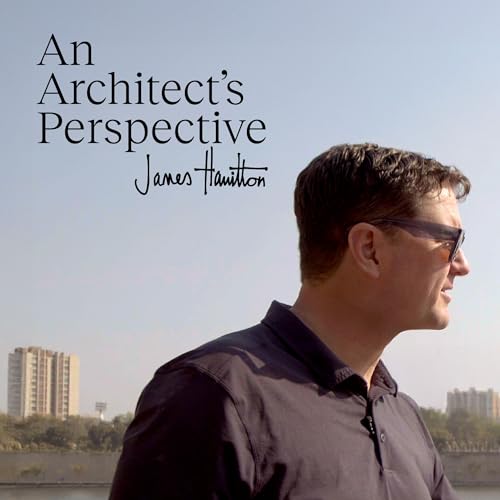
    I’m James Hamilton, and in this episode, we turn our attention to B. V. Doshi — one of India’s most revered architects, and the first from the country to win the Pritzker Prize.

    This conversation took place in 2018, at his home in Ahmedabad. What unfolded was more than a professional interview. It was a rare, personal insight into the philosophy and life story of a man who saw architecture not just as construction, but as culture.

    Doshi speaks about his early years working with Le Corbusier and Louis Kahn, his love of Indian tradition, and his belief in architecture as a social act. We talk about the importance of shade and breeze, the meaning of thresholds, and why life—not form—should always be the starting point for design.

    This episode isn’t just about buildings. It’s about attention. About values. About how we choose to live, and what architecture can do to support that.

    Key Moments & Topics of Conversation

    ● Working under Le Corbusier and how it shaped Doshi’s sensibility

    ● Founding School of Architecture and CEPT University in Ahmedabad

    ● Why he believed modernism must be adapted to Indian culture and climate

    ● Reflections on Aranya Housing, Sangath, and IIM Bangalore

    ● Architecture as a form of storytelling and spatial choreography

    ● The body, the senses, and the everyday as foundations of design

    ● A deep commitment to community, humility, and place

    Balkrishna Vithaldas Doshi (1927–2023) was an architect, educator, and urbanist whose work defined post-independence architecture in India. Known for combining modernist principles with vernacular sensitivity, his legacy includes over 100 built projects and generations of students. He was awarded the Pritzker Prize in 2018.


    Host Info

    James Hamilton, founder of James Hamilton Architects. Trained at Cambridge and Harvard, James brings a practitioner’s eye to every episode - offering grounded insight, clear storytelling, and a deep respect for the buildings under discussion.


    Links and Resources

    ● James Hamilton Architects

    ● Watch the full episode on YouTube

    ● CEPT University

    ● Sangath Studio Project Page (Vastushilpa Foundation)

    ● Aranya Low Cost Housing


    Quotes

    “Architecture is not the building. It’s the space between the buildings. It’s the thresholds. The breeze. The possibility of meeting.”

    “You don’t design from the mind. You design from the body — from the senses, from experience, from life itself.”

    “What we need is not monuments. We need memories. And memory comes from living well.”


    Website: www.jameshamiltonarchitects.com

    Instagram: @jameshamiltonarchitects

    Production: OneFinePlay.com

    Show More Show Less
    11 mins
  • The most radical cricket stadium in India
    May 12 2026

    This is a conversation about more than just sports architecture. It’s about the intersection of land, politics, and public life. Correa’s stadium doesn’t dominate its site—it rests lightly on it, more pavilion than monument. It invites people in, rather than fencing them out. And it’s shaped as much by the climate as it is by the culture.

    We’re in Ahmedabad, at the Sardar Vallabhbhai Patel Stadium, designed by Charles Correa in the early 1980s. It’s one of his most radical works—at once minimal, monumental, and deeply democratic. To unpack this building’s meaning and its legacy, I’m joined by architect, urbanist, and professor Rahul Mehrotra.

    Rahul brings an insightful and generous reading of the project, drawing connections between Correa’s design principles and broader questions of civic space in India today.

    If you’ve ever thought stadiums were all about scale and spectacle, this episode might just change your mind.

    Key Moments & Topics of Conversation

    ● The design logic and spatial strategy of the Patel Stadium

    ● How Correa subverted conventional stadium typologies

    ● The relationship between the architecture and the Ahmedabad landscape

    ● Rahul’s personal experiences at the stadium growing up

    ● Shade, breeze, and climate as structuring forces in tropical architecture

    ● Civic architecture as a platform for democracy and inclusion

    ● Correa’s legacy as seen through the lens of the stadium


    Guest Info

    Rahul Mehrotra is an architect, urbanist, and educator. He is the founder of RMA Architects and Professor of Urban Design and Planning at Harvard GSD. Rahul’s work spans design,

    research, and activism, with a deep commitment to the built environment of India and the global South.


    Links and Resources

    ● James Hamilton Architects

    ● RMA Architects

    ● Charles Correa Foundation

    ● Sardar Patel Stadium Project Page

    ● Watch the full episode on YouTube


    Quotes

    “It’s a building that breathes with the land. Not something you arrive at, but something you’re already in.”

    “There’s a generosity to the design—a refusal to monumentalise, a willingness to serve.”

    “This is a stadium where cricket is an event, yes, but it’s also a gathering, a celebration of community.”


    Website: www.jameshamiltonarchitects.com

    Instagram: @jameshamiltonarchitects

    Production: OneFinePlay.com

    Show More Show Less
    40 mins
  • Nondita Mehrotra on Correa's living legacy
    May 5 2026

    I’m James Hamilton, and in this episode, we explore a building that transcends architecture to touch on something far deeper: dignity, restraint, and national memory.

    We’re in Ahmedabad, India, at the Gandhi Ashram - designed by Charles Correa, one of the most influential figures in tropical modernism. And joining me is Nondita Mehrotra, an architect and academic whose life and work intersect closely with Correa’s legacy.

    What does it mean to build a space that honours a life like Gandhi’s? How do you design without ego, while still creating something resonant and lasting? In this conversation, Nondita helps unpack the nuanced genius of Correa’s ashram - a building that manages to be both modest and monumental.

    Together, we explore themes of cultural memory, architecture’s role in healing, and the ethics of representation. This is not just a story about one building. It’s about architecture as a form of empathy - and about what modernism can look like when it’s rooted in context, not ideology.

    So let’s step inside this space of quiet power.

    Key Moments & Topics of Conversation

    ● Charles Correa’s design philosophy and lifelong commitment to human-centric architecture

    ● The Gandhi Ashram as a case study in restraint, symbolism, and architectural humility

    ● Nondita’s perspective on working with legacy and place as an Indian woman architect

    ● The spatial rhythm of the ashram, and how it shapes visitor experience

    ● Reflections on climate, materiality, and spiritual atmosphere in Correa’s work

    ● What it means to design for national memory without monumentality

    ● The evolving relevance of tropical modernism today


    Guest Info

    Nondita Mehrotra is an architect and educator whose work focuses on contemporary architecture in India, with a special interest in cultural institutions and the legacy of post-independence modernism. She is the daughter of Charles Correa and works actively to advance his architectural and civic vision.


    Links and Resources

    ● James Hamilton Architects

    ● Charles Correa Foundation

    ● Gandhi Ashram, Ahmedabad

    ● An Architect’s Perspective on YouTube


    Quotes

    “He didn’t try to replicate Gandhi’s life in the form. He let the light, the air, the silence do the work.”

    “It’s one of the only national memorials I know that doesn’t feel like it’s trying to impress you.”

    “The building never says ‘look at me.’ But somehow, you do.”


    Website: www.jameshamiltonarchitects.com

    Instagram: @jameshamiltonarchitects

    Production: OneFinePlay.com
    Show More Show Less
    41 mins
  • What does it mean to build with humility?
    Apr 28 2026

    In this episode, I sit down with Neelkanth Chhaya, architect and academic, to talk about the Gandhi Memorial Museum - and how Charles Correa embedded Gandhi’s values into its very form.

    We explore how the building reflects humility through materials, structure, and sequencing - and how it echoes the Indian tradition of open courtyards and sky as a central space. Neelkanth shares both personal insights and a grounded analysis of what makes the Ashram feel so profound.

    Key Topics:

    ● Gandhi’s philosophy translated into built form

    ● Open courtyards and sky as compositional tools

    ● Material humility and ethical restraint

    ● How Correa’s architecture resists spectacle

    ● The museum as a site of memory and daily life


    Guest Info:

    Neelkanth Chhaya is a prominent Indian architect and former Dean of Architecture at CEPT University. His work and teaching focus on vernacular wisdom, cultural continuity, and ethics in architecture.


    Quotes from the Episode:

    On humility in design: "There are no grand gestures here. Just space, light, and a deep sense of purpose."

    On the building’s presence: "It doesn’t speak loudly. It speaks with moral clarity - like Gandhi himself."

    On learning from tradition: "Architecture isn’t about invention. It’s about listening to what’s already there."


    Website: www.jameshamiltonarchitects.com

    Instagram: @jameshamiltonarchitects

    Production: OneFinePlay.com

    Show More Show Less
    26 mins
  • Charles Correa and the birth of tropical modernism
    Apr 21 2026

    I visit Ahmedabad to explore the life and work of Charles Correa, a pioneering voice in post-independence Indian architecture. We look at how Correa translated modernist ideas into a distinctly Indian language — rooted in climate, tradition, and civic purpose.

    From the Gandhi Memorial Museum to his urban design legacy, Correa’s work reveals how architecture can be both modern and deeply local. This is an episode about climate, ethics, and the power of spatial restraint.

    Host Info

    James Hamilton, founder of James Hamilton Architects. Trained at Cambridge and Harvard, James brings a practitioner’s eye to every episode - offering grounded insight, clear storytelling, and a deep respect for the buildings under discussion.


    Key Topics:

    ● The philosophical roots of Correa’s work

    ● What defines Tropical Modernism beyond aesthetics

    ● Lessons from the Gandhi Ashram and its quiet symbolism

    ● How Correa positioned architecture as a tool for democracy

    ● The tension between monumentality and humility in his work


    Quotes from the Episode:

    On Correa’s ethics: "He never built to be noticed. He built to be useful — to serve."

    On Gandhi’s influence: "This is modernism as principle. Light, silence, and conviction."

    On architecture and identity: "What he gave India wasn’t a style. It was a way to build without forgetting where you are."


    Website: www.jameshamiltonarchitects.com

    Instagram: @jameshamiltonarchitects

    Production: OneFinePlay.com

    Show More Show Less
    16 mins
  • The woman who almost got written out of architectural history
    Apr 14 2026

    I sit down with Spanish architect and academic Carmen Espegel to explore the life and work of Eileen Gray, with a particular focus on the complexities of authorship, identity, and gender within architectural history.

    Carmen offers an incisive reading of Villa E-1027 not just as a physical space, but as an architectural manifesto — one where form, emotion, and politics are deeply intertwined. We discuss Gray’s design intelligence, her artistic independence, and the cultural dynamics that led to her marginalisation for much of the 20th century.

    This is a conversation about recognition: how architecture is credited, who gets remembered, and how we begin to set the record straight.

    Key Topics:

    ● The originality of Eileen Gray’s architectural vision

    ● The politics of authorship and gender in modernism

    ● Carmen’s academic work on restoring Gray’s legacy

    ● How space and identity intersect in architectural history

    ● Villa E-1027 as a manifesto for modern domesticity


    Guest Info:

    Carmen Espegel is a practising architect and professor at ETSAM Madrid, whose work focuses on collective housing, gender studies, and the re-reading of modernist history through a critical feminist lens.


    Quotes from the Episode:

    On Gray’s authorship: "This house was not co-authored. Villa E-1027 was entirely Eileen Gray’s vision."

    On architecture and gender: "Architecture is never neutral. It reflects the hand and the gaze of its author — and historically, that gaze has been overwhelmingly male."

    On setting the record straight: "We don’t need to invent heroes. We just need to tell the truth about the ones we ignored."


    Website: www.jameshamiltonarchitects.com

    Instagram: @jameshamiltonarchitects

    Production: OneFinePlay.com

    Show More Show Less
    42 mins
  • Was Le Corbusier the villain of this story?
    Apr 7 2026

    I’m joined by architectural historian Tim Benton for an in-depth look at Eileen Gray’s Villa E-1027, and what her design says about modernism at its most intimate. Tim was one of the first scholars to seriously document and interpret Gray’s work, and he brings decades of insight to our conversation.

    We unpack how Villa E-1027 challenges the rationalist model of modernism, replacing rigidity with rhythm, softness, and a careful choreography of light and movement. Along the way, we discuss issues of authorship, legacy, and what makes Gray’s work so quietly radical.

    Key Topics:

    ● How E-1027 contrasts with Le Corbusier’s ideals

    ● The original intent behind Gray’s spatial sequencing

    ● Tim’s firsthand research and discoveries on site

    ● Misattribution and the erasure of female architects

    ● What E-1027 teaches us about architecture as lived experience


    Guest Info:

    Tim Benton is Professor Emeritus at The Open University and an internationally respected expert on Le Corbusier and early modernism. His work has been pivotal in reevaluating Eileen Gray’s role in architectural history.


    Quotes from the Episode:

    On E-1027’s layout: "It’s not a machine for living. It’s a place to linger."

    On authorship and interpretation: "To see what she did, you have to remove the myths and really look at the building."

    On architecture’s emotional register: "This house doesn’t shout. It whispers, and that’s far harder to do."


    Website: www.jameshamiltonarchitects.com

    Instagram: @jameshamiltonarchitects

    Production: OneFinePlay.com

    Show More Show Less
    40 mins
  • Eileen Gray's radical house on the Riviera
    Mar 31 2026

    In this episode, I visit Villa E-1027, the seaside house designed by Eileen Gray and built in 1929 on the Côte d’Azur. Known for its sensuality and quiet radicalism, the house challenges many assumptions of early modernism — especially its relationship to the body, to comfort, and to intimacy.

    Unlike the “machines for living in” of her male contemporaries, Gray’s design is deeply personal, profoundly tactile, and structurally inventive. From the pivoting screens to the custom furniture, every detail is tuned to the rhythms of life.

    This is Sensual Modernism in action - modern architecture that values emotion as much as function.

    Key Topics:

    ● Why Villa E-1027 remains a radical example of domestic architecture

    ● Eileen Gray’s attention to tactility, light, and comfort

    ● The philosophical split between Gray and Le Corbusier

    ● How modernism can accommodate softness, privacy, and sensuality

    ● The legacy of E-1027 in architectural history


    Host Info

    James Hamilton, founder of James Hamilton Architects. Trained at Cambridge and Harvard, James brings a practitioner’s eye to every episode - offering grounded insight, clear storytelling, and a deep respect for the buildings under discussion.


    Quotes from the Episode:

    On design and emotion: "This isn’t a house you move through — it’s one you feel your way around."

    On Gray’s legacy: "She built spaces that cared for the person inside them. That’s more radical than steel or concrete."

    On atmosphere as structure: "Light and air aren’t afterthoughts. They’re structural."


    Website: www.jameshamiltonarchitects.com

    Instagram: @jameshamiltonarchitects

    Production: OneFinePlay.com

    Show More Show Less
    19 mins