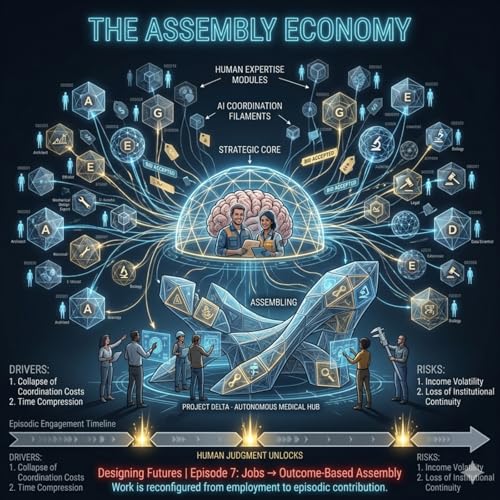
• Jobs→Global Bidding Market
    Feb 27 2026

    “The 9-to-5 model optimized for presence. AI optimizes for throughput.” In Episode 7 of Designing Futures, we deconstruct the shift from continuous employment to modular engagement. When AI handles the repetition, human work becomes a series of episodic, high-stakes judgments. We explore the transition from firms as labor pools to firms as System Assemblers, and why your future "career" may look less like a steady paycheck and more like a high-value global bidding market.

    In this episode, we break down:

    • The Coasean Collapse: Why the economic advantage of permanent headcount weakens as coordination costs reach near-zero.
    • Episodic Judgment: Why the most valuable human contributions—problem framing and risk auditing—don't require 40 hours a week.
    • The Assembly Leader: Why managing "time" is becoming obsolete, replaced by the management of "trust" and "decision boundaries."

    Keywords: Future of Work, Coase’s Theory of the Firm, Gig Economy 2.0, Human Capital, AI Coordination, Economic Modularization, Labor Market Disruption, Strategic Leadership.

    🔗 Read the Episode: Episode 7: Jobs → Global Bidding Market

    Show More Show Less
    16 mins
  • Leadership in the age of AI
    Feb 14 2026

    AI hasn't made leadership easier; it has made the stakes of decision-making much higher.

    A fundamental variable in leadership has changed: the cost of trying an idea.

    What once required months of budget, hiring, and tooling now takes minutes. A cloud instance, an API call, a no-code workflow. No capital expenditure. No permanent headcount. Just execution.

    This isn’t bad. It has democratized creation.

    But here's the crisis: When the cost of action collapses, the cost of a bad decision doesn’t disappear—it moves downstream.

    AI amplifies this. It makes feasibility studies cheap and prototypes instant. So "decision quality" can no longer be about "can we build it?"

    Quality now must mean:

    • Second and third-order effects (What does this actually optimize at scale?)

    • Systemic and human impact (What behaviors does this incentivize? What does it erode?)

    • Reversibility (Can we undo this, or does it create a new normal?)

    • Accountability (Who pays the price if the core assumption is wrong?)

    AI is a force multiplier. It will faithfully amplify your logic—and your blind spots. Bad assumptions no longer fail fast and quietly; they propagate, scale, and entrench themselves into systems.

    So yes, move fast. Iterate relentlessly. But spend your truly scarce resource—focused leadership attention—on the one thing the machine cannot do: hold the complexity of consequence.

    Speed without that judgment isn't innovation.

    It's just faster risk propagation.

    Show More Show Less
    30 mins
  • Don’t Regulate AI, Architect It
    Feb 21 2026

    “Sovereignty no longer means control; it means agency.” In Episode 5 of Designing Futures, we analyze the structural bind facing modern states: a total economic dependency on AI-heavy firms paired with a speed mismatch in policy. We argue for a transition from "Regulation" to "Ecosystem Design," focusing on how to build domestic capability loops and living regulatory sandboxes. Discover why the role of the state must evolve into an orchestrator of compute, data, and standards to prevent a quiet, irreversible loss of agency.

    In this episode, we break down:

    • The Renter State: Why most nations are downstream consumers of a concentrated "upstream" cognitive infrastructure.
    • From Operator to Architect: The six levers of the new design space, including distributed innovation and knowledge commons.
    • The Failure of Blunt Force: Why symbolic bans and protectionism only deepen dependency and accelerate capital exit.

    Keywords: AI Governance, Digital Sovereignty, Ecosystem Design, Regulatory Sandboxes, Infrastructure Concentration, Policy Innovation, Strategic Agency, 2026 Geopolitics.

    🔗 Read the Episode: Episode 5: Don’t Regulate AI, Architect It

    Show More Show Less
    14 mins
  • The Cognitive allocation of Labor
    Feb 21 2026

    “High velocity, low trajectory.” In Episode 4 of Designing Futures, we examine the dangerous mismatch between human training and machine capability. We argue that humans are currently being forced into rote compliance while AI is pushed into performative creativity—a symmetrical error that is stifling foundational discovery. Learn why we must pivot human work toward "unstructured research" and "problem framing," leaving the exhaustive search of the known space to the algorithms.

    In this episode, we break down:

    • Innovation vs. Invention: Why invention is a combinatorial search (AI), but innovation is a judgment of relevance (Human).
    • The Engine of Discomfort: Why AI cannot feel the "conceptual tension" that signals a new paradigm.
    • The Institutional Bottleneck: How KPI-driven evaluation is systematically defunding the very activities that create new scientific domains.

    Keywords: Intelligence Allocation, Comparative Advantage, Problem Discovery, Structural Stagnation, Research Policy, Epistemic Discomfort, Institutional Reform, AI Strategy 2026.

    🔗 Read the Episode: Episode 4: We Are Misallocating Intelligence

    Show More Show Less
    12 mins
  • How We Reversed the Logic of Discovery and Invention
    Feb 21 2026

    “Newton didn’t have a business plan for gravity.” In Episode 3 of Designing Futures, we analyze the shift from Law-First to Problem-First thinking. We explore how modern funding and educational structures collapse the search space before exploration even begins, favoring incremental optimization over structural breakthroughs. This episode is a call to replenish our foundational reserves and understand why the most transformative technologies—from lasers to mRNA—would have failed a modern impact statement.

    In this episode, we break down:

    • Exploration vs. Pre-Justification: Why demanding relevance before understanding is structurally hostile to discovery.
    • The AI Paradox: How we’ve given curiosity to machines (unsupervised learning) while forcing humans into audited compliance.
    • Intellectual Strip-Mining: Why today’s rapid "innovation" is actually the extraction of decades-old foundational physics and math.

    Keywords: Innovation Policy, Foundational Research, ROI in Science, R&D Strategy, Problem-First Thinking, Discovery Science, Cognitive R&D, Paradigm Shifts.

    🔗 Read the Episode: Episode 3: How We Reversed the Logic of Discovery

    Show More Show Less
    15 mins
  • AI Age Needs Both Rote Learning and Critical Thinking
    Feb 21 2026

    “An engine without fuel doesn’t move.” In Episode 2 of Designing Futures, we examine why the AI age actually intensifies the need for foundational mastery. We move past the false binary of "memorization vs. creativity" to show how internalized knowledge frees up cognitive bandwidth for higher-order analysis. Learn why the fastest way to create a dependent class is to outsource the "internal substrate" of the human mind to a machine.

    In this episode, we break down:

    • The Bandwidth Problem: Why constantly "looking things up" leaves zero mental room for actual innovation.
    • The Dependency Trap: How a lack of rote foundations turns critical thinking into "blind trust" in AI outputs.
    • Sequential Mastery: A two-phase framework for building automaticity in fundamentals before moving to AI-augmented judgment.

    Keywords: Rote Learning, Critical Thinking, Cognitive Load Theory, AI Dependency, Education Strategy, Mental Models, Automaticity, Human Relevance.

    🔗 Read the Episode: Episode 2: Why the AI Age Needs Both Rote and Critical Thinking

    Show More Show Less
    15 mins
  • Why Education Must Move Beyond What Can Be Learned from a Book
    Feb 21 2026

    “AI masters the codified. Humans must master the ambiguous.” In Episode 1 of Designing Futures, we analyze the shift from procedural schooling to high-order cognitive development. We break down the three levels of human work—Reactive, Systemic, and Paradigm-shaping—and expose why current education systems are over-indexing on the exact skills AI is designed to replace. This episode provides the strategic lens for a thinking-centered education that prioritizes how to decide when what to know is free.

    In this episode, we break down:

    • The Book-End of Learning: Why tasks that rely on absorbing and recalling existing datasets are now inherently automatable.
    • Deep Rewiring: Why the "thinking patterns" developed in childhood are more critical than the "tool proficiency" learned as adults.
    • The New Equity: Why instruction-driven, repetitive education is a trap for the most vulnerable populations in an AI economy.

    Keywords: Education Reform, Cognitive Architecture, Systems Thinking, AI Displacement, Problem Reframing, Pedagogy, Future of Learning, Human Capital.

    🔗 Read the Episode: Episode 1: Rebuilding Education for the AI Age

    Show More Show Less
    14 mins
  • AI யுகத்திற்கான தமிழ்நாட்டின் பள்ளிக் கல்விக்கான மறுவடிவமைப்புத் திட்டம் (2027–2037)
    Feb 21 2026

    "அறிவுசார் இறையாண்மை" (கல்வி மற்றும் எதிர்காலம்) "முந்தைய தலைமுறைகளுக்குக் கற்றுக் கொள்ள பல ஆண்டுகள் இருந்தன. நம்மிடம் சில மாதங்களே உள்ளன." AI காலத்திற்கான கல்விச் சீர்திருத்த வரிசையில், 'புத்தறிவுப் புரட்சி' (Cognitive Revolution) குறித்து நாம் ஆழமாக ஆராய்கிறோம். மனித வரலாற்றில் முதல்முறையாக, ஒரு தொழில்நுட்பம் வெறும் புதிய கருவிகளைத் தரவில்லை; மாறாக மனித அறிவின் அடிப்படையையே (Substrate of Value) கேள்விக்குள்ளாக்குகிறது. மனப்பாடக் கல்வியும், விதிமுறை சார்ந்த உழைப்பும் காலாவதியாகி வரும் சூழலில், தமிழ்நாடு எவ்வாறு ஒரு புதிய 'அறிவுசார் கட்டமைப்பை' உருவாக்கப் போகிறது? மெதுவான சீர்திருத்தங்கள் என்பது வெறும் மறுப்பு மட்டுமே—இங்கு தேவை ஒரு முழுமையான அறிவுசார் மாற்றம்.

    இந்தக் காணொளியில்/அத்தியாயத்தில் நாம் அலசுபவை:

    • தானியங்கி எல்லை (The Automation Boundary): எவையெல்லாம் எழுத்துப்பூர்வமாக ஆவணப்படுத்தப்பட்டுள்ளதோ, அவை அனைத்தும் AI-ஆல் ஆக்கிரமிக்கப்படும்—இதிலிருந்து மனித அறிவை எப்படிக் காப்பது?
    • பயன்பாட்டு மனப்பாடம் (Applied Rote): மனப்பாடம் செய்வதற்கும் சிந்திப்பதற்கும் இடையிலான போலிப் போரை முடிவுக்குக் கொண்டு வந்து, அதைத் 'தன்னியக்கத் திறனாக' (Automaticity) மாற்றுவது எப்படி?
    • சமூக நீதி மற்றும் அறிவுசார் அடுக்குமுறை: AI நுட்பங்கள் வெறும் நகர்ப்புற மேல்தட்டு மக்களுக்கானதாக மாறாமல், கிராமப்புற மாணவர்களுக்கான 'அறிவுசார் உரிமையாக' மாற்றுவதற்கான வழிமுறைகள்.
    • தமிழ்நாடு மிஷன்ஸ் (TN Missions): மாவட்ட நீர் பாதுகாப்பு முதல் பஞ்சாயத்து நிர்வாகம் வரை—கல்வியை வகுப்பறையிலிருந்து நிஜ உலகச் சிக்கல்களைத் தீர்க்கும் கருவியாக மாற்றுதல்.

    முக்கியச் சொற்கள் (Keywords): அறிவுசார் கட்டமைப்பு (Cognitive Architecture), கல்விச் சீர்திருத்தம், செயற்கை நுண்ணறிவு (AI), சமூக நீதி (Social Justice), அறிவுசார் இறையாண்மை (Intellectual Sovereignty), தன்னியக்கத் திறன் (Automaticity), முறையான பகுத்தறிவு (Systemic Reasoning).

    Show More Show Less
    18 mins