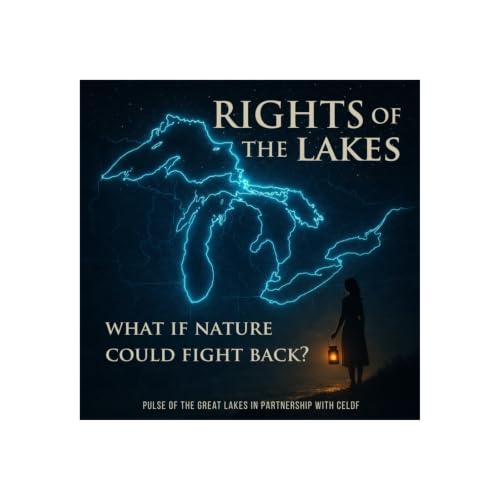
Rights of the Lakes cover art

Rights of the Lakes

Rights of the Lakes

By: PULSE of the Great Lakes with Tamara Graham
Listen for free

What if the Great Lakes could talk?

What would they say about us?

Would they say we're protecting them or destroying them?

Rights of Nature is a growing legal movement that challenges a foundational assumption of American law: that ecosystems are property. That rivers, lakes, wetlands, and forests exist to be owned, extracted, and controlled by whoever holds the deed.

Rights of Nature says otherwise. It recognizes that the living systems we depend on for survival—including the Great Lakes—have the right to exist, to flourish, to regenerate, and to evolve.

This isn't nature versus humans. We are nature. The separation is the lie that got us here.

If the Great Lakes had legal rights, the communities who depend on them could stand in court to defend them. Not as owners protecting an asset. As part of a living ecosystem fighting for its life.

In this series, we go deep. The Lake Erie Bill of Rights. New York's proposed Great Lakes and State Waters Bill of Rights. Rights of Nature laws already on the books—and what happened when corporations fought back. The legal architecture of corporate personhood that lets industries destroy what belongs to all of us. And our work to bring Rights of Nature legislation to every one of the eight Great Lakes Basin states at both the local levels and states level.

This is about regulated destruction—the kind that comes with permits and the full blessing of the legislatures that were elected to protect us.

The question isn't whether the Great Lakes deserve rights.

The question is whether we're willing to admit that protecting them means recognizing we are them.

PULSE of the Great Lakes
Episodes
  • Environmental Regulation Has Failed Us | The Case for Rights of Nature
    Jun 30 2026

    In this episode, Tamara is joined by Tish O'Dell and Ben Price of CELDF. The conversation explores the evolving concept of Rights of Nature, highlighting its origins, challenges, and the global movement advocating for nature's rights. The speakers discuss the importance of community engagement, cultural shifts, and the role of indigenous wisdom in shaping environmental laws. They emphasize the need for local actions to drive change and prepare for potential pushback against the movement as it gains traction.

    Key Takeaways

    The Rights of Nature movement started in a small borough in Pennsylvania and has grown globally.

    Ecuador's constitutional recognition of nature's rights has inspired similar movements worldwide.

    Indigenous populations play a crucial role in the success of rights of nature initiatives.

    Legal frameworks for nature's rights are evolving, but challenges remain in implementation.

    Community engagement is essential for the movement's success and sustainability.

    Cultural shifts are necessary to change perceptions of nature from property to a living entity.

    The movement faces potential co-opting by corporate interests, which could dilute its goals.

    Local actions can inspire broader movements and create a ripple effect in neighboring communities.

    The health of the environment is directly linked to human health and well-being.

    Expect resistance as the movement grows, but remain committed to the cause.

    Chapters

    00:00 Introduction to Rights of Nature

    11:29 The Evolution of Rights of Nature

    20:15 Challenges and Opportunities in Implementation

    27:28 Global Perspectives on Rights of Nature

    39:11 Cultural Shifts and Community Engagement

    56:08 Local Actions and Global Movements

    69:12 Conclusion and Future Directions

    Read the Rights of the Lakes Blueprint. Join our Email List. Get involved and organize where you live: GreatLakesPulse.com

    Watch the podcast on YouTube: https://youtu.be/4TsuZT6Q4po?si=7cnVDgeFCzp5s5Cy

    Show More Show Less
    1 hr and 7 mins
  • The Right Not To Be Poisoned
    Jun 30 2026

    In this episode, the conversation revolves around the New York and Great Lakes Bill of Rights, its evolution, challenges, and the importance of community empowerment in environmental decision-making. Tamara is joined by Tish O'Dell and Ben Price of CELDF (Community Environmental Legal Defense Fund). They discuss the opposition faced from major environmental groups, the role of corporate personhood in environmental issues, and the potential impact of the Bill on communities. They emphasize the need for youth engagement in environmental activism and the importance of educating future generations about their rights and responsibilities towards nature.

    Key Takeaways

    The Great Lakes Bill of Rights was inspired by the Lake Erie Bill of Rights.

    Community engagement is crucial for the success of environmental legislation.

    Opposition from major environmental groups is common in rights of nature movements.

    Empowering communities to make decisions about their environment is essential.

    Corporate personhood complicates environmental decision-making.

    The Great Lakes Bill of Rights could set a precedent for other states.

    Youth engagement is vital for the future of environmental activism.

    Education about rights of nature is necessary for community empowerment.

    The interconnectedness of ecosystems must be recognized in legislation.

    Long-term impacts of projects must be considered over short-term benefits.

    Chapters

    00:00 Introduction to the Great Lakes Bill of Rights

    08:48 The Evolution of the Great Lakes Bill of Rights

    12:42 Challenges and Opposition to Rights of Nature

    20:10 Community Empowerment and Environmental Decision-Making

    30:49 The Role of Corporate Personhood in Environmental Issues

    37:08 Potential Impact of the Great Lakes Bill of Rights

    46:34 The Future of Rights of Nature and Youth Engagement

    Read the Rights of Nature Blueprint for the Great Lakes Basin Region. Subscribe to our newsletter to get involved where you live: GreatLakesPulse.com.

    Watch the podcast on YouTube: https://youtu.be/iZzQXmM-hWM?si=4nyI1VYPwBy2FFDo

    Show More Show Less
    53 mins
  • Corporate Personhood is Killing Us | The Lake Erie Bill of Rights
    Jun 30 2026

    Episode 2 in our ongoing Rights of the Lakes series. Tamara is joined by Tish O'Dell and Ben Price from the Community Environmental Legal Defense Fund (CELDF). This conversation explores the concept of Rights of Nature, focusing on the Lake Erie Bill of Rights (LEBOR). The discussion covers the origins of LEBOR. Its significance, the reactions it garnered, and the implications of its eventual overturning. This episode emphasizes the importance of community activism and the need for greater awareness and support for environmental legislation in the Great Lakes Basin region.

    Key Takeaways

    Rights of Nature is crucial for protecting ecosystems.

    The Lake Erie Bill of Rights was a groundbreaking legislation.

    Libor faced significant opposition from corporate interests.

    The overturning of Libor highlights systemic issues in environmental law.

    Community activism is essential for advancing environmental rights.

    Public awareness of environmental issues is increasing.

    Legislation must prioritize human and ecological rights over corporate interests.

    Lessons from Libor can guide future rights of nature efforts.

    The fight for environmental protection is ongoing and complex.

    Engagement in local politics is vital for effective change.

    Chapters

    00:00 Introduction to Rights of Nature

    02:07 Understanding the Lake Erie Bill of Rights (Libor)

    14:23 The Impact and Reactions to Libor

    31:50 Legal and Cultural Implications of Libor's Overturn

    41:59 Lessons Learned and Future of Rights of Nature Legislation

    Read the Rights of the Lakes Blueprint and Get Involved: GreatLakesPulse.com

    Watch this podcast on YouTube: https://youtu.be/6zSoFYbddx8?si=6uWO4DsgqeJuY4cz

    Show More Show Less
    52 mins
adbl_web_anon_alc_button_suppression_t1
No reviews yet