• Trust Issues in the Age of Social Media (S4 Intro)
    Jan 29 2026

    What if your feed isn’t showing you the world, just the loudest corner of it? We open season four by taking a hard look at how outrage-optimized platforms distort your sense of “most people,” turn rare behavior into the norm, and train your nervous system to live on a distorted map. Instead of fueling another crusade, we make a cleaner promise: signal over noise, mirror over blame, sovereignty over algorithm.

    We break down why moral-emotional content spreads faster, how clustered networks funnel us into echo worlds, and why your patterns keep meeting the same archetypes in different outfits. The goal isn’t to slap labels on anyone. It’s to see recurring strategies for what they are (responses to fear, status anxiety, loneliness, and control) so you can tell the difference between some and most, pattern and population, spotlight and census. That shift turns cynicism from a false badge of wisdom into useful information about your inputs and boundaries.

    You’ll also hear a preview of “Of Men,” a forthcoming episode that uses a mirror model to flip an old 1865 essay about women through a modern woman’s standpoint on men. We use archetypes as tools, not weapons, then do the grown-up part: separating instant recognition from sweeping generalization, exploring why patterns form, what they protect, and how to stop accidentally selecting them. To make it practical, we offer a seven-day drill: ten minutes a day to steelman the other side in two sentences, name the fear under it, set one boundary, and rate your emotional intensity. If that number drops, you’re building sovereignty; if not, the algorithm still has the leash.

    Ready to trade outrage for clarity and reclaim your attention? Hit follow, share this with someone who could use less heat and more signal, and leave a review with your seven-day score. Your feed is a spotlight, not a census. Let’s start acting like it.

    Chapters:

    0:00 Season Four Premise
    0:30 How Feeds Distort Reality
    2:38 Patterns, Archetypes, And Agency
    4:13 Practicing Sovereignty
    5:08 Preview: Of Men
    6:08 A Seven-Day Mirror Drill
    9:00 Closing: Spotlight Not Census

    Tap HERE for all Social Media, email, and Podcast platforms

    Show More Show Less
    10 mins
  • Self-Awareness Isn’t A Superpower: The Hidden Cost Of Always Noticing | The Reckoning Part 19
    Jan 22 2026

    If your insight feels like a flashlight you can’t turn off, this conversation is your exhale. We face the hard truth that self-awareness isn’t always a superpower; sometimes it’s a steady drain that turns us into translators, peacekeepers, and containment fields for other people’s emotions. We name the difference between clean clarity and body-level hypervigilance, and we unpack why smart language often disguises anxious control. Expect vivid stories from love, work, and family, where tone shifts, politics, and old roles quietly run the show, and a clear path to stop carrying what was never yours.

    We go deep on the social fatigue of the deeply aware: why small talk feels airless, why safe sentences replace true ones, and how resentment grows when people want your clarity without doing their own work. You’ll hear the science of threat scanning and emotional labor, plus the subtle costs of being “everyone’s safe place” while having none of your own. Then we pivot to rebuilding: language that protects your energy, boundaries that let you rest, and simple practices that teach your nervous system that life isn’t a code to crack.

    We close with a practical three-column exercise (mine, not mine, optional) that anchors sovereignty without shutting down compassion. If you’ve been living on high alert, this is your invitation to let insight be a tool, not an identity; a guide, not a prison. Subscribe, share with someone stuck in performance healing, and help more listeners trade hypervigilance for clarity and build circles where honesty is safe and rest is possible.

    Chapters:
    0:00 The Cost Of Seeing
    1:06 When Insight Becomes Exhaustion
    2:07 Envy Of Not-Noticing And Control
    3:25 False Positives And Seeing Clearly
    4:10 Let Insight Guide You Home
    5:20 Section One: The Resonant One
    6:57 Work, Love, Family Examples
    8:15 Section Two: Social Fatigue
    10:10 Choosing Fewer, Better People
    11:22 Section Three: Clarity Vs Hypervigilance
    12:30 Trust, Resentment, Quiet Heartbreak
    13:43 Compassion Without Servitude
    15:00 Threat Scanning And Emotional Labor
    16:35 Section Four: Containment Vs Connection
    18:05 Being Used As Infrastructure
    19:20 Section Five: Reclaiming Insight
    20:40 Boundaries That Let You Rest

    Tap HERE for all Social Media, email, and Podcast platforms

    Show More Show Less
    21 mins
  • The Peace Of Non-Improvement: Leaving The Self-Help Treadmill | The Reckoning Part 18
    Jan 18 2026

    What if the most radical form of healing is to stop trying to fix yourself? We take aim at the self-help treadmill that keeps smart, caring people stuck in a loop of endless optimization, and we offer a grounded path out. A path where growth fuels a bigger life, not a busier inner audit.

    We unpack the quiet assumptions that feed the loop: discomfort means you’re broken, rest is avoidance, and worth equals progress. From there, we draw a hard line between integration and optimization. Integration shows up as calmer choices, clearer boundaries, and more play. Optimization keeps you scanning for flaws and buying frameworks. We talk sovereignty (accepting yourself fully while still taking responsibility for your impact) and we dismantle the myth of the “finished self.” You don’t need a perfect nervous system or a final breakthrough. You need permission to be human without turning every rough edge into a defect.

    This episode is practical. You’ll get the seven-day non-improvement experiment: zero self-help content for a week and twenty minutes a day of actual living; walking, lifting, cooking slowly, messy creativity, real conversation. Track one metric only: presence. Then try the 30-day outward/inward anchor rule. Choose one outward anchor that expands your world: relationships, craft, body, service, or play, and one inward anchor that stabilizes you: sleep, morning light, quiet, useful therapy, or decisive journaling. Keep the outward anchor bigger so your inner work never eclipses your life.

    If healing never turns into living, it’s a loop. Trade fireworks for quiet evidence: small actions, done today, that align with your values. Repair harm, enforce boundaries, and stop building a brand around your pain. Subscribe for more honest tools, share this with someone who’s tired of “doing the work,” and leave a review to tell us which small action you took first.

    Chapters:

    0:00 The Case Against Endless Fixing
    2:50 Integration Versus Optimization
    6:40 When Insight Becomes A Cage
    11:30 Sovereignty: Acceptance With Accountability
    16:00 The Seven-Day Non-Improvement Experiment
    22:30 Naming The Self-Help Loop
    28:30 Signs You’ve Outgrown Fix-Myself Culture
    36:00 Killing The Myth Of The Finished Self

    Tap HERE for all Social Media, email, and Podcast platforms

    Show More Show Less
    38 mins
  • The Cost Of Being Everyone’s Mirror (Part 2) | The Reckoning Part 17
    Jan 14 2026

    Ever feel like the lighthouse that never gets a signal back? We’re naming the ache of being everyone’s mirror. The person who senses the fear under the joke, the control inside “I’m just being honest,” and the pattern before it snaps shut. That depth can feel like a gift until it becomes a job you never applied for. We unpack why emotional hyperliteracy turns into unpaid labor, how survival mode masquerades as strength, and what it costs your body when you’re always the one holding the room. This is Part 2, the Bonus episode that continues from The Reckoning Part 9: 'Emotional Fluency Can Make You Invisible'

    We introduce the Lighthouse Framework to move from starving for replies to becoming the signal you keep waiting to receive. Together, we trace the roots of mirror fatigue, including parentification and the training to confuse comfort with connection. You’ll hear why translating yourself to be tolerated isn’t love, how the “therapy friend” dynamic burns you out, and the subtle ways usefulness hides grief. Then we get practical: choosing nourishing solitude over starved proximity, finding other lighthouses even if they’re rare, and creating simple systems that actually feed you: two honest check-ins a week, a place where you’re not the leader, a hobby that returns you to beginner’s mind, and a friendship where you’re allowed to be messy.

    We also tackle scarcity without collapse. Accept that many won’t meet you, and believe that some can. Don’t look for perfect mirrors; seek glimpses: Repair, presence, honesty, and accountability. Learn the markers of being met: challenge without power games, questions that deepen instead of deflect, and reciprocity that balances over time. We close with a boundary practice to protect your depth and retrain your nervous system: list what drains, list what nourishes, and set one small boundary this week. If you’ve been shrinking to stay connected, it’s time to stand up fully and let the right signals find you. If this resonated, follow, share with a friend who needs it, and leave a review to help other lighthouses find their people.

    Chapters:

    0:00 The Lighthouse Problem
    1:05 Introduction To The Lighthouse Framework
    3:23 Survival Mode And The Mirror Role
    5:26 The Pain Of Emotional Hyperliteracy
    8:46 Mirror Fatigue And Its Roots
    12:40 Why Finding A Match Feels Hard
    15:00 Choosing Solitude And Building Systems

    Tap HERE for all Social Media, email, and Podcast platforms

    Show More Show Less
    17 mins
  • Forge Your Own Sacred Architecture | The Reckoning Part 16
    Jan 13 2026

    Fire without form burns everything. We chose to turn that heat into a forge and build sacred architecture you can actually live inside. After dismantling inherited scripts like career-as-worth and romance-as-salvation, we map a practical path from ashes to authorship: values that cost, rituals that anchor, mythology that gives direction, and language that steadies you when the room goes quiet.

    We start by naming why borrowed meanings fail and why the void that follows isn’t nihilism but a blank page. Then we draw a hard line between performative awareness and creation: one stays safe on the observation deck, the other risks building something that could collapse and still be worth it. That shift, from observer to architect, changes how you move through uncertainty. You stop waiting for revelation and realize you are the revelation, capable of choosing what becomes sacred even in an indifferent universe.

    From there, we get concrete. Pick fewer values than you want and make sure they cost you a real price: truth that risks approval, depth that risks comfort, craft that risks applause, solitude that risks being misunderstood. Turn them into rituals your body recognizes as non-negotiable. Shape a personal mythology that answers what you serve and protect, and choose language that functions like handrails when chaos rises. We also reclaim structure as bones, not a cage: flexible, revisable, alive. Designed by you, rebuilt when needed. Finally, we face the question of worship. Everyone sacrifices for something; sovereignty is deciding where to place the altar so you don’t have to betray yourself to keep it standing.

    If this conversation helps you move from abstract clarity to lived purpose, share it with someone standing in the ashes, subscribe for future deep dives, and leave a review to tell us the first pillar you’re choosing today.

    Chapters:

    0:00 Blueprint After The Burn
    1:41 Lighthouse Framework Overview
    3:55 Why Inherited Meaning Fails
    5:37 Deconstruction And The Void
    6:12 Performance Versus Creation
    7:42 Practicing Sacred Architecture
    9:23 Structure As Bones, Not Prison
    10:49 Choosing What You Worship
    11:51 Signs Your Architecture Is Working
    14:06 Everyday On Purpose

    Tap HERE for all Social Media, email, and Podcast platforms

    Show More Show Less
    16 mins
  • When Hypervigilance Turns Life Into A Plot Against You
    Nov 20 2025

    The mind can turn life into a thriller you never auditioned for. When every glance feels loaded and every piece of trash reads like a message, you are not weak; you are living with an alarm system stuck on high. We dig into how hypervigilance, trauma, and loneliness can make neutral moments feel like coordinated attacks, and why the brain stitches scattered discomforts into a single persecutory plot that feels unshakably true.

    I walk through a simple lighthouse frame (Signal, Mirror, Sovereignty, and a Gritty Invitation) to map what it feels like from the inside, what your nervous system might be doing, and where your control actually lives. We talk neuroscience in plain English: a salience network that flags noise as danger, the role of chronic stress and sleep debt, and the sneaky ways diet, alcohol, and doomscrolling crank paranoia higher. Then we get practical. Instead of stockpiling “proof,” build one grounded relationship where you can test beliefs without shame. Tools like CBT for psychosis and worry-focused strategies help turn the volume down, not by forcing positivity, but by loosening the grip of constant threat scanning.

    Let’s also name the identity twist: believing you’re the hunted can feel like power. Letting go can feel like loss. You can honor real pain and still question the story about why it hurts. Good therapists won’t tell you you’re wrong; they’ll help you gather evidence and cope either way. If there’s a plot, steadier skills help you face it. If there isn’t, you get your life back. Ready to trade late-night red string for one solid alliance offline? Hit play, subscribe, and share this with someone who might be quietly carrying the “everyone is against me” story; then leave a review with one question you’d bring to a first session.


    “Loneliness Trajectories over Three Decades Are Associated with Conspiracist Worldviews in Midlife.” Nature Communications 15, no. 1 (2024): 3629. https://doi.org/10.1038/s41467-024-47113-x.

    “Posttraumatic Stress Disorder with Secondary Psychotic Features (PTSD-SP): Diagnostic and Treatment Challenges.” Progress in Neuro-Psychopharmacology and Biological Psychiatry 88 (2019): 265–75. https://doi.org/10.1016/j.pnpbp.2018.08.001.

    “Effects of Cognitive Behaviour Therapy for Worry on Persecutory Delusions in Patients with Psychosis (WIT): A Parallel, Single-Blind, Randomised Controlled Trial with a Mediation Analysis.” The Lancet Psychiatry 2, no. 4 (2015): 305–13. https://doi.org/10.1016/S2215-0366(15)00039-5.

    “Pathways from Trauma to Psychotic Experiences: A Theoretically Informed Model of Posttraumatic Stress in Psychosis.” Frontiers in Psychology 8 (2017): 697. https://doi.org/10.3389/fpsyg.2017.00697.

    “Paranoid Beliefs and Conspiracy Mentality Are Associated with Different Forms of Mistrust: A Three-Nation Study.” Frontiers in Psychology 13 (2022): 1023366. https://doi.org/10.3389/fpsyg.2022.1023366.

    “Cognitive Behavioural Therapy for Psychosis: The End of the Line or Time for a New Approach?” Psychology and Psychotherapy: Theory, Research and Practice 97, no. 1 (2024): 4–18. https://doi.org/10.1111/papt.12498.

    “Psychotic-like Experiences in the Lonely Predict Conspiratorial Beliefs and Are Associated with the Diet during COVID-19.” Frontiers in Nutrition 9 (2022): 1006043. https://doi.org/10.3389/fnut.2022.1006043.


    Tap HERE for all Social Media, email, and Podcast platforms

    Show More Show Less
    24 mins
  • Manifestation Can’t Override Your Nervous System | The Reckoning Part 15
    Nov 18 2025

    Forget the glossy promise that a vision board can outmuscle your nervous system. We pull back the curtain on why manifestation often collapses under pressure: the body votes last, and it will choose predictability over your goals until safety comes online. Instead of blame or shame, we offer a more honest roadmap that blends neuroscience and spirituality; prediction coding, vagal tone, trauma memory, and the daily practices that transform worthiness from a mantra into a memory.

    We start by naming the trap of spiritual bypass; how “good vibes only” turns avoidance into a virtue and performance into a personality. From there, we unpack how survival strategies become adult patterns: staying small to keep peace, mistaking anxiety for chemistry, flinching when money arrives because abundance feels unsafe. You’ll hear the four common paths people take after the same wound (fusing with pain, moving through, alchemizing with support, or outrunning it) and how capacity, community, and agency shape which path sticks. The point isn’t perfection; it’s integration.

    Then we lay out what real empowerment looks like. Regulate first, visualize second, act third, and integrate always. We share practical tools to expand your window of tolerance, retrain your vagus nerve, and practice receiving without bracing. You’ll learn why “thoughts become things” only after repetition rewires prediction, how to tolerate good long enough for it to feel ordinary, and how to spot the subtle ways you might be merchandising your story instead of metabolizing it. Close with a five‑minute reflection that reveals the doorway your body already marked: the exact moment you still tense when life gets good.

    If this resonates, follow and share with someone tired of trying harder at what never worked. Subscribe for more grounded spirituality, leave a review to help others find the show, and tell us: where does your body still brace when things go right?

    Chapters:

    0:00 Burning Down Manifestation Myths
    0:36 Why Vibes Without Safety Fail
    2:02 The Body Votes Last
    5:13 Spiritual Bypass Exposed
    8:20 How Programming Really Forms
    10:56 Four Paths After The Same Pain
    13:58 Real Empowerment Is Regulation
    16:00 Depth-Oriented Manifestation
    18:20 Final Words And Science Spotlight

    Tap HERE for all Social Media, email, and Podcast platforms

    Show More Show Less
    20 mins
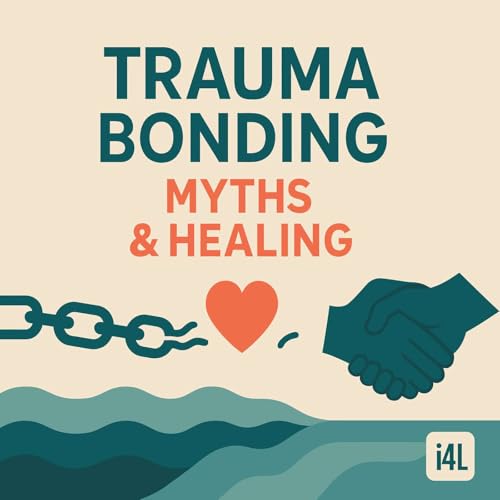
  • Trauma Bonding Is Abuse Attachment
    Nov 4 2025

    We untangle the myth that “bonding over trauma” equals a trauma bond, then map the real cycle of abuse-driven attachment. We show how neurochemistry, attachment styles, and clean repair build secure love or point to safe exits.

    • trauma bonding = abuse-driven attachment, not shared history
    • Rae & Dax’s grief story as empathy buffer, not pathology
    • cortisol, dopamine, oxytocin in the cycle
    • why makeup sex feels intense and why it isn’t repair
    • Lighthouse: Signal, Mirror, Sovereignty, Gritty Invitation
    • three ingredients of trauma bonds + cognitive dissonance
    • clean repair vs patterns, scripts for accountability
    • anxious, avoidant, disorganized, earned secure
    • therapy: EFT, IFS, EMDR, somatic work
    • safety planning, no-contact, resource pathways

    Safety beats insight. If a self-harm threat is present, leave to safety and call 911. For guidance, call or text 988 in the U.S. Do not manage it alone.

    Chapters:

    0:00 Setting The Record Straight
    2:00 Grounding And Safety Resources
    4:07 Ray And Dax: Shared Grief, Not Bond
    6:26 What Trauma Bonding Really Means
    10:25 The Neurochemistry Of The Cycle
    12:10 Why Makeup Sex Feels So Intense
    16:15 The Lighthouse Framework In Practice
    18:12 Cognitive Dissonance And Control
    20:42 The Three Ingredients Of A Trauma Bond
    23:15 Myth Busting Shared Trauma
    27:28 Scenarios A vs. B
    31:20 Clean Repair Versus Patterns
    36:05 Breaking The Cycle Step By Step
    41:00 Revenge Traps And Safer Swaps
    46:20 Attachment Styles Overview
    53:10 Anxious, Avoidant, Disorganized Deep Dive
    1:00:30 Earned Security And Healing Paths
    1:06:40 Therapy Modalities And Tools
    1:12:20 Self‑Reflection Questions
    1:16:30 Resources, Hotlines, Next Steps
    1:20:30 Final Takeaways And Hope

    Tap HERE for all Social Media, email, and Podcast platforms

    Show More Show Less
    2 hrs and 43 mins