Episodes

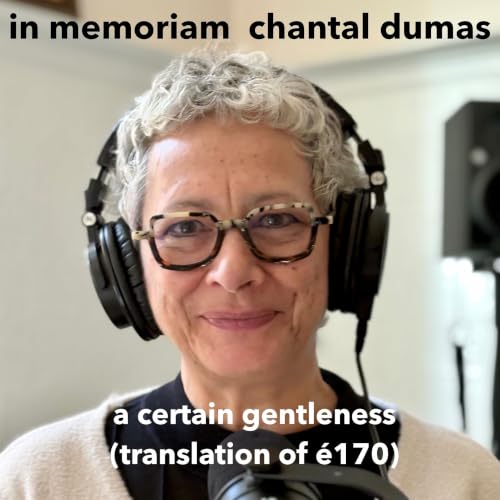
  • in memoriam - chantal dumas – a certain gentleness
    May 11 2026
    Hello, I’m interrupting my period of pause in the production of this podcast to share some very sad news. A good friend and colleague, Chantal Dumas, passed away on May 17th 2026 after a long struggle with cancer. She was 66 and had much more to live and to give. I invite you to share a moment of silence. J’offre mes profondes condoléances à la famille de Chantal et à son cercle d’amis qui ont été si présents et fidèle avec elle ces derniers mois. My deepest condolences to Chantal’s family and to her circle of friends, who have been so present and in solidarity with her these last few months. In order to commemorate Chantal’s life and her creative work, with her permission, I’ve prepared an English language translation of our September 13, 2025 conversation on balado conscient épisode 170 chantal dumas - une certaine douceur, recorded in Chantal’s apartment in Montreal. (field recording of me entering Chantal’s apartment with her ‘big ben’ door chime and a very sonic kiss). We’ll miss you, Chantal. A friend once told me that when a loved one passes, one way to honour their memory is to continue the best of their good work. But I’m not sure how to do this. What I’ll try to do is keep in mind Chantal’s lived vitality, her kindness, her humour and her unique ability to help us listen to each other and listening to the earth. I’ve put some links for further information in the episode notes for those who want to know more about Chantal’s life and work. Thanks to artist Sabrina Mathews for the narration and to all those who helped me with this episode. But before we listen to the episode, I’d like to play you another recording I made at Chantal’s apartment on September 13th, 2025, after our interview. In front of us was a componium, which is a kind of music box that plays from a strip of punctured paper. I asked Chantal to explain how the instrument works and to play a composition she made for the instrument, first in forwards mode and then backward. This presentation is not translated into English, but I think you’ll get the gist of it. I invite you to listen to this bonus episode of conscient podcast, in memoriam - chantal dumas - a certain gentleness. * (original episode) For me, it calls for us to scale back to much smaller scales, to community scales, I would say, to communities of interest, communities of sensitivity, which invites us to get closer to our own communities, closer to our own being and immediate family, but also to our friends, and to really appreciate that aspect, while remaining sensitive to what is happening around us. I also think that we need to find a way to — I don't know if I would call it consolation — but in any case, to have a certain gentleness. I think art can bring that, to calm the anxiety that can be caused by this... From an ecological point of view, we don't really know what's going on right now. We see that our political leaders were very attentive during the pandemic and we said to ourselves, “Oh wow, we can hear the little birds,” “Oh wow, the Earth is vibrating less,” so there are fewer earthquakes. We realized that it was largely generated by human activity if the Earth was shaking and all of that. Imagine listening to the heartbeat of the Earth, feeling the rumbling of tectonic plates, and experiencing geological time. This is the experience offered by the electroacoustic composition ‘Oscillations planétaires’, ‘Planetary Oscillations’, a creation by my guest for this final episode of the sixth season of balado conscient, sound artist and long-time friend Chantal Dumas. Chantal shares her unique perspectives on capturing the hidden movements of the Earth. “Planetary Oscillations” is an invitation to listen deeply to the planet beneath our feet, a reminder of the immense timescale of geological processes, and a call for both environmental and spiritual awareness. You’ll hear Chantal talk about some of her childhood memories, including the soundscapes of the countryside and also the Villeray acoustique project, an initiative by Chantal and Magali Babin, in collaboration with Espace Projet,which offers signage in public spaces where listening, as a sensory experience, is associated with historical, cultural and ecological information specific to that territory. By the way if you’d like more information on this project, listen, in French, to é171 chantal dumas et magali babin (collectif dB) - villeray acoustique, in French, on balado conscient. I thank Chantal for our valuable exchange and for everything she is and has done, with love, from us all. Photo of Chantal Dumas by Claude Schryer (September 14, 2025, Montreal) This conversation was recorded on September 14, 2025, in Montreal in French and was translated into English by Claude Schryer and narrated by Sabrina Mathews. Oscillations planétaires© 2017-18, 19, Chantal Dumas (SOCAN) / Ymx ...
    Show More Show Less
    26 mins
  • a calm presence - pressing pause
    Feb 16 2026
    pressing pauseAn extended break from the production of conscient podcast, balado conscient, a calm presence and related social mediaWhy do this? One reason is that I noticed that I sleep better when I don’t produce podcasts or essays about the end of the world as we know it.Imagine that.But it’s also because my learning and unlearning journey, which I began back in 2020, some 5 years ago, has come full circle. It feels like the end of a chapter.I sometimes think of it as a five-year mission to explore strange new art, to seek out solutions to the ecological crisis and to boldly talk about things that have never been talked about before. Maybe they have, but it’s worth repeating.You know, it was a trek, with many mistakes and a few discoveries. And, of course, there are many, many more stories yet to be told that can inspire us to action, or at the very least comfort us in troubled times.There are many more examples of transformative artworks that I hope we will know about and eventually experience.There are many more questions, good questions, to be asked by artists.Also, artists can play a role in providing us with a few moments of respite and escape from the doom and gloom around us. I see the value in this kind of media and storytelling work and support whoever is doing it, as best I can. But for me, it’s time to press pause. There’s a quote that I want to read to you that’s my northern star. It’s by the great Vietnamese zen master Thich Nhat Hanh:What we most need to do is to hear within us the sound of the Earth crying. I’m going to think about this and have it at the heart of my daily life and think about what it means to listen deeply to the sounds of the earth crying, which is essentially ourselves. How can this insight lead to healing? We’ll see where my spirit takes me. I really have no idea where it’s going to go. Before ending this last Substack posting I wanted to remind you that I’ve recently published four new podcast episodes of conscient podcast, 2 in English et 2 en Français. On conscient podcast: An ENCORE presentation of e41 – emergency preparedness from 2021 with Jen Rae, a Melbourne, Australia based artist, researcher, facilitator and educator of Canadian Red River Métis and Scottish descent who talks about the intersection between art, emergency preparedness, disaster risk-reduction and resilience, which seems very timely in 2026 as these issues are amplified. There is some very good ideas and positive energy coming out of Jen’s work. e244 roundtable - death as transformation, recorded on December 2, 2025 and originally broadcast on December 13, 2025 as an episode of the Making Waves radio program, where I moderated a panel of sound artists and previous guests of conscient podcast, Azul Carolina Duque, Kenneth Newby, andWendelin Bartley about our understanding of ‘death as a natural transformation of energy and consciousness, not an end’ and how our practices as sound artists relate to this transition.Sur le balado conscient :un episode ENCORE l’épisode 27 - l’énergie créatrice libreavec l’artiste sonore, musicienne, réalisatrice radio, sculpteure et une bonne amie de longue date, Hélène Prévost qui nous parle de sa tristesse pour l’état du monde et comment l’art, s’il est libre, peut devenir un puissant levier de changement et de ralliement social. Un bon rappel pour 2026. é171 - villeray acoustique avec deux artistes sonores, Magali Babin et Chantal Dumas, le collectif dB, un entretien enregistré pour un article dans la Revue Circuit, qui parle du projet de recherche-création Villeray acoustiqueune exploration de l’écoute de ce quartier de Montréal comme expérience sensorielle. Vous allez entendre notre conversation et aussi une prise de son du parc Jarry à Montréal par Magali Babin. There you go.Thank you so much for reading and listening over these many years. It’s been my privilege to be able to express myself and receive your feedback. Thanks to my guests and collaborators on all these platforms.I’m now going to go silent for a long time, possibly forever, depending on the outcomes of my reflections. Take care. See you down the road… *END NOTES FOR ALL EPISODESNote : I'm currently 'pressing pause' and am not producing new content until further notice. Hey conscient listeners, I’ve been producing the conscient podcast as a learning and unlearning journey since May 2020. It’s my way to give back.This Indigenous Land Acknowledgement statement was developed by members of the Algonquin community for my former employer the Canada Council for the Arts. I have adapted slightly to make it my own.I acknowledge that my studio, located in Ottawa, is on the unceded, unsurrendered Territory of the Anishinaabe Algonquin Nation whose presence here reaches back to time immemorial.I recognize the Algonquins as the customary keepers and defenders of the Ottawa River Watershed and ...
    Show More Show Less
    8 mins
  • e244 roundtable – death as transformation
    Feb 8 2026
    Death might be one of the most relational acts possible. I think death is that threshold moment where that illusion is dissolved. Our death is a moment of redistribution of nutrients, of memory, of rhythm, of vibration into the wider field, from the illusion of a single self into the remembering of an entangled self. I love to think about death as a teacher of surrender and a trust in the intelligence of regeneration. - Azul Carolina Duque(Below is the script that you can hear me narrate in this episode.)Its January 20, 2026. I was going to publish this roundtable called death as transformation later this year to inaugurate the 7th season of the conscient podcast but I changed my mind – imagine that - and have added it to season 6 because I’ve decided to take a long break from producing both of my podcasts and my Substack in order to do some thinking and meditation and self-care but I wanted to get this very special episode out to you now in case I decide not to continue with the podcast after my break.It's one of those pivotal moments. Here’s back story on this episode. In November 2025, Artistic Director of New Adventures in Sound Art, Darren Copeland, asked me if I would like to participate in an episode of his monthly Making Waves radio program, which is broadcast on WGXC 90.7 FM in New York's Upper Hudson Valley and also available as a podcast. Darren wanted to talk about one of my favorite topics, climate change and asked me what would I like to talk about specifically? And to my surprise I immediately answered: death. I went on to explain that I meant death in the sense of how our spirit and consciousness continues when our body goes back to the earth, and what might this spirit and consciousness sound like? I was also interested in how this heightened awareness might help us relate to complex issues like climate change and societal disruption. So I helped Darren select an expert panel of sound artists and on December 2, 2025, I moderated a 55 minute recording for the December 13, 2025 edition of Making Waves that featured three former guests of my conscientpodcast : Azul Carolina Duque, who you can hear on e211 art as medicine, Kenneth Newby who you can hear on e207 living with grace and Wendelin Bartley who you can hear on e222 restoring our connection with nature.So what you’re about to hear is a rebroadcast of this conversation.This conversation is quite magical because we were able to share some very intimidate stories about our own vulnerabilities, our relationship to death and how our practices as sound artists relates to this transition. You’ll hear that I ask each of my guests to respond to this 12-word sentence by a friend of mine, Tim Brodhead: Death as a natural transformation of energy and consciousness, not an end.And won’t worry the episode is actually a lot of fun and quite enlightening. It’s really more about transition than an end. I’m so pleased that it concludes this chapter of the conscient podcast and in a way begins whatever might come next. Thanks so much for listening. Thank you Darren, Azul, Kenneth and Wendelin.See you next time. *END NOTES FOR ALL EPISODESNote : I'm currently 'pressing pause' and am not producing new content until further notice. Hey conscient listeners, I’ve been producing the conscient podcast as a learning and unlearning journey since May 2020. It’s my way to give back.This Indigenous Land Acknowledgement statement was developed by members of the Algonquin community for my former employer the Canada Council for the Arts. I have adapted slightly to make it my own.I acknowledge that my studio, located in Ottawa, is on the unceded, unsurrendered Territory of the Anishinaabe Algonquin Nation whose presence here reaches back to time immemorial.I recognize the Algonquins as the customary keepers and defenders of the Ottawa River Watershed and its tributaries. I honour their long history of welcoming many Nations to this beautiful territory and uphold and uplift the voice and values of our Host Nation.Further, I offer my respect and affirm the inherent and Treaty Rights of all Indigenous Peoples across this land and honour commitments to self-determination and sovereignty that have been made to Indigenous Nations and Peoples.I acknowledge the historical oppression of lands, cultures and the original Peoples in what we now know as Canada and fervently believe the Arts contribute to the healing and decolonizing journey we all share togetherIn parallel with the production of the conscient podcast and its francophone counterpart, balado conscient, I I publish a free ‘a calm presence' monthly Substack see https://acalmpresence.substack.com. Your feedback is always welcome at claude [at] conscient [dot] ca and/or on social media: Facebook, Instagram, Linkedin, Threads, BlueSky, Mastodon, Tik Tok, YouTube and Substack.Share what you like, etcI am grateful and accountable to the earth and the human labour that ...
    Show More Show Less
    1 hr and 6 mins
  • ENCORE e41 jen rae – emergency preparedness
    Feb 3 2026
    The thing about a preparedness mindset is that you are thinking into the future and so if one of those scenarios happens, you've already mentally prepared in some sort of way for it, so you're not dealing with the shock. That's a place as an artist that I feel has a lot of potential for engagement and for communication and bringing audiences along. When you're talking about realities, accepting that reality, has the potential to push us to do other things. Welcome to another ENCORE episode of conscient podcast. I do this because if you missed an episode the first time it was published you can hear it again. However this is the last ENCORE episode for a while because I’m taking break from the production of this podcast, of its sister French language version, balado conscient as well as my a calm presence Substack for what looks like undetermined period of time. I wrote about this in my last Substack posting called pressing pause. My plan is to meditate on my next steps in this ongoing learning and unlearning journey and do a bit of self-care as I learned to do during the Zen and the Art of Saving the Planet course last fall.But before pressing pause, so to speak, I wanted to publish this ENCORE episode because it’s about an issue that we will be talking about increasingly in the months and years to come: which is, how do we, as artists and cultural workers, respond more effectively to emergency situations and to ongoing societal disruption. And who better that Jen Rae, a Melbourne, Australia based artist, researcher, facilitator and educator of Canadian Red River Métis and Scottish descent.And before going any further I want to acknowledge that Jen Rae lives, creates and works on the unceded traditional lands of the Wurundjeri, Boon Wurrung, Woi Wurrung, and Wathaurong people of the Kulin Nation and offers deep respect to their elders - past, present and emerging. So, this 47-minute conversation was recorded, remotely, on May 10, 2021. Jen and I talked about a wide range of issues including the intersection between art, emergency preparedness, disaster risk-reduction and resilience. Here are some of the questions that were raised: How do we embrace an emergency preparedness mindset? What do we increase our focus on community resilience?How can we challenge Western-centric narratives? How can we further value inclusivity? How can art and speculative fiction in particular, help free our minds and inspire action?You’ll find some answers, also more questions, at the The Centre for Reworlding in Australia, where Jen is the creative research lead. I’m also publishing this ENCORE episode to listen back to conversations recorded during the COVID pandemic. For artists, in particular, it was a tough time. For a few of us it created opportunities for new forms of digital engagement but for most artists it was a nightmare of lost income, isolation and disconnection. COVID, difficult as it was, can be thought of as a kind of test run for larger scale emergencies that will come as the climate crisis and related disasters unfold. So I’m grateful that artists like Jen Rae and The Centre for Reworlding are proactively are working, and this is a quote from their web site, to ‘advocate for the mainstream integration of culture & the arts in climate action and disaster management discourses, policy frameworks and all-years education’.So let’s go back to 2021. And, as I did with all of my episodes at that time, you’ll hear excerpts from previous episodes that try to connect the thinking of my guests with some previous guests and that’s a lot of fun. It was a lot or work but then I had a lot of time on my hands. So without further ado, episode 41 ENCORE. Warm thanks to Jen for this 2021 conversation and hopefully we’ll talk again if and when I come back to producing this podcast. For more information on Jen’s work, see https://www.jenraeis.com, http://www.fairsharefare.com/ and The Centre for Reworlding.Links to a selection of Jen’s work mentioned in this episode:REFUGIUM: film premiering 27 April 2021 (online and in real life - in collaboration with Claire G. Coleman)Who needs artists in a climate crisis?: Raising the Bar, 13 November 2019Refuge Talk Series: Preparing for a pandemic (21 May - 1:01:35-1:08:08), Living in a pandemic (27 May) and Recovering from a pandemic (4 June) *END NOTES FOR ALL EPISODESNote : I'm currently 'pressing pause' and am not producing new content until further notice. Hey conscient listeners, I’ve been producing the conscient podcast as a learning and unlearning journey since May 2020. It’s my way to give back.This Indigenous Land Acknowledgement statement was developed by members of the Algonquin community for my former employer the Canada Council for the Arts. I have adapted slightly to make it my own.I acknowledge that my studio, located in Ottawa, is on the unceded, unsurrendered Territory of the Anishinaabe ...
    Show More Show Less
    55 mins
  • a calm presence - uplift
    Jan 1 2026
    uplifthere are some uplifting words for the new year drawn from 9 episodes of conscient podcast et 3 extraits du balado conscientThis posting of a calm presence was designed as an audio listening experience though it also exists in written form, here.Ceci est un episode bilingue. Afin de faciliter la compréhension des extraits en anglais, j’ai ajouté une transcription de l’épisode en français dans les notes d’épisode. J’ai aussi ajouté un petit sommaire oral en français à la fin de chacun des épisodes en anglais. Personnellement, je trouve intéressant d'écouter quelqu'un parler dans une autre langue, car je peux me concentrer sur le ton et l'intonation de la voix. This is a bilingual episode. For those who do not understand French I have added a transcript in English in the episode notes. I also created a short English language oral summary for each of the French language episodes. Personally, I find it interesting to listen to someone speak in another language because I can focus on the tone and inflection of the voice.Please note that the pace of my narration is rather slow with the occasional short silence.This is how I like to listen to narrations, with lots of space to ponder what is being said but also to consider what might lie in between the words and in the timbre of the voice. I’m also recording this reading in one take, flubs and all, similar to a late night radio monologue where it’s ok to be imperfect and where time is suspended. Finally, a reminder that I now publish a calm presence postings one at a time, for a few weeks and then replace it with a new one and so on. In other words, what you’re listening to now, recorded on January 1, 2026 at 8.51 am it will be erased sometime in February 2026, never to be published again but I hope it might be retained in memory for those who need it, which is why I created this Substack in the first place, for those in need of a calm presence. *END NOTES FOR ALL EPISODESNote : I'm currently 'pressing pause' and am not producing new content until further notice. Hey conscient listeners, I’ve been producing the conscient podcast as a learning and unlearning journey since May 2020. It’s my way to give back.This Indigenous Land Acknowledgement statement was developed by members of the Algonquin community for my former employer the Canada Council for the Arts. I have adapted slightly to make it my own.I acknowledge that my studio, located in Ottawa, is on the unceded, unsurrendered Territory of the Anishinaabe Algonquin Nation whose presence here reaches back to time immemorial.I recognize the Algonquins as the customary keepers and defenders of the Ottawa River Watershed and its tributaries. I honour their long history of welcoming many Nations to this beautiful territory and uphold and uplift the voice and values of our Host Nation.Further, I offer my respect and affirm the inherent and Treaty Rights of all Indigenous Peoples across this land and honour commitments to self-determination and sovereignty that have been made to Indigenous Nations and Peoples.I acknowledge the historical oppression of lands, cultures and the original Peoples in what we now know as Canada and fervently believe the Arts contribute to the healing and decolonizing journey we all share togetherIn parallel with the production of the conscient podcast and its francophone counterpart, balado conscient, I I publish a free ‘a calm presence' monthly Substack see https://acalmpresence.substack.com. Your feedback is always welcome at claude [at] conscient [dot] ca and/or on social media: Facebook, Instagram, Linkedin, Threads, BlueSky, Mastodon, Tik Tok, YouTube and Substack.Share what you like, etcI am grateful and accountable to the earth and the human labour that provided me with the privilege of producing this podcast, including the toxic materials and extractive processes behind the computers, recorders, transportation systems and infrastructure that made this production possible. Thanks for listening. Claude SchryerLatest update on March 21, 2026
    Show More Show Less
    52 mins
  • e243 francisco rodriguez – amazon awareness
    Nov 26 2025
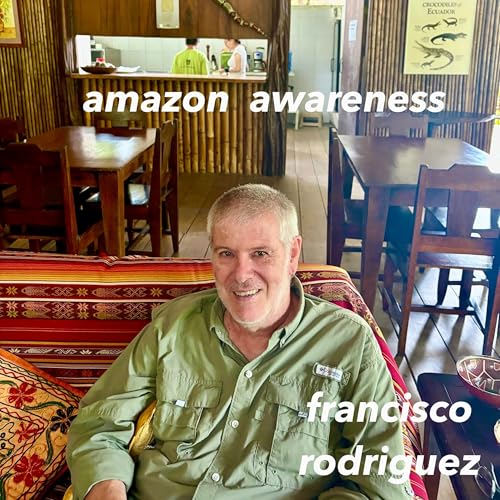
    Take care of the earth. We have grandsons and great-great-grandsons, and we have to, we, our generation, has to teach the young people what we lived, the beauty of the world that we lived, not the disaster we have today.Hello conscient podcast listeners,Many of us do international travel, probably a bit too much. When I travel, I consider it a privilege that comes with responsibilities. For example, whenever we can we try to give back by donating to local charities in the region where I’m visiting or maybe making sure that we tip appropriately and that the people we am with get a fare wage. We also try to by buy credible carbon offsets. That kind of thing. You might recall e235 lallan – art from the soil, which I recorded while in the Tirthan Valley in Northern India :My advice to artists would be drop every garb that you have, drop every piece of knowledge that you think you have. Head to the jungles, head to the rural places. We are living in a time of crisis.You might also recall e236 keiko torigoe – the power of listening, which was recorded in Tokyo, Japan: The environmental issues currently at hand, including global warming, are related, but I believe that at their root lies the decline of our listening ability and the power of listening as humanity.Both episodes were recorded quite spontaneously on my iphone. I hadn’t planned to record these interviews, but as I listened to some of the stories around me and I thought it could be a gesture of reciprocity to make these voices available on this podcast to help raise awareness about activities in that country but also to point out commonalities between us all in the world. So, what you’re about to hear is my third conversation in this series, this time with Francisco Rodriguez, a Chilean born banker, who with his wife Sylvia, manage the Anaconda Lodge on the shores of the Napo River near Tena, in Ecuador, where my wife Sabrina and daughter Clara were doing some eco-tourism. So we had the pleasure of staying there and meeting Francisco and others from the region. I sat down with Francisco – you’ll hear some birds and insects in the background - about his relationship with the Amazon forest as a living entity as well as their collaborations with the Kichwa indigenous people who are the traditional custodians of these lands and waters. You’ll hear some beautiful sounds and good stories about the Amazon, which I found uplifting but you’ll also hear about some of the very serious challenges that they currently face, which call upon increased solidarity from the rest of the world, given that the Amazon is the lung of the earth. You’ll notice this episode is a bit more than 15 minutes. I added some soundscapes that makes it a bit longer than usual, which I hope you’ll enjoy.Warm thanks Francisco, Sylvia, all the guides and staff at Anaconda Lodge for their kindness and hospitality. Episodes notes generated by Whisper Transcribe AIKey Takeaways:Support Indigenous communities by living alongside them and understanding their challenges, rather than offering temporary aid.Learn about the Amazon’s diverse cultures and ecological fragility through reading and authentic resources.Reduce your carbon footprint by making small, conscious changes in daily habits to support global environmental efforts.Recognize the Amazon as a single, interconnected entity, not divided by national borders, but by Indigenous territories.Understand the impact of Western influences, such as processed food and consumer goods, on uncontacted tribes and their traditional way of life.Story PreviewDiscover the journey of Francisco Rodriguez, who left the banking world to dedicate his life to protecting the Amazon and working its Indigenous peoples. Hear how he and his wife Sylvia created Anaconda Lodge as a bridge between cultures, fostering understanding and solidarity for the ‘lung of Mother Earth.’ Chapter Summary00:00 Introduction to Amazon and Indigenous Voices02:44 From Banker to Amazon Advocate05:50 Living with Indigenous Communities09:58 Ecotourism and Amazonian Consciousness14:25 Understanding the Amazon from Afar20:00 Sustainable Living and Jungle CommunicationFeatured QuotesWe always hope that when they go back home, they use less fossil fuel.You have to think one thing, these people have been beating up by our, by we Western people for over 500 years.Our main goal is to make our guests to understand where they are.Behind the StoryClaude shares his third recording from international travel, this time from the Anaconda Lodge near Tena, in Ecuador. He, his wife Sabrina, and daughter Clara experienced ecotourism firsthand which led to this conversation with Francisco Rodriguez. The episode highlights the value of reciprocity when traveling and making voices from different regions accessible to a global audience. *END NOTES FOR ALL EPISODESNote : I'm currently 'pressing pause' and am not producing new content until further notice. Hey ...
    Show More Show Less
    23 mins
  • e242 roundtable - dissolving boundaries
    Nov 24 2025
    In an era where pressures on climate and environments grow even stronger, we should not underestimate the transformative power of art. (Ambassador of the European Union to Canada Geneviève Tuts)When you do the trigger, the emotional part, you can go down hope and fear both. Both lead to action but ultimately, we need to transform being passive into really active contributors to solving this and what a better way than art? (Akash Rastogi, Chief Capital Strategy Officer at Canada’s Ocean Supercluster) We want to activate the creativity of communities through the arts to create the cities of the future, basically, right, the cities we want to live in (Juan Eraso, leader of international programs at Culturans)‘Change happens. There's always going to be ways to adapt. That's not to say that the initial change might not be catastrophic but there was always going to be something left and you have to work with that’. (e208 clara schryer - science as story). Now it breaks my heart to hear that because for a young person to say that means that they don't anticipate there won't be a lot left and yet… (Claude Schryer)We know that when we work with green spaces, we work with life, we work with art, we can rebuild, we can regenerate, but we have to do it differently. (Claude Schryer)Yes, to doing things differently. Yes, to more evocative, emotionally resonant art.Yes, to dissolving boundaries.(Background sound from Jubilee Queen Cruise Ship in podcast)When I got an invitation from Jana Macalik, Director of the Global Centre for Climate Action at OCAD University to participate on a panel about art and climate - one of my passions - I was excited and honoured to accept. This panel was part of an event called Dissolving Boundaries that took place on October 4, 2025, as part of Nuit Blanche Toronto, which of course went on all night. It featured the premiere of a large scale, beautiful large-scale art projection by Alessandro Gisendi and Marco Noviello of the OOOPStudio in Italy. Their work was projected onto the massive Canada Malting Silos on the shores of Lake Ontario in Tkaronto. Dissolving Boundaries was co-presented by the Global Centre for Climate Action at OCAD University and the European Union (EU), through its Delegation to Canada. I want to thank them for their hospitality and congratulate them their vision in collaborating, partnering and bringing this work and this conversation to us. The timing was good for me. I was wrapping up season 6 of my conscient podcast / balado conscient after some 350 episodes since I started it in 2020 and I was about to take a break, but then I got a call to talk about how arts and culture can help move audiences from awareness to action and I could not refuse that. I felt good about speaking freely and really listening to the different points of view. We were on a ship called the Jubilee Queen Cruise Ship so it quite moving, literally, to be on a boat looking out onto the projection and talking about art, culture and climate. Here’s Ana Serrano, OCAD University’s President and Vice-Chancellor explaining what the event was about: But we can't stop, really. We don't really have much of a choice. So, convening like this, trying to figure out ways to create evocative, emotionally resonant works that will catalyze people into thinking about their relationship with the land, with water, with climate and their daily actions is what tonight is all about.First you’ll hear Ana Serrano shares some inspiring opening remarks, followed by an engaging speech by the Ambassador of the EU to Canada, Geneviève Tuts. You’ll then hear panelists, with Ana as facilitator, speak one by one. First Alessandro Gisendi, Akash Rastogi (Chief Capital Strategy Officer at Canada’s Ocean Supercluster) myself, Juan Erazo (Culturans) and Alice Xu (Director of Policy, Planning and Program Enablement; Environment, Climate and Forestry Division at the City of Toronto). At the end of the recording you’ll hear a question from an audience member, who happens to be a friend of mine, Coman Poon (e202 coman poon - what are you doing with your life ?) ask about ‘extraction for the sake of economic autonomy’, which we all commented upon. The conversation continued until it was time to view the art projection!I want to express my warmest thanks to the organizers, fellow panelists, audience members and in particular to OCAD sound technician Omar Qureshi, who recorded this session for me.Enjoy. It’s good to talk about these things with creative energy. May the conversations continue.*Episodes notes generated by Whisper Transcribe AIKey Takeaways:Activate community creativity through art to design future cities and foster positive change.Bridge the gap between rational climate data and emotional engagement to motivate action.Reassess economic models to prioritize natural assets and foster international cooperation for scalable solutions.Integrate nature-based solutions ...
    Show More Show Less
    56 mins
  • e241 roundtable – everyday habits for transforming systems
    Jul 27 2025
    The question the book asks is obviously transforming the system is not an individual task, it's a collective activity. But it still begs the question, if we're trying to contribute to that, what do we need to do? Not every four years when we vote, not every year when we go to a strategy workshop, but what do we do every day? And so the title is very straightforward: Everyday Habits for Transforming Systems. And that's the question the book is offering an answer to.My second conversation with writer, facilitator and consultant Adam Kahane (the first was episode e219) and with the audience at the Ottawa launch of Everyday Habits for Transforming Systems, the Catalytic Power of Radical Engagement at Perfect Books on July 2, 2025. This episode is part of my roundtable series, open-ended conversations about what a group of citizens are passionate about. And passionate they were! I started by asking Adam why he wrote the book and why does he think it’s relevant today, in particular here in the nation’s capital at a time when there are great tensions with our neighbours to the south and when Canadians are talking to each other more than ever about our shared values, and the challenges that we face such as the ecological crisis and climate emergency, which sadly seems to have temporarily fallen off our collective radar. Show notes generated by Whisper Transcribe AIAction pointsEmbrace radical engagement: Lean into understanding diverse perspectives and actively seek common ground.Recognize the power of everyday habits: Focus on daily actions to create lasting systemic change.Navigate complexity: Balance working towards a larger goal with acknowledging individual interests and power dynamics.Collaborate across differences: Seek opportunities to work with those who hold different views to achieve meaningful progress.Act responsibly: Consider the broader impact of your actions on all living beings.Story PreviewWhat if the key to changing the world lies not in grand gestures, but in the small, often overlooked habits of our daily lives? Adam Kahane shares his journey from facilitating transformative dialogues in South Africa to uncovering the power of radical engagement, inviting us to rethink how we contribute to a better future. Chapter Summary00:00 The Collective Task of Transformation01:19 Introducing Adam Kahane04:01 Setting the Stage for Discussion09:40 The Motivation Behind the Book15:42 Everyday Habits for Transformation22:39 Exploring the Seven Habits29:12 The Slippery Slope of Disagreement and The Challenge of Acting Responsibly35:20 Power Dynamics in Collaboration39:40 Trust and Collaboration44:00 Balancing Urgency and Everyday Habits54:25 Art, Culture, and Collaboration56:13 Radical Engagement in Action01:00:05 Navigating Power Dynamics and The Importance of Agency01:12:51 Redefining Power and Responsibility01:17:04 Risks and Realities of Engagement01:23:13 The Complexity of Multiple SystemsFeatured QuotesTransforming the system is not an individual task. It’s a collective activity.Radical engagement is the opposite of standing back with your arms crossed saying, take it or leave it.Ring the bells you still can ring. Forget your perfect offering. There is a crack in everything, that’s how the light gets in. (quoting Leonard Cohen)Behind the StoryAdam Kahane’s latest book, ‘Everyday Habits for Transforming Systems,’ stems from a moment of confusion during an interview with South African leader Trevor Manuel. This experience led Kahane to explore what it means to contribute to systemic change, focusing on the everyday actions that shape our world. This episode explores themes of power, collaboration, and social responsibility and how the arts weave their way through all of this. Credit: cover photo by Conyer Clayton *END NOTES FOR ALL EPISODESNote : I'm currently 'pressing pause' and am not producing new content until further notice. Hey conscient listeners, I’ve been producing the conscient podcast as a learning and unlearning journey since May 2020. It’s my way to give back.This Indigenous Land Acknowledgement statement was developed by members of the Algonquin community for my former employer the Canada Council for the Arts. I have adapted slightly to make it my own.I acknowledge that my studio, located in Ottawa, is on the unceded, unsurrendered Territory of the Anishinaabe Algonquin Nation whose presence here reaches back to time immemorial.I recognize the Algonquins as the customary keepers and defenders of the Ottawa River Watershed and its tributaries. I honour their long history of welcoming many Nations to this beautiful territory and uphold and uplift the voice and values of our Host Nation.Further, I offer my respect and affirm the inherent and Treaty Rights of all Indigenous Peoples across this land and honour commitments to self-determination and sovereignty that have been made to Indigenous Nations and Peoples.I acknowledge the historical oppression of ...
    Show More Show Less
    1 hr and 29 mins