• Is hope on the horizon for treating drug-resistant TB?
    May 27 2026

    Final few days to fill out our short listener survey. Everyone who completes it is entered into a draw for a £50 gift card. 👉 https://www.surveymonkey.com/r/SX6X8X3?source=shownotes Closes 28 May.

    ***

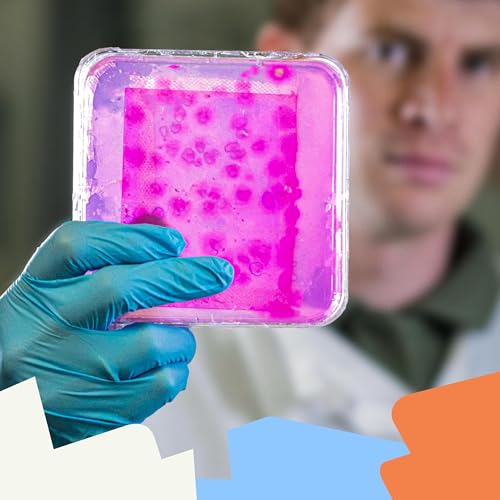
    Tuberculosis has been with us so long that traces appear in mummies. But today, the challenge is different: how do we respond to TB that's resistant to modern drugs?

    Professor Salome Charalambous tells Alisha Wainwright about the challenges of treating the half-million people with drug-resistant TB, and Professor Nazir Ismail explains how it gets harder in countries where resources are scarce.

    But there may be hope on the horizon. Salome gives a glimpse of the new tests and treatments already saving lives, and we hear from Enalkachew Fekadu, a drug-resistant TB survivor who now advocates for others with the disease.

    Show More Show Less
    46 mins
  • How can we respond to extreme heat and its effect on mental health?​
    May 20 2026
    We want to hear from you! Please tell us a bit about your experience by filling out our short listener survey. Everyone who completes it is entered into a draw for a £50 gift card. 👉 https://www.surveymonkey.com/r/SX6X8X3?source=shownotes Closes 28 May. *** We know how extreme heat impacts us physically, but science is still uncovering its effects on mental health. Professor Andrea Mechelli tells Alisha Wainwright what analysing millions of datapoints is teaching us, we hear from participants in his London-based research about their struggles with heat and mental health, and Mete Çoban, London's Deputy Mayor for Environment and Energy, talks about efforts to future-proof the city. Looking beyond London, Dr Benedict Weobong explains why his research in Ghana and Zimbabwe shows that local context is crucial for dealing with heat-related mental health issues, and Alisha explores how reconnecting with nature - and each other - could also help us tackle the causes of rising heat. *** Mentioned in this episode and further reading: Prof. Andrea Mechelli's Substack on how nature and climate shape our mental health: https://andreamechelli.substack.com/ The effects of extreme heat events on mental health in vulnerable urban communities: towards evidence-based policy and practice (https://www.kcl.ac.uk/research/the-effects-of-extreme-heat-events-on-mental-health-in-vulnerable-urban-communities-towards-evidence-based-policy-and-practice) Urban Mind – an app that measures your experience of urban & rural living in the moment (https://urbanmind.info/) Heat Exposure, Sleep, Cognition and Mental Health - HEATSCAPE-Africa (https://www.yorku.ca/dighr/project/heatscape-africa/)
    Show More Show Less
    47 mins
  • Have 10 minutes? Help us shape Season 5 + a chance to win £50
    May 19 2026

    We're running a listener survey for When Science Finds a Way and we'd love your input. Takes around 10 minutes, completely anonymous, and there's a £50 gift card draw for everyone who completes it. Survey closes 28 May: https://www.surveymonkey.com/r/SX6X8X3

    Show More Show Less
    1 min
  • We're living longer, but are we living healthier?
    May 13 2026
    We want to hear from you! Please tell us a bit about your experience by filling out our short listener survey. Everyone who completes it is entered into a draw for a £50 gift card. 👉 https://www.surveymonkey.com/r/SX6X8X3?source=shownotes Closes 28 May. *** In much of the world people are living longer, but how can we make sure those extra years are healthy? Professor Dame Linda Partridge tells Alisha Wainwright how our ever-growing knowledge of health and ageing could lead to more personalised medicine, and Professor Mika Kivimäki explains how new methods for measuring the "biological age" of our organs could be used to predict disease. We also hear from Shamita Sharmacharja, curator of the new Coming of Age Exhibition at London's Wellcome Collection, about how changing society could help us all age better. *** Mentioned in this episode and further reading: Hallmarks of ageing: an expanding universe (https://pubmed.ncbi.nlm.nih.gov/36599349/) Biological organ ages predict disease risk decades in advance, Mika Kivimäki , UCL Faculty of Brain Sciences (https://www.ucl.ac.uk/news/2025/feb/biological-organ-ages-predict-disease-risk-decades-advance) The Coming of Age Exhibition, Wellcome Collection, London. Open until November 2026 (https://wellcomecollection.org/exhibitions/the-coming-of-age)
    Show More Show Less
    41 mins
  • Does the food we eat improve our mental health?
    May 6 2026

    We want to hear from you! Please tell us a bit about your experience by filling out our short listener survey. Everyone who completes it is entered into a draw for a £50 gift card. 👉 https://www.surveymonkey.com/r/SX6X8X3?source=shownotes Closes 28 May.

    ***

    We know that the food we eat affects us physically, but how might our diets help or hinder mental health? Dr Wolfgang Marx tells Alisha Wainwright about his work to find a link between mental health and diet. We also hear from Dr Iain Campbell, who found that a famous diet helped his own bipolar symptoms, inspiring him to work on a new large-scale trial. And Dr Sheri Johnson explains why we should explore not just what we eat, but when.

    ***

    Mentioned in this episode and further reading:

    • Food and mood centre, a multi-disciplinary research centre that aims to understand the complex ways in which what we eat influences our brain, mood, and mental health, Deakin University (https://foodandmoodcentre.com.au/)

    • Time-restricted eating as an adjunctive intervention for bipolar disorder – Wellcome funding award (https://wellcome.org/research-funding/funding-portfolio/funded-grants/time-restricted-eating-adjunctive-intervention)

    • Personal keto journey leads to career in research: Iain Campbell's story (https://www.metabolicmind.org/thinksmart/explore-strategies/iain-campbell/)

    Show More Show Less
    43 mins
  • Why was a life saving drug overlooked for half a century?
    Apr 29 2026

    Tranexamic acid (TXA) has enormous potential to prevent deaths from postpartum haemorrhage, but until very recently it's been overlooked. Professor Haleema Shakur Still tells Alisha Wainwright how she stumbled on TXA's untapped potential, and the drug's journey from being an undervalued discovery in post-war Japan to a groundbreaking treatment in modern-day Nigeria. Professor Nike Bellow and Dr Abiola Akiyode-Afolabi share their efforts to make TXA more accessible to communities, while Haleema explains how drug trials have revealed a hidden side to postpartum haemorrhage – one that could prevent cases before treatment is even needed.

    ****

    We want to hear from you! Please tell us a bit about your experience by filling out our short listener survey. Everyone who completes it is entered into a draw for a £50 gift card. 👉 https://www.surveymonkey.com/r/SX6X8X3?source=shownotes Closes 28 May.

    ****

    Mentioned in this episode and further reading:

    • WOMAN trials: looking at the effect of the drug tranexamic acid (TXA) on bleeding, and the best ways to give it (https://thebloodtrials.org/womens-health-trials/)

    • The missing evidence: anaemia, postpartum bleeding and maternal death, Blood Trials, LSHTM (https://thebloodtrials.org/the-missing-evidence/)

    A word of thanks to all the WOMAN Trial collaborators, Professor Ian Roberts, who co-led the WOMAN Trials alongside Haleema, trial teams in London, Nigeria, Pakistan, Tanzania and Zambia and the women and families who make this work possible.

    Show More Show Less
    41 mins
  • What happens when fungi find their way into our brains?
    Apr 22 2026
    We want to hear from you! Please tell us a bit about your experience by filling out our short listener survey. Everyone who completes it is entered into a draw for a £50 gift card. 👉 https://www.surveymonkey.com/r/SX6X8X3?source=shownotes Closes 28 May. *** It might sound like something out of TV shows like The Last of Us, but brain-invading fungi are a real-world problem. Alisha Wainwright speaks to Drs. Rachael Dangarembizi and Rebecca Drummond, an immunologist and a neuroscientist collaborating across continents to tackle Cryptococcal Meningitis – the leading cause of fungal death worldwide. Dr Kyla Murphy also talks about the new tests and treatments saving lives from the disease, and Alisha shares the story of her own mother's brush with a dangerous fungal infection. **** Mentioned in this episode and further reading: Will climate change lead to more fungal infections? An explainer by Wellcome (wellcome.org/insights/articles/will-climate-change-lead-more-fungal-infections) Wellcome Fungal Adaptation Call Awardees (wellcome.org/research-funding/funding-portfolio/funded-grants?f%5B0%5D=funding_scheme_grants_awarded%3ABiology%20of%20fungal%20adaptation Global incidence and mortality of severe fungal disease, David W Denning, The Lancet Infectious Diseases (thelancet.com/journals/laninf/article/PIIS1473-3099(23)00692-8/fulltext) The WHO fungal priority pathogens list as a gamechanger, Matthew C. Fisher & David W. Denning, Nature Reviews Microbiology (nature.com/articles/s41579-023-00861-x#citeas) How fungi shape our world...and how the climate is shaping our fungi – The Naked Scientist Podcast in partnership with Wellcome (thenakedscientists.com/podcasts/naked-scientists-podcast/how-fungi-shape-our-world) When Science Finds a Way is brought to you by Wellcome, an independent global foundation that supports science to solve the urgent health challenges facing everyone. For more information and podcast transcripts visit wellcome.org/podcast
    Show More Show Less
    44 mins
  • AI and mental health: can we trust AI therapy?
    Apr 15 2026

    We want to hear from you! Please tell us a bit about your experience by filling out our short listener survey. Everyone who completes it is entered into a draw for a £50 gift card. 👉 https://www.surveymonkey.com/r/SX6X8X3?source=shownotes Closes 28 May.

    ***

    AI chatbots and apps are increasingly being used for mental health support. But could these new tools carry hidden risks?

    In the second part of this special episode, Alisha Wainwright unpicks her own experiments with AI therapy, takes tips from Dr John Torous on staying safe when seeking help digitally, and hears about the risks of unregulated tools.

    But there's hope with these tools too. Professor Miranda Wolpert reveals how AI could help scale mental health interventions in the globally and even inspire whole new forms of therapy.

    ****

    Mentioned in this episode and further reading:

    • AI and mental health: "it could help revolutionise treatments" - Miranda Wolpert, Director of Mental Health, Wellcome (https://wellcome.org/insights/articles/ai-and-mental-health-help-revolutionise-treatments)
    • Generating evidence for AI in health (EVAH) (https://wellcome.org/insights/articles/evah-new-initiative-generate-evidence-ai-health)

    When Science Finds a Way is brought to you by Wellcome, an independent global foundation that supports science to solve the urgent health challenges facing everyone. For more information and podcast transcripts visit wellcome.org/podcast

    Show More Show Less
    45 mins