• Witness Notes 8
    Feb 17 2026
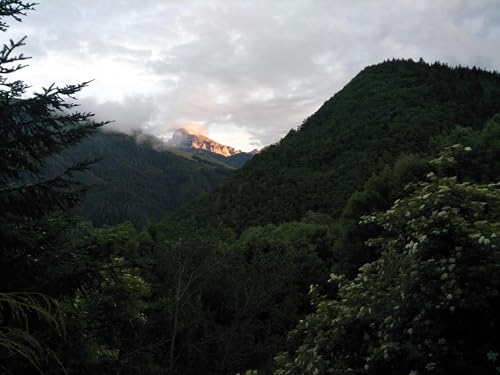
    (After you have read these introductory paragraphs once, you can skip to the new/old content below. If you are listening, then the time stamp is around the two minute 45 second mark.)IntroductionThe word settled, to me, carries connotations I am keen to avoid. I have never felt settled or, perhaps, I cannot recall a time I felt settled. I do not feel settled now, writing this, and I’ve lived in the same house for three and a half years. Without even discussing the obvious issues of colonisation, I just don’t feel like I could, or should, settle; better to keep my constituent parts shook up, agitated perhaps, rather than separating and stagnant.Instead, I feel as though I have been travelling for years, maybe because I have not lived in my ‘home’ nation of Scotland for eight and a half years, perhaps because I know I won’t stay here forever, or maybe because I carry that concept of home in a way which differs from many?More precisely, I still think of myself as a slow traveller, globally feral. Recently, I have been revisiting places through the photographs and words I recorded when my feet crossed their soil. This is a way of reminding myself of where I have been, not just in space and time, but in mind, too. It is a wonderful thing, to come out of a low and rediscover myself through words I crafted, through the lens of a camera, when memory has wandered in the fog for too long. Thank you, past me.When I first started sharing letters with the world in this fashion, six or more years ago, I usually began them with a vignette of where I was, a sort-of travel diary, mixed with nature observation, locking in the setting for the reader, before I spoke of other things—and, by so doing, ensuring that place fed into the whole. It was a useful device, for reader and myself both but, as these letters were sent to so few readers, and now languish archived behind a paywall, I thought it a shame not to share these snippets again.As such, I am going to share a short series of these sketches, accompanied by a photograph from that time, sent to you in date order.I shall include the above paragraphs in each of the letters in this series, but I shall also include a link at the very start, so you can skip ahead once you are familiar with the above words. If you are listening and similarly want to skip, then the timestamp you want to navigate to will be in the same place.Taken without these paragraphs, each is a short read, and I hope you enjoy them.Cercal, Portugal. July 2020.Time, at some points and places, stretches. Days seem longer, the mind translates the passage of the sun in ways which are not, perhaps, normal. When I was eight, my family moved to Stromness, Orkney. The month was March, so the daylight was practically the same across the single face of our globe yet, as the months passed and I ventured out to play and explore, to search for lost gold in the burns, plan raft voyages to the Amazon, and torment the bull in the field below Brinkie’s Brae, the evenings grew beyond anything I had ever witnessed.Time stretched. The sun would be high in the sky, long before I woke, and would still be there when I went to bed. It was as though our relocation had gifted me with unlimited playtime, unlimited potential adventure. This was, of course, before that first, dark, and long winter and subsequent SADness.For me, as for many of you, I suspect, the last few months have also stretched. Think about this time last year, where you were, what you were doing—it seems half a lifetime away (and yet, strangely, also near enough to touch). I am fortunate, in that I live in the northern hemisphere and, even as I was locked down, the daylight extended. Not by Orkney standards, nowhere near, but each evening was brighter longer, each morning the sun higher in the sky than the previous. Now that the solstice has passed, the days already feel shorter, the screaming of the swifts more frantic, as their insect-snatching hours condense, the moment of departure for Africa ever closer. For this year’s young, they will not land for nearly three years.Imagine that—sleeping on the wing, never landing, never stopping, constant movement. Nature is ridiculous and wonderful and inspiring.I try to maintain a healthy balance of positivity in this place, to resist my natural tendency to raise uncomfortable, urgent and, I’d argue, essential questions. At least on balance—asking these questions is important. In the earlier drafts of this paragraph I moved from the joy of nature being so inspiring to the bigger issue, to the damage we wreak and sow. I have edited this out, it is a long section, all about our place on this planet, living in a tiny strip of breathable gas, on a floating and equally narrow section of rock. I shall think about how best to use this but, for now, I’d just like to reiterate—nature is ridiculous and wonderful and inspiring.FinallyIf you can afford to, there are currently two direct ways to support ...
    Show More Show Less
    6 mins
  • Where We Are, or Where Am I?
    Feb 12 2026
    This is a sort-of companion piece to my Third State of The Nest Address I shared back in November, on the anniversary of sharing a regular letter via Substack for six years. In that piece, I discuss the growth (or otherwise) of my letter (I don’t like the phrase ‘I have a newsletter’ and I dislike the phrase ‘I have a Substack’ even more—to my mind, I have a letter, a letter which comes from me, to you. That’s it. Like in the olden times, when we would actually touch paper and move a pen across its blank face, lick an envelope, likewise a stamp, then walk to the postbox, feel air on our faces).One of the possible reasons I believe my letter has not grown recently is simply because I have not been sending it with the regularity I did in 2024 or in 2023. Or, for that matter, at any point since 2019.I’ve been sharing a letter for a long time now (6+ years) and writing on the internet for a lot, lot longer (my first steps on the World Wide Web were actually pre-WWW, at school back in the early 1990s) and 2025 was the quietest I have been online since those days, especially if we include email or messages.The why behind this is what this piece is all about.Why Go Quiet?In short, there are two principal reasons I have not been sharing online as much as I did previously.The first is one of personal development, of a sort. I have taken the time to examine my wiring beneath the board, to look at why I am as I am, to work out the details, then to try and see a way forward which will not replicate the boom/bust/depression/burnout cycle I have followed in the past.I will continue to share things about this process, which is, of course (of curse, as I just mistyped, also works admirably well), ongoing. All self-development should be—we should all keep asking questions and all keep listening to the answers even—or especially—when they make us feel uncomfortable.The second reason is, well, all of this *the author waves around generally at the world*. We are living in dark, dangerous times. That is a simple fact. And the dark and the dangerous seeps into everything we are, whether we intend it to, or not.Imagine a blind man, who happens to also be deaf, walking slowly in a straight line. He doesn’t know he is walking to a crumbling cliff edge.Now, imagine a blind man who is no longer deaf and, although he can hear the sound of approaching waves crashing ahead, keeps on walking.Now, the man is also no longer blind—a miracle! Science!—and he can hear the waves and see the cliff edge ahead, feel that spray on his face, and yet he keeps walking.Others, wise people, normal people, your neighbours, friends and family, are all nearby, shouting at him to stop walking but, yes, he keeps walking.The walk feels familiar, each step like the last, right up until the ground gives way beneath his feet and he falls, faster, gathering pace, to smash upon the rocks below.That man is, rather obviously in this ridiculous extended metaphor, humanity, at this point in time. Today.We are no longer blind and deaf, we have all those voices telling us what is happening to the only home our species has ever had—and, at this rate, may well ever have. And yet, we keep not only walking, but pick up the pace a little.I’m sure if you’ve ever read any post on Substack (or elsewhere) from one of the various scientists, or climatologists, or even someone ‘normal’, saying ‘guys, maybe we should rein this in a little?’ you’ll also have picked up on some of the frankly ridiculous comments these posts receive. Some are horrible, vile, cruel. Others just plain laughable. Still others try very hard to manipulate the figures to show something they do not show, irrevocable proof that climate collapse is just a gold-plated hoax.Some of those voices, the naysayers, are probably not even human. Russia has been quietly waging a war against the world over the last decade or more. A war fought through fingertips. Fair play to them, they saw the future, and they knew the power of words in that future—trust the Russians to understand how words and stories are truly powerful, after all. Their literature was perhaps a warning, a hint of the troll factories and deliberate misinformation to come.In the First Worldwide Story War, Russia has certainly won.Many nations are only just waking to the fact they’ve lost control of their own messaging; that it doesn’t matter what they say, the damage is already done. Trust is gone, belief has evaporated, and hope is somewhere down the back of the sofa, picking up dust and fluff, perhaps adhering to a sticky, lost delicacy, slowly returning to a sugary base.Only, there are those who keep going, who seek to redress the balance in the ways they know how. Some share their practical tips for preparing for disaster, whether on a local, regional, or national (or even global) level, others talk about the data, what it demonstrates, what it might mean to us all, and how it ties in with yet ...
    Show More Show Less
    18 mins
  • Witness Notes 7
    Feb 10 2026
    (After you have read these introductory paragraphs once, you can skip to the new/old content below. If you are listening, then the time stamp is around the two minute 45 second mark.)IntroductionThe word settled, to me, carries connotations I am keen to avoid. I have never felt settled or, perhaps, I cannot recall a time I felt settled. I do not feel settled now, writing this, and I’ve lived in the same house for three and a half years. Without even discussing the obvious issues of colonisation, I just don’t feel like I could, or should, settle; better to keep my constituent parts shook up, agitated perhaps, rather than separating and stagnant.Instead, I feel as though I have been travelling for years, maybe because I have not lived in my ‘home’ nation of Scotland for eight and a half years, perhaps because I know I won’t stay here forever, or maybe because I carry that concept of home in a way which differs from many?More precisely, I still think of myself as a slow traveller, globally feral. Recently, I have been revisiting places through the photographs and words I recorded when my feet crossed their soil. This is a way of reminding myself of where I have been, not just in space and time, but in mind, too. It is a wonderful thing, to come out of a low and rediscover myself through words I crafted, through the lens of a camera, when memory has wandered in the fog for too long. Thank you, past me.When I first started sharing letters with the world in this fashion, six or more years ago, I usually began them with a vignette of where I was, a sort-of travel diary, mixed with nature observation, locking in the setting for the reader, before I spoke of other things—and, by so doing, ensuring that place fed into the whole. It was a useful device, for reader and myself both but, as these letters were sent to so few readers, and now languish archived behind a paywall, I thought it a shame not to share these snippets again.As such, I am going to share a short series of these sketches, accompanied by a photograph from that time, sent to you in date order.I shall include the above paragraphs in each of the letters in this series, but I shall also include a link at the very start, so you can skip ahead once you are familiar with the above words. If you are listening and similarly want to skip, then the timestamp you want to navigate to will be in the same place.Taken without these paragraphs, each is a short read, and I hope you enjoy them.Cercal, Portugal, June 2020This morning, as I draft this, it is raining, for the first time in weeks. Everything is cool and crisp, the air fresh and clear. It is a joy to feel rain like this, and something I do not ever take for granted, despite a damp Scottish upbringing. I know that in the weeks and months ahead, here in Alentejo, the rain will be rare and welcomed even more than today.When we lived in Thailand, each rainfall—from late October onward—began to take on special significance; would this downpour be the last before the long months of the dry season? Or would there be one tomorrow, or in a week? I feel a similarity here, today, but I also know that this location, so close to damp Atlantic winds, will not be the same as northern Thailand, the air will stay fresh, any pollution blown away. The air here in this corner of Portugal is exceptionally clean and clear, and a big reason why we chose this as our home after Chiang Mai. Whether there will be months of drought, without any rain, remains to be seen. After the extensive wildfires in 2018, just south of here, I hope not.I, like so many others, have done the vast amount of my recent nature observation from the windows of our home. Here, in the west of Alentejo, even on the fourth floor, sometimes nature also tries to bring itself closer to us. Butterflies lay their eggs on our salads and nasturtiums, Moorish geckos hide behind the plant-pots, tiny spiky dragons, who would not surprise me if they hiccuped smoke. Birds have been known to fly in and then out again, sometimes pausing on the open bedroom window and depositing tiny calling-cards on the floor. In the corner of the kitchen sits a fat, elegant spider, high up and patient. She is well fed, for this corner, above the door to the balcony, is where the insects rise and where, subsequently, a constant rain of desiccated corpses falls to the floor. This is not a bad thing, even spiders need love and feeding and, to be honest, I prefer them to mosquitoes who, in turn, love me.We have managed to install a magnetic bug screen in the bedroom, which is rather wonderful, as it means we can leave the window open and let the cool evening air replace the heat of the day. As a welcome bonus, it also enables me to stand in the dark, looking out at the view at night, inhaling the scent and hearing the voices of the night-shift.I have previously mentioned the joy of watching a pair of barn owls dance together and, ever since, I have tried to see them again. ...
    Show More Show Less
    12 mins
  • Witness Notes 6
    Feb 3 2026
    (After you have read these introductory paragraphs once, you can skip to the new/old content below. If you are listening, then the time stamp is around the two minute 45 second mark.)IntroductionThe word settled, to me, carries connotations I am keen to avoid. I have never felt settled or, perhaps, I cannot recall a time I felt settled. I do not feel settled now, writing this, and I’ve lived in the same house for three and a half years. Without even discussing the obvious issues of colonisation, I just don’t feel like I could, or should, settle; better to keep my constituent parts shook up, agitated perhaps, rather than separating and stagnant.Instead, I feel as though I have been travelling for years, maybe because I have not lived in my ‘home’ nation of Scotland for eight and a half years, perhaps because I know I won’t stay here forever, or maybe because I carry that concept of home in a way which differs from many?More precisely, I still think of myself as a slow traveller, globally feral. Recently, I have been revisiting places through the photographs and words I recorded when my feet crossed their soil. This is a way of reminding myself of where I have been, not just in space and time, but in mind, too. It is a wonderful thing, to come out of a low and rediscover myself through words I crafted, through the lens of a camera, when memory has wandered in the fog for too long. Thank you, past me.When I first started sharing letters with the world in this fashion, six or more years ago, I usually began them with a vignette of where I was, a sort-of travel diary, mixed with nature observation, locking in the setting for the reader, before I spoke of other things—and, by so doing, ensuring that place fed into the whole. It was a useful device, for reader and myself both but, as these letters were sent to so few readers, and now languish archived behind a paywall, I thought it a shame not to share these snippets again.As such, I am going to share a short series of these sketches, accompanied by a photograph from that time, sent to you in date order.I shall include the above paragraphs in each of the letters in this series, but I shall also include a link at the very start, so you can skip ahead once you are familiar with the above words. If you are listening and similarly want to skip, then the timestamp you want to navigate to will be in the same place.Taken without these paragraphs, each is a short read, and I hope you enjoy them.Cercal, Alentejo, Portugal. May 2020We live around 12 kilometres, or 7.5 miles, from the ocean. Here, as I have mentioned, the ground begins to fold and hills rise around us, stretching above crinkled, complicated valleys, all the way down to the Serra de Monchique.Hills to the south, rolling cork oak pastureland and fields to the east, plains all the way north, and the vast, roiling waters of the Atlantic to the west.There are mornings where a fresh wind from the west brings the scent of the sea; hike to the crest of the first hills in that direction and you can see the haze of salt spray spreading out below you, all the way to the coast. It is barely a stretch of the imagination to imagine a 16th century farmer watching as Barbary Corsairs destroyed the village of Vila Nova de Milfontes, taking away the inhabitants, condemned to a life of slavery. There is a reason there are so few old settlements along this coast, and that reason was piracy.When I look at a landscape, I tie it to my imagination and what I know from history, archaeology, and reading. Sometimes, this is unconscious thought, ideas and ghosts of stories flickering across my mind; at other times I deliberately wonder what the young Alex would see if transplanted to this place and time. He would undoubtedly have read the tales of the pirates and made up fables of his own. There are deep caves here, tunnels from the mines which date back many centuries. Now, they are important for the local bats but, perhaps, young Alex would have been convinced some contained pirate treasure. He would definitely have climbed up and down the crumbling cliffs, leaping across fissures here, ignoring the drop and possibility of injury, flush with the fearlessness of the young and invincible.When I inhale the scent of the early morning, watering the plants on the small balcony, catching the familiar salty tendrils on the breeze, I am reminded of other early mornings near the sea. I still recall the first time I awoke in Stromness, the way the air tasted utterly different from what was then called South Humberside. It left a deep sense of magic, which has not faded with time.The sea is within me, in a way almost impossible to describe for those who did not grow beside her, have never sampled her moods and tasted her fury, and this creeps into my writing.Eventually, everything does.FinallyIf you can afford to, there are currently two direct ways to support my work here. The first is to take out a paid subscription.The second...
    Show More Show Less
    6 mins
  • Witness Notes 5
    Jan 27 2026
    (After you have read these introductory paragraphs once, you can skip to the new/old content here. If you are listening, then the time stamp is around the two minute 45 second mark.)IntroductionThe word settled, to me, carries connotations I am keen to avoid. I have never felt settled or, perhaps, I cannot recall a time I felt settled. I do not feel settled now, writing this, and I’ve lived in the same house for three and a half years. Without even discussing the obvious issues of colonisation, I just don’t feel like I could, or should, settle; better to keep my constituent parts shook up, agitated perhaps, rather than separating and stagnant.Instead, I feel as though I have been travelling for years, maybe because I have not lived in my ‘home’ nation of Scotland for eight and a half years, perhaps because I know I won’t stay here forever, or maybe because I carry that concept of home in a way which differs from many?More precisely, I still think of myself as a slow traveller, globally feral. Recently, I have been revisiting places through the photographs and words I recorded when my feet crossed their soil. This is a way of reminding myself of where I have been, not just in space and time, but in mind, too. It is a wonderful thing, to come out of a low and rediscover myself through words I crafted, through the lens of a camera, when memory has wandered in the fog for too long. Thank you, past me.When I first started sharing letters with the world in this fashion, six or more years ago, I usually began them with a vignette of where I was, a sort-of travel diary, mixed with nature observation, locking in the setting for the reader, before I spoke of other things—and, by so doing, ensuring that place fed into the whole. It was a useful device, for reader and myself both but, as these letters were sent to so few readers, and now languish archived behind a paywall, I thought it a shame not to share these snippets again.As such, I am going to share a short series of these sketches, accompanied by a photograph from that time, sent to you in date order.I shall include the above paragraphs in each of the letters in this series, but I shall also include a link at the very start, so you can skip ahead once you are familiar with the above words. If you are listening and similarly want to skip, then the timestamp you want to navigate to will be in the same place.Taken without these paragraphs, each is a short read, and I hope you enjoy them.Cercal, Alentejo, Portugal. April 2020My local world is bounded by windmills. Round hilltop towers, now shorn of their sails, some falling back to nature, others repurposed into circular homes. Many of the taller hilltops near this village are capped with a windmill, their curves juxtaposing with the angles of the distant line of pylons stepping southward in great cable-linked, invasive metallic strides.Throughout the day, from the first light until the last, these stunted sentinels act as giant sundials, barometers against the azure or beneath the grey, sometimes vanishing for hours at a time, only to reappear in evening brilliance, all between us bejewelled by fresh spring rain and the low angle of the sun.I live beside ancient hills, just where the flat plain rises to my back, to the south, the east and, for a short distance, the west. The dawn is swift and the sun stays in the sky, no cover once the day breaks. The dusk, however, is the opposite, a ballet of light and shadow, as the sun slips behind a hill, to usher in night, only to suddenly reappear, before repeating this dance, forest-clad hills skirted, and the patchwork of fields and white of the buildings lit again.Throughout the evening, the windmills are points in this play, bright pinnacles, gnomon, casting long fingers of shadow. As the sun moves into hiding I swear the world begins to whisper, only to regain its voice as the daylight returns once more; birds sing, dogs bark, the sheep reassure one another, as a wave of technicolor rolls towards my position, at a speed which serves to reminds me how fast our planet spins, making me feel a little dizzy.I wonder whether the missing sails once cast corkscrewing shadows of their own. Whether they were broad and slow enough to add to this marvel, or whether the miller had always locked them by the time the sun was setting. I wonder who else gazed from this village to this interplay of light and dark, what they thought at the end of a long day in the fields, or working with the local iron. You can find slag from the smelting here, dating back to the time of the Romans, or earlier, when the Miróbrigenses spoke the now long-extinct Tartessian. Names, an alphabet, lumps of melted rock, all surviving long after their makers are dust.All those days spinning into years, those years into centuries and millennia, time adding layers to this place, sunset after sunset, no two ever alike. The windmills watch, as do I, one day both to return to dust, as the hills ...
    Show More Show Less
    6 mins
  • Witness Notes 4
    Jan 20 2026
    (After you have read these introductory paragraphs once, you can skip to the new/old content here. If you are listening, then the time stamp is around the two minute 45 second mark.)IntroductionThe word settled, to me, carries connotations I am keen to avoid. I have never felt settled or, perhaps, I cannot recall a time I felt settled. I do not feel settled now, writing this, and I’ve lived in the same house for three and a half years. Without even discussing the obvious issues of colonisation, I just don’t feel like I could, or should, settle; better to keep my constituent parts shook up, agitated perhaps, rather than separating and stagnant.Instead, I feel as though I have been travelling for years, maybe because I have not lived in my ‘home’ nation of Scotland for eight and a half years, perhaps because I know I won’t stay here forever, or maybe because I carry that concept of home in a way which differs from many?More precisely, I still think of myself as a slow traveller, globally feral. Recently, I have been revisiting places through the photographs and words I recorded when my feet crossed their soil. This is a way of reminding myself of where I have been, not just in space and time, but in mind, too. It is a wonderful thing, to come out of a low and rediscover myself through words I crafted, through the lens of a camera, when memory has wandered in the fog for too long. Thank you, past me.When I first started sharing letters with the world in this fashion, six or more years ago, I usually began them with a vignette of where I was, a sort-of travel diary, mixed with nature observation, locking in the setting for the reader, before I spoke of other things—and, by so doing, ensuring that place fed into the whole. It was a useful device, for reader and myself both but, as these letters were sent to so few readers, and now languish archived behind a paywall, I thought it a shame not to share these snippets again.As such, I am going to share a short series of these sketches, accompanied by a photograph from that time, sent to you in date order.I shall include the above paragraphs in each of the letters in this series, but I shall also include a link at the very start, so you can skip ahead once you are familiar with the above words. If you are listening and similarly want to skip, then the timestamp you want to navigate to will be in the same place.Taken without these paragraphs, each is a short read, and I hope you enjoy them.Cercal, Alentejo, Portugal. April 2020Outside the window, the world warms, stories of life everywhere.Swirls of storks climb invisible spirals. Beneath, strata of swallows manoeuvre, twist, brake and snatch, manoeuvre, twist, brake and snatch. Lower still, plummeting sparrows, falling from our eaves to the orange grove below, a constant squabble. Beyond the storks rises a bird of prey, perhaps a buzzard, perhaps something else, I do not have my binoculars to confirm and the angle is off. Three crows mob and give chase, an explosion of collared doves below, flashing from thicket to thicket. Earlier, two ravens headed west, scaring the same doves and a brace of wood pigeon, a cycle which continues throughout the day.The shepherd is moving the sheep from the field with the olives to the one with the holm oak shade. His dog, at this distance, could be a hunting wolf. Further, a field of brown and well-fed cattle move along the edge in single file, a solitary dark horse in the field between, geese, chickens, and vegetable gardens closer still. Dusty tree-lined trails mark boundaries, arteries to the wilder places beyond this village.Here, the trees and bushes are mostly green, with the others in blossom or still awaiting their moment, to burst into leaf once more. This is a reversal from the land I grew up within, where the verdancy of holly or ivy was welcome in the winter, whilst all else slept, drained of colour, a monochrome hibernation. The cork oaks, the oranges and lemons, the satsumas, the eucalyptus, the holm oaks and others I am still trying to identify: this is a rolling land of green winters and blue, blue, azul skies. It is a land of surprisingly cold winds and reassuringly warm sun, sudden dawn and swift sunset, a land chiming with the church bell, toll unchanged through centuries. Sleek cats cross the village on terracotta clay tiles, a highway in the sky, a stratum of their own. Below, the dogs bark at their scent and the ink shadow of a returning stork brushes across shining paper-white walls, today’s approach to the nest directly parallel to our kitchen window.The local Grandmothers hush the dogs, shoo the hens and sit for a spell, short woollen cloaks over their shoulders, sun seeping into leathery tanned skin, heating old bones, mimicking the lizards in the grass. Warmed, they move fast, determined: sweeping, hanging laundry, cooking on braziers, moving heavy wooden furniture outside to clean. Another pause and an animated discussion with neighbours...
    Show More Show Less
    7 mins
  • Witness Notes 3
    Jan 13 2026
    (After you have read these introductory paragraphs once, you can skip to the new/old content here. If you are listening, then the time stamp is around the two minute 45 second mark.)IntroductionThe word settled, to me, carries connotations I am keen to avoid. I have never felt settled or, perhaps, I cannot recall a time I felt settled. I do not feel settled now, writing this, and I’ve lived in the same house for three and a half years. Without even discussing the obvious issues of colonisation, I just don’t feel like I could, or should, settle; better to keep my constituent parts shook up, agitated perhaps, rather than separating and stagnant.Instead, I feel as though I have been travelling for years, maybe because I have not lived in my ‘home’ nation of Scotland for eight and a half years, perhaps because I know I won’t stay here forever, or maybe because I carry that concept of home in a way which differs from many?More precisely, I still think of myself as a slow traveller, globally feral. Recently, I have been revisiting places through the photographs and words I recorded when my feet crossed their soil. This is a way of reminding myself of where I have been, not just in space and time, but in mind, too. It is a wonderful thing, to come out of a low and rediscover myself through words I crafted, through the lens of a camera, when memory has wandered in the fog for too long. Thank you, past me.When I first started sharing letters with the world in this fashion, six or more years ago, I usually began them with a vignette of where I was, a sort-of travel diary, mixed with nature observation, locking in the setting for the reader, before I spoke of other things—and, by so doing, ensuring that place fed into the whole. It was a useful device, for reader and myself both but, as these letters were sent to so few readers, and now languish archived behind a paywall, I thought it a shame not to share these snippets again.As such, I am going to share a short series of these sketches, accompanied by a photograph from that time, sent to you in date order.I shall include the above paragraphs in each of the letters in this series, but I shall also include a link at the very start, so you can skip ahead once you are familiar with the above words. If you are listening and similarly want to skip, then the timestamp you want to navigate to will be in the same place.Taken without these paragraphs, each is a short read, and I hope you enjoy them.Vila Nova de Milfontes, Alentejo, Portugal. February 2020In the last ten days, I have been joined by old friends: the salt-tang of the ocean carried on powerful, iodine-strong winds, the sun a force, capable of burning quickly, the roar of waves an ancient lullaby. The nights are cool, the days warm, the land surprisingly green and already covered in flowers; flashes and banks of yellow, pebble-dash of pinks and reds. Here, farmers are already harvesting and baling grass, there a shepherd tends sheep or goats.Citrus splashes cover verdant small trees, oranges and clementines dotted everywhere, often fallen and rolled, ditches and dips full of gathered sweet balls, unclaimed, rotting. Lemons are equally common, sometimes almost too large to be believed, their yellow so obvious it is a colour of its very own.Bamboo tracks the waterways, here and there giant stacks have been collected, bundles of canes to be used later in Spring. The cork oak trunks are a spectrum, darkest where they have most recently been peeled, lighter where time has passed and a new cover awaits silently, to seal the wine or port of many miles of vineyards.I am learning this language, the language of a landscape that feels ancient and lived-in—how fields are maintained, how there is space for nature above the terraces, in between settlements, or on the long coastal edge. Portugal feels full of stories; old stories and new, whispers of tales to come. It is into this land that we venture, seeking a home, filling in the gaps in our knowledge. The land whispers back, tells us what we need to hear, and we listen.FinallyIf you can afford to, there are currently two direct ways to support my work here. The first is to take out a paid subscription and, as it is the midwinter (or midsummer) season and to celebrate six years of sharing this letter, I’m offering 20% off both monthly and annual subscription plans. If you subscribe at that price, it will lock in for the rest of your subscription, for as long as you remain a subscriber. I shall be raising my subscription fees slightly in the new year, so taking advantage of this might make sense. The offer ends mid-January, 2026.The second way to support me here is to use my Kofi button/link to send a tip of any amount. If you enjoyed this letter and wish to share it with others, please do so! I love it when someone shares my work.I also love it when you comment on a piece—really, really love it. During 2025, I have not been as good at responding to ...
    Show More Show Less
    6 mins
  • Witness Notes 2
    Jan 6 2026
    (After you have read these introductory paragraphs once, you can skip to the new/old content here. If you are listening, then the time stamp is around the two minute 45 second mark.)IntroductionThe word settled, to me, carries connotations I am keen to avoid. I have never felt settled or, perhaps, I cannot recall a time I felt settled. I do not feel settled now, writing this, and I’ve lived in the same house for three and a half years. The Crow's Nest is a reader-supported publication. To receive new posts and support my work, consider becoming a free or paid subscriber.Without even discussing the obvious issues of colonisation, I just don’t feel like I could, or should, settle; better to keep my constituent parts shook up, agitated perhaps, rather than separating and stagnant.Instead, I feel as though I have been travelling for years, maybe because I have not lived in my ‘home’ nation of Scotland for eight and a half years, perhaps because I know I won’t stay here forever, or maybe because I carry that concept of home in a way which differs from many?More precisely, I still think of myself as a slow traveller, globally feral. Recently, I have been revisiting places through the photographs and words I recorded when my feet crossed their soil. This is a way of reminding myself of where I have been, not just in space and time, but in mind, too. It is a wonderful thing, to come out of a low and rediscover myself through words I crafted, through the lens of a camera, when memory has wandered in the fog for too long. Thank you, past me.When I first started sharing letters with the world in this fashion, six or more years ago, I usually began them with a vignette of where I was, a sort-of travel diary, mixed with nature observation, locking in the setting for the reader, before I spoke of other things—and, by so doing, ensuring that place fed into the whole. It was a useful device, for reader and myself both but, as these letters were sent to so few readers, and now languish archived behind a paywall, I thought it a shame not to share these snippets again.As such, I am going to share a short series of these sketches, accompanied by a photograph from that time, sent to you in date order.I shall include the above paragraphs in each of the letters in this series, but I shall also include a link at the very start, so you can skip ahead once you are familiar with the above words. If you are listening and similarly want to skip, then the timestamp you want to navigate to will be in the same place.Taken without these paragraphs, each is a short read, and I hope you enjoy them.The Alps, Isère, France. January 2020The silence of snow is thick and cushioned, the light diffused, reflected, refracted, contradictory. Twigs, branches and trunks are blanketed on one side only, crystal-white creating contrast, highlighting their twisting shapes, calling out their identity to those who know their coded winter pattern.The sky is gunmetal and thick, brown at the edges, rusting clouds silently slipping lower throughout the day, with occasional tickles of flakes tessellating where they fall.Here and there are the traces of those who have already passed, footsteps telling tales we trackers delight in—this the nursery of tracking, as with wet sand, the details are beautiful, each trail a story clearly written. We can take these and learn, understand where to look in spring or summer, how the animal moves to avoid a fallen tree, or to step over—or on—a branch. Whispers of a past, with another living thing at their end.The mountains are a place I adore. Here, in the Alps, the seasons are constantly changing, each major quarter of the year broken down into smaller bites. Winter woodland snows are a delight, something magical, always carrying a hint of Narnia.If a lamppost had appeared along the trail I followed, I would not have been surprised.FinallyIf you can afford to, there are currently two direct ways to support my work here. The first is to take out a paid subscription and, as it is the midwinter (or midsummer) season and to celebrate six years of sharing this letter, I’m offering 20% off both monthly and annual subscription plans. If you subscribe at that price, it will lock in for the rest of your subscription, for as long as you remain a subscriber. I shall be raising my subscription fees slightly in the new year, so taking advantage of this might make sense. The offer ends mid-January, 2026.The second way to support me here is to use my Kofi button/link to send a tip of any amount. If you enjoyed this letter and wish to share it with others, please do so! I love it when someone shares my work.I also love it when you comment on a piece—really, really love it. During 2025, I have not been as good at responding to comments as quickly as I would like but, seeing as my word of the year for 2026 is almost certainly going to be ‘communication’, I like to think that will soon change. Finally, many thanks...
    Show More Show Less
    5 mins