• How to Say No Without Being Rude
    May 2 2025

    Saying no is imp but also important is to not sound rude. Here 4 ways to do that.

    Show More Show Less
    5 mins
  • 🗣️ How Do I Get Even Shy Participants to Speak Up?
    Apr 29 2025
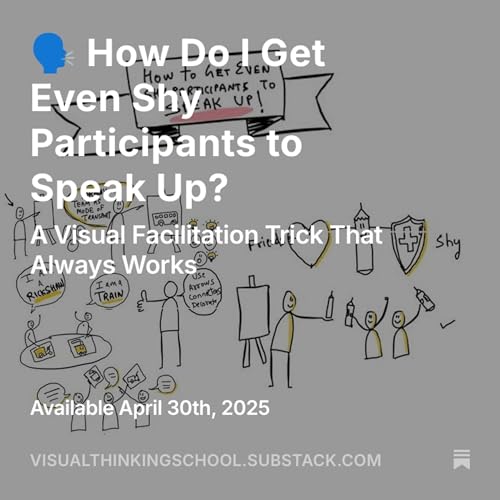
    Have you ever been in a workshop or a team session where…you ask a question,you smile at the group,and then…silence. 😶No one makes eye contact.People look down at their notes or phones.Even the enthusiastic ones just… stay quiet.It can feel awkward, right?If you’re a trainer, coach, manager or educator—you’ve definitely been there.But here’s the good news:There’s a way to get people—even the shyest ones—to open up.And it’s not about asking better questions.It’s not about calling them out by name.It’s about using visual prompts to lower the pressure and make it fun.Let me show you how it works. 👇🌈 Why People Don’t Speak UpLet’s start with a quick reality check.People don’t stay silent because they’re lazy.There are usually 3 reasons why they hold back:Fear of being wrong→ “What if my idea isn’t smart enough?”Fear of judgment→ “I don’t want to sound weird.”Not enough warm-up time→ “I need time to think before I talk.”So, when we throw a question like “How does your team collaborate?”…some people freeze.They need an entry point that’s safer and more playful.And that’s where drawing comes in.Instead of asking people to speak, ask them to sketch something symbolic.Here’s one I love:"If your team was a mode of transport, what would it be?"You’ll see magic happen.One participant draws a rollercoaster:“Because our team has extreme ups and downs.”Another draws a rickshaw:“I’m the one pulling, and everyone else is just sitting!”These sketches are fun.They feel personal but not exposing.And most importantly—they get people talking.Learn SketchnotesHere’s the exact 4-step method I use to ease participants into speaking:✅ Step 1: Start with a Visual PromptGive them something unexpected and symbolic to draw.Examples:Your workday as a weather patternYour project as a type of foodYour energy level as a batteryThe goal is not art—it's expression.✅ Step 2: Sketch Quietly (No Talking Yet)Give everyone 2–3 minutes to draw on their own.Let them doodle freely without pressure.Use simple sketching tools—sticky notes, markers, index cards.This quiet time helps them gather thoughts without the spotlight.✅ Step 3: Share in Pairs or Small GroupsNow ask them to explain their sketch to just one or two others.Talking in small groups feels safer than speaking to the whole room.You’ll start hearing:“Mine’s a pizza delivery bike because we’re always in a rush!”“Mine’s a snail… we’re slow but steady.”This step builds connection without pressure.✅ Step 4: Invite Reflections and ConnectionsOnce people are warmed up, open the room for reflection.Ask:“What patterns are we noticing?”“How do these sketches reflect our team culture?”“What’s surprising about these visuals?”You’ll find that the real conversation now begins—because the ice is broken.Learn Business SketchnotesLet’s break it down:1. It removes the pressure of “saying the right thing.”Drawing feels playful. There’s no “right answer.”2. It engages different types of learners.Some people think visually, not verbally.Sketching includes them in the process.3. It helps people project their thoughts.It’s easier to talk about a drawing than about yourself.That slight distance gives people courage to speak.If you run group sessions, this visual warm-up trick is pure gold.You can use it in:Team meetingsOnline workshops1-on-1 coachingOnboarding sessionsTraining icebreakers🖍️ A Final ThoughtVisual facilitation isn’t about making things pretty.It’s about unlocking people.It’s about inviting creativity, safety, and surprise into your space.And sometimes… it’s as simple as handing someone a pen instead of a mic.So next time your group goes quiet—don’t panic.Don’t pressure.Just say:“Let’s draw something first.” 😊You might be amazed at who speaks up next.✍️ Have you tried visual prompts in your sessions?What worked for you? Share your favorite idea in the comments below!
    Show More Show Less
    8 mins