• #102: How Bias and Psychological Safety Shape Your Team with Susan Swendsen Harris
    Jun 30 2026

    Every veterinary professional brings their own experiences, beliefs, and assumptions into the workplace. While bias is a natural part of being human, it can quietly influence how we communicate with teammates, care for clients, and create a culture where people either thrive or withdraw. Susan Swendsen Harris joins me to explore how becoming aware of our biases can strengthen psychological safety, improve collaboration, and help teams build greater trust.

    Drawing on her experience as a veterinary social worker and leadership coach, Susan explains the four common types of bias that commonly appear in veterinary medicine and why recognizing them is the first step toward creating healthier workplace relationships. Through relatable examples, we discuss how bias can affect everything from onboarding new team members to interacting with clients and collaborating across departments. Rather than judging ourselves for these natural tendencies, we explore how curiosity, self-awareness, and shared language can help teams move beyond assumptions and build stronger connections.

    The conversation also explores the four elements of psychological safety and why creating an environment where people feel included, safe to learn, comfortable contributing, and empowered to respectfully challenge one another leads to healthier teams and better patient care. Susan reminds us that these are not soft skills. They are leadership skills that require practice, vulnerability, and courage. By slowing down, remaining curious, and choosing connection over judgment, veterinary professionals can build workplaces where people feel valued, supported, and inspired to grow together.

    What’s Inside:

    • How unconscious bias influences communication, teamwork, and client relationships
    • The four types of bias that commonly show up in veterinary medicine
    • The four elements of psychological safety and why they matter for every team
    • Practical ways leaders can build trust through curiosity, accountability, and open dialogue

    Mentioned in this Episode:

    How to reduce bias in your workplace | The Way We Work, a TED series
    Vet Med Wellness and Leadership Podcast
    Full Circle Lab
    Crystal Stokes on LinkedIn

    Show More Show Less
    33 mins
  • #101: Compassion Satisfaction During Busy Season with Senani Ratnayake
    May 12 2026

    Busy season in veterinary medicine can bring more than packed schedules and longer days. It can also heighten the negativity bias many veterinary professionals already carry into the workplace. In this episode, Senani Ratnayake joins me for a thoughtful conversation about how negativity, perfectionism, and emotional overwhelm quietly shape team culture and individual wellbeing, especially during high-stress seasons.

    Together, we explore the powerful relationship between negativity bias and confirmation bias and how quickly teams can spiral into patterns of dread, frustration, and emotional exhaustion when those patterns go unchecked. Senani shares why veterinary professionals are particularly vulnerable to focusing on what went wrong rather than recognizing the many moments of success, connection, and impact that happen throughout the day.

    The conversation introduces the concept of compassion satisfaction as a meaningful counterbalance to burnout, empathic distress, and compassion fatigue. Rather than dismissing the emotional weight of veterinary medicine, Senani explains how intentionally noticing moments of purpose, contribution, and teamwork can help restore emotional capacity and resilience. She outlines three practical ways veterinary teams can begin strengthening compassion satisfaction: sharing positive stories, resisting the urge to take meaningful moments for granted, and reframing daily responsibilities through the lens of what we “get” to do rather than what we “have” to do.

    We also discuss the deeper emotional realities of working in a helping profession, including perfectionism, self-criticism, and the challenge of carrying veterinary medicine home with us. Senani offers a refreshing perspective on work-life balance, encouraging listeners to think instead about creating a sustainable working balance that honors both professional passion and personal wellbeing.

    This episode is an invitation to pause, reframe, and reconnect with the meaning behind the work. Even during the busiest seasons, there are opportunities to cultivate more joy, gratitude, and emotional sustainability within veterinary medicine.

    What’s Inside:

    • How negativity bias and confirmation bias shape veterinary team culture
    • Why compassion satisfaction is a critical protective factor against burnout
    • Three practical ways to cultivate more positivity and emotional resilience at work
    • A healthier perspective on work-life balance within veterinary medicine


    Mentioned in this Episode:

    Senani Ratnayake on LinkedIn
    Motivatum Consulting Website
    Motivatum Consulting Facebook Page
    Kristin Neff Tedx Talk – The Space Between Self-Esteem and Self-Compassion
    Professional Quality of Life Tool
    Vet Alliance
    Vet Med Wellness and Leadership Podcast
    Full Circle Lab
    Crystal Stokes on LinkedIn

    Show More Show Less
    32 mins
  • #100: Fixing Clinical Recruiting in Vet Med with Savanna Tracy
    Apr 28 2026

    Veterinary leaders are feeling the pressure when it comes to recruiting right now, and for many, it feels like no matter how much effort goes in, the right candidates just aren’t sticking. In this episode, Savanna Tracy joins me to explore what’s really happening in today’s hiring landscape and how practices can shift their approach to build stronger, more sustainable teams.

    Drawing on her experience in multi-site operations and leadership development, Savanna breaks down the current state of the industry and why the challenge hasn’t disappeared, it’s simply evolved. While staffing shortages may look different than they did a few years ago, the strain has moved upstream into how we recruit, engage, and retain our people. She explains why recruiting and retention are no longer separate conversations, but part of the same strategy that begins the moment a candidate first interacts with your practice.

    Savanna shares practical insights into what today’s candidates are actually looking for and how leaders can better meet those expectations. From speed and consistency in communication to transparency about the realities of the practice, she highlights the importance of building trust early. The conversation also explores how helping candidates envision their life within the practice, not just their role, can be a powerful differentiator in a competitive hiring market.

    We also dive into one of the most overlooked opportunities in leadership: onboarding. Savanna explains why the first 90 days are critical in shaping confidence, connection, and long-term retention. With thoughtful structure, clear expectations, and intentional support, onboarding can shift from a reactive process to a powerful retention strategy. She leaves listeners with a clear reminder that culture is not defined by intention, but by the experience a new hire has from day one.

    What’s Inside:

    • Why recruiting and retention must be approached as one unified strategy
    • How transparency and communication build trust with today’s candidates
    • The role of candidate experience in standing out in a competitive market
    • Why structured onboarding is key to long-term retention

    Mentioned in this Episode:

    Veterinarians : Occupational Outlook Handbook: U.S. Bureau of Labor Statistics
    2026 State of General Practice Veterinary Care Overview
    Instinct Report 2024 The State of Emergency & Specialty Veterinary Care
    Vet Med Wellness and Leadership Podcast
    Full Circle Lab
    Crystal Stokes on LinkedIn

    Show More Show Less
    27 mins
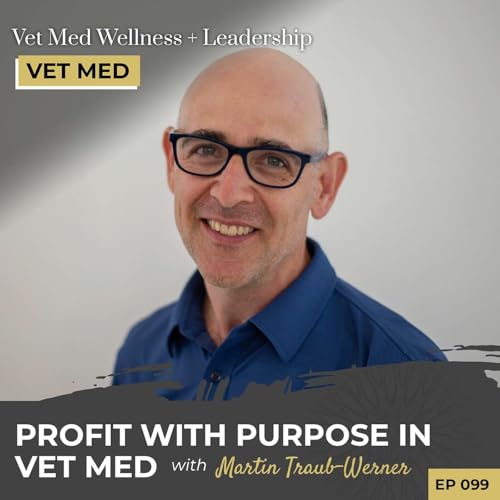
  • #099: Profit With Purpose in Vet Med with Martin Traub-Werner
    Mar 17 2026

    Financial conversations can feel loaded in veterinary medicine. Many of us entered this profession to care for animals, not to analyze income statements. But avoiding the numbers does not protect your mission. In fact, it often increases anxiety, fuels burnout, and limits your ability to grow.

    In this episode, I speak with entrepreneur Martin Traub-Werner, founder of VetBooks, about why financial control is foundational to sustainable leadership. Martin shares how his work in veterinary data analytics revealed a major gap for independent practices: clear, accurate, and timely financials that truly reflect profitability.

    We explore the emotional side of money in vet med, including the common fear of being perceived as greedy. I offer the perspective that money is energy. When used intentionally, it becomes fuel for reinvestment, team development, better equipment, and expanded patient care. Profit is not a betrayal of purpose. It is what allows your purpose to endure.

    Martin also breaks down practical steps for gaining financial clarity, from committing to curiosity instead of fear to using the AAHA VMG Chart of Accounts. He emphasizes focusing on your top revenue and expense categories, where most of the meaningful change happens.

    If you have ever woken up at 3 a.m. worrying about payroll, rising costs, or sustainability, this conversation will remind you that your financials are not something to fear. They are a diagnostic tool. And when you understand them, you gain back control.

    What’s Inside:

    • Why avoiding your numbers increases anxiety and uncertainty
    • How profit can fuel your mission instead of competing with it
    • Practical first steps to gaining financial control in your practice
    • Why focusing on your top revenue and expense categories drives sustainable grow

    Mentioned in this Episode:

    Vetbooks
    Martin Traub-Werner on LinkedIn
    Vet Med Wellness and Leadership Podcast
    Full Circle Lab
    Crystal Stokes on LinkedIn

    Show More Show Less
    23 mins
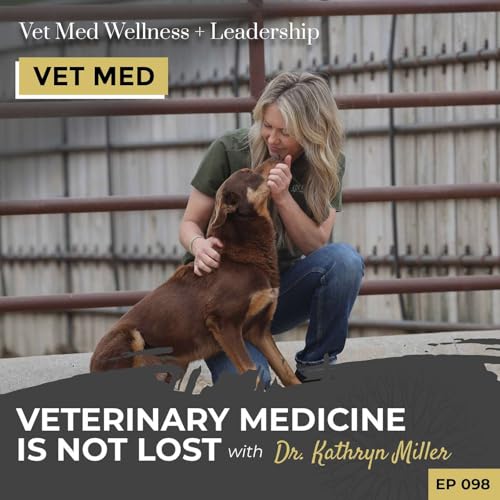
  • #098: Veterinary Medicine Is Not Lost with Dr. Kathryn Miller
    Feb 17 2026

    In this episode, I’m sharing a conversation I had with Dr. Kathryn Miller, a rural mixed animal veterinarian in Kansas who believes wholeheartedly that veterinary medicine is not lost. Instead of accepting burnout and poor wellbeing as inevitable, Kathryn shares how coaching, culture, and mindset shifts can change the trajectory of an entire career.

    Kathryn opens up about her own turning point with burnout after becoming a mother. What once felt manageable quickly became overwhelming, and without support, she is clear she might have left the profession altogether. Through professional coaching, she experienced a powerful mindset shift that allowed her to see she did not have to choose between being a great veterinarian and a great mom. That realization changed everything.

    We explore the most common traps early career veterinarians fall into, from harsh inner critics and black and white thinking to identity loss after vet school. Kathryn shares how tools like the Enneagram and structured coaching conversations help young practitioners reframe mistakes, navigate team dynamics, and build resilience instead of self-doubt. She also offers practical guidance on evaluating job opportunities, identifying red and green flags in practice culture, and learning to feel safe asking questions in those critical first years.

    This conversation is both honest and hopeful. Yes, veterinary medicine is hard. Yes, burnout is real. But with the right tools, support, and mindset, it does not have to define your career. Kathryn reminds us that growth requires discomfort, culture requires tending, and coaching can be a powerful catalyst for long-term wellbeing and leadership.

    What’s Inside:

    • Kathryn’s personal burnout story and the mindset shift that kept her in veterinary medicine
    • Common early career traps including perfectionism, identity loss, and black and white thinking
    • How coaching and the Enneagram create self-awareness, compassion, and stronger team communication
    • Red and green flags to watch for when choosing a practice and building a sustainable career

    Mentioned in this Episode:

    RKM Clinic Website

    RKMM Website

    Dr. Kathryn Miller on Instagram

    Rocking KM Vet on Instagram

    Rocking KM Vet - Potwin on Instagram

    CanvasRebel Feature

    Vet Med Wellness and Leadership Podcast

    Full Circle Lab

    Crystal Stokes on LinkedIn

    Show More Show Less
    34 mins
  • #097: Caring for the Caregivers: Leadership Development and Wellness in the Veterinary Hospital
    Jan 13 2026

    This week, I’m stepping into the guest seat on the Pawsitive Leadership Podcast with Andrea Crabtree and David Liss, and we’re going deep into something that matters to me with my whole heart: caring for the people who care for everyone else. If you’ve ever felt the weight of veterinary medicine in your bones, the kind of exhaustion that comes from showing up day after day with your whole soul, this conversation is for you.

    I share my full circle story, from being the kid who only ever wanted to be a veterinarian to burning out hard as an overnight ER tech to leaving vet med entirely because I thought I “didn’t have what it takes.” That pivot led me into psychotherapy, where I became a Licensed Marriage and Family Therapist and learned the tools that brought me back to life. And eventually, those same tools led me right back into veterinary medicine after I was invited into a hospital that had just lost a veterinarian to suicide. That moment changed everything, and it clarified why this work is so urgently needed.

    We talk about why wellness is not fluff. It’s operational. Healthy, happy people make healthy profits, and when hospitals ignore that, the cost shows up everywhere: turnover, productivity, and the emotional toll carried by the team. I explain why burnout isn’t random. It’s often the predictable result of leadership structures that don’t support humans, especially when people are promoted without training and then expected to carry impossible expectations.

    We also get practical. I share one of the most powerful tools I use with teams and leaders: pause, notice, and choose. It sounds simple, but it is life-changing. That moment of awareness interrupts autopilot and brings you back into alignment, so you can lead from intention instead of survival mode. Because the truth is, you cannot build a thriving hospital culture from a depleted nervous system.

    What’s Inside:

    • How my full-circle journey took me from vet tech burnout to psychotherapy and back into veterinary medicine
    • Why wellness is a retention strategy and a profitability strategy, not an optional perk
    • Two leadership mistakes that quietly sabotage hospitals: promoting without training and misaligned expectations
    • A simple tool to reduce stress and regain control in real time: pause, notice, and choose

    Mentioned:

    Man’s Search for Meaning by Viktor Frankl

    Vet Med Wellness and Leadership Podcast

    Pawsitive Leadership Podcast

    Full Circle Lab

    Crystal Stokes on LinkedIn

    Show More Show Less
    28 mins
  • #096: Building Vision-Driven Veterinary Teams with Dr. George Cuellar
    Dec 16 2025

    Veterinary leaders often rise through the ranks without ever receiving formal training in how to define a vision, build culture, or guide a team with clarity. Dr. George Cuellar joins Crystal to explore how aspiring entrepreneurs can step into leadership with purpose by working through three essential phases: defining the vision, sharing it effectively, and engaging the team in bringing it to life. Drawing on decades as a corporate executive, practice owner, and state veterinary leader, George explains how he discovered that true leadership is not about directing people; it’s about creating a shared sense of purpose that others want to be part of.

    George shares how his own hospital’s transformation began with articulating a clear, compelling vision and pairing it with a set of values that guided every decision. He describes how leaders can evolve from simply “telling” their vision to collaborating on it by testing ideas, inviting dialogue, and using regular meetings to cultivate ownership across the team. As the culture strengthens, leaders move into phase three: engaging individual team members through development plans, outcome-based goals, and accountability structures that empower them to grow rather than depend on the leader.

    The conversation also explores why leaders must resist the urge to overhelp and allow team members to struggle, fail, and ultimately succeed on their own terms. George explains how celebrating wins, learning from missteps, and trusting the team helps shift the culture from leader-dependent to self-sustaining. He leaves listeners with core reminders: everything you need to lead is already within you, growth requires compassion and grit, and no leader should go it alone. Veterinary professionals are encouraged to seek mentorship and support as they develop leadership cultures that are built to last.

    What’s Inside:

    • How Dr. Cuellar went from corporate leadership to building a vision-driven veterinary hospital
    • Why defining a clear vision and set of values is the foundation for effective leadership
    • The five stages of sharing a vision, from telling to true co-creation with your team
    • How to engage staff through individualized growth plans, accountability, and meaningful consequences
    • Why leaders must resist overhelping and allow room for struggle, learning, and celebration
    • Practical steps to build a self-sustaining culture where aligned, motivated team members thrive

    Mentioned:

    Dr. George Cuellar on LinkedIn
    Ready, Vet, Go
    Full Circle Lab
    Crystal Stokes on LinkedIn

    Show More Show Less
    31 mins
  • #095: Mental Health First Aid in Veterinary Medicine
    Nov 18 2025

    Veterinary professionals are often trained to care for everyone except themselves. But what if they had the tools to recognize and respond to mental health challenges within their own teams? Dr. Sonja Olson, DVM, C-MMT, and Susan Swendsen, MSSW, LCSW, VSW from Full Circle Lab join Crystal to explore how Mental Health First Aid (MHFA) is reshaping the conversation around well-being in veterinary medicine.

    Susan shares how MHFA began in Australia in 2000 with founders Betty Kitchener and Anthony Jorm, grew to 29 countries, and aims to train one in every fifteen people worldwide. Introduced in the U.S. in 2008, the program equips everyday people with the confidence to recognize early signs of mental distress and connect others to the help they need before a crisis occurs.

    The group talks about how MHFA differs from therapy. It’s a peer-support model designed to help colleagues feel prepared to respond when someone is struggling. Sonja breaks down the ALGEE action plan: Assess for risk of suicide or harm, Listen non-judgmentally, Give reassurance and information, Encourage appropriate professional help, and Encourage self-help. She explains how this structured, step-by-step approach resonates with the way veterinary professionals think and problem-solve.

    The conversation highlights the power of early intervention, the importance of reducing stigma, and how empathy can protect against secondary traumatic stress. The team also shares practical ways for veterinary clinics to bring MHFA training into their workplaces through the National Council for Behavioral Health and how learning these skills together can strengthen connection, compassion, and care across the profession.

    What’s Inside:

    • How Mental Health First Aid started in Australia and went global
    • Why MHFA is different from therapy but just as powerful in veterinary care
    • Step-by-step guide to the ALGEE action plan for real-life crises
    • Simple ways to break stigma and start honest conversations about mental health
    • Early intervention tips to prevent burnout and secondary trauma
    • How to get certified and bring MHFA training to your clinic
    • Building stronger, more connected veterinary teams through peer support

    Mentioned:

    Mental Health First Aid
    LinkedIn
    Full Circle Lab
    Crystal Stokes on LinkedIn

    Show More Show Less
    27 mins