Tuned In cover art

Tuned In

Tuned In

By: High Performance Academy
Listen for free

LIMITED TIME OFFER

£0.99/mo for 3 months - terms apply. Offer ends 24 August 2026.

High Performance Academy Presents: Tuned In. A podcast interviewing influential people from around the world at the top of their respected fields. Covering topics such as Tuning, CAD, Performance Engine Building, Automotive/Motorsport Wiring, Data Analysis, Driver Coaching/Training, Motorsport Fabrication and Car Setup.

© 2026 Tuned In
Episodes
  • 167: From Turbo Hondas to Holley EFI Guru
    Jul 29 2026

    Joe Simpson didn’t grow up building cars with his dad or surrounded by race engines. Instead, an early fascination with imports, turbo Hondas, and the underground tuning scene slowly pulled him towards a career he never originally planned—eventually becoming an incredible fabricator and tuner.

    👉 Use the code ‘PODCAST500’ to get $500 OFF HPA's VIP Package: https://hpcdmy.co/podvip

    In this episode of Tuned In, Joe explains how he started with almost no mechanical experience before teaching himself fabrication and tuning out of necessity. Beginning with basic piggyback controllers and early Hondata systems, he steadily built his skills through repetition, experimentation, and plenty of time on the dyno.

    We also explore Joe’s transition from Honda tuning into domestic performance, HP Tuners, and eventually the Holley EFI ecosystem. He breaks down the differences between the Sniper, Terminator X, HP, and Dominator systems, where each works best, and why the most expensive ECU is not automatically the right solution.

    Joe and Andre also discuss why making huge horsepower numbers can be easier than achieving factory-like street manners. Cold starts, idle control, drivability, and reliable power management can require far more attention than simply producing an impressive dyno result. Finally, Joe shares how his YouTube channel evolved into Tune The Trilogy, turning years of workshop and tuning experience into online education.

    This conversation is full of practical insights and real-world experience. Joe’s honest approach to learning, problem-solving, and continuous improvement makes this an episode every performance enthusiast can take something away from.

    👉 Use the code ‘PODCAST500’ to get $500 OFF HPA's VIP Package: https://hpcdmy.co/podvip

    Follow Joe Here:

    Instagram: joe_at_tempest
    Youtube: JoeSimpsonAtTempest
    WWW: tempest-racing.com
    WWW: tunethetrilogy.com

    Timestamps:

    0:00 From Turbo Hondas to Holley EFI Guru
    3:15 How did you become interested in cars?
    11:16 Discovering Honda’s
    19:46 Getting your first job in a performance shop
    23:14 Do you need a qualification to be a mechanic in the US?
    30:15 How did you learn to tune?
    38:38 How did you find moving into the K series?
    43:58 How did you switch from JDM to US domestic?
    53:32 Tuning big power is easy?
    58:28 What Holley products are you working with?
    1:01:25 Holley Sniper self tuning
    1:09:04 Holley Terminator X
    1:10:02 What’s the advantages of the HP and Dominator ECU’s?
    1:16:43 How good is transmission support for the 4L60, 4L80 on the Terminator X?
    1:18:17 Best and worst features of the Holley ECU’s?
    1:27:23 8HP integration
    1:31:42 How did you start Tune the Trilogy?
    1:36:42 Is there still time to run a performance workshop?
    1:49:39 Final 3 questions


    Show More Show Less
    2 hrs and 1 min
  • 166: Building Record-Breaking GT-Rs & Lamborghinis | AMS Performance
    Jul 15 2026

    When Martin designed his first camshaft for the Ford Merkur XR4Ti, he probably never imagined that one day he'd be building some of the fastest GT-Rs and Lamborghinis in the world—but that's exactly what he has done. Martin Musial's journey with AMS Performance has been nothing short of extraordinary.

    👉 Use the code ‘PODCAST500’ to get $500 OFF HPA's VIP Package: https://hpcdmy.co/podvip

    In this episode of Tuned In, Martin shares how growing up around machinery and studying mechanical engineering laid the foundations for his career. After working in his father’s machine shop, he discovered a passion for designing and manufacturing performance parts that solved real problems, eventually helping shape AMS into one of the world's most respected performance companies.

    We follow AMS’s evolution from Mitsubishi Evos to the R35 GT-R, where relentless testing pushed the team to develop stronger engines, turbo systems, and drivetrain solutions. Martin explains how repeated failures lead to innovations, proving that successful product development is built on continuous refinement.

    The conversation also explores AMS’s move into the Audi R8 and Lamborghini Huracán platforms, the challenges of modern ECUs and dual-clutch transmissions, and why the biggest dyno number doesn't always make the best street car. Martin also shares the realities of growing a specialist workshop into a global engineering and manufacturing business.

    This episode is packed with insight into engine development, product design, and building a successful performance business. Whether you're chasing horsepower or creating better parts, Martin's experience shows that the best results come from understanding the engineering and never stopping the development process.

    👉 Use the code ‘PODCAST500’ to get $500 OFF HPA's VIP Package: https://hpcdmy.co/podvip

    Follow Martin here:

    Instagram: AMS Performance
    Facebook: AMS Performance
    Youtube: AMS Performance
    WWW: amsperformance.com

    Timestamps:

    0:00 Building Record-Breaking GT-Rs & Lamborghinis | AMS Performance
    3:54 How did you become interested in cars?
    9:35 The story of starting AMS?
    13:49 Is old school mechanical knowledge being lost?
    17:57 The start of AMS continued
    26:41 What was the change like from Talon, Eclipse to Evo 8?
    35:15 How did you develop your skills with EFI tuning?
    37:15 How do you navigate uncharted territory with customer builds?
    44:37 The transition from the 4g63 to the R35 GTR
    48:25 Designing a stock placement turbo kit for the R35 GTR
    57:26 How did the billet block for the R35 come about?
    1:05:42 When things go wrong, who pays for it?
    1:06:42 The million dollar mistake
    1:15:30 What sort of head gasket are you using?
    1:17:06 Do we have full control and understanding of the DCT transmissions?
    1:24:58 What ECU’s are you using to control these cars?
    1:27:12 Moving from the R35 platform to the Lamborghini Huracan/Audi R8
    1:32:04 What’s a street level turbo Huracan’s happy power level?
    1:36:52 What makes and models are you looking to support in the future?
    1:42:09 What does AMS look like today?
    1:50:57 What’s your current role at AMS look like?
    1:59:52 Final 3 questions


    Show More Show Less
    2 hrs and 9 mins
  • 165: Pioneering the Mazda FD3S RX-7
    Jul 1 2026

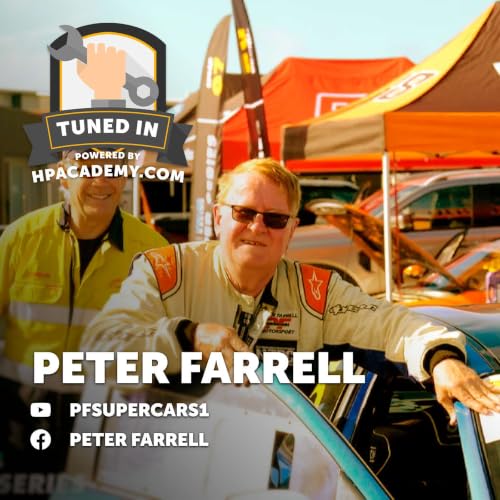
    We often hear about drivers who built successful racing careers, but Peter Farrell’s story goes far beyond the driver’s seat. While many enthusiasts know him for his work developing the legendary Mazda FD RX-7, his career stretches from rallying on a shoestring budget in New Zealand to developing some of the first performance upgrades for the FD and competing in factory-backed racing programs in the United States.

    👉 Use the code ‘PODCAST500’ to get $500 OFF HPA's VIP Package: https://hpcdmy.co/podvip

    After discovering rallying as a teenager, Peter combined his engineering background with an obsession for making cars faster. Whether it was pioneering turbocharged Ford Escorts, competing against legends like Possum Bourne, or moving to America with little more than ambition and mechanical skill, every chapter of his story was built on finding opportunities and making the most of them.

    That determination eventually led Peter into professional endurance racing, where he drove for manufacturers including Mitsubishi, Peugeot, Saturn, and most famously Mazda. Along the way he helped develop the FD RX-7 into a race-winning platform, worked alongside Mazda's engineers in Japan, pioneered performance parts for the iconic rotary sports car, and experienced the golden era of factory-backed motorsport in America.

    Beyond the racing, Peter shares invaluable insights into engine development, turbocharging, cooling, reliability, and why understanding the fundamentals matters just as much as having the latest technology. His stories highlight how ingenuity, persistence, and strong relationships opened doors that money alone never could.

    This episode is packed with incredible stories from a fascinating motorsport career. From grassroots rallying and endurance racing to rotary development and factory engineering, Peter's journey offers lessons that every racer, tuner, and enthusiast can appreciate.

    👉 Use the code ‘PODCAST500’ to get $500 OFF HPA's VIP Package: https://hpcdmy.co/podvip

    Follow Peter here:

    Youtube: pfsupercars1
    Facebook: Peter Farrell

    Timestamps:

    0:00 Pioneering the Mazda FD3S RX-7
    3:55 How did you first develop a passion for cars?
    7:25 Competing in rally in New Zealand
    17:39 Early turbo setups on 2.0 Pinto engines
    28:58 Moving to America to go chase the rally dream
    38:17 The switch to circuit racing and getting paid to race
    1:00:18 Starting the relationship with Mazda
    1:03:00 Building the FD RX7 to race in the IMSA Supercars
    1:12:19 How to keep a Rotary reliable and fast?
    1:17:40 Were you not allowed an aftermarket ECU?
    1:20:05 Did you have problems with the factory gearbox?
    1:32:51 Starting a performance parts business (PFS)
    1:35:58 Peter Farrell Purple Box piggy back ECU
    1:57:40 Final 3 questions


    Show More Show Less
    2 hrs and 5 mins
adbl_web_anon_alc_button_suppression_t1
No reviews yet