• Ep554: Everlast - From Rhyme Syndicate to Embers to Ashes
    Jun 29 2026
    Everlast traces his journey from Rhyme Syndicate graffiti kid to House of Pain to solo artist, revealing how Jump Around's success gave him the freedom to never chase a hit again. New LP "Embers to Ashes" available here Topics Include: Everlast's new album Embers to Ashes drops August 28th with vinyl availableHe collects art and guitars, not records — leaves vinyl to the DJsHis guitar collection spans vintage Fender Strats, Gretsch Falcons, and Martin acousticsGrew up immersed in graffiti culture, his kids are graffiti artists tooHis house is essentially a private gallery of graffiti and street art Music was always on — mom loved R&B and doo-wop, dad loved Southern rockHis dad had a guitar; Everlast taught himself basic chords by watching TVHip hop took over at 15, but guitar quietly stayed in his lifeHe plays guitar like a drummer — rhythm-first, not melody-firstThe breakthrough came post-House of Pain: suddenly he could play and sing simultaneously Whitey Ford Sings the Blues was conceived as hip hop — "What It's Like" changed everythingJump Around's success gave him the financial freedom to never chase it againHe and Muggs deliberately made each subsequent record darker and more distant from itSoul Assassins kept management out of sessions — artistic control was non-negotiableHis first ever rhyme came from tagging alongside Divine Styler and the Rhyme Syndicate crew Danny Boy introduced him to punk — Bad Brains and the LA hardcore sceneHis debut solo record split between pure artistic vision and label-pleasing compromises Tommy Boy won his loyalty over bigger-money offers purely on cultural credibility Just Another Victim with Helmet emerged organically on the Judgment Night soundtrack Lethal sampled and slowed Helmet's track, then sandwiched both versions together After eight-plus years away, Yellow Wolf simply asked "why don't you make a record?" COVID, divorce, and losing his house shaped the emotional landscape of the new album Yellow Wolf pushed him to fully sing — his strongest vocal performance on recordA near-miss connection to the Bataclan attack was redirected by a last-minute camera detourHe's got shows booked and eyes a final solo acoustic tour as his ultimate bookend High resolution version of this podcast is available at: www.Patreon.com/VinylGuide Apple: https://tinyurl.com/tvg-iosSpotify: https://tinyurl.com/tvg-spotAmazon Music: https://tinyurl.com/tvg-amazonSupport the show at Patreon.com/VinylGuide
    Show More Show Less
    44 mins
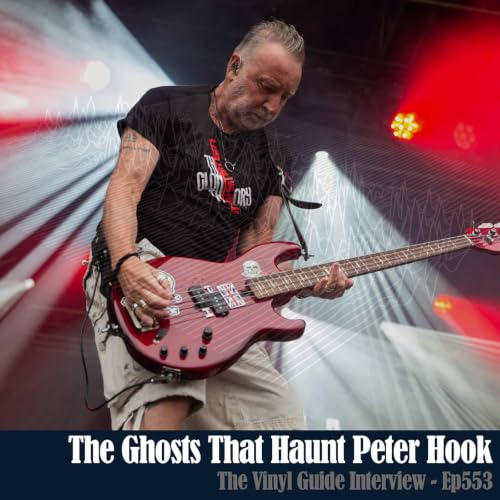
  • Ep553: The Ghosts That Haunt Peter Hook
    Jun 22 2026
    Peter Hook reflects on 50 years of music, the emotional weight of performing Joy Division and New Order live, and the many memories and ghosts of his past. Tickets for Peter Hook & The Light, Australia 2026 Topics Include: New Order toured Australia as early as 1982, helped by Factory Australasia's local support. Hooky calls Australia the only place he never wants to leave — he still suffers leaving every time. Peter Hook and the Light played their seventh-ever gig in Melbourne on their first Australian tour.He is now working through every New Order and Joy Division album ever recorded live. Get Ready features songs never played live as New Order, with Steve Morris largely absent during recording.The band's Grammy came from Orgy's heavy metal cover of Blue Monday — Hook loves the weird covers most.He revealed a plan to stage a full New Order classical concert, eyeing the Sydney Opera House.Ian Curtis performed with absolute conviction every single night — something Bernard Sumner couldn't match early on.Hook recalls first seeing Ian smash up a venue at 2:30am, dancing through broken tables — terrifying and electrifying.That chaotic Stiff/Chiswick talent show led directly to Rob Gretton becoming Joy Division's manager. Ian's lyrics, Hook says, are heartbreaking up close — Love Will Tear Us Apart masks devastating words in euphoric music. Singing Ian's words himself has given Hook a profound new insight into what Curtis was actually expressing.Tony Wilson signed them with a handshake — no contracts — while other labels arrived with thick legal documents. Bernard Sumner found the Unknown Pleasures pulsar image in a textbook; nobody planned the iconic sleeve. Hooky was actually sued for bootlegging the Unknown Pleasures artwork — which Factory themselves had originally stolen.Ian Curtis reportedly wrote a letter complaining about how Closer sounded — a detail Hook only learned years later. During Closer sessions, Curtis was being torn apart: marriage collapsing, new love, epilepsy worsening, the band pushing forward.Hook deeply regrets not seeing Ian before his cremation — but a gravedigger privately told him where Curtis is actually buried.The inquest into Ian's death so disgusted the band they decided on the spot to continue as New Order.Joy Division was deliberately boxed away for 30 years; Bernard called playing those songs "miserable" and refused to continue. Bobby Gillespie suggested the album playback concept so Hook could faithfully recreate Martin Hannett's studio sound live. Watching his son learn Joy Division bass lines at the same age Hook was then felt like staring into the past. Performing these songs, Hook says he is "living surrounded by ghosts" of collaborators now gone.The K-93 sessions saw Killing Joke's Geordie Walker move into Hook's Manchester home for six weeks, causing complete chaos. Those lost K-93 tapes mysteriously surfaced after the label went bankrupt — and Jaz Coleman promptly went silent again. High resolution version of this podcast is available at: www.Patreon.com/VinylGuide Apple: https://tinyurl.com/tvg-iosSpotify: https://tinyurl.com/tvg-spotAmazon Music: https://tinyurl.com/tvg-amazonSupport the show at Patreon.com/VinylGuide
    Show More Show Less
    46 mins
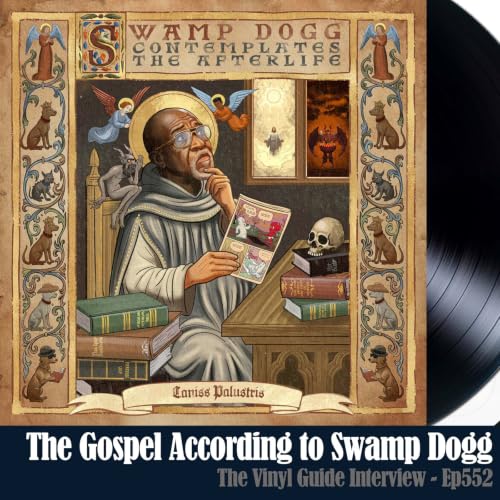
  • Ep552: The Gospel According to Swamp Dogg
    Jun 15 2026
    Jerry "Swamp Dogg" Williams Jr opens up about his new album "Contemplates the Afterlife," reflecting on death, faith, and a 70-year career that's produced over 2,000 songs. Extended and high resolution podcast at: www.Patreon.com/VinylGuide Topics Include: New album, Swamp Dogg Contemplates the Afterlife, drops on S-Curve Swamp Dogg shares wild theories on what happens after deathHe opens up about faith, doubt, and fear of dying Reveals he's written over 2,000 songs across 31 albumsHis very first record came out way back in 1954 Stories of opening for Sam Cooke and Larry Williams Names the R&B legends who shaped his sound early on Louis Jordan's band once crashed at his childhood home Tells the story of the worst gig of his lifeA gorilla costume gets stabbed onstage — true story Joining a traveling sideshow for five dollars a night Discusses which Swamp Dogg records collectors hunt hardest todayBob Dylan secretly covered one of his songs years ago Bonds with the host over their shared Australia connection Reveals his wild Beatles-cover novelty record made in Australia Explains how the record business vanished almost overnight Teases new Trinidad soca album and Black Grass II Black Grass II will feature Steve Earle and Margo Price Talks new collaboration album with Eli "Paperboy" Reed Reflects on his Nixon protest era and Jane Fonda ties Looks back on going broke after getting rich fast Recalls producing hit records for Gene Pitney and others Shares fond memories of legendary producer Jerry WexlerThe stopwatch story behind his studio recording ritualOn Phil Spector's massive ego and Wall of Sound Reveals which British acts covered his songs in the '60s Talks favorite record stores and his 100-record jukebox Hunting down rare 45s worth up to $1,000The story behind his dance hit "Let's Do the Wobble" Closes with favorite love songs and a wild birthday coincidence Extended and high resolution version of this podcast is available at: www.Patreon.com/VinylGuide Apple: https://tinyurl.com/tvg-iosSpotify: https://tinyurl.com/tvg-spotAmazon Music: https://tinyurl.com/tvg-amazonSupport the show at Patreon.com/VinylGuide
    Show More Show Less
    1 hr and 10 mins
  • Ep551: Lydia Lunch - Confrontationalist, Poet, No Wave Pioneer
    Jun 1 2026
    Lydia Lunch unpacks the raw origins of No Wave, her squatting-and-surviving New York story, and why after five decades of confrontational art, pleasure remains the ultimate rebellion. Australian tour tickets and show info here. Topics Include: Lydia Lunch is touring Australia and New Zealand in June She's performing Suicide and Alan Vega covers across multiple cities Australia holds deep personal meaning — Roland S. Howard, Tex Perkins, lifelong friends Lydia considers herself a comedian; most people are just too afraid to laugh Words are her primary art — music is just the machine gunShe sleeps in two-hour shifts and wakes famished at 5am every day Creativity has no fixed time — she writes song lyrics in five minutes flatShe self-publishes through 48-hour printing, selling books for $20, cost $4True crime forensics and Matthew McConaughey in Magic Mike are her guilty pleasures Daily she rotates between war, politics, and apocalyptic comedy — Dear Ivanka included She's actively promoting new bands: Genra's Death, Bog Creeper, New City Slang Instrumental music — Budos Band, Yusef Lateef, Baba Zula — is her listening diet Suicide and Mars were already playing when she arrived in New York Suicide actually coined the term "punk rock" on flyers back in 1972No Wave wasn't a movement — it was personal insanity in a decaying cityThe name "No Wave" just came out of her mouth in one interviewIf you couldn't play, you had to be brutally tight — or elseShe taught a homeless man she'd befriended to play drums for Teenage Jesus Teenage Jesus songs were written on a borrowed bass she barely understoodShe squatted an abandoned Tribeca building, running electricity from neighbours to rehearse Teenage Jesus singles on Migraine Records likely preceded the No New York compilation Beirut Slump was horror rock — described as a slug over a razor bladeShe arrived in New York with $200, a suitcase, and zero contacts Seeing Suicide at Max's Kansas City with ten people changed everything instantly Martin Rev gave teenage Lydia vitamins; Alan Vega was leather-bound and irresistibleShe boycotted Bowie and Iggy in Rochester — accidentally saving them from a drug bustMick Ronson's Slaughter on 10th Avenue: the glam record Bowie quietly stole fromLou Reed — always a dick; Warhol — vapid, but his car crashes were greatShe owns every recording, every publishing right — everything she's ever madeHer reward for a lifetime of rebellion: pleasure, rage, and zero regrets High resolution version of this podcast is available at: www.Patreon.com/VinylGuide Apple: https://tinyurl.com/tvg-iosSpotify: https://tinyurl.com/tvg-spotAmazon Music: https://tinyurl.com/tvg-amazonSupport the show at Patreon.com/VinylGuide
    Show More Show Less
    52 mins
  • Ep550: Black Flag Vocalist Max Zanelly
    May 20 2026

    Black Flag vocalist Max Zanelly shares how she went from waitressing to fronting one of punk's most legendary bands and how the new lineup is carving their own space in legacy of the band.

    Australian tour tickets and info here.

    Topics Include:

    • Max Zanelly checks in from Toronto, post-Canada tour
    • Black Flag heading to Australia: four cities in late May
    • One year ago, Max had just started rehearsing with Black Flag
    • Only prior music experience: saxophone in middle school band
    • A longtime fan, Max attended a Black Flag show in Vancouver
    • Greg Ginn noticed Max singing every word from the front row
    • Numbers exchanged; Greg said he wanted to make music someday
    • A month later: the vocalist left, Greg offered Max the role
    • Max sent vocal demos and flew to Texas to rehearse
    • Already knew the full catalog; My War was the gateway album
    • Side two's slow, sludgy tracks resonated the most deeply
    • Favourite songs to perform live
    • New recordings underway, still at early instrumental stages
    • Max currently writing lyrics for a potential new Black Flag record
    • Big age gap with Greg, but the band dynamic gels well
    • Lineup reveal photos triggered massive online backlash before any shows
    • Live shows quickly won skeptics over, including 80s-era veterans
    • Henry Rollins is Max's personal favourite past Black Flag vocalist
    • First rehearsals: nervous and shy about screaming into a mic
    • Fake-it-till-you-make-it; fully unleashed onstage by the fourth show
    • Voice conditioned gradually; 24-hour rest between shows is enough
    • Bassist David sparked Max's interest in record collecting on tour
    • Grew up religious; told mum she was just selling band merch
    • Mum eventually came around; Max now inspiring women to start bands

    High resolution version of this podcast is available at: www.Patreon.com/VinylGuide

    • Apple: https://tinyurl.com/tvg-ios
    • Spotify: https://tinyurl.com/tvg-spot
    • Amazon Music: https://tinyurl.com/tvg-amazon
    • Support the show at Patreon.com/VinylGuide
    Show More Show Less
    36 mins
  • Ep549: Dave Markey & The Secret Lives of Bill Bartell
    May 18 2026

    Filmmaker Dave Markey discusses his documentary "The Secret Lives of Bill Bartell", the punk scene's most fascinating, mysterious, and surprisingly influential behind-the-scenes figure.

    Stream it now | Order the Blu-Ray

    Topics Include:

    • Dave Markey has a large record collection but stopped buying recently.
    • Vinyl prices have skyrocketed — once cheap records now cost thousands.
    • Dave bought records directly from band members at punk shows.
    • Ian MacKaye sold Dave a first press Minor Threat 7".
    • Dave bought Minutemen and Descendents EPs from D-Boon for a dollar.
    • Dave made the Bill Bartell documentary for people who don't know him.
    • Bill Bartell was unknowable — different things to different people.
    • Dave tried making this film in the 90s; Bill refused to cooperate.
    • The film was made ten years after Bill passed away.
    • Bill Bartell faked backstage passes to get into arena rock shows.
    • Bill named the Iron Maiden live EP Maiden Japan.
    • Bill gave Steve Harris his outfit, worn in the "Run to the Hills" video.
    • Bill saw no distinction between the Scorpions, the Germs, and the Beatles.
    • Bill would tell artists exactly what he thought — no filter whatsoever.
    • Bill told Steve Perry he was responsible for the worst night of his life.
    • Bill told Beck "I don't like you" upon their very first meeting.
    • Bill tried out as guitarist for Public Image Ltd in 1981.
    • Kiss circulated photos of Bill to security: do not let him in.
    • Bill befriended Sean Lennon, which led to a friendship with Yoko Ono.
    • Bill's 1988 Beatlefest noise performance nearly caused a riot.
    • Bill talked Kiss manager Bill Aucoin into discovering Generation X.
    • That connection indirectly launched Billy Idol's massive solo career.
    • Billy Idol himself didn't know Bill Bartell's role until recently.
    • Bill gave Kurt Cobain Os Mutantes tapes, reviving the band's career.
    • Pat Smear and Drew Barrymore were sought for the film but unavailable.
    • Dave's band Painted Willie did Black Flag's final tour in 1986.
    • Dave preferred Painted Willie's early Spinhead Records releases over SST output.
    • The Bill Bartell documentary and Love Dolls films are now on Criterion Channel.
    • Bill Bartell's Flying V guitar now hangs in the Punk Rock Museum, Las Vegas.
    • Bill's money, connections, and secrets largely died with him — still a mystery.

    High resolution version of this podcast is available at: www.Patreon.com/VinylGuide

    • Apple: https://tinyurl.com/tvg-ios
    • Spotify: https://tinyurl.com/tvg-spot
    • Amazon Music: https://tinyurl.com/tvg-amazon
    • Support the show at Patreon.com/VinylGuide
    Show More Show Less
    1 hr and 18 mins
  • Jack Douglas (1945-2026) - The Vinyl Guide interview
    May 13 2026
    The legend himself Jack Douglas (1945-2026) shares stories from five decades of rock history — from producing John Lennon's final album to the memories Aerosmith, Cheap Trick, The Who, and his recent production of Silverplanes. Topics Include: Jack Douglas joins Nate from a snowy driveway, cigar in hand. Silverplanes' debut album Airbus is finally releasing after years of delays.Jack met Silverplanes' Aaron Smart through his college-age son. Aaron turned out to own the Sunset Boulevard studio Jack had worked in.Jeff Emerick mixed the album shortly before his sudden death in 2018.The pandemic added two more years of delay to the release.Jack and Aaron are now label partners with New York real estate billionaire Douglas Durst. Their label operates 50/50 with artists — no standard royalty deals. Signed artists include Robin Taylor Zander and the Detroit Youth Choir.Jack builds songs from a single acoustic guitar performance first. Aerosmith was different — built from the band groove up, lyrics last.Walk This Way had no lyric until a Young Frankenstein gag unlocked it.Jack started his career as a TV composer while janitoring at Record Plant.He worked on sessions that became The Who's Who's Next.Kit Lambert and Keith Moon were both, politely, out of their minds.Jack survived eccentric clients by being reliably sober and crazy simultaneously.John Lennon was the easiest artist Jack ever worked with.John would say: "I'm the artist, you're the producer — let's work like that."Jack engineered Imagine and stayed close to Lennon through the Lost Weekend years.He was in and out of the Fame sessions with Lennon and Bowie.John told Bowie: "I'm writing you the best hit you'll ever have."John knew about — and liked — Aerosmith's cover of "Come Together." George Martin gave Jack a flat in Kensington and a Morgan sportscar.Jack helped produce Ringo's "Grow Old With Me," hiding Here Comes the Sun in the strings. Double Fantasy was secretly recorded at Hit Factory, too far west for fans.John wanted a middle-of-the-road record aimed at people aged 28 to 40.Earl Slick was kept from rehearsals deliberately — a wildcard for fresh solos.Rick Nielsen discovered John's Shea Stadium Rickenbacker with the setlist still taped on.Rick later gifted John a custom all-white Rickenbacker, model 001, never cashed his check. Cheap Trick's "I'm Losing You" session was thrilling but too edgy for the album.Jack hid microphones throughout the sessions, gifting John cassettes on his birthday.Jack destroyed the tape of the last day — John had sworn him to secrecy. After John's murder, Jack and Yoko listened to vault tapes alone until dawn.Yoko later sued Jack; Phil Spector's incoherent testimony and a wig mishap followed.Jann Wenner called Jack a nobody — until Jack's lawyer read Wenner's own book aloud.The jury was out ten minutes. Jack won millions.The 2010 Stripped Down version was mixed in the exact same Record Plant room. Live at Budokan was actually Osaka — Budokan tapes were too poorly recorded.Jack rebuilt the Osaka drum kit using speaker-driven bass frequencies and filtered signals. Aerosmith's Live Bootleg was sent back to Sony unchanged after Jack faked a remix session. High resolution version of this podcast is available at: www.Patreon.com/VinylGuide Apple: https://tinyurl.com/tvg-iosSpotify: https://tinyurl.com/tvg-spotAmazon Music: https://tinyurl.com/tvg-amazonSupport the show at Patreon.com/VinylGuide
    Show More Show Less
    2 hrs and 12 mins
  • Ep548: After the Astronaut - Butthole Surfers' Lost Album w Paul Leary & King Coffey
    May 11 2026

    Butthole Surfers' Paul Leary and King Coffey trace the band's unlikely major label journey — from America's top-grossing indie act to MTV hitmakers to a lost album finally resurrected after nearly three decades.

    Preorder "After the Astronaut" LP here

    Topics Include:

    • After the Astronaut releases June 26 after sitting unreleased for 28 years.
    • Capitol signed Butthole Surfers when they were America's top-grossing indie band.
    • Label president Hale Milgram believed in them; his firing changed everything.
    • Pepper was written on the spot after a producer demanded one more song.
    • Pepper won radio call-in polls for a month and played MTV hourly.
    • The hit turned them into a "follow-up band," which was never their thing.
    • John Paul Jones produced Worm Saloon and taught Paul Leary how to produce.
    • Jones and the band shared a Lagavulin obsession, running up a $20,000 scotch bill.
    • Capitol's big budgets contrasted sharply with Touch and Go's approach.
    • After the Astronaut was a deliberate return to experimental, art-school Butthole Surfers DNA.
    • Mark Ryden painted the original cover; getting dropped handed it to Marcy Playground.
    • Declining a Hellraiser soundtrack placement created the first real rift with Capitol.
    • Their manager's heroin relapse coincided with the band getting dropped mid-promo cycle.
    • Promo cassettes already pressed now sell for $800–$1,000 on the secondary market.
    • Hollywood Records funded Weird Revolution; Rob Cavallo showed up once a week for ten minutes.
    • Finding two-inch master tapes in a storage locker triggered the After the Astronaut remix.
    • Documentary The Whole Truth and Nothing But took director Tom Stern five years to make.
    • Rob Reiner called it one of the best music docs ever — hours before his murder.
    • A potential box set looms, but Paul prefers naps, his cat, and his bicycle.

    High resolution version of this podcast is available at: www.Patreon.com/VinylGuide

    • Apple: https://tinyurl.com/tvg-ios
    • Spotify: https://tinyurl.com/tvg-spot
    • Amazon Music: https://tinyurl.com/tvg-amazon
    • Support the show at Patreon.com/VinylGuide
    Show More Show Less
    58 mins