• One Truck an Hour, a Jeep Identity Crisis, and the New Rules of Buying Cars
    Jan 13 2026

    Drop me a text and let me know what you think of this episode!

    What if a $10 part could swing millions, and a single extra truck per hour could add a quarter billion in revenue? We open with the hard math behind Ford’s production ramp-up, showing how small cost changes and modest line-speed gains compound into outsized financial results. It’s a revealing look at why automakers obsess over pennies, manage thousands of suppliers, and make capacity moves that ripple through jobs, community investment, and market share.

    Then we switch lanes to the Jeep Wagoneer S, an all-electric SUV with a storied badge and a new identity. We trace the nameplate’s history, explain how the Wagoneer S rides on Stellantis’s STLA truck platform, and explore the high-density NMC battery that delivers serious power and solid efficiency. On the road, it’s quick, refined, and thoughtfully packaged, but towing is limited, there’s no spare, and the design language drifts from classic Jeep. With pricing in the mid-to-high 60s and incentives already in play, we ask the question buyers are asking: Is this truly a Jeep, or a luxury EV wearing a famous name?

    Finally, we confront the quiet crisis many households face: managing rising healthcare costs, tight housing, expensive groceries, and the pressure to keep a vehicle on the road.

    Against that backdrop, Carvana’s partnership with Plaid promises instant ACH payments and 24/7 buying—less friction, faster verification, and fewer failed transactions. Convenience is real, but so are the risks of skipping a test drive or a third-party inspection. We offer a practical checklist to protect your wallet: get preapproved, define your must-haves, compare the total cost of ownership, and put your hands on the vehicle before money leaves your account.

    If you care about how the auto business really works, whether the Wagoneer S fits your needs, or how fintech changes car buying, you’ll find clear takeaways and actionable advice on The TechMobility Podcast. Subscribe, share with a friend who’s car shopping, and leave a review with your biggest car-buying question—we may feature it next time.

    Support the show

    Be sure to tell your friends to tune in to The TechMobility Podcast!

    Show More Show Less
    43 mins
  • Why Bollinger Failed, NYC Congestion Pricing Succeeded, Privacy Power, and AI Driven Insurance
    Jan 13 2026

    Drop me a text and let me know what you think of this episode!

    A tough goodbye opens the show as we chart Bollinger Motors’ rise, pivot, and fall—from an elegant, fixable EV truck vision to an ambitious medium-duty chassis play that ran headlong into the realities of capital, volume, and time. We walk through the funding twists, the move from contract manufacturing to a dedicated plant, and why selling only a handful of vehicles can doom even smart engineering. It’s a candid look at what it really takes to build hardware in a deeply capital-intensive industry.

    Next, a shocker many didn’t expect: congestion pricing is working in New York. One year after launch, Lower Manhattan saw millions fewer car trips, faster tunnels and bridges, cleaner air, and quicker buses—without the feared spillover traffic into surrounding neighborhoods. We break down the toll structure, the equity of investing revenue in New York City's public transportation system, and how escalating fees can keep traffic from creeping back. If you care about urban mobility, transit funding, and livable streets, these numbers matter.

    Privacy gets equal billing under California’s new data broker deletion law. For the first time in the U.S., residents can require hundreds of brokers to wipe personal data and keep it wiped, shifting the burden from individuals to industry. We cover the limits, the daily fines that give the policy teeth, and why recurring deletion is essential in a constantly refreshed data market. It’s a real path to regaining control without spending hours on cryptic opt-outs.

    We close by tackling AI’s accelerating role in insurance. Think underwriting powered by decades of climate and claims data, faster and more empathetic claims workflows, and the hard truth that some regions may become too risky to insure without policy changes or public backstops. Reinsurance pressures, state regulators, and model transparency collide here, and the outcomes will shape premiums, availability, and fairness.

    Subscribe to The TechMobility Podcast for more grounded, data-rich takes on mobility, privacy, and risk. Share this episode with a friend, and leave a quick review to tell us which segment hit you hardest—congestion pricing’s results, California’s privacy push, or AI’s new force in insurance.

    Support the show

    Be sure to tell your friends to tune in to The TechMobility Podcast!

    Show More Show Less
    42 mins
  • Volkswagen ID. Buzz Stalls, Polestar 3 Shines, Foxconn Scales Up, and Mitsubishi Searches for Relevance
    Jan 5 2026

    Drop me a text and let me know what you think of this episode!

    A cult icon priced out of reach, a luxury EV that thrills and frustrates, and a contract manufacturing giant betting big on batteries—this one threads the real story of where electric mobility stands right now. We start with the Volkswagen ID Buzz, a vehicle that should have owned family EV nostalgia but ran into U.S. pricing, tariffs, and demand headwinds. Skipping the 2026 model year isn’t surrender; it’s a hard reset that only works if VW aligns content and cost with the $40–50K sweet spot and clears dealer inventory without draining brand heat.

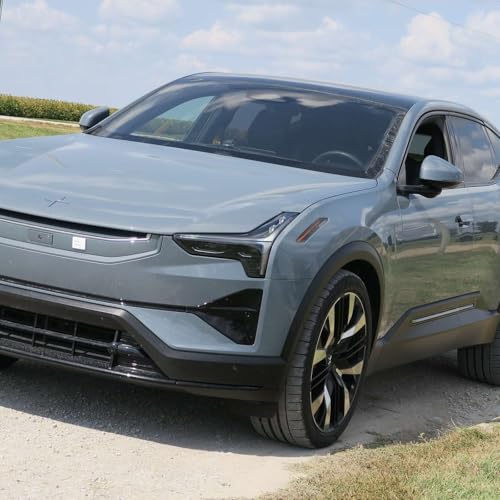
    From there, we jump into a full review of the Polestar 3. It’s quick, planted, and comfortable on long drives, with one-pedal grace and a minimalist cabin that feels genuinely premium. Yet living with it isn’t as effortless as the badge suggests: start-up quirks, menu-heavy controls, uneven speed-limit data, and no spare tire undercut daily confidence. The good news is meaningful price cuts, a strong range for the class, serious towing for an EV SUV, and over-the-air updates that can smooth the edges. If Polestar streamlines UX, this becomes a segment benchmark.

    Then we widen the lens. GM’s multi-nameplate EV strategy shows why scale matters: costs fall, ranges rise, and the lineup stays credible while others pull back. Ford’s pause on a pure EV truck might save cash now but risks long-term leadership with innovation-first buyers. And quietly, Foxconn is assembling the most intriguing play in the room—homologating a U.S.-bound EV, standardizing battery plants on four-year timelines, and offering turnkey platforms that legacy brands can badge and sell. That’s the smartphone supply chain model coming to the auto industry.

    We close with Mitsubishi: a brand with a history, dealers under strain, and a path forward only if its product, pricing, and partnerships align. A credible sub-$25K entry, a modern compact SUV, and a smart plug-in strategy could reintroduce the brand to buyers who barely know it’s here. The EV transition isn’t a cliff; it’s a climb. The winner's prize for reality, design for daily life, and keep building even when the headlines wobble.

    If this breakdown sharpened your view of where mobility is headed, follow The TechMobility Show, share it with a friend, and drop your take—who’s making the smartest bet right now?

    Support the show

    Be sure to tell your friends to tune in to The TechMobility Podcast!

    Show More Show Less
    44 mins
  • Electric Vans, Oil Demand Through 2050, AI Car Buying, and Infiniti’s Performance Gamble
    Jan 5 2026

    Drop me a text and let me know what you think of this episode!

    A single decision can shape a decade. We examine General Motors’ abrupt exit from BrightDrop and argue that electric work vans still deliver real value: quiet, clean food trucks for dense cities, flexible upfits for utilities, and premium RV builds that thrive on low floors, instant torque, and all-weather electric drivetrains. With tooling paid for and demand abroad still rising, scrapping a platform designed for jobs the market needs feels less like strategy and more like a missed compounding bet.

    Zooming out, we examine the energy horizon and its implications for product planning. The latest projections show oil and gas demand growing through 2050, even as solar leads renewables, China and Europe push EVs, and U.S. buyers flirt with hybrids and gas. That split reality forces automakers to hedge without losing relevance. Tooling, batteries, and service networks aren’t quarterly decisions; they’re decade-long commitments. Walk away too early, and you concede markets to faster, bolder rivals.

    We also evaluate the consumer advantage provided by AI car-buying tools such as CarEdge. The promise: real prices, data-driven targets, and someone else handling the back-and-forth. The nuance: dealers want transparency that shortens deals, not slogans that paint the entire industry as the problem. Our take offers a practical middle path—how to leverage data, protect your time, and still win by being prepared to walk when offers fall short.

    Regarding performance, we question Infiniti’s plan to compete with Mercedes-Benz's AMG and BMW M performance subbrands through low-volume power upgrades. Halo badges work best when the base cars already command respect and the dealer network can support complex hardware. A stronger reset calls for a new hero model with standout design, chassis tuning, and a clear identity that re-engages enthusiasts.

    If this perspective helps you think longer and plan smarter, follow the TechMobility Show, share it with a friend who loves cars and strategy, and be sure to leave a quick review to tell us what to dig into next.

    Support the show

    Be sure to tell your friends to tune in to The TechMobility Podcast!

    Show More Show Less
    44 mins
  • Hot Takes On A Cold Start: Ferrari Plugs In, Ford Maverick Drops Low, Texas Goes Geothermal, and Why CDLs Should Be Federal
    Dec 22 2025

    Drop me a text and let me know what you think of this episode!

    What happens when peak performance, practical utility, and power storage all hit an inflection point at once? We kick off with Ferrari’s leap into an all-electric supercar chassis built entirely in-house—75% recycled aluminum, an 800‑volt system, and more than 60 patented solutions designed to deliver real Ferrari feel, instant torque, and a rock-bottom center of gravity. We unpack why an EV halo car makes sense from a physics standpoint, even as broader EV demand looks choppy, and we call out the unanswered questions about charge time and range, despite a hefty 122 kWh battery.

    Then we switch lanes to a name with a long tail. Maverick once meant a compact car; today it’s Ford’s compact pickup, and the 2025 Maverick Lobo doubles down on street-truck DNA. Lower ride height, sport-tuned suspension, bigger brakes, and torque-vectoring AWD make it feel quick and planted. We share what works—quiet cruising, easy entry, and a confident chassis—and what misses, from fussy controls to a stiff rear seat and an oddly slick accelerator. The real debate: if Maverick proved that people want an affordable hybrid truck, what does it mean when a street-focused trim pushes past $42K?

    Next, we head to Texas for geothermal 2.0: geo‑pressured wells that act like batteries, storing grid power by pumping water deep underground and releasing it later for four to six hours of dispatchable energy. It’s a smart reuse of oilfield rigs, crews, and techniques, and it could help balance growing solar capacity as data centers surge into the state. The hurdles are cost and scale, but with familiar infrastructure and bipartisan momentum, this approach could become a key part of Texas’ energy mix.

    We close with safety and policy: how Commercial Driver License (CDL) endorsements keep specialization honest, where state reporting still leaves gaps, and why a centralized, federal CDL could streamline moves, reduce fraud, and remove unsafe drivers from the road faster. If you care about where mobility is going—from EV supercars to compact street trucks to firm clean power—this conversation puts the specs, tradeoffs, and policy levers in one place. Enjoy the ride, subscribe, share the TechMobility Podcast with a friend, and tell us what shift you want to see next.

    Support the show

    Be sure to tell your friends to tune in to The TechMobility Podcast!

    Show More Show Less
    44 mins
  • Trust Under Pressure: VinFast, RSL 1.0 AI Licensing, America’s Water Reckoning, and The New Sticker Shock
    Dec 22 2025

    Drop me a text and let me know what you think of this episode!

    Three stories, one throughline: trust under pressure. We kick off with VinFast’s rocky U.S. rollout—shrinking dealer networks, paused plant plans, and two EVs targeting the toughest price band in the market. We unpack why styling, timing, and the absence of an entry-level hybrid make adoption difficult, and revisit the long game required to win American buyers. Drawing lessons from Toyota, Honda, Hyundai, and Kia, we outline what it takes to build credibility and why hybrids currently hold the advantage for range, cost, and convenience.

    From market trust to data trust, we dive into RSL 1.0, a new, machine-readable licensing standard backed by major publishers to set clear terms for AI training. The idea is straightforward: if AI models benefit from journalism, photography, and code, creators deserve transparent permissions and compensation. The challenge is compliance. With no U.S. federal AI law and no binding commitments from leading model builders, enforcement may hinge on infrastructure providers or on European policy momentum. We explain how RSL could become the missing signaling layer and where accountability must follow.

    Then the focus shifts to water—the most tangible form of risk. In Alaska, warming is accelerating permafrost thaw, exposing pyrite, leaching metals, turning more than 200 rivers orange, and killing aquatic life that sustains communities and salmon runs. Downstream, in a different sense, the Colorado River’s century-old legal framework collides with a hotter, drier reality. We explore senior and junior water rights, the politics of cuts, and Phoenix’s push for advanced reuse to secure drinking water in a tightening system.

    We wrap up the podcast by decoding why your car’s destination charge is rising. Tariffs on imported components and supply-chain friction are pushing costs into non-negotiable fees rather than the MSRP, leaving buyers surprised by the final number. If you care about how innovation, climate, and policy affect your wallet, this conversation connects the dots. If it resonated, follow The TechMobility Podcast, share it with a friend, and leave a review to help others find it.

    Support the show

    Be sure to tell your friends to tune in to The TechMobility Podcast!

    Show More Show Less
    44 mins
  • Hype vs. Reality: Tesla Cybertruck, The Lexus RX Gets it Right, Talent Gap in the Service Bay, and The Moment Ambition Paused
    Dec 15 2025

    Drop me a text and let me know what you think of this episode!

    A truck might look ready for tomorrow but still miss today. We start with the Tesla Cybertruck at two years old—viral videos, slipping sales, and a price story that shifted from the initial promise. Predictions assumed a plant operating near full capacity, but the reality of high fixed EV costs, recalls, and a poor fit for traditional truck buyers adds up quickly. While most pickups are sold to those towing, hauling, and enduring winters in the heartland, a bulky urban status symbol struggles to justify its presence.

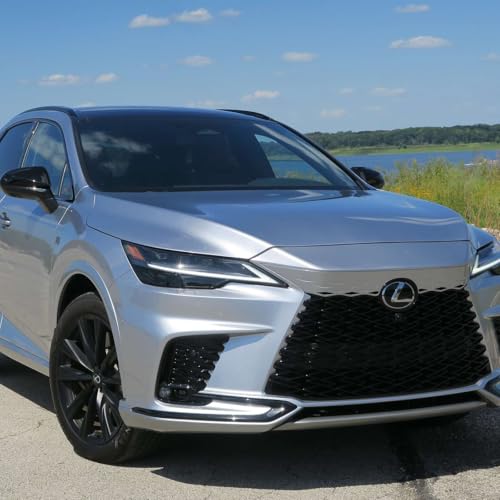
    Next, we explore the quiet confidence of the 2025 Lexus RX 500h. The RX helped define the luxury crossover segment, and this model continues to demonstrate why: a 2.4-liter turbocharged gasoline engine, dual electric motors, a nickel-metal hydride hybrid battery pack, and a smooth six-speed transmission that remains stable and responsive. We appreciated comfort in every seat, intuitive controls, a genuine spare tire accessible from inside the vehicle, and the kind of everyday ease that makes you want to drive. It’s not perfect—awkward steering-wheel switches, a digital mirror that strains the eyes, and rear seats that don’t fold flat—but even with options costing in the $70,000 range, the value still feels genuine because the experience matches the price.

    Next, we examine the talent gap hindering automotive service bays at car dealers nationwide. The National Automobile Dealers Association's (NADA) new apprenticeship program, developed with the National Institute for Automotive Service Excellence (ASE) and approved by the U.S. Department of Labor, offers paid training, mentor-led rotations, and a skills checklist that genuinely builds competence. It provides a lasting path into a high-demand career without debt—especially meaningful for rural communities looking to develop local talent as vehicles incorporate more software and electronics each year.

    Finally, we examine the rise of “job hugging.” Hiring has slowed since 2022. AI screens resumes before humans review them. Employers have cut back on hiring incentives, bonuses, and employee perks while pushing harder for a return to days in the office. Ambitious workers are choosing to stay put, preferring steady paychecks over unpredictability. We discuss what this means for mobility, middle management, and anyone considering a leap: where risks are real, where niches still pay well, and how to time a move when confidence is low.

    If this mix of hard data, real-driving impressions, and career advice helped you see things differently, tap follow, share the TechMobility Show with a friend, and leave a quick review. What would make you switch—your car, your job, or both?

    Support the show

    Be sure to tell your friends to tune in to The TechMobility Podcast!

    Show More Show Less
    44 mins
  • Human In The Loop, Why Libraries Still Matter, AI in the Bathroom, and the Real Reason Your Power Bill Is Rising
    Dec 15 2025

    Drop me a text and let me know what you think of this episode!

    The tech cycle keeps turning—covering beige PCs to the early web, from must-have apps to autonomous hype—and now a surge of AI. We examine what actually works: a human-in-the-loop approach that shifts AI from just spraying out content to becoming a disciplined helper. I share my real workflow with multiple models and editors, how I verify sources and citations, and why reading, revising, and pushing back always beat copy-paste. If you’ve noticed that nagging “polished but shallow” tone in AI output, you’re not imagining it; here’s how to improve it.

    Then we turn to an unexpected hero in the streaming age: your local library. As catalogs fragment and subscription costs increase, libraries are quietly remaining the last true video rental stores, keeping classic films available when platforms drop them. We explore access, licensing hurdles, and why physical media still protect culture. If you miss the joy of browsing shelves—and the surprise of discovery—this will make you smile and maybe prompt a visit to the stacks.

    We also explore a controversial product: AI-powered toilet cameras marketed for gut health. Aside from the high cost, the main concerns involve privacy, encryption, biometrics, and data security. For patients with chronic conditions, targeted monitoring can be helpful under medical supervision. For everyone else, we consider the risks, accuracy, and potential issues from false positives so you can decide if this goes too far.

    To wrap up this episode, we examine rising electricity prices through the lens of actual grid economics. Blaming AI data centers or EVs overlooks the bigger picture: substantial fixed costs in generation, transmission, and distribution. In areas with spare capacity, new demand can lower prices by spreading out fixed costs; where infrastructure is old and constrained, upgrades tend to increase rates. Understanding capacity margins and planned investments provides more insight into your bill than any headline. If you enjoy practical insights into technology, culture, privacy, and infrastructure, you’ll find this space engaging.

    If you enjoy The TechMobility Show, subscribe, leave a review, and share this episode with a friend who loves tech with context.

    Support the show

    Be sure to tell your friends to tune in to The TechMobility Podcast!

    Show More Show Less
    44 mins