The Signal cover art

The Signal

The Signal

By: Jeff Dillon
Listen for free

Reaching #4 on the Apple Podcast Education charts, The Signal (formerly the EdTech Connect Podcast) is the definitive podcast for higher education’s transformation leaders. Hosted by Jeff Dillon, The Signal cuts through the noise of the "status quo" to bring you the strategic intelligence needed to reshape how institutions recruit, support, and retain students. Every Friday, we sit down with the practitioners and technology builders who are actively defining the next decade of campus life. Why Higher Ed Leaders Listen: In one of the most consequential periods for academia, we move past the hype to focus on Human-Centered Innovation. Our episodes feature deep-dive interviews with guest experts from SNHU, EAB, WGU, and Panopto, focusing on the "real work" of institutional evolution. Core Topics & AI Strategy: * Artificial Intelligence: Practical AI adoption, governance, and the "Human in the Loop" mindset. * Enrollment Marketing: Modern recruitment strategies and GEO (Generative Engine Optimization). * Student Success: Data-driven retention, mental health, and digital engagement. * Institutional Transformation: Navigating digital transformation with a focus on workforce readiness and AVPs reimagining student care. Whether you are a C-suite leader, IT Director, or Faculty member, join our community of 100,000+ professionals to stay ahead of the curve. New episodes every Friday. Learn more at edtechconnect.com© EdTech Connect Inc 2024 - 2026
Episodes
  • Ep. 93 - Dave Tucker: The Note Taker's Dilemma — Why Lectures Are Mostly Wasted
    Jun 26 2026

    What if the biggest barrier to student success isn't ability—but the belief that effort is even worth it?

    In this episode, host Jeff Dillon sits down with Dave Tucker, founder and CEO of Genio, a learning technology company that's been quietly transforming how students study, learn, and persist for nearly two decades. What started as an assistive note-taking tool for students with dyslexia has evolved into a platform used by over 900 institutions worldwide, supporting more than 160,000 learners—including first-generation students, working adults, veterans, and neurodivergent learners.

    Dave shares the company's origin story: creating a visual interface for lecture recordings so students wouldn't have to re-listen to hours of audio. But along the way, he discovered something deeper—the "note taker's dilemma," the cognitive overload of trying to capture information while simultaneously processing it, and the devastating impact of students internalizing failure as a personal flaw.

    The conversation covers Genio's recent independent research showing a 3.6% GPA increase and a 28% reduction in dropout rates, the company's ESSA Level 3 validation, and Dave's thoughtful, cautious approach to AI. He argues that the real opportunity lies not in replacing effort but in scaffolding the learning process—capture, organize, refine, apply—so that students develop the confidence and skills to learn independently.

    For any enrollment leader, dean of students, or ed tech decision-maker trying to separate genuine impact from marketing noise, this episode offers a grounded, evidence-informed perspective on what actually moves the needle for student success.

    Key Takeaways

    • Learning Is a Process, Not an Event: Genio's framework—capture, organize, refine, and apply—scaffolds the entire learning journey, helping students move from simply recording information to truly synthesizing and applying it. Understanding this process is the foundation of effective study.
    • The "Note Taker's Dilemma" Is Real: Students struggle to capture information while simultaneously understanding it. Recording lectures and creating a visual, interactive interface allows them to focus during class and engage deeply afterward—reducing cognitive overload and wasted effort.
    • Small Interventions Can Be Life-Changing: Dave shares the story of a community college student who thought she was "stupid" until she used Genio and realized she wasn't the problem—the environment was. Simple tools that address core friction points can transform a student's self-belief and trajectory.
    • Confidence Is the Real Product: If students don't believe that effort will pay off, they won't invest it. The goal of learning technology should be to build self-efficacy and agency—not just to deliver content faster.
    • Trust Is Built Over Time, Not Through Claims: Independent research, student testimonials, research partnerships, and consistency all contribute to trust. The question isn't just "does it work?" but "does this company have the best intentions for learning?"
    • Accessibility Should Be Built In, Not Bolted On: Accessibility is not about compliance checkboxes—it's about access to the learning process itself. When done well (like the iPhone's built-in accessibility features), it benefits everyone, not just a subset of users.
    • Learner-Centered Design Is the Future: Higher education has traditionally been teaching-centric, focusing on pedagogy and classroom design. But most learning happens outside the classroom, through independent study. The biggest opportunity is designing tools that support learners in those environments.
    • Good Learning Is Effortful—But It Doesn't Have to Be Wasteful: Like going to the gym, learning requires struggle. But w...
    Chapters
    • (00:00:00) - The Fix to Student Academic Struggles
    • (00:00:44) - Meet Dave Tucker Diaz
    • (00:02:29) - Genio: The Story of Note Taking
    • (00:07:54) - Quora's Core Learning Process: Capture, Organize, Ref
    • (00:09:31) - Genio: The accessibility of learning
    • (00:13:22) - How Genio Stabilizes its Learning System
    • (00:15:34) - Genio on the Relationship between Technology and Student Success
    • (00:22:01) - ADvocacy on Accessibility
    • (00:24:54) - The EdTech market's focus on learning science
    • (00:28:57) - ESSA Level 3 validation and more
    • (00:31:01) - Higher Ed: The Future of Learning and Support
    Show More Show Less
    34 mins
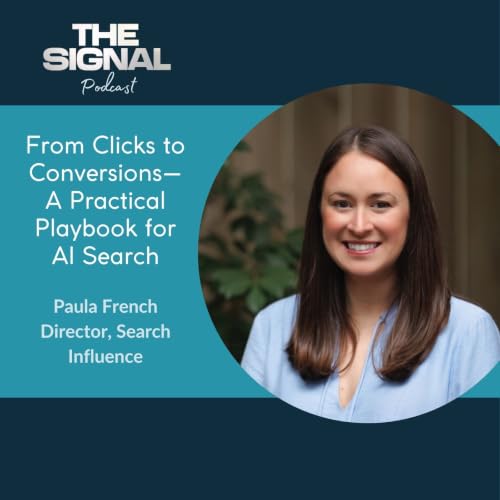
  • Ep. 92 - Paula French: From Clicks to Conversions—A Practical Playbook for AI Search
    Jun 19 2026

    Your traffic is down. Your inquiries are flattening. But your applications haven't dropped. What's happening? The front door just moved—and most higher ed marketers haven't noticed.

    In this episode, Jeff Dillon welcomes Paula French, Director of Sales and Marketing at Search Influence, a digital marketing agency with more than 16 years of experience helping institutions stay visible online. Paula co-authored a groundbreaking study with UPCEA titled AI Search in Higher Education: How Prospects Search in 2025, and the findings are reshaping how colleges should think about discovery, trust, and ROI.

    Paula shares the data: one in three prospects now trusts AI tools for program search, 79% are reading Google's AI overviews, and more than half say they trust institutions cited there. But here's the catch—those prospects are showing up to your website already informed, which means they never registered as a click or an inquiry. The metrics marketers have relied on for two decades are breaking down.

    The good news? AI has the power to connect students with niche programs in ways Google never could. Paula walks through real examples—including how Tufts University recovered lost traffic by optimizing for AI—and offers a practical six-month playbook for institutions with limited budgets. She also tackles the hard questions: Where should you focus when you're spread thin? How do you measure success when the funnel is no longer a funnel? And why Q&A sections might be the "easy button" for AI visibility.

    For any enrollment marketer, digital strategist, or institutional leader trying to make sense of a post-AI search landscape, this episode is required listening.

    Key Takeaways

    • AI Search Is Mainstream, Not Fringe: One in three prospects now trusts AI tools for program search, and 50% are using AI as part of their search process. This isn't early adoption anymore—it's the new normal.
    • 79% of Prospects Are Reading Google's AI Overviews: And more than half say they trust institutions cited in those overviews. If your institution isn't being cited, you're not even in the consideration set.
    • Your Traffic Will Drop—But That Doesn't Mean Interest Dropped: Prospects are showing up to your website already informed. They never registered as a click or an inquiry. Marketers who rely on top-of-funnel metrics alone will panic unnecessarily.
    • AI Search Is SEO Plus, Not a Replacement: Everything you're doing for organic search helps AI visibility, and everything you do for AI helps organic rankings. It's a layering effect, not a channel shift.
    • Focus on 1–5 Programs: Spreading yourself thin across dozens of programs is a losing strategy. Institutions that focus on a small set of programs, build a repeatable playbook, and execute consistently will see movement much faster.
    • Consistency Across Channels Creates Patterns AI Can Read: If you talk about a program four different ways across your website, LinkedIn, and YouTube, AI will have a blurry picture. If you say the same thing consistently, AI learns to repeat it back to users.
    • The Tufts Example: Recovering Traffic Through AI Optimization: Tufts recovered lost traffic by (1) writing content more directly for AI with clear program descriptions at the top of the page, and (2) adding detailed Q&A sections that answered the nuanced questions prospects are asking AI engines.
    • Q&A Is the "Easy Button" for AI Visibility: When you write in Q&A format, you're forced to get detailed about what prospects are actually asking. AI engines expect that level of detail now—high-level content won't cut it.
    • AI Can Connect Niche Programs That Google Never Could: People are now having highly specific, conversational search...
    Chapters
    • (00:00:00) - The Signal: How AI Is Affecting Colleges and Universities
    • (00:01:54) - How Long Have You Been at Search Influence?
    • (00:04:17) - How Higher Ed Became a Focus for Search Influence
    • (00:07:09) - How AI Search in Higher Ed Will Affect Universities
    • (00:17:09) - How Tufts University Salvaged Organic Traffic with AI Search
    • (00:23:48) - Higher Ed Marketing: How to Improve Your Outreach in AI Search
    • (00:27:24) - How to Quantify Student Experience in a Digital World
    • (00:29:57) - A Taste of AI in Student Search
    • (00:30:57) - The Signal: Higher Ed Tech Insights
    Show More Show Less
    32 mins
  • Ep. 91 - Mallory Willsea: Activity vs. Strategy—Why Higher Ed Marketing Measures the Wrong Things
    Jun 12 2026

    After nearly 20 years watching colleges pour millions into sameness—the same viewbooks, the same home page videos, the same taglines—Mallory Willsea has a message for higher ed: stop mistaking activity for strategy.

    In this episode, Jeff Dillon sits down with Mallory, a strategist and consultant who has been shaping digital marketing in higher ed since the early days of social media. From her early experiments with YouTube recruitment videos at St. Michael's College to co-founding Higher Ed Icons and hosting the Higher Ed Pulse Podcast, Mallory brings a rare longitudinal view of what actually works—and what doesn't.

    Mallory argues that the real enemy isn't polish; it's sameness. When every institution claims to "develop the whole student" without showing what the chemistry department actually does at 9 a.m. on a Tuesday, trust erodes. The fix? Specificity. Real people. Proof behind the claims.

    She also tackles the AI shift head-on, warning that SEO strategies from 2019 are no longer enough when students start their search in ChatGPT, Reddit, or AI overviews. She urges institutional leaders to audit where their audience is actually finding information—and to accept that they no longer control the front door.

    Packed with stories , practical advice on building executive visibility on LinkedIn, and a sharp critique of how higher ed confuses outputs with outcomes, this episode is a must-listen for any marketer, enrollment leader, or ed tech founder trying to cut through the noise.

    Key Takeaways

    • Activity Is Not Strategy: Many colleges measure their teams on how busy they are (outputs) rather than whether they changed a prospective student's mind (outcomes). Confusing the two keeps institutions spinning their wheels.
    • Sameness Is the Real Enemy, Not Polish: The problem with higher ed marketing isn't that it's too polished. It's that every viewbook, video, and campaign hits the same beats. Authenticity comes from specificity—real people, real proof, and a real point of view.
    • The Featherstone University Lesson: When Colorado Mesa University launched "Featherstone University" as a parody admissions campaign, it made waves because it wasn't hitting the same beats as everyone else. It had a perspective.
    • Stop Solving for the Institution: Too much institutional digital media is designed to make internal stakeholders comfortable, not to help a prospective student make a decision. Know which decision the student is making and at what stage—and show up accordingly.
    • Give a Stage to the People No One Is Asking: Yes, student takeovers are common. But what about the faculty member doing interesting research? The facilities worker who flips the switch on the holiday lights? Their pride and stories humanize an institution in ways no drone video ever can.
    • AI Search Has Changed the Front Door: The homepage is no longer the front door. Students start in AI overviews, ChatGPT, TikTok, Reddit, and Claude. SEO strategies from 2019 are insufficient. Audit where AI is pulling information about your institution (Reddit, YouTube transcripts, review platforms) and show up there.
    • Not Showing Up Is Also a Choice—With Bigger Consequences: Institutional leaders who avoid LinkedIn or public platforms because it feels risky are making a choice with consequences. Start small: one post a week about something specific you're thinking about. Consistency builds findability and recognition.
    • If No One Disagrees With You, You Probably Don't Have a Perspective: Conflict is a tenant of storytelling. Disagreement moves us forward faster. If no one is pushing back on your ideas, they're probably not that interesting.
    • Brand Shortens the Trust Curve: Brand awareness isn't separate from conver...
    Chapters
    • (00:00:00) - Brand and Digital Strategy in Higher Education
    • (00:00:51) - Mallory Willsie on Higher Ed Pulse
    • (00:01:54) - How St. Michael's College Changed Higher Ed Marketing Media
    • (00:04:06) - What's the Biggest Gap Between Colleges and Digital Marketing?
    • (00:06:10) - What's Authentic Digital Strategy in Higher Ed?
    • (00:08:07) - Higher ed icons: A celebration
    • (00:11:21) - Five Quick Wins for Your Digital Presence
    • (00:17:34) - The Fight for Diversity
    • (00:18:04) - The Need to Build a Personal Platform
    • (00:20:11) - What's The Next Big Thing in Higher Ed?
    • (00:24:06) - Brand Authority and Converting Students
    • (00:26:11) - What's the Right Way to Approach AI in Higher Ed?
    • (00:29:26) - Jeff Stoner on Higher Ed Live:
    • (00:30:54) - The Signal: Higher Ed Tech Insights
    Show More Show Less
    32 mins
adbl_web_anon_alc_button_suppression_t1
No reviews yet