• Micaiah Johnson on Necropolitics (Part 2) in 'The Unkilled: White Supremacy's Insidious Preservation of Black Lives'
    Jan 25 2026

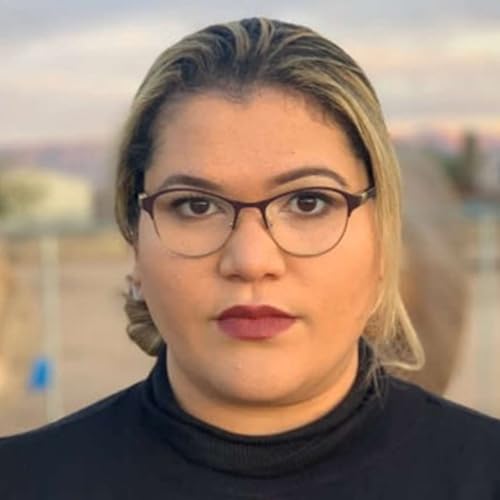
    This is the second half of our conversation with Micaiah Johnson continued from our last episode about necropolitics in Ned Beauman's 'Venomous Lumpsucker'. Micaiah is the author of the Ashtown duology, ‘The Space Between Worlds’ and ‘Those Beyond the Wall’, and we spoke to her about these books in episode 49, loosely on the topic of the Multiverse but more about the social and political aspects of a future dystopia divided by extreme inequality. Since that interview Micaiah has become Dr. Johnson, completing her PhD on those very subjects, and in this episode we focus on her PhD which is titled ‘The Unkilled: White Supremacy's Insidious Preservation of Black Lives'. Here we delve more deeply into social and political science to understand something about the dark underbelly of inequality, violence, and frankly evil which has permeated the foundations of our civilization, and continues to do so in a shockingly relevant moment as we see the eruption of American fascism today. This is a pretty intense conversation addressing some heavy topics, but Micaiah does so with the kind of bright passionate intelligence that it takes to sustain a long fight against the darkness.

    Send us a message

    Email:
    thescienceinthefiction@gmail.com

    Facebook:
    https://www.facebook.com/groups/743522660965257/

    Show More Show Less
    47 mins
  • Micaiah Johnson on Necropolitics (Part 1) in 'Venomous Lumpsucker'
    Jan 10 2026

    We welcome Micaiah Johnson back to the show, this time in her role as a PhD specialist on the topic of Necropolitics, which we tackled in our last episode on 'Venomous Lumpsucker' by Ned Beauman. This episode is the first half of our conversation, where Micaiah introduces us to the topic of Necropolitics and its origins from Foucault to Mbembe. She discusses how it pertains to Ned's book in terms of harmful practices of 'preservation' gone awry. We also talk about the tyranny of billionaires, Zohran Mamdani's win in New York, joyful hopelessness and the difference between doing good and being seen to do good. The second half of our conversation will continue in our next episode where we take a deep dive into Micaiah's PhD thesis 'The Unkilled: White Supremacy's Insidious Preservation of Black Lives'.

    Send us a message

    Email:
    thescienceinthefiction@gmail.com

    Facebook:
    https://www.facebook.com/groups/743522660965257/

    Show More Show Less
    29 mins
  • Ned Beauman on Necropolitics in 'Venomous Lumpsucker'
    Nov 18 2025

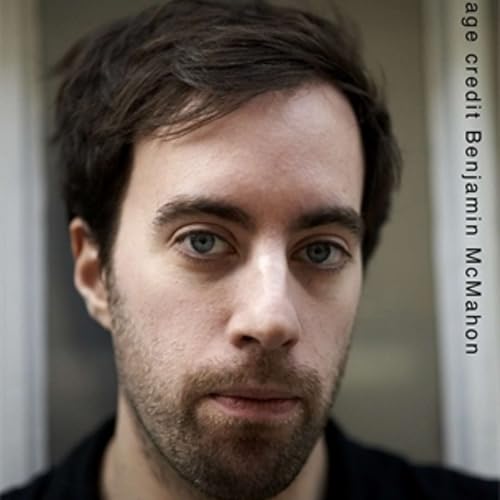
    Ned Beauman is the author of 'Venomous Lumpsucker', a biting satire which examines the environmental and social consequences of capitalism run amok, and the dangerous absurdities that can result from using free-market mechanisms to solve the environmental problems we face today. We talk about the political and economic choices and mechanisms that determine which species are preserved and which species go extinct - hence 'necropolitics'. We talk about calibrating our economic and environmental values, about the importance of pragmatism and efficacy, about taking responsibility or fooling our selves and passing the buck to future generations. We also talk about what’s working, what’s going better than expected and having hope for the future.

    Ned Beauman's Website

    Venomous Lumpsucker : Beauman, Ned: Amazon.ca: Books

    Venomous Lumpsucker by Ned Beauman | Goodreads

    Send us a message

    Email:
    thescienceinthefiction@gmail.com

    Facebook:
    https://www.facebook.com/groups/743522660965257/

    Show More Show Less
    43 mins
  • William Bains on Dark Ecology in 'Shroud'
    Oct 14 2025

    Marty speaks with biochemist and astrobiologist William Bains on the topic of Dark Ecology, as a final chapter to our 4 previous episodes on this topic with Chris Beckett (Ep 56), Julius Csotonyi (Ep 57-58) and Adrian Tchaikovsky (Ep 59). Dr. Bains is the author of “The Cosmic Zoo: Complex Life on Many Worlds”, and has earned degrees from the universities of Oxford, Warwick and Stanford, and has held positions at the University of Bath, MIT, Imperial College London, and in addition to founding a number of biotech start-up companies is now a senior research fellow in the Department of Physics and Astronomy at Cardiff University in the UK. William is exactly the kind of person we love to speak with on this show as his expertise really expands and deepens some of ideas we’ve been talking about in contemporary science fiction. Some of his recent papers carry titles like "Prospects for detecting signs of life on exoplanets in the JWST era" and "Astrobiological implications of the stability and reactivity of peptide nucleic acid (PNA) in concentrated sulfuric acid". So that’s the kind of thing we discuss in the following conversation. In addition to expanding on the details of Adrian Tchaikovsky’s worldbuilding in Shroud, we talk about the WOW signal in astronomy, the incoming 3I/ATLAS extrasolar object, and new experiments in high throughput chemistry and biochemistry.

    Send us a message

    Email:
    thescienceinthefiction@gmail.com

    Facebook:
    https://www.facebook.com/groups/743522660965257/

    Show More Show Less
    57 mins
  • Nicholas Keating Casbarro on World-Building in 'Vitalerium'
    Sep 13 2025

    Marty speaks to Nicholas Keating Casborro about the hard-scrabble, dystopian world portrayed in his book 'Vitalerium: Descent into the Void'. This is a far future space opera where faster than light travel is made possible by the exotic substance that serves as the title of the book, where humans have spread across multiple planets, where the politics are cynical, street life is vicious, human life disposable, and corruption endemic. This episode is lighter on the science and heavier on the fiction; we discuss some of the technology essential to this world, but our focus is on the world-building, politics, religion and characters Nick has created in the Vitalerium universe.

    https://atmospherepress.com/books/vitalerium-descent-into-the-void-by-nicholas-keating-casbarro/

    Send us a message

    Email:
    thescienceinthefiction@gmail.com

    Facebook:
    https://www.facebook.com/groups/743522660965257/

    Show More Show Less
    56 mins
  • Chris Kulp on Artificial Intelligence in 'Lost Origins'
    Aug 14 2025

    Chris Kulp is a professional physicist and science fiction author, who has won the Mike Resnick award for his first published story ‘What Would You Pay for a Second Chance’. We talk about his second novel ‘Lost Origins’, a space opera where Earth is regarded as a myth by a galactic civilization peopled by humans and androids. Our conversation goes from a sci-fi story about artificial intelligence to one that explains how current AI models work, what they can and can't do, what they might do in the future. We also chat about Chris’ research in nonlinear dynamics and the use of AI in shaping the behaviour of complex networks.

    https://chriskulp.com/

    Send us a message

    Email:
    thescienceinthefiction@gmail.com

    Facebook:
    https://www.facebook.com/groups/743522660965257/

    Show More Show Less
    59 mins
  • Adrian Tchaikovsky on Dark Ecology in 'Shroud'
    Jul 17 2025

    Adrian Tchaikovsky is a bestselling British author whose work has taken the science fiction world by storm since his seminal sci-fi novel Children of Time, which won the Arthur C. Clarke Award in 2016. Its sequel Children of Ruin won the equally prestigious British Science Fiction Association or BSFA award in 2019, and after the publication of the third book in the series Children of Memory, those books won the Hugo Award for Best Series in 2023. He’s also won 4 other BSFA awards for his novels and short fiction, and this year 2 of his books Alien Clay and Service Model are up for both the Hugo Award and the Locus Award!

    In this conversation we discuss his latest book Shroud, which happens to dovetail nicely along the theme of Dark Ecology that we’ve been discussing since our interviews with Chris Becket and Julius Csotonyi about Dark Eden. We talk about the exotic planetary environment and the aliens he’s invented in Shroud, whose neural architecture and sensorium share the same electromagnetic modality, making for the kind of collective intelligence and consciousness that Adrian often creates and wrestles with in his work. We also discuss theory of mind in hedgehogs, the social relations of mantis shrimp, bird intelligence and a few other things that have come to be signature topics in Adrian’s science fiction.

    Send us a message

    Email:
    thescienceinthefiction@gmail.com

    Facebook:
    https://www.facebook.com/groups/743522660965257/

    Show More Show Less
    1 hr
  • Julius Csotonyi on Dark Ecology in 'Dark Eden' - Part 2
    Jun 19 2025

    This is the second part of Marty's conversation with Julius Csotonyi about dark ecology in relation to the dark rogue world of Chris Beckett’s book 'Dark Eden'. We discuss the extraordinary existence of anoxygenic autotrophic bacteria that are capable of photosynthesis in the dark of the ocean floor! Julius describes the ecology of thermal vents and geothermal energy as it stems from a hot planetary core, and we speculate about the kinds of planets that could host a dark ecology. We learn about protective and accessory photosynthetic pigments and ancient archaea microbes and not only the Tree of Life, but the more convoluted Bush of Life! We talk about superorganisms and colonial organisms and social insects, plasmodial slime molds, mutualism, and how empathy and cooperation are the real superpowers of life. Finally we discuss how to imagine new possibilities for extraterrestrial life and how to hunt for exobiology using educated speculation and scientific creativity.

    https://www.csotonyi.com/

    https://sierraclub.bc.ca/learn-to-draw-b-c-wildlife-series-with-julius-csotonyi-gift/

    Send us a message

    Email:
    thescienceinthefiction@gmail.com

    Facebook:
    https://www.facebook.com/groups/743522660965257/

    Show More Show Less
    44 mins