

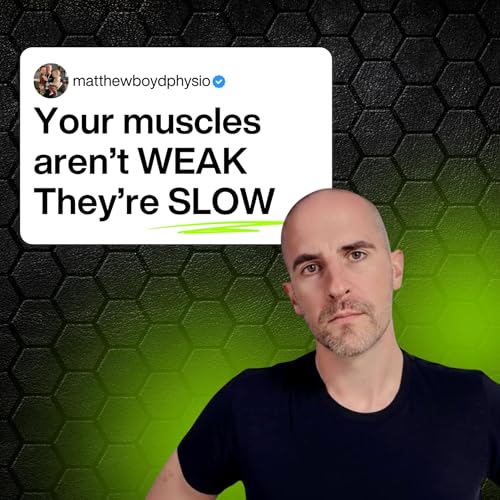
The Real Reason RUNNERS Get Knee Pain (Nobody Talks About This)
Failed to add items
Sorry, we are unable to add the item because your shopping cart is already at capacity.
Add to basket failed.
Please try again later
Add to wishlist failed.
Please try again later
Remove from wishlist failed.
Please try again later
Adding to library failed
Please try again
Follow podcast failed
Unfollow podcast failed

The Real Reason RUNNERS Get Knee Pain (Nobody Talks About This)
-
Narrated by:
-
By:
About this listen
If you’re an injured runner we can help you get back to running pain-free.
Click the link to book a free call with us
https://matthewboydphysio.com/booking/
Running Fundamentals Course
https://matthewboydphysio.com/running-fundamentals-course/
https://www.instagram.com/matthewboydphysio/
Summary
In this episode, Matthew Boyd discusses the common misconception among runners that knee pain is primarily caused by weak muscles. He emphasizes the importance of muscular power and speed, explaining that strong but slow muscles can lead to knee injuries. Boyd outlines a training regimen focused on plyometrics to build the necessary power for injury prevention and improved running performance.
Takeaways
- Knee pain in runners is often due to slow muscles, not weak ones.
- Strong muscles alone do not prevent knee pain.
- Muscular power is crucial for protecting the knees while running.
- Plyometric exercises can help develop the explosive strength needed for running.
- Runners should focus on max effort in their training to build power.
- A structured approach to plyometrics can enhance running performance.
- Starting slowly and building up is key for those with knee pain.
- Incorporating variety in exercises can keep training effective and engaging.
- Training for power can lead to faster running times.
- Consistency in training is essential for long-term benefits.
No reviews yet