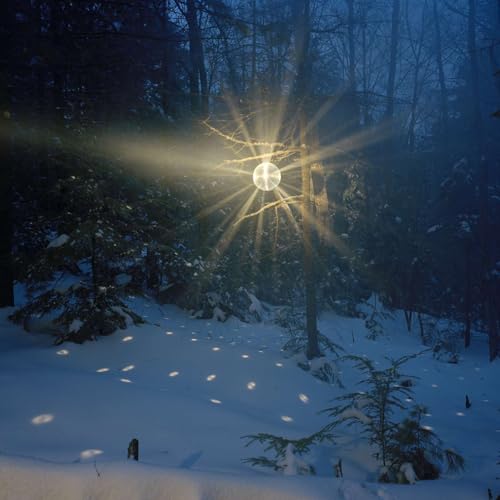
The Principal Uncertainty cover art

The Principal Uncertainty

The Principal Uncertainty

By: George Laufenberg
Listen for free

About this listen

What happens when the path you've followed stops making sense—when achievement delivers everything it promised except meaning?


The Principal Uncertainty is a series of conversations about navigating the unmapped territory between who you've become and who you might be. Host George Laufenberg—a former wilderness educator, political operative, and cultural anthropologist—talks with people who've sat with uncertainty long enough to learn something from it: ministers and therapists, writers and researchers, anyone who's discovered that the questions matter more than the answers.


These aren't interviews. They're thinking-out-loud sessions about presence, purpose, and the courage to stay in the not-knowing.


(Theme Music: "New Journalism" by AVBE from #Uppbeat. https://uppbeat.io/t/avbe/new-journalism. License code: HDGCC9FPOKHO81UZ)

© 2026 The Principal Uncertainty
Philosophy Science Social Sciences
Episodes
  • Adam Ekberg: On The Other Side of Boredom
    Feb 18 2026

    Adam Ekberg is a photographer whose work lives in the permanent collections of the Museum of Contemporary Art Chicago, the George Eastman Museum, the Museum of Fine Arts Houston, and the Worcester Art Museum. His solo exhibition Minor Spectacles ran at the George Eastman Museum in 2023.

    Adam and I met years ago when our kids were in forest school together in rural New Jersey — one of those places where you sign a waiver so your preschooler can use an axe. He's one of the most delightfully goofy people I know, and also one of the most serious artists I know. Those things are connected, and I wanted to understand how.

    This conversation covers enormous ground. It begins with a barn fire — a four-year-old in spaceship pajamas holding a glow stick, watching hundreds of feet of flame erase something he took for granted was permanent. From there we move through the man across the street who taught Adam to watch ants for hours, through years of caring for people with HIV and AIDS in early-2000s Portland, to a night on a mountain in Maine when a disco ball, a flashlight, and a smoke machine produced the photograph that made everything snap into focus.

    We talk about the game of Go and why clinging to what mattered fifty moves ago will kill you. About riding a bicycle at twelve miles an hour as a way of not quite being anywhere. About the difference between making something for real and making it in Photoshop — and whether that difference matters. About the pocket watch his dying friend gave him with a note that said have a different relationship to time.

    And we talk about boredom — specifically, what lives on the other side of it. The land within all of our minds that opens up when you sit with the discomfort long enough to push through.

    Fair warning: the range of this conversation goes from Bluey to Walter Benjamin.


    (cover photo: A Disco Ball on the Mountain, 2005, courtesy of the artist and CLAMP, New York)

    Support the show

    Show More Show Less
    1 hr and 30 mins
  • Everything Is Relational
    Feb 3 2026

    Kanwal Matharu is a cornea surgeon, Fulbright scholar, and global health educator who has spent his career building pipelines between American academic medicine and under-resourced communities around the world. He's also my friend—we met when he was a freshman at Princeton and I was working in residential life, and I've watched him navigate the distance between idealism and institutions ever since.

    In this conversation, we talk about what it means to align your career with your faith, what he learned about strategy and relationships as a young trustee on Princeton's board, and why he's come to believe that "soft relations carry so much more weight" than procedural wins. We also talk about the costs of the path he's chosen—the isolation that comes with subspecialty training, a called-off engagement, and sitting cross-legged in borrowed slippers on his last day in Egypt, practicing patience after everything went sideways.

    This is a conversation about service, sacrifice, and what it means to keep going when the story isn't as clean as you thought it would be.

    Support the show

    Show More Show Less
    1 hr and 5 mins
  • Companionable Silence
    Jan 8 2026

    What do you do when the people you're caring for can't give you certainty that you're doing it right?

    Lynn Casteel Harper—minister, chaplain, and author of On Vanishing: Mortality, Dementia, and What It Means to Disappear—spent years with people living with dementia. Not trying to fix them or bring them back, but learning to read a different kind of language: silence that isn't empty, presence that doesn't require words, companionship that survives the loss of recognition.

    This conversation is about what she learned in that work—about gentleness as a form of power rather than weakness, about staying present when certainty isn't available, and about what happens when you stop trying to eliminate uncertainty and start learning from it instead.

    We talk about Hannah Arendt's distinction between power and violence, the Biosphere 2 trees that couldn't grow without wind, why she's writing "ungently" about gentleness, and the question that keeps coming up in these conversations: what are you loyal to that you didn't choose?

    If achievement has brought you to questions your current framework can't answer, this might be for you.

    Show More Show Less
    1 hr and 7 mins
No reviews yet