Episodes

  • How do you get from rural Maine to Hollywood? Tim Simons shares his journey
    Apr 29 2026
    Tim Simons, who graduated from the University of Maine in 2001, is living a dream that first took root in Orono through college theater. That spark has led to an impressive and growing resume as a working actor in both film and television. Notable credits include playing Jonah, an obnoxious White House liaison, in the HBO series “VEEP,” and Sasha in the Netflix hit series “Nobody Wants this.” Tim's unlikely journey from rural Readfield, Maine, to UMaine to Los Angeles provides a backdrop for his latest gig: speaker for the 2026 undergraduate commencement ceremonies at his alma mater. In this episode of “The Maine Question” podcast, host Ron Lisnet and Allen Adams, communications specialist and marketing coordinator for the College of Liberal Arts and Sciences, speak with Tim about his journey, the business of show business, memories of his days in Orono and much more.
    Show More Show Less
    55 mins
  • Are ' Forever Chemicals' really here Forever?
    Mar 12 2026
    A group of chemicals known as PFAS have become a growing concern for human health, agriculture and the environment. Because they resist breaking down, these “forever chemicals” can accumulate in soil, water and food systems and expose people to a range of adverse health conditions. From nonstick cookware and disposable tableware to everyday items like toothbrushes, these oil- and water-repellent chemicals became widespread in the late 20th century. Today, communities across the country are grappling with the residue they’ve left behind. Maine has emerged as a national leader in responding to PFAS contamination, advancing policies aimed at protecting farms, ecosystems and public health. Researchers at the University of Maine are working to understand how PFAS moves through soil, crops and livestock; develop technologies to break it down; and design sustainable materials that could replace it in everyday products. On this episode of “The Maine Question” podcast, host Ron Lisnet speaks with UMaine researchers Jean MacRae, Christina Murphy, Caroline Noblet and Rachel Schattman about how their work, spanning engineering, economics, agriculture and conservation biology, is helping communities confront PFAS and chart a cleaner path forward.
    Show More Show Less
    43 mins
  • How can creative programming reduce professional burnout?
    Jan 30 2026
    Stress has always been a part of life, whether from the news, the economy, the environment, a mortgage, a job or school. It can be found in every profession and any workplace, affecting performance and leading to burnout. Job-related stress in professions like nursing and teaching are increasingly overwhelming many who chose these career paths. At a time when teachers and nurses are in high demand, professional burnout is forcing them to rethink their careers. Faculty at the University of Maine recognized this happening in nursing and education students before they even stepped into the professional world. To reduce it among students and maintain a healthy workforce in Maine, they brainstormed creative programming to help future nurses and teachers cope with demanding professions. In this episode of “The Maine Question” podcast, UMaine faculty members Kelley Strout, Jesse Kaye-Schiess and Faith Erhardt, along with nursing student Ian Beaulieu, explore these programs and more with host Ron Lisnet.
    Show More Show Less
    44 mins
  • Can Zebrafish improve human health?
    Dec 16 2025
    Nothing about the zebrafish is physically impressive. Despite being less than an inch long, this little fish from Southeast Asia is a favorite for home aquariums and human health research. Zebrafish are powerhouses in the lab. Not only can they regrow their organs and body parts, but they also have transparent eggs and remarkably similar DNA to human beings. All of those features, and the fact that they are easy to grow and care for, make zebrafish great for studying some of the most serious diseases affecting people — from infections and cancer to muscular dystrophy. The University of Maine has ongoing and completed research projects that use zebrafish as a model, some of which have led to groundbreaking discoveries. In this episode of “The Maine Question” podcast, UMaine faculty members Ben King, Melody Neely and Rob Wheeler explore how university research uses this remarkable little fish with host Ron Lisnet.
    Show More Show Less
    34 mins
  • What is the future for manufacturing in Maine?
    Jul 15 2025
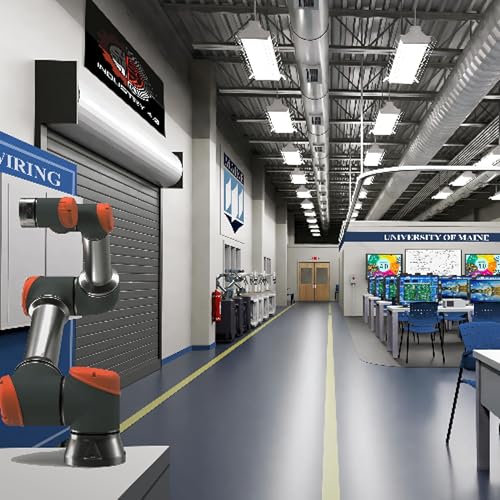
    Robots are coming — or in some cases, have come — to Maine but not to destroy civilization like in the movies. They're here to help, specifically to help Maine manufacturing companies modernize and become more productive. The University of Maine Advanced Manufacturing Center (AMC) is helping manufacturers in the state integrate robots, along with technologies such as AI, machine learning and automation technologies, into their operations. These mechanical helpers can take care of the three “D's” in manufacturing — work that is dull, dirty or dangerous. They don’t get bored, can’t be overworked and aren’t subject to injury. In this episode of “The Maine Question” podcast, John Belding, director of the AMC and guests Brad Denholm, associate director of workforce development at the AMC, Ryan Lindsay, operations engineer at Ntension, and Peter Birch, mechanical engineering student and assistant at the AMC, explore Maine’s future of advanced manufacturing with robotics.
    Show More Show Less
    31 mins
  • What is the potential for Maine's Outdoor Recreation Economy?
    Apr 22 2025
    Before it was a state, Maine had already earned a reputation for its great outdoors. It began as a place where anyone could hunt and fish, and served as a summer destination with numerous second homes owned by celebrities and other wealthy individuals. Today, the outdoors are a major part of the economy, generating $3.4 billion annually. A group of University of Maine faculty and staff teamed up with industry stakeholders to create the Maine Outdoor Economy Roadmap, which lays the groundwork for growing and diversifying the state’s great outdoors over the next decade. Collaborative partners, including the university, the Maine Office of Outdoor Recreation, Maine Outdoor Brands and others, launched the roadmap in January. In this episode of “The Maine Question” podcast, a few experts who worked together to develop the roadmap discuss the various outdoor-related industries, their potential for growth and the potential challenges they face.
    Show More Show Less
    40 mins
  • Who can give insight to 40 years of student life at UMaine? Robert Dana.
    Feb 10 2025
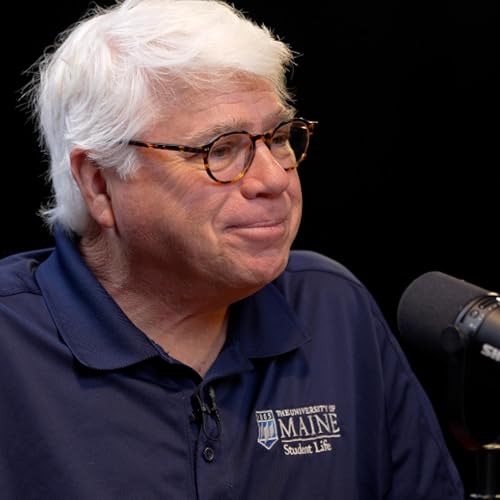
    The man known to many students as Dean Dana or Dr. Dana retired in January after four decades of service to the University of Maine community. Robert Dana, former vice president of student life and inclusive excellence, guided students along their journeys through kindness, care and compassion. For nearly a quarter of the university’s existence, Dana helped students through the highs and lows of being a college student and earning a degree — celebrating the joys and working through the challenges and tragedies. In this episode of “The Maine Question” podcast, Dana reflects on his time at UMaine one week into his retirement.
    Show More Show Less
    27 mins
  • How can hazing be reduced or eliminated?
    Jan 12 2025
    From the military to athletics to campus fraternity and sorority life, students and others endure hazing to satisfy the basic human desire to be part of a group. It operates in the shadows, but when hazing does appear in the headlines, it is often associated with tragic consequences. Elizabeth Allan, professor of higher education leadership at UMaine's College of Education & Human Development, has studied hazing throughout her career and become an authority on the subject. Founder of StopHazing.org, Allan’s recent hazing education efforts encouraged Congress to craft legislation, which was recently signed into law, that addresses this national phenomenon. In this episode of “The Maine Question” podcast, Allan explains how hazing operates and provides examples on how to reduce or eliminate the practice.
    Show More Show Less
    29 mins