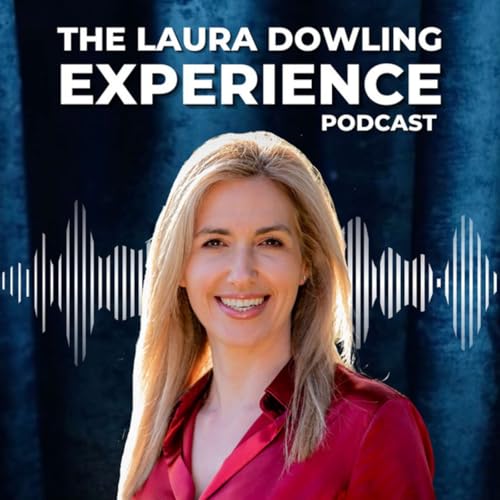
The Laura Dowling Experience cover art

The Laura Dowling Experience

The Laura Dowling Experience

By: Laura Dowling
Listen for free

Conversations about health, science, wellness, life, love, sex and everything in-between. Laura is a Pharmacist who loves to talk to interesting people about their unique life and work experiences. See @fabulouspharmacist on instagram for more information.

Hosted on Acast. See acast.com/privacy for more information.

© 2025 The Laura Dowling Experience
Hygiene & Healthy Living Psychology Psychology & Mental Health Social Sciences
Episodes
  • A Generational Story Behind Women & Dieting with Aimee Donnellan #175
    Jun 25 2026
    Aimee Donnellan joins Laura to talk about her new book Off the Scales: The Inside Story of Ozempic and the Race to Cure Obesity, and the much bigger story sitting underneath it - how generations of women learned to live with food.Through interviews with women across the world, Aimee found the same pattern repeating. A trip to a dietitian around the age of seven. A mother quietly carrying her own dieting story, passing it on through Weight Watchers, rice cakes and "don't think cute clothes mean you can come off your diet." For some, GLP-1 medications like Wegovy and Mounjaro have quietened the food noise for the first time in their lives. For others, the more confronting realisation is how differently the world treats them when they shrink.Aimee also explores how the men in her book relate to their bodies very differently, the rising scale of childhood obesity and the shame attached to it, and why the food industry has barely adjusted to a world where appetite itself is shifting. She and Laura reflect on body positivity, menopause and the pressure women carry at every stage of life, before closing on something simpler - why she thinks the meaning of life comes down to picking up the phone.🔑 Key Points1. Dieting often starts in childhood — Many of the women Aimee spoke to were first sent to a dietitian around age seven, framing food as something to manage rather than enjoy.2. Mothers carry the story forward — Weight Watchers, calorie counting and "good" and "bad" foods pass quietly from mother to daughter across generations.3. Food noise can dominate a life — Constant thoughts about food and shame-based self-talk shape how many women move through the world.4. GLP-1 drugs change more than weight — When the food noise quietens, work, relationships, shopping and how others treat you can all shift.5. Men and women relate to weight differently — Men often seek treatment for health reasons, while women carry decades of body criticism and comparison.6. These drugs are not a quick fix — Muscle loss, side effects, cost and the reality of injecting long-term are rarely talked about honestly.7. Childhood obesity is rising — Shame and clinics that don't fit larger bodies stop many families seeking help early.8. The food industry has barely adjusted — Cheap, ultra-processed food still fills shelves, and meaningful change runs into cost and lobbying.📚 ResourcesOff the Scales: The Inside Story of Ozempic and the Race to Cure Obesity — Aimee Donnellan⏱️ Timestamps01:00 — Welcome and the focus of the book03:00 — Why the dieting story starts at age seven04:30 — Rice cakes, Hershey's sauce and a mother's diet06:00 — Sarah's first Wegovy injection07:00 — Losing 70 pounds and a life that changes overnight12:00 — Menopause, microdosing and Ozempic on the black market14:00 — Body positivity, celebrity bodies and the shift back22:00 — Plateaus, muscle loss and life-long drugs28:00 — A Mars executive on a pharma board36:00 — How men relate to their bodies differently41:00 — Childhood obesity, shame and small clinic rooms44:00 — Food deserts and the cost of real change56:00 — Picking up the phone and choosing connectionThanks for listening! You can watch the full episode on YouTube here. Don’t forget to follow The Laura Dowling Experience podcast on Instagram @lauradowlingexperience for updates and more information. You can also follow our host, Laura Dowling, @fabulouspharmacist for more insights and tips. If you enjoyed this episode, please subscribe and leave a review—it really helps us out! Stay tuned for more great conversations. Hosted on Acast. See acast.com/privacy for more information.
    Show More Show Less
    1 hr
  • Grief, Poetry and a New Kind of Masculinity with Darragh Fleming #174
    Jun 18 2026
    Darragh Fleming went viral last year for a poem — but this conversation is about everything that came before it. The Cork writer talks to Laura about a childhood spent lost in books, a long detour through sport and self-doubt, and the years he spent convinced he wasn't creative at all.At seventeen, Darragh lost his close friend Irby to suicide, and the grief changed him profoundly. For years afterwards he felt almost nothing — a numbness he didn't recognise as depression — while quietly performing the emotions other people expected of him. He's honest about the survivor's guilt that made him sabotage his own happiness, the panic attack that became his rock bottom, and how therapy and journaling slowly led him back to writing.From there the conversation opens out into the work Darragh is known for now: poetry that reimagines what it means to be a man. He and Laura discuss why anger is so often the only emotion men feel allowed to show, how language like "toxic masculinity" can shape the way boys see themselves, and why he believes emotionally healthier men make life safer for everyone. Warm, funny and full of hope, it's also a conversation about creativity in everyday life and Darragh's belief that the meaning of life is found in the people we share it with.🔑 Key PointsGrief can arrive as numbness, not sadnessAfter losing his friend Irby at seventeen, Darragh didn't feel constant sadness but a flatness he didn't recognise as depression for years.Survivor's guilt can quietly sabotage a lifeHe describes an unconscious sense that he wasn't allowed to be happy, which led him to undo good things whenever they started going well.Writing became a way back to feelingJournaling suggested by his therapist turned naturally into poetry, helping him name emotions he otherwise couldn't reach.Anger is often the only emotion men feel permittedDarragh argues that sadness, rejection and disappointment frequently come out as anger because men aren't given other outlets.Language shapes how boys see themselvesHearing "toxic" almost always paired with "masculinity" can lead young men to believe masculinity itself is something bad.A lighthouse, not a lifeboatRather than trying to rescue everyone, Darragh sees his public work as showing people a way through and reminding them they're not alone.Success can arrive at the right timeHe reflects on being glad his career didn't take off in his twenties, when he wouldn't have been ready to carry it.📚 ResourcesThoughts Too Big — Darragh's long-running mental health blogIf I Ever Have Boys — Darragh FlemingIf I Ever Have Girls — Darragh FlemingWaiting for the Good Guys — Darragh FlemingThe Hole — Darragh Fleming, a poem on depression and copingDangerous Men — Lucas Jones, the poem Darragh's "If I Ever Have Boys" responded toMental health support — Samaritans, freephone 116 123; Pieta, freephone 1800 247 247 or text 51444⏱️ Timestamps00:00 — "My Dad Could Beat Up Your Dad" (cold open)01:13 — Welcome and introduction05:40 — Going viral with "If I Ever Have Boys"14:53 — Why he started writing17:31 — Losing Irby at seventeen18:42 — The numbness he didn't know was depression21:45 — The panic attack, therapy and journaling33:35 — A lighthouse, not a lifeboat35:23 — Masculinity, the manosphere and raising sons42:42 — Language, mental illness and "toxic masculinity"50:30 — "A Snake Named Snake" and his dad01:01:36 — Darragh reads "My Dad Could Beat Up Your Dad"01:03:09 — Advice for young people and the meaning of lifeThanks for listening! You can watch the full episode on YouTube here. Don’t forget to follow The Laura Dowling Experience podcast on Instagram @lauradowlingexperience for updates and more information. You can also follow our host, Laura Dowling, @fabulouspharmacist for more insights and tips. If you enjoyed this episode, please subscribe and leave a review—it really helps us out! Stay tuned for more great conversations. Hosted on Acast. See acast.com/privacy for more information.
    Show More Show Less
    1 hr and 6 mins
  • Why So Many Women Suffer in Silence with Dr Fadi #173
    Jun 11 2026
    In this episode, consultant obstetrician and gynaecologist Dr Fadi joins Laura for an open, practical conversation about pelvic floor health, incontinence, prolapse and the realities of modern obstetrics.Dr Fadi explains how childbirth, ageing and menopause affect the pelvic floor, and why so many women end up living with stress incontinence, prolapse and faecal incontinence in silence. He walks through the full range of treatment options — from physiotherapy and pessaries to urethral bulking, Botox, sacral neuromodulation, robotic surgery, and the mesh procedures paused in Ireland since 2018.The conversation also takes in interstitial cystitis, vaginal oestrogen, the impact of long inductions on older mothers, and the trade-offs women now weigh up between a vaginal delivery and a caesarean section. Dr Fadi closes with a reflection on his time working with Syrian refugees, where he met 13-year-old mothers and a 26-year-old grandmother.🔑 Key Points1. Pelvic floor problems are common and treatable — Stress incontinence, prolapse and faecal incontinence are usually linked to childbirth, not an inevitable part of being a woman.2. Mesh for incontinence has been paused in Ireland since 2018 — Ireland is the only country in the world where this procedure is currently unavailable, and patients are being sent to Spain to access it.3. There is no single fix for incontinence — Treatment depends on the type, from physiotherapy and urethral bulking to mesh slings, Botox into the bladder wall, and sacral neuromodulators.4. Prolapse is not just the womb — Bladder, womb and rectum can all prolapse, each with their own grade and treatment pathway.5. Pessaries give women back some control — Different types of pessary can hold a prolapse in place, and many women can learn to manage their own at home.6. Faecal incontinence is more common than women admit — Third and fourth degree tears at delivery can damage the anal sphincter, and primary repair at the time of birth gives the best outcome.7. Vaginal oestrogen is a low-risk, high-impact tool — It can ease overactive bladder, recurrent UTIs, dryness, and slow the progression of prolapse after menopause.8. Older mothers face different trade-offs — Long inductions, instrumental deliveries and unplanned caesareans are more common, which is why some women are now actively asking for a planned section.📚 ResourcesLove Your Vulva — Laura DowlingfabÜ Hello HealingContinence Foundation of Ireland⏱️ Timestamps01:46 — Introducing Dr Fadi and urogynaecology02:49 — Why pelvic floor problems happen04:14 — Assessing pelvis and baby size before delivery05:09 — Robotic surgery and vault prolapse06:34 — Stress incontinence and mesh as the gold standard09:01 — Why mesh has been paused in Ireland12:31 — Sending Irish patients to Spain for mesh14:25 — Botox for overactive bladder and Interstim15:43 — Faecal incontinence and tears at delivery19:17 — Interstitial cystitis and hyaluronic acid21:21 — Types and grades of prolapse24:25 — How a pessary works28:01 — Surgery for prolapse34:18 — Vaginal oestrogen and pelvic floor36:08 — Epidurals and instrumental delivery37:25 — Why more women are asking for caesareans45:00 — Working with Syrian refugees48:32 — Advice for young people and the meaning of lifeThanks for listening! You can watch the full episode on YouTube here. Don’t forget to follow The Laura Dowling Experience podcast on Instagram @lauradowlingexperience for updates and more information. You can also follow our host, Laura Dowling, @fabulouspharmacist for more insights and tips. If you enjoyed this episode, please subscribe and leave a review—it really helps us out! Stay tuned for more great conversations. Hosted on Acast. See acast.com/privacy for more information.
    Show More Show Less
    50 mins
adbl_web_anon_alc_button_suppression_t1
No reviews yet