🎙 Inventive Journey | Real Stories From the Startup Survival Club cover art

🎙 Inventive Journey | Real Stories From the Startup Survival Club

🎙 Inventive Journey | Real Stories From the Startup Survival Club

By: Devin @ Miller IP
Listen for free

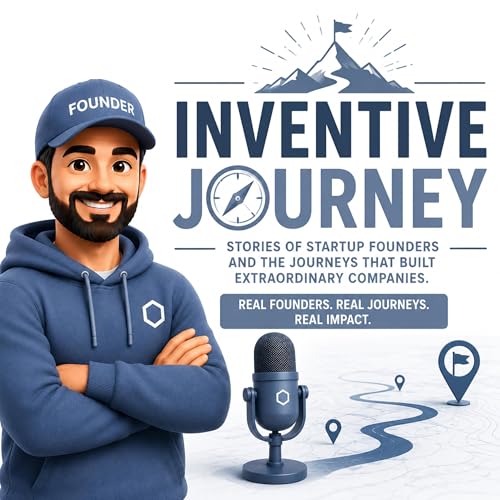
Buckle up for real stories from startup founders and small business heroes who survived the chaos, laughed at the mistakes, and still built something awesome. 🚀 Each episode dives into the wild ride of turning ideas into impact—complete with hard lessons, lucky breaks, and plenty of caffeine. ☕️ Entrepreneurs, this is your pit stop for honest insights and unexpected laughs.Devin @ Miller IP Economics Leadership Management & Leadership
Episodes
  • 🍎 Can Ordinary Words Become Trademarks?
    Jul 7 2026

    Can an ordinary word become a trademark? Yes—and that answer is more useful, more nuanced, and slightly more dangerous than it sounds.

    This episode-style breakdown explores how common words can become powerful brand assets when they identify the source of goods or services instead of merely describing what a business sells. A word like “apple” can be an everyday fruit in one context and a major technology brand in another. That does not mean a company owns the word everywhere. It means trademark protection depends on context, consumer perception, and consistent brand use.

    We walk through the difference between generic, descriptive, suggestive, arbitrary, and fanciful marks. Generic terms name the product category and cannot function as trademarks. Descriptive terms directly explain a feature, purpose, quality, or ingredient and may be harder to protect. Suggestive marks are different. They hint at an idea but require a little imagination from the customer. That extra mental step can make a brand name more distinctive and more defensible.

    For startup founders and small business owners, this matters early. A name that sounds obvious in a meeting may become a legal headache later. A business might choose a descriptive name because it feels clear, only to discover that it is difficult to register, difficult to enforce, or already surrounded by competitors using similar language. On the other hand, a suggestive name can create a stronger identity while still giving customers a useful clue about the brand.

    The conversation also covers common mistakes: assuming domain availability means trademark availability, thinking registration equals total ownership of a word, ignoring common-law rights, and picking a name before checking whether customers may confuse it with another business. Trademark law is not about who had the best brainstorming session. It is about whether a mark identifies a source and whether another use is likely to confuse consumers.

    You will also hear why over-enforcement can backfire. Owning a trademark does not give a company control over every ordinary use of a word. Competitors can often use descriptive language fairly. Smart trademark strategy protects the brand without trying to annex the English language like a caffeinated empire.

    We also look at why suggestive marks often become the practical middle ground. Made-up words can be strong, but they may require more marketing investment because customers have to learn what they mean. Descriptive names can be easy to understand, but they may be too weak to protect. Suggestive names sit between those extremes. They give the market a clue while still acting like a brand.

    That balance can save money, reduce confusion, and support long-term growth. A strong mark can make it easier to build recognition across websites, packaging, social media, ads, sales conversations, investor decks, and customer referrals. A weak mark can create friction in every one of those places. Nobody wants to discover that the brand name printed on the booth banner is also being used by three competitors and one suspiciously enthusiastic Etsy shop.

    By the end, you will have a practical framework for reviewing your own name before you fall in love with it too hard.

    The key takeaway: ordinary words can become extraordinary trademarks when they are used creatively, consistently, and strategically. The strongest names are not always the most literal. They are the ones that customers remember, competitors cannot easily copy, and the business can grow with over time.

    This is a practical listen for founders choosing a company name, teams preparing to launch a product, marketers building brand identity, and business owners wondering whether their “simple” name is legally strong enough to protect.

    To chat about this one-on-one, grab a free consult at strategymeeting.com

    Show More Show Less
    1 min
  • 🔒 How Long Does a Trademark Last? The Business Owner’s Guide to Staying Protected
    Jul 3 2026

    Your trademark can last a very long time. Potentially forever. But, like a houseplant, a customer relationship, or the office printer that only works when spoken to respectfully, it needs care.

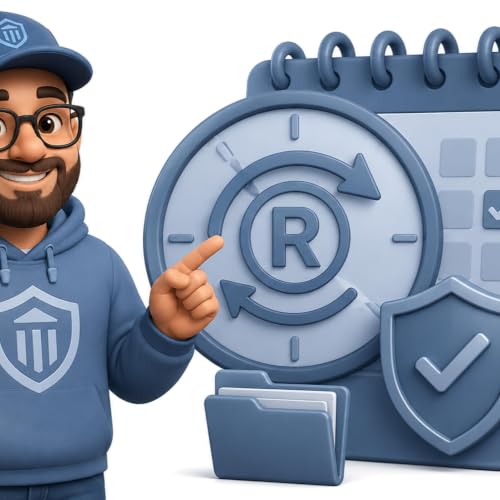
    This episode breaks down the question every founder eventually asks: how long does a trademark last? The answer is both encouraging and slightly paperwork-flavored. In the United States, a federal trademark registration can continue indefinitely if the owner keeps using the mark in commerce and files the required maintenance and renewal documents on time.

    That is the good news. The less glamorous news is that a trademark registration is not a trophy you place on a shelf forever. It has deadlines, use requirements, and renewal windows. It also has a talent for becoming a problem right when your business is busy launching, raising money, hiring people, or discovering that the website footer still says copyright twenty nineteen.

    In this episode, we explain why trademarks are different from patents. Patents have fixed terms. Trademarks are connected to marketplace identity. If customers still associate your mark with your goods or services, and you maintain the registration, protection can continue decade after decade.

    We also cover the major U.S. trademark maintenance windows business owners should know. After registration, owners usually need to file a declaration of continued use between the fifth and sixth year. Then, between the ninth and tenth year, renewal and maintenance documents are typically due. After that, renewals continue every ten years.

    We dig into what “use in commerce” actually means. A trademark needs real commercial use connected to the goods or services in the registration. For products, that could include packaging, labels, product pages, or point-of-sale displays. For services, it might include websites, proposals, ads, or booking pages.

    We also talk about abandonment, which is the legal version of your brand wandering off into the woods. If a business stops using a mark and has no intent to resume use, the mark can become vulnerable. Three consecutive years of nonuse can become strong evidence of abandonment under U.S. law. That is why “we might bring it back someday” is not a great trademark strategy unless there is a real plan behind it.

    Monitoring is another major topic. Registering a trademark does not mean the government automatically enforces it for you. The USPTO does not patrol the marketplace with a tiny badge and a suspiciously well-organized spreadsheet. Trademark owners usually need to watch for confusingly similar brands, copycats, partner misuse, and signs that consumers are getting confused.

    The episode also explains why enforcement should be strategic. Not every similar word deserves a legal battle. Smart trademark enforcement looks at similarity, related goods or services, customer overlap, actual confusion, market impact, and business goals. Sometimes the right move is a letter. Sometimes it is a coexistence agreement, takedown, or litigation.

    For founders and small business owners, the practical takeaway is simple: treat trademarks like active business assets. Calendar deadlines early. Save proof of use. Review registrations annually. Keep ownership records clean. Update goods and services when the business changes. Monitor the market. Use the mark consistently. And please, do not rely on memory as your legal operations system. Deadlines love disguises.

    This episode is especially useful for sta

    rtup founders, small business owners, marketing leaders, brand managers, product companies, service businesses, franchise operators, and anyone who has ever said, “We registered the name, so we’re good forever, right?”

    Your trademark is more than a name. It is the symbol customers remember, the asset competitors notice, and the brand signal investors may evaluate. Protect it like it matters, because it probably does.

    To chat about this one-on-one, grab a free consult at strategymeeting.com

    Show More Show Less
    Less than 1 minute
  • 🤖 Can AI-Generated Images Infringe Intellectual Property? The Robot Art Lawyer Problem
    Jul 2 2026

    AI-generated images are no longer a futuristic party trick. They are sitting inside marketing departments, startup pitch decks, agency workflows, website headers, product mockups, and social media calendars. The visuals are fast, cheap, and often surprisingly polished. They can also be legally awkward, because the phrase “the robot made it” does not automatically protect a business from copyright, trademark, trade secret, or publicity-rights problems.

    In this episode-style breakdown, we explore the question every founder, creator, and marketing team should ask before publishing AI visuals: can AI-generated images infringe intellectual property?

    The answer is yes, sometimes. An AI image may create copyright risk if it reproduces protected expression from an existing illustration, photo, character, poster, or design. It may create trademark risk if it looks too similar to a known logo, product package, mascot, icon, or brand identity. It may create trade secret risk if someone uploads confidential business information, invention drawings, customer files, unreleased screenshots, or private design concepts into a tool without checking the terms. It may also create publicity-rights risk if it imitates a real person in a commercial context.

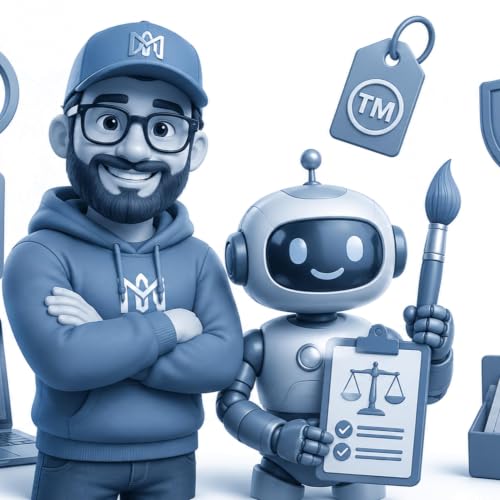
    The episode also explains the ownership problem. In the United States, copyright generally requires human authorship. That means raw AI-generated output may not receive strong copyright protection unless a person contributed meaningful creative control through selection, editing, arrangement, or transformation. For businesses, that creates a strange situation: an AI image can be risky enough to trigger a claim, yet not human-authored enough to become a strong company asset. That is the robot art lawyer problem, and yes, it deserves its own tiny briefcase.

    We walk through practical steps businesses can take right now. Start by defining the use case. Internal brainstorming images are not the same as logos, paid ads, product packaging, investor materials, or website hero graphics. The more public and commercial the use, the more review it deserves.

    Next, avoid prompts that intentionally target protected material. Do not ask for famous characters, living artists’ styles, competitor logos, celebrity lookalikes, branded packaging, sports team designs, or movie-scene replicas. Describe the visual qualities you want instead: clean, modern, playful, technical, blue-toned, founder-friendly, polished, or minimal. Let the robot understand the vibe without handing it a lawsuit starter kit.

    Review outputs before publication. Look for confusingly similar marks, recognizable characters, hidden logos, fake watermarks, copied-looking compositions, celebrity-like faces, and anything that seems too familiar. Reverse image search can help, but it is not perfect. Human review still matters.

    The discussion also covers confidential information. Trade secrets depend on reasonable secrecy efforts. Uploading unreleased product drawings, patent figures, client materials, or internal strategy files into an unapproved AI tool can weaken those efforts. The prompt box is not always a vault. Sometimes it is more like a very talented toaster with a memory.

    Finally, we talk about policy. Businesses do not need to panic, but they do need guardrails. Approved tools, banned prompt categories, confidentiality rules, documentation habits, human-editing requirements, and legal review triggers can make AI image use faster and safer. The robot can sketch. The humans should approve.

    This topic matters because AI creativity is not slowing down. The companies that win will not be the ones that ignore AI or the ones that let everyone prompt recklessly. The winners will use AI thoughtfully, document human creativity, clear brand-critical assets, and protect confidential information before it becomes a problem.

    To chat about this one-on-one, grab a free consult at strategymeeting.com

    Show More Show Less
    1 min
adbl_web_anon_alc_button_suppression_t1
No reviews yet