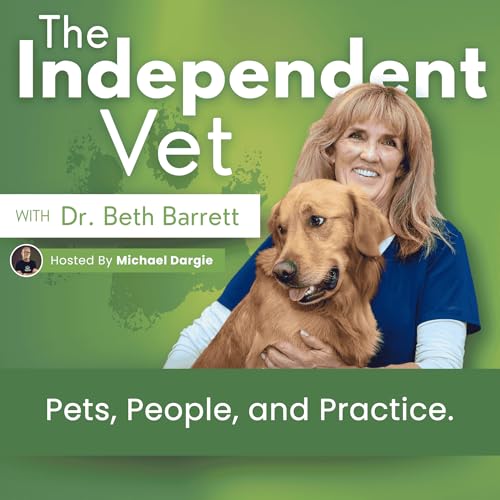
The Independent Vet cover art

The Independent Vet

The Independent Vet

By: Dr. Beth Barrett
Listen for free

Pets. People. Practice. Welcome to The Independent Vet — the podcast that helps you give your fuzzy family the best life possible. Hosted by Michael Dargie, join veterinarian Dr. Beth Barrett every other week as they dig into all things pet care: from puppy training and senior cat nutrition to parasite prevention and what to pack in your pet's first aid kit. Whether you're a new pet parent or a lifelong animal lover, you'll find expert advice, surprising facts, and real-life insights from a working vet clinic in Alberta, Canada. Short, practical, and full of heart — because at Barrett Veterinary Practice, we treat your pets like our own.2026 Relationships Social Sciences
Episodes
  • Behind the Barn: Meet the Team
    May 21 2026
    Season 1 · Episode 08 Run time: ~35 minutes Host: Michael Dargie Featuring: Dr. Beth Barrett, DVM Episode Description Ever wonder who all those people are at your vet clinic — and what they each actually do? In this special "Behind the Barn" episode, Michael pulls back the curtain at Barrett Veterinary Practice with Dr. Beth Barrett to introduce the full team that cares for your pets. From Tammy at the front desk to the Registered Veterinary Technologists who run anesthesia, x-rays and lab work, to the tech assistants who keep everything flowing — Beth shares why veterinary medicine is a team sport, how she hires for personality fit using the "Colors" framework, and what she's actually doing in the four pillars of her own role. Plus a sneak peek at the AI tools transforming how Barrett documents care, and a few stories you won't find on the website (yes, including the house-trained baby goats). If you've ever wondered why you're seeing three or four different people during one appointment, this is the episode that explains why that's a very good sign. In This Episode Who you actually meet at a vet visit — and why a "team of four" is the goalThe difference between RVTs, tech assistants, and veterinarians (and why Beth doesn't call any of them "her assistant")The "Colours" personality framework Beth uses to build her teamThe four legal pillars of what a veterinarian actually doesHow AI-powered appointment recording is improving discharge summariesWhy Beth says she's "always hiring" the right person Episode Chapters TimeSegment00:00Cold open & show intro00:33Welcome — "Today we're going behind the barn"01:55Section 1 — Meet Tammy: the face of the practice04:40Section 2 — RVTs: the backbone of Barrett13:18Section 3 — Tech assistants: the essential support crew16:30From volunteer to tech: Ayla's story18:25Hiring with the "Colors" personality framework21:00What the vet actually does: the four pillars22:30Tech sidebar — AI-powered discharge summaries27:00Building a team of A-players31:35Myth or Muzzle?32:05Ask Dr. Beth33:00Outro + hiring CTA Key Takeaways Vet medicine is a team sport. Seeing three or four people during one appointment isn't a red flag — it's a sign the clinic is running efficiently and putting the right person on the right job.RVTs are highly trained, regulated professionals. Registered Veterinary Technologists in Alberta are licensed under the same body as veterinarians (ABVMA). They handle anesthesia, dentistry support, x-rays, lab work, nursing care, triage, and a huge share of client education.The vet's role is narrower than most people think. Legally, the veterinarian owns four pillars — diagnosis, prognosis and treatment plan, prescriptions, and surgery. Everything else flows through the team.Hire for fit, not just skill. Beth uses the Colors personality framework to match people to roles they'll thrive in — and looks for "A-players" who match the clinic's culture of warmth, humour, and getting things done.Technology should serve the team. Barrett was an early-adopter clinic in Alberta, and Beth now uses an AI appointment recorder to generate accurate, complete discharge summaries — catching the small details that handwriting and end-of-day typing inevitably miss. Myth or Muzzle? MYTH: "Everyone in scrubs at the vet clinic is basically a vet's assistant." Beth's take: they're all part of the team, but they're not assistants to the vet. If anything, the relationship runs the other way — Beth sees herself as more of a tech's assistant on a lot of procedures. Everyone fills a different role, and each role has its own training, scope, and value. Ask Dr. Beth Listener Question: "Why do I sometimes see three or four people during one appointment? Is something wrong with my pet?" Short answer: no — and you should actually be glad you're seeing three or four people. Each team member is doing what they do best (billing, nail trims, history-taking, diagnosis, discharge). Seeing only the vet would be slower, less thorough, and frankly less warm. The team approach is what makes the appointment work. Resources & Mentions Barrett Veterinary Practice — barrettvet.caThe "Colors" personality assessment — the framework Beth uses for hiring and team-buildingAlberta Veterinary Medical Association (ABVMA) — the licensing body for both veterinarians and RVTs in AlbertaAlberta Veterinary Technologist Association (ABVTA) — the support association for Alberta RVTsAI appointment-recording tools — Beth's clinic adopted one for discharge summaries; Michael now uses a Plaud device for his own meetingsSteve Jobs (quoted): "A small team of A-players will run circles around a large team of B-players." Now Hiring at Barrett LEARN MORE HERE Heard something in this episode and thought, "I'd love to work somewhere like that"? Barrett Veterinary Practice is hiring right now. Visit barrettvet.ca for the latest postings, or call 403.860.5763 to start a conversation. Connect with...
    Show More Show Less
    35 mins
  • Spay, Neuter, or Wait?
    May 6 2026
    Spay, Neuter, or Wait? The Independent Vet — Season 1, Episode 7 Released May 6, 2026 Featuring: Dr. Beth Barrett, DVM Host: Michael Dargie Runtime: 38:15 Episode Overview In this episode of The Independent Vet, host Michael Dargie sits down with Dr. Beth Barrett of Barrett Veterinary Practice to unpack one of the most common—and most debated—questions in pet care: when should you spay or neuter your pet? What starts as a seemingly simple topic quickly becomes a thoughtful conversation about hormones, health, behaviour, breed differences, and responsible pet ownership. Dr. Beth explains why spaying and neutering have long been recommended to help prevent unwanted litters, while also exploring newer research that shows timing matters—especially for certain dog breeds. From growth plates and orthopedic health to cancer risks, urinary incontinence, aggression myths, and options like vasectomy or ovary-sparing spays, this episode reminds pet owners that there is no one-size-fits-all answer. The best choice depends on your pet's species, breed, size, lifestyle, and health risks—and it should always involve a real conversation with your veterinarian. Quotables "Spaying and neutering is not just 'fixing' a problem. It's way more complicated than that." — Dr. Beth Barrett "Hormones are not just used for reproductive purposes. Hormones have a lot of function in our bodies." — Dr. Beth Barrett "Testosterone is very involved in orthopedic health and closure of growth plates." — Dr. Beth Barrett "It is not one size fits all." — Dr. Beth Barrett "If your head is spinning just a little, I think that's the right reaction. This topic deserves more than just a one-line answer." — Michael Dargie "An educated client is a better client." — Dr. Beth Barrett "You've got to respect those chemicals." — Dr. Beth Barrett Key Moments 00:00 – Welcome and Introduction Michael introduces the topic of spaying, neutering, and waiting—and admits he once thought the answer was simple. 01:07 – What Spay and Neuter Actually Mean Dr. Beth explains the basic goal: preventing pregnancy, while noting there are different surgical options for both males and females. 02:34 – Why Spaying and Neutering Became the Default The conversation explores overpopulation, shelter medicine, unwanted litters, and why prevention remains an important goal. 04:28 – Why "Fixing" Isn't the Whole Story Dr. Beth explains why she avoids the word "fixing" and why removing reproductive organs can affect more than reproduction. 05:40 – The Role of Hormones Estrogen and testosterone are discussed as powerful hormones that influence metabolism, growth, behaviour, orthopedic health, and more. 08:30 – Why Timing Depends on the Pet Dr. Beth highlights research showing that breed, size, and species all matter when deciding when to spay or neuter. 09:55 – Orthopedic Health and Growth Plates The episode dives into ACL/CCL injuries, growth plate closure, and why early spay/neuter can affect body structure in some dogs. 13:19 – Cancer Risks and Breed Differences Dr. Beth explains how spaying and neutering may reduce some cancer risks while increasing others in certain breeds. 16:34 – Behaviour, Anxiety, and Aggression Myths The discussion challenges the assumption that spaying or neutering automatically improves aggression or temperament. 18:03 – Urinary Incontinence in Spayed Dogs Dr. Beth explains the link between estrogen and bladder control, especially in older spayed female dogs. 19:48 – What About Cats? Cats are discussed separately, including population control, intact male behaviour, and the current limitations of research. 23:52 – Older Pets and Pyometra Risk Dr. Beth explains why intact older female dogs and cats can be at risk for pyometra, a serious and potentially life-threatening uterine condition. 26:09 – Vasectomy, Ovary-Sparing Spay, and Other Options The conversation covers alternatives to traditional spay and neuter procedures, including vasectomy and ovary-sparing spays. 34:18 – Myth or Muzzle Myth: "Female dogs or cats should have one litter before being spayed." Dr. Beth gives this one a clear myth. 35:31 – Mailbag: Biscuit the Golden Retriever A listener asks when to spay a seven-month-old Golden Retriever. Dr. Beth explains why she would likely wait until growth plates are closed. 36:39 – Final Takeaway The episode wraps with the reminder that timing depends on the individual pet—and a good conversation with your vet is key. About Dr. Beth Barrett Dr. Beth Barrett is a veterinarian and clinic owner at Barrett Veterinary Practice in Alberta. She's passionate about helping pet owners make informed, practical decisions that improve the quality and longevity of their animals' lives. Resources Barrett Veterinary Practice: https://barrettvet.ca Facebook: https://www.facebook.com/barrettveterinarypractice/ Instagram: https://www.instagram.com/barrettveterinarypractice UC Davis ...
    Show More Show Less
    38 mins
  • Pet Dental Health
    Apr 6 2026

    Yes, your pets need to brush too.

    Bad breath might seem like a small thing—but it's often your pet's way of telling you something more is going on.

    In this episode, Michael Dargie sits down with Dr. Beth Barrett to talk about dental health—one of the most overlooked parts of caring for your pet. What starts in the mouth doesn't stay there. Dental disease can quietly impact your pet's heart, kidneys, and overall quality of life.

    Dr. Beth walks through what's really happening beneath the surface, why dental issues are so common, and how small, manageable steps at home can make a big difference over time.

    Because when your pet is feeling their best, you can see it in everything they do—from tail wags to mealtime excitement.

    What You'll Learn

    • What dental disease actually looks like in pets (and why it's more common than you might think)

    • Why "just bad breath" deserves a closer look

    • How oral health connects to the heart, kidneys, and overall wellness

    • What we're really checking for during a dental exam

    • Simple, realistic ways to care for your pet's teeth—no wrestling required

    • Why starting early can help your pet stay healthier, longer

    Key Moments

    • A closer look at why dental health is often missed

    • How problems in the mouth can affect the rest of the body

    • The subtle signs your pet may be showing at home

    • What happens during a dental check at the clinic

    • Why prevention is one of the kindest things you can do for your pet

    Quotes
    • "Bad breath is a red flag. That's a shot across the bow."

    • "Dental health has huge impacts… especially on cardiac and kidney health."

    • "I see animals' lives shortened because we didn't take care of their teeth earlier."

    • "It's one of the best things we can do for animals in practice."

    Why This Matters

    Dental disease is one of the most common — and preventable — health issues in pets.

    This conversation reframes it from a cosmetic concern to a serious health issue. Taking action early doesn't just mean fresher breath — it can mean a longer, healthier life for your pet.

    About Dr. Beth Barrett

    Dr. Beth Barrett is a veterinarian and clinic owner at Barrett Veterinary Practice in Alberta. She's passionate about helping pet owners make informed, practical decisions that improve the quality and longevity of their animals' lives.

    Resources

    Barrett Veterinary Practice: https://barrettvet.ca

    Show More Show Less
    33 mins
adbl_web_anon_alc_button_suppression_c
No reviews yet