• What Nobody Tells You About Starting a Business in the Gulf
    Jun 27 2026

    The Gulf is one of the most attractive places in the world to build a business — but the rules are different here, and the mistakes are expensive. In this episode, we walk through the real framework for starting a business as an expat: free zones vs mainland, ownership structures, the costs people do not anticipate, and the mindset shift required to go from employee to founder in this region.

    At some point, almost every Gulf professional thinks: I could start something here. Then come the questions – licence? visa? Employment contract? Is it even legal for an expat?

    This episode gives you the honest answers. You’ll learn:
    ✔️ Can an expat legally own a business in the UAE, Oman, and Saudi? (Yes – with the right structure)
    ✔️ Mainland vs free zone vs freelance permits – what actually works
    ✔️ The critical question: can you start while still employed? (read your contract)
    ✔️ Low‑capital, service‑based ideas that leverage what you already know
    ✔️ 3 questions to ask yourself before you begin (including halal compliance)

    The Gulf is more open to expat business than most people realise. But structure, legal clarity, and realism separate success from costly mistakes.


    Full article and business setup checklist at crypode.com


    #Crypode #GulfProfessionals #ExpatBusiness #StartupGulf #GulfEntrepreneur #FreeZone #BusinessSetup #ExpatFinance #GulfFinance #HalalBusiness #FinancialPlanning #DubaiStartup #GulfExpat #RealMoneyRealLife #EntrepreneurMindset

    Show More Show Less
    6 mins
  • The Gulf Professional Mistake of the Week Episode 2 — The First Salary
    Jun 24 2026

    First salary. Finally. You're earning. New clothes. Nice dinners. Gifts for family. A new phone. By day 22, your bank account is almost empty.

    The first salary mistake isn't really about money – it's about identity. Spending feels like success. But that feeling lasts three weeks. Then rent and bills arrive.

    One simple rule: before you spend anything from your first salary, put 20% somewhere you can't touch. The habit matters more than the amount.

    Last time we talked about the car loan. Today we are going back further. All the way to the beginning. The first salary.

    [The Mistake]

    You have been studying for years. Living on whatever your family gave you. Counting every rial.

    Then the job comes. The first salary arrives.

    Suddenly, you are buying things you never needed before. New clothes. Dinner at a restaurant you previously only looked at from the outside. Gifts for family. A new phone because the old one is technically still working, but you deserve an upgrade.

    By day twenty-two of the month, you open your banking app, and you see a number that does not make sense.

    How is it already almost gone?

    [The Recognition]

    The first salary mistake is not really about the money. It is about identity.

    For the first time in your life, you feel like someone who earns. And spending is the fastest way to feel that.

    The problem is that the feeling lasts about three weeks. Then the bills arrive. And the rent. And the family obligations.

    And you think — next month I will be more careful. Next month arrives. The same thing happens.

    [The Lesson]

    The first salary is the foundation of every financial decision you will make for the next twenty years.

    One simple rule: before you spend anything from your first salary — put twenty percent somewhere you cannot easily touch. Even if it is small. The habit matters more than the amount.

    [Close]

    Next week — the saving promise. I will start saving next month. Said every Gulf professional. Every month. For fifteen years.

    #FirstSalary #MoneyHabits #GulfProfessionals #SalaryManagement #FinancialMistakes #BadHabits #DayOne #GulfExpat #OmanFinance #UAEFinance #IslamicFinance #HalalFinance #Crypode #RealMoneyRealFaith #MoneyMindset

    Show More Show Less
    3 mins
  • How to Send Money Home Without Losing It
    Jun 21 2026

    Every month, Gulf professionals send billions home — and a significant portion of it disappears in fees and exchange rate margins before it ever arrives. In this episode, we cover how remittance costs really work, which platforms give you the best rates, how to time your transfers, and how to build a smarter remittance strategy that protects your family's money.

    It’s an obligation – to parents, to siblings, to family. But how much of that money actually arrives?

    Bank fees and hidden exchange rate markups can silently drain 3–7% of every transfer. Over a decade, that’s thousands of dollars lost – not to your family, but to middlemen.

    This episode shows you how to keep more of what you send:
    ✔️ The difference between visible fees and invisible exchange rate losses
    ✔️ Why timing your transfers can save hundreds per year
    ✔️ Which services actually work (Wise, Remitly, Al Ansari, and more)
    ✔️ How consolidating transfers cuts fees immediately
    ✔️ The harder conversation: making sure your remittances build something long‑term

    You work hard to send this money. Make sure it arrives fully – and builds a real future.

    Full article and resources at crypode.com


    #Crypode #GulfProfessionals #Remittance #SendMoneyHome #ExpatFinance #GulfFinance #MoneyTransfer #ExchangeRate #PersonalFinance #HalalFinance #GulfExpat #FinancialPlanning #ExpatLife #RealMoneyRealLife #MoneyTips

    Show More Show Less
    6 mins
  • The Gulf Professional Mistake of the Week Episode 1 — The Car Loan
    Jun 17 2026

    Episode 1 — The Car Loan


    A new car. Leather seats. Touch screen. 350 rials a month. Sounds reasonable, right? Until you calculate 350 × 60 months = 21,000 rials for a car worth 9,000 by the time you're done.

    This episode kicks off our Mistake of the Week series with the most common trap: the car loan. Plus insurance, registration, maintenance, fuel, and parking. The salesman didn't mention those.

    A car is not an investment. If you can't pay for it in cash within two years, it's too expensive.


    [Opening]

    Welcome back to The Gulf Finance Podcast.

    Before we get into today's main topic, I want to start something new — a segment I am calling The Gulf Professional Mistake of the Week.

    No judgment. No lectures. Just honest conversation about the things most of us have done — or watched someone do — and quietly thought to ourselves: that was not a good idea.

    This week's mistake is one I know personally. The car loan.

    [The Mistake]

    Here is how it goes.

    You get a job. Good salary. You are feeling confident. And then you look at what you are driving and you think — I deserve better than this.

    So you walk into a showroom. And the salesman — who is very good at his job — shows you something beautiful. Leather seats. New smell. Touch screen everything.

    And you sit in it.

    Suddenly, the monthly installment sounds very reasonable. Three hundred and fifty rials a month. That is nothing. You earn good money. You can handle that.

    What you do not calculate — right there in that leather seat — is that three hundred and fifty rials a month for five years is twenty-one thousand rials for a car that is worth maybe nine thousand rials by the time you finish paying for it.

    You also do not calculate the insurance. The registration. The maintenance. The fuel. The parking.

    [The Recognition]

    The funny part is not the mistake itself. The funny part is what happens next.

    Three months later, you are in that beautiful car — leather seats, new smell mostly gone — sitting in traffic — and your phone buzzes.

    It is your bank. Reminding you that your loan installment is due tomorrow.

    And you look at the steering wheel and you think — this car is costing me how much again?

    And then the traffic moves. And the moment passes. And you turn up the music.

    And next year — when the new model comes out — you go back to the showroom.

    [The Lesson]

    A car is not an investment. It is a depreciating asset. The moment you drive it out of the showroom it is worth less than what you paid.

    A simple rule: if you cannot pay for it in cash within two years of saving, it is too expensive for where you are right now.

    [Close]

    Next time — the first salary. What Gulf professionals do with it. And why is it usually gone before the second one arrives?

    Visit crypode.com for practical debt management tools built for Gulf professionals.

    #CarLoan #GulfCarLoan #DebtTrap #OmanFinance #UAEFinance #CarFinance #FinancialMistakes #InterestTrap #GulfProfessionals #MoneyMistakes #DebtFree #IslamicFinance #HalalFinance #Crypode #RealMoneyRealFaith

    Show More Show Less
    4 mins
  • The Real Cost of Living in the Gulf (Nobody Tells You This)
    Jun 14 2026

    You negotiated the salary. You checked the rent. But did you account for the costs nobody puts in a spreadsheet? In this episode, we break down the real price of living well in the Gulf — school fees, healthcare gaps, convenience inflation, social pressure, and the flight bill that quietly drains your savings every year. If you are a Gulf professional who wants to understand where your money is actually going, this episode is for you.Before you moved to the Gulf, someone told you about the tax‑free salary. The housing allowance. The flights home.

    But did anyone explain what it actually costs to live here? Not the rent. The hidden things – school fees, healthcare gaps, convenience inflation, social pressure, and the real price of flying home.

    In this episode, we uncover the 5 silent drains on your Gulf salary:
    ✔️ School fees – $10k–$50k per child per year
    ✔️ Healthcare – what your employer plan doesn’t cover
    ✔️ Convenience inflation – food delivery, taxis, malls
    ✔️ Social cost – keeping up with the expat circle
    ✔️ Flights home – the thousands your contract leaves out

    Plus a 3‑step plan to take control: calculate your real cost of living, audit quarterly, and build a lifestyle budget around your goals – not your income.

    The highest earners don’t always win. The most intentional spenders do.

    Full article and resources at crypode.com


    #Crypode #GulfProfessionals #ExpatLife #HiddenCosts #GulfFinance #PersonalFinance #FinancialPlanning #ExpatFinance #DubaiLife #GulfExpat #MoneyTips #RealMoneyRealLife #HalalFinance #FinancialAwareness #GulfLiving

    Show More Show Less
    6 mins
  • Before You Start That Side Hustle — Run It Through This Checklist First
    Jun 9 2026

    Side income has become a survival strategy for Gulf professionals. But for Muslims, there’s an extra layer: is this income halal? Most advice skips this completely.

    This episode gives you a 7‑point checklist: permissible product/service, genuine value exchange, full transparency, no riba, not neglecting prayers or family, genuine passive income (not riba in disguise), and clear contracts. Plus a simple three‑question test. And concrete halal side income ideas – freelancing, content, tutoring, halal investments, reselling.

    Earn with barakah. The honest, trustworthy merchant is with the prophets.

    👉 crypode.com – full halal side income article.

    #Crypode #GulfFinance #IslamicFinance #HalalMoney #GulfProfessionals #GulfLife #ExpatLife #PersonalFinance #FinancialEducation #MuslimMoney

    Show More Show Less
    7 mins
  • The Most Trusted Halal Asset in the Gulf — and How to Actually Invest in It Correctly
    Jun 3 2026

    Gold has protected Gulf families for generations. It’s tangible, has intrinsic value, and requires almost no Shariah screening. But not all gold investments are equal under Islamic law.

    This episode covers: why physical gold (bars, coins) is universally halal, the critical hadith about “gold for gold, hand to hand”, why unallocated accounts and gold futures are problematic, and how to buy gold in the GCC – Muttrah Souk, Dubai Gold Souk, banks, and Shariah‑certified platforms like HelloGold. Plus Zakat on gold (85g nisab, 2.5%).

    Invest in something real. Own it completely.

    👉 crypode.com – gold Zakat calculator and guides.

    #Crypode #GulfFinance #IslamicFinance #HalalMoney #GulfProfessionals #GulfLife #ExpatLife #PersonalFinance #FinancialEducation #MuslimMoney

    Show More Show Less
    6 mins
  • Welcome to The Gulf Finance Podcast -An Introduction for New Listeners
    Jun 2 2026

    Welcome to Crypode.

    Before we get started, make sure to hit the Follow button so you don't miss future episodes.

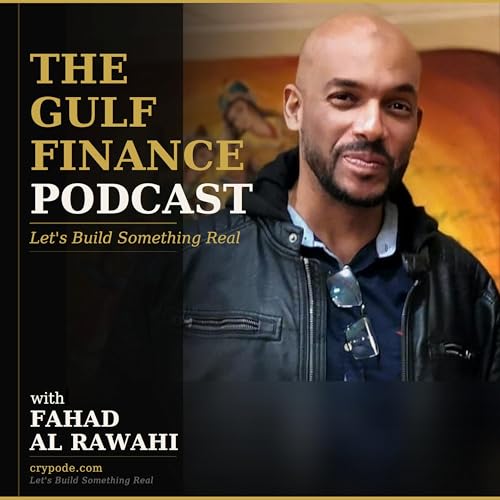
    My name is Fahad Al Rawahi. I am a Gulf aviation professional, a father of six, and the founder of crypode.com — a personal finance platform built specifically for Gulf professionals.

    I started this podcast because honest financial guidance for people like us has been missing for too long.

    Most financial advice you find online was written for Americans or Europeans. It talks about 401k plans, mortgage tax relief, and investment accounts that simply do not exist in Oman, the UAE, Saudi Arabia or the wider Gulf region.

    We live in a different system. Our salaries are deducted before we see them. Our loans come with different terms. Our faith shapes how we think about money. Our family obligations extend beyond the nuclear family. And most of us have no guaranteed pension waiting at the end of our careers.

    That reality deserves honest, practical, and faith-aligned guidance. That is what this podcast is about.

    What you will hear on this show:

    Every episode focuses on one real financial challenge that Gulf professionals face — debt management, Islamic finance, career growth, side income, retirement planning, the expat and local divide, and more.

    No jargon. No theory. No advice that only works somewhere else. Just honest conversations about money from someone living the same reality as you.

    A little about me:

    I have spent over twenty years working in private aviation in Muscat, Oman. For much of that time, I carried significant personal debt while raising six children on a single salary — exactly the situation most Gulf financial advice ignores.

    There were months when I watched my salary arrive and disappear before I could account for it. The quiet pressure of being the sole provider in a system with no flexibility.

    I never found a resource that spoke honestly to that reality. So I built one myself. Crypode.com started as articles — honest financial guidance written from the Gulf for the Gulf. This podcast is the next step.

    I am not a certified financial advisor. I am a Gulf professional who figured things out the hard way and decided to share everything openly.

    Who this podcast is for:

    This podcast is for the Gulf professional who has ever watched their salary arrive and leave before breakfast. For the expat sending money home while building something for themselves. For the believer, ensuring their finances align with their faith.

    It is for every Gulf professional who deserves better guidance than they have been given.

    How this podcast works:

    Each episode is short, focused, and practical. Designed for your commute, your lunch break, or the quiet hour after the family sleeps. If you have a question — reach out through crypode.com.

    If an episode helps you — share it with someone who needs it.

    Welcome to Crypode. Welcome to The Gulf Finance Podcast.

    Let us build something real together.

    بإذن الله — the best is still coming. 🤲

    Follow on Spotify · Visit crypode.com · Real Money · Real Faith · Real Life


    #Crypode #GulfFinancePodcast #GulfProfessionals #HalalInvesting #IslamicFinance #MuslimMoney #PersonalFinance #GulfExpat #HalalWealth #FinancePodcast #DebtFreeJourney #RetirementPlanning #OmanFinance #UAEFinance #MiddleEastPodcast

    Show More Show Less
    5 mins