Episodes

  • Your AI Coding Agent Should Live Where the Important Conversations Happen
    May 30 2026

    This story was originally published on HackerNoon at: https://hackernoon.com/your-ai-coding-agent-should-live-where-the-important-conversations-happen.
    This article explores how AI developer tools are moving beyond the IDE to reduce context switching across Slack, cloud agents, and coding workflows.
    Check more stories related to programming at: https://hackernoon.com/c/programming. You can also check exclusive content about #ai-coding, #kilo-code, #kilo-ai, #kilo-for-slack, #ai-developer-tools, #cloud-agents, #slack-bots, #good-company, and more.

    This story was written by: @kilocode. Learn more about this writer by checking @kilocode's about page, and for more stories, please visit hackernoon.com.

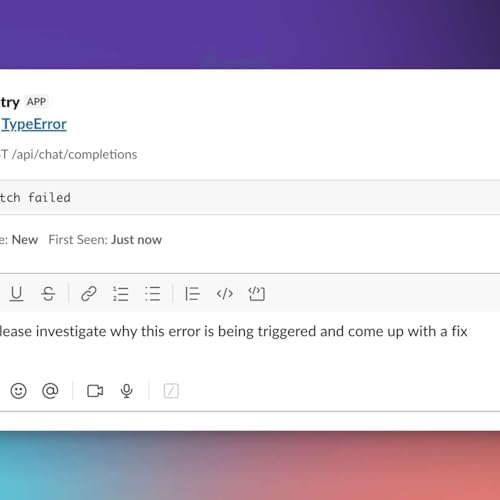
    Most AI dev tools live in the IDE, but half the work starts in Slack threads, which means you spend your day copy-pasting context between the two. Kilo for Slack is a bot you @-mention in any thread. It reads the conversation, accesses your connected repos, and either answers or spins up a Cloud Agent that opens a PR. Same credits, same 500+ models, same Sessions that carry across VS Code, JetBrains, and the CLI. Not a separate chatbot wearing a Slack costume, the same Kilo agent, just reachable from where the work already is.

    Show More Show Less
    8 mins
  • How Swatilina Barik Is Rebuilding US Immigration Strategy with Artificial Intelligence
    May 29 2026

    This story was originally published on HackerNoon at: https://hackernoon.com/how-swatilina-barik-is-rebuilding-us-immigration-strategy-with-artificial-intelligence.
    Discover how Visa Architect uses AI and immigration expertise to help applicants, businesses, and attorneys navigate complex US visa processes.
    Check more stories related to tech-stories at: https://hackernoon.com/c/tech-stories. You can also check exclusive content about #ai-immigration-platform, #us-visa-strategy-software, #case-analysis-ai-immigration, #visa-architect-platform, #ai-immigration-attorney, #immigration-petition, #employment-visa-application, #good-company, and more.

    This story was written by: @sanya_kapoor. Learn more about this writer by checking @sanya_kapoor's about page, and for more stories, please visit hackernoon.com.

    Visa Architect is an AI-powered immigration platform created by Swatilina Barik to simplify and strengthen US visa decision-making. Built from over a decade of hands-on immigration strategy experience, the platform analyzes applicant profiles, identifies petition weaknesses, and recommends stronger visa pathways. It helps applicants, businesses, and attorneys navigate an increasingly complex immigration system with smarter, data-driven guidance.

    Show More Show Less
    5 mins
  • From Finance to Retail: Distributed Ledger Technology Goes Beyond Crypto
    May 29 2026

    This story was originally published on HackerNoon at: https://hackernoon.com/from-finance-to-retail-distributed-ledger-technology-goes-beyond-crypto.
    Crypto goes far beyond money. Finance leads, but supply chains, governments, and more are quietly adopting DLT where trust and coordination matter most.
    Check more stories related to web3 at: https://hackernoon.com/c/web3. You can also check exclusive content about #distributed-ledger-technology, #distributed-systems, #distributed-ledger, #blockchain-technology, #crypto-adoption, #dlt-use-case, #obyte, #good-company, and more.

    This story was written by: @obyte. Learn more about this writer by checking @obyte's about page, and for more stories, please visit hackernoon.com.

    Crypto goes far beyond money. Finance leads, but supply chains, governments, and more are quietly adopting DLT where trust and coordination matter most.

    Show More Show Less
    7 mins
  • World Is Putting Humans First in a $35B Live Music Market Overrun by Bots
    May 28 2026

    This story was originally published on HackerNoon at: https://hackernoon.com/world-is-putting-humans-first-in-a-$35b-live-music-market-overrun-by-bots.
    30 Seconds to Mars and World partner to reserve concert tickets for verified humans, as bots claim up to 96% of ticket queues globally.
    Check more stories related to society at: https://hackernoon.com/c/society. You can also check exclusive content about #world, #ai, #good-company, #music, #technology, #privacy, #identity, #world-id, and more.

    This story was written by: @ishanpandey. Learn more about this writer by checking @ishanpandey's about page, and for more stories, please visit hackernoon.com.

    World and 30 Seconds to Mars have launched "Humans Only Tickets" for five shows across the UK and Germany in April 2027. Fans with a verified World ID get access to reserved ticket inventory through Concert Kit, a tool that checks proof of humanity before any ticket is issued. At a test run of the same system for a DJ Pee .Wee show in San Francisco, more than 100,000 automated requests were blocked and roughly 1,000 verified humans successfully claimed tickets. That ratio, 100 bots for every human, is not a corner-case anomaly. It is the normal state of a major concert ticket sale in 2026. What is the 30 Seconds to Mars and World concert partnership? 30 Seconds to Mars and World have launched "Humans Only Tickets" for five shows across Germany and the UK in April 2027. Fans with a verified World ID can access reserved ticket inventory through Concert Kit, bypassing bots. Verified humans also receive a free extra ticket and two merchandise vouchers. What is World ID and how does it work? World ID is a proof-of-humanity credential issued after a biometric iris scan at a physical device called an Orb. It confirms the holder is a unique human without storing or sharing identifying information. World reports more than 18 million verified users across 160 countries, with Orbs at 589 locations in 14 countries. How bad is the bot problem in live music ticketing? In a recent high-profile concert onsale, 96 percent of queue traffic came from bots. Ticketmaster blocks 5 billion bot attempts monthly. The secondary ticket market exceeds $15 billion, funded largely by scalpers using automated systems to buy tickets faster than humans can. What did Concert Kit prove at the DJ Pee .Wee show? More than 100,000 automated requests were blocked while approximately 1,000 verified humans successfully claimed tickets, a roughly 100-to-1 bot-to-human ratio in the queue that Concert Kit cleared in favor of real fans.

    Show More Show Less
    8 mins
  • CertiK Is Building the Antivirus for an AI World Worth $400B by 2030: Inside Cybersecurity AI
    May 28 2026

    This story was originally published on HackerNoon at: https://hackernoon.com/certik-is-building-the-antivirus-for-an-ai-world-worth-$400b-by-2030-inside-cybersecurity-ai.
    CertiK launches Skill Scanner, an antivirus for AI agents scoring third-party Skills before execution as the agent market nears $50B by 2030.
    Check more stories related to programming at: https://hackernoon.com/c/programming. You can also check exclusive content about #certik, #ai, #autonomous-agents, #cybersecurity, #agent-skills, #ai-cybersecurity-toolkit, #good-company, #web3, and more.

    This story was written by: @ishanpandey. Learn more about this writer by checking @ishanpandey's about page, and for more stories, please visit hackernoon.com.

    CertiK has launched CertiK Skill Scanner, a security tool that inspects third-party AI Skills and scores them from 0 to 100 before they run. It targets the gap between how fast AI agents are being adopted and how slowly they are being secured. The AI agents market is on track to grow from $5.4 billion in 2024 to $50.31 billion by 2030. The dedicated market for securing those systems is being built almost from zero. CertiK is moving into that gap with a pre-execution trust layer. What happens when an AI agent runs code it was never inspected for, and the first time anyone checks is after the money has already moved? That question sits underneath the launch of CertiK Skill Scanner, announced today by Certik. The product scans third-party AI Skills, the plug-in tools agents call to get things done, and returns a risk score before any of them execute. CertiK frames it as an antivirus for the AI age. The framing is apt for a reason most coverage will skip: the threat model has changed, and the defense has not kept up. What is CertiK Skill Scanner? CertiK Skill Scanner is a security tool launched on May 27, 2026 that inspects third-party AI Skills, the plug-in tools AI agents use, and scores them from 0 to 100 with a pass, warn, or fail verdict before they execute. It works across Web3 and Web2 and reaches up to 90.5 percent precision in identifying security risks. Why does it matter? AI agents are being adopted faster than they are being secured. The AI agents market is projected to grow from $5.4 billion in 2024 to $50.31 billion by 2030, while the dedicated AI Systems Security market is being built from near zero to about $8 billion by 2030. CertiK Skill Scanner targets that gap by checking risk before execution rather than after a breach. Who is it for? AI Skill marketplaces, enterprises, and developers first, with everyday users planned. It is already deployed in select Web3 AI agent infrastructure and is integrating with FinChip.ai.

    Show More Show Less
    9 mins
  • Win a Trip to The World Cup! ZOOMEX World Cup Carnival
    May 28 2026

    This story was originally published on HackerNoon at: https://hackernoon.com/win-a-trip-to-the-world-cup-zoomex-world-cup-carnival.

    Check more stories related to web3 at: https://hackernoon.com/c/web3. You can also check exclusive content about #web3, #zoomex, #blockmanwire, #press-release, #meet-zoomex, #zoomex-announcement, #blockchain-development, #good-company, and more.

    This story was written by: @blockman. Learn more about this writer by checking @blockman's about page, and for more stories, please visit hackernoon.com.

    Show More Show Less
    8 mins
  • The Email Problem That Kills M&A Deals Is Not the One Anyone Is Watching
    May 28 2026

    This story was originally published on HackerNoon at: https://hackernoon.com/the-email-problem-that-kills-manda-deals-is-not-the-one-anyone-is-watching.
    Email integration failures are quietly derailing M&A deals, creating security gaps, operational chaos, and costly post-close delays.
    Check more stories related to tech-stories at: https://hackernoon.com/c/tech-stories. You can also check exclusive content about #manda-email-integration, #enterprise-email-migration, #microsoft-365-merger, #it-integration-merger, #manda-cybersecurity, #ransomware-acquisitions, #postmerger-identity-management, #good-company, and more.

    This story was written by: @jonstojanjournalist. Learn more about this writer by checking @jonstojanjournalist's about page, and for more stories, please visit hackernoon.com.

    Email systems are one of the most overlooked but critical parts of M&A integration. What seems like a simple mailbox migration actually involves identity management, security policies, compliance rules, and years of hidden infrastructure complexity. Delaying email integration creates operational disruption and security exposure, especially during high-pressure post-merger transitions.

    Show More Show Less
    7 mins
  • Rethinking Kleppmann's “Designing Data-Intensive Applications”
    May 28 2026

    This story was originally published on HackerNoon at: https://hackernoon.com/rethinking-kleppmanns-designing-data-intensive-applications.
    Martin Kleppmann and Chris Riccomini discuss how DDIA evolved for AI workloads, cloud-native systems, vector search, and modern database architecture.
    Check more stories related to cloud at: https://hackernoon.com/c/cloud. You can also check exclusive content about #cloud-native-database, #ai-distributed-systems-design, #martin-kleppmann-ddia-2026, #data-intensive-applications, #vector-search-database, #postgres-extension, #object-storage-database, #good-company, and more.

    This story was written by: @scylladb. Learn more about this writer by checking @scylladb's about page, and for more stories, please visit hackernoon.com.

    Martin Kleppmann and Chris Riccomini explain why Designing Data-Intensive Applications needed a second edition. The updated book explores cloud-native architectures, object storage, Postgres extensions, vector databases, streaming tradeoffs, and AI-driven workloads. The conversation also covers how distributed systems are evolving for edge computing, multimodal data, semantic search, and human-AI collaboration.

    Show More Show Less
    10 mins