• Cooperative Principles & Leadership Mindset
    Dec 4 2025
    In a time when organizations are navigating generational change, evolving leadership expectations, and shifting workforce dynamics, cooperative boards have a unique opportunity to lead differently, anchored in values, purpose, and shared ownership. This episode of the Forward Thinking Podcast features FCCS SVP of Marketing and Communications Stephanie Barton, Vice President of Organizational Development for FCCS Jay Lux, and Angie Coleman, Organizational Development Consultant with FCCS. Their conversation centers around director strategies for connecting with the spirit of cooperative identity so that every choice made in the boardroom strengthens both the organization and the people it serves. Episode Insights Include: What makes cooperative governance distinct? The cooperative structure is made up of the members, for the members. Decisions made by the board directly impact those whom it serves. Boards include member-owners of the organization. Cooperative governance starts with member benefits, not shareholder return. Decisions are made with and for the people that the board serves. Cooperatives exist to create value with their people. The future of cooperative boards As businesses grow in complexity, cooperative boards offer insights into how to best serve their members. Shifting workforce and generational shifts are aligned with what cooperatives value. Board focus is shifting toward what really matters to employees today. The collaborative nature of how organizations are structured and governed is revealing. Key differentiators between corporate and collaborative structures benefit the patrons of the cooperative, rather than the owners. Cooperatives exist to create value with their people. These principles matter in today's current landscape more than ever before. Three leadership challenges that cooperatives address Employees are distrustful of organizations that value profit over people. The triple bottom line affects consumer and employee decision making. Workforce expectations have shifted toward what the cooperative structure offers. The cooperative model is uniquely positioned toward employee expectations. Performance and purpose are effectively addressed by the cooperative model. Board decision-making principles in the cooperative model All seven cooperative model principles may show up in the boardroom at any given time Cooperative boards are focused on long-term viability of the business, and ultimately, the member-owner. Annual returns are positively impacted by the cooperative model. These principles are the foundation for the structure and purpose of the institution. Employee engagement and good governance Employees today expect transparency, participation, and purpose. Employees want to know the why behind decision making. High-performing teams have clear expectations, visibility, and effective feedback loops. When people understand the why, the don't just buy-in, they believe-in. Board decisions need to reflect employee needs. Respectful dissent in the boardroom is addressing conflict done well. Healthy conflict requires getting curious and asking clarifying questions. Shifting governance expectations in the face of leadership transitions and increased complexity Demographic changes for management transitions with the new generation. Growing organization size creates new complexities. Technology advancements are regular conversations in today's boardroom Businesses are run of people, by people. Regulatory landscape requirements have made business operations increasingly challenging. Individual expertise must be balanced with collective decision making at the board level. Effective board and management collaboration and education Preliminary preparation is essential for effective conversations. Engage in robust debate about ideas, not individuals. The executive session is a powerful tool for meaningful board discussions. When in doubt, bring in a subject matter expert. Directors have a responsibility to build regular learning into the boardroom. Annual board performance reviews are essential. Succession planning should be embedded throughout the boardroom culture. This podcast is powered by FCCS. Resources Connect with Jay Lux — Jay Lux Connect with Angie Coleman — Angie Coleman Get in touch info@fccsconsulting.com
    Show More Show Less
    39 mins
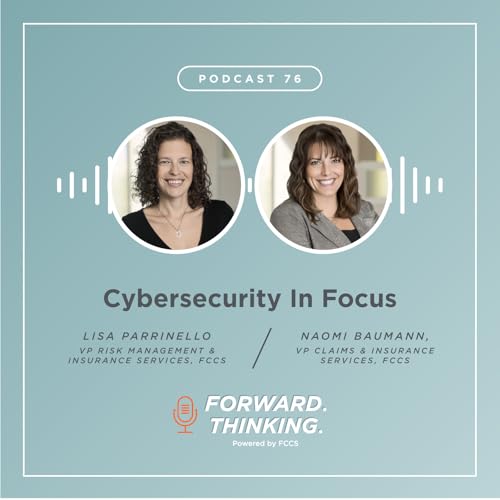
  • Cybersecurity in Focus
    Nov 13 2025
    Cyberthreats are everywhere, and while they may be inevitable, their impact can be manageable. Institutions who are prepared for cybersecurity disruptions are proactive and collaborative about their response. This episode of the Forward Thinking Podcast features FCCS SVP of Marketing and Communications Stephanie Barton, Lisa Parrinello, FCCS VP of Risk Management & Insurance Services and Naomi Baumann, FCCS VP of Claims & Insurance Services. Together they discuss how Farm Credit's Captive Insurance Company is helping institutions strengthen their cyberdefenses and what boards of directors need to know to stay ahead of the cybersecurity game. Episode Insights Include: The bigger picture of cyberthreats Cyberthreats used to be considered an IT-only problem, but that isn't the case anymore. These enterprise-wide issues demand board-level attention. Ransomware, extortion, targeted financial systems and AI deep-fake impersonations are some of today's biggest cyberthreats. The goal today isn't just protection, it's resilience. A prepared institution can respond and recover from cyberthreats no matter where they hit. The role of Farm Credit's Captive Insurance Company As the captive, they provide institutions cyber insurance and management services that go beyond what commercial insurance markets can offer. They offer tailored protection designed specifically for the unique cooperative structure of Farm Credit. Collaborative claims management proactively responds to any incident or threat of incident. Their strategic access to commercial markets allows them to purchase insurance as well. Over the years, Captive has saved an average of $50 million in insurance coverage. Consistent system-wide learning whenever instances occur. Resilience tools and strategies Resilience requires a multi-layered approach based on assents and security needs. Threat detection and response pinpoint vulnerability, endpoint detection, and tabletop exercises. Human-centric risk management and ongoing employee training are critical for cyber risk management. Employees and people are always going to be the weakest link in cybersecurity. Data protection and resilience in communications in sensitive information need to be encrypted and backup tested. Cybersecurity is not an impenetrable armor, it is an anatomy with multiple systems working together to respond and continue operating in a culture of proactive risk management. The pivotal role of the board Directors need to prioritize an approved annual cyber risk manual. Ongoing development and maintenance of a robust program is essential. Boards should receive quarterly reports on threats, vulnerabilities and mitigation actions. Cyber oversight needs to be integrated into business technology planning. FCA should be notified within 36 hours of any cyber incident. The culture of cybersecurity Institutions build resilience when everyone is involved. Third party oversight and engagement with cyber-focused legal counsel is crucial. Most breeches don't happen in bad systems, they happen when good people let down their guard. Muscle memory kicks in when crisis hits, but only when preparation has occurred. Ultimately, cybersecurity is everyone's business. This podcast is powered by FCCS. Resources Connect with Lisa Parrinello — Lisa Parrinello Connect with Naomi Baumann — Naomi Baumann Get in touch info@fccsconsulting.com "The goal isn't just protection – it's resilience." — Naomi Baumann "The Captive provides consistent system-wide learning whenever instances occur." — Lisa Parrinello "Human-centric risk management and ongoing employee training are critical for cyber risk management." — Naomi Baumann "Employees and people are always going to be the weakest link in cybersecurity." — Naomi Baumann "Even without a deep technical knowledge, boards can strengthen resilience by asking the right questions and staying engaged." — Lisa Parrinello "Institutions build resilience when everyone is involved." — Naomi Baumann Resilience is just as much about people as it is about systems." — Naomi Baumann
    Show More Show Less
    23 mins
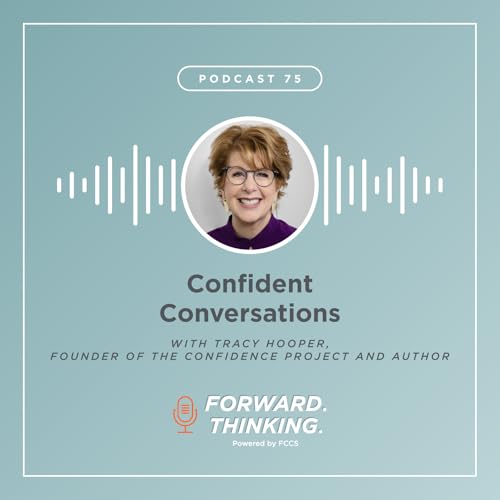
  • Confident Conversations
    Oct 17 2025

    How strong are your conversation skills? Whether you are stepping into a boardroom, attending a networking event, or connecting with coworkers over coffee, the way you show up in conversations matters. This episode of the Forward Thinking Podcast features FCCS SVP of Marketing and Communications Stephanie Barton and Tracy Hooper, founder of the Confidence Project and author of The NOW Hello. Their conversation is filled with practical tips, personal stories, and the small language shifts that make a big difference in how we connect with others.

    Episode Insights Include:

    Why do conversations feel so hard?

    • Anxiety around conversations is common and natural.

    • When we focus too much on ourselves, we are unable to focus on the other person.

    • Conversations should not be about you, but about the other person.

    • Shift into curiosity mode – what can you learn? How can you make them comfortable?

    Techniques to start a conversation

    • Before you enter any room, strike a power pose.

    • "I'm going to meet some interesting people today, and this is going to be fun."

    • Start with a compliment or a connection you have.

    • State something that you know about them or their company.

    • Compliment a person's character or trait rather than their looks.

    • Use the magic words – what, how, and tell me more.

    • The Golden Rule – treat everyone as if they are the most important thing in the room.

    Tips for Introverts

    • If you're not energized by meeting people, prepare your mind in advance.

    • Don't try to meet every person in the room, select just 2 or 3 to focus on.

    • It will take energy to talk to people, so be kind to yourself in the process.

    • If you are exhausted after an event, take a nap!

    Entering an existing conversation

    • Wait for a slight pause in the conversation, then say, "May I join you?"

    • Highlight what you heard them talking about.

    • Toe-to-toe means no – a conversation between two people is not appropriate to enter.

    • Read body language to determine if the conversation is open to others.

    Help! I forgot their name

    • Don't run in the opposite direction.

    • Preempt the awkward – offer your name first.

    • Mention that they look familiar or that you do recognize them.

    • If necessary, simply say, "Help me with your name".

    • Make introductions when welcoming others into your conversation.

    • "Come join us, we were just talking about ___" and "Do you all know each other?"

    • "I'll let you all introduce yourselves."

    Politely exiting a conversation

    • The graceful dismount is a 4-step art that must be practiced.

    • 1- Say thank you for the conversation.

    • 2- Acknowledge the stories they told.

    • 3- Use a farewell phrase about the future.

    • 4- Offer a goodbye gesture.

    First impressions and body language

    • Body language is the unsung hero of successful conversations.

    • Pull your shoulders down and away from your ears.

    • Good posture speaks confidence for you before you open your mouth.

    • Practice good grooming in your appearance.

    • Dress for success – don't touch your hair or your face.

    • Check your tone of voice and slow down your words.

    • Say three sentences and a period. Then it's their turn to talk.

    • Consider what you actually want to say, and eliminate the filler words.

    This podcast is powered by FCCS.

    Resources

    Connect with Tracy Hooper — Tracy Hooper

    Get in touch

    info@fccsconsulting.com

    "Everyone's favorite thing to talk about is themselves, so let them!" — Tracy Hooper

    "Rehearse! Everyone has to practice in order to get good at anything, including conversations." — Tracy Hooper

    "If you keep curious, conversations are easier than you think." — Tracy Hooper

    "Be the person that welcomes people into a conversation." — Tracy Hooper


    "

    Show More Show Less
    41 mins
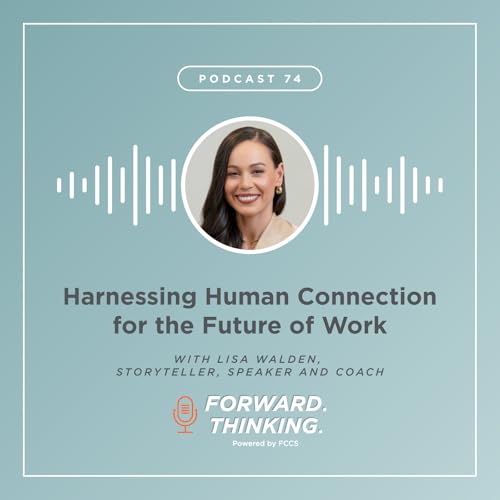
  • Harnessing Human Connection for the Future of Work
    Sep 25 2025

    Today's topic is positioned at the intersection of technology and humanity. How do we stay truly human in the age of digital intelligence? This episode of the Forward Thinking Podcast features FCCS SVP of Marketing and Communications Stephanie Barton and Lisa Waldren, storyteller, speaker and coach. She highlights what it really means to stay human, shares strategies for leaders to balance efficiency with empathy, and offers recommendations to help any team thrive in this rapidly changing workplace.

    Episode Insights Include:

    Staying human in the age of AI

    • AI is an effective tool, but it's also a distraction from the human element of work.

    • We can acknowledge the presence of AI while also maintaining connection and creativity.

    • Building relationships is hard work that can't be ignored.

    • Relationships are increasing in urgency as opportunities for connection continue to decrease.

    • Studies show that Gen Z doesn't actually want to be online 100% of the time.

    Is AI going to replace or amplify my role?

    • Efficiency and human connection have to be carefully balanced in today's digital world.

    • AI is designed to free up your time so you can be more human.

    • The hardest part of being at work is working with other humans, but that is also the most essential component of work.

    • When used correctly, AI can help build strong human relationships at work.

    Risks of leaning too heavily on technology

    • Leaders who rely too heavily on technology risk not nurturing the human side of work.

    • AI is a tool, but when leaders use it as a crutch, things start falling apart.

    • Overreliance on AI shuts down parts of the brain in just a short amount of time.

    • Happy accidents of innovation can't happen with AI.

    • AI offers a confirmation bias, which limits creativity.

    Utilizing AI to strengthen human connection

    • The 70/20/10 model includes people, process and technology.

    • AI should be used to free up time for connecting with people.

    • Leaders need to remain intentional about building culture through rituals.

    • AI should be employed as a smart assistant.

    • Human creativity needs to remain top priority.

    • Staying curious is an essential element of success now and in the future.

    Practical advice to leaders

    • Self compassion is a critical component of success.

    • Leaders need to remember that they will not change everything, but micro-moves are still considered progress.

    • Read communications out loud and with the assumption that others are cheering you on.

    • Having an open door to feedback is not enough – solicit specific feedback regularly.

    • What's the rumor? What does your team want you to know? What am I missing?

    • Consider how you are soliciting feedback in a safe environment.

    • Different is not inherently wrong. Stay curious about change.

    This podcast is powered by FCCS.

    Resources

    Connect with Lisa Waldren — Lisa Waldren

    Get in touch

    info@fccsconsulting.com

    "We can acknowledge the presence of AI while also maintaining connection and creativity." — Lisa Waldren

    "AI is designed to free up your time so you can be more human." — Lisa Waldren

    "AI is a tool, but when leaders use it as a crutch, things start falling apart." — Lisa Waldren


    "Different is not inherently wrong. Stay curious about change." — Lisa Waldren

    Show More Show Less
    49 mins
  • Shared Ownership, Shared Accountability
    Sep 5 2025

    In today's dynamic lending environment, meeting client needs requires more than individual excellence; it demands shared ownership and accountability across every level of the organization. This episode of the Forward Thinking Podcast features FCCS VP of Marketing and Communications Stephanie Barton and Mike Evans, author and speaker on leadership, and speaker at the upcoming Sales Leaders Conference. He shares insights into building resilient, accountable and high-performing teams in an increasingly complex and demanding landscape, and what leaders can do to increase accountability on their teams.

    Episode Insights Include:

    Drivers behind the demand for increased agility

    • Peak-performing organizations know that accountability and leadership are essential.

    • Excelling in 'future work' requires the fast, flexible and agile will succeed.

    • Those who are unwilling to adapt will find themselves increasingly vulnerable.

    Common obstacles that impede accountability

    • Are you an accountable person? Do you need to see more accountability in your team or organization?

    • If we consider ourselves accountable, why do we still demand more accountability from others?

    • 100 people will give you 100 different definitions of accountability. How can it be standardized?

    • Many organizations have a generally negative definition of accountability.

    • If accountability is viewed as a negative, people will resist embracing it.

    Redefining accountability

    • What percentage of leaders believe that they communicate well?

    • What percentage of teams believe that their leaders communicate?

    • How can the gap between these two numbers be decreased in effective ways?

    • Define meaningful, measurable, and memorable goals to improve results.

    Nurturing a culture of accountability

    • The 20 best practices will help employees clearly understand where they need improvement.

    • Leaders need to model best practices first.

    • Teams need to see a behavior in their leaders before they will take it on themselves.

    • Best practices must be integrated into daily routines.

    • Accountability, collaboration and mindsets are essential to thriving in today's competitive landscape.

    The impact of AI in today's competitive landscape

    • A variety of futurists and global leaders weigh in on the change that AI will bring.

    • How will your company stand out when competing with all-knowing machines?

    • Curiosity is an essential key to standing out.

    First steps for leaders to encourage accountability

    • What your team sees you do is what they will do.

    • Does your team have the resources necessary to keep learning?

    • If you're not listening to your team, don't expect commitment from them.

    • Leaders need to develop these skills in themselves first.

    • You can't make anyone else more accountable.

    • Watch for warning signs that accountability is not taking place.

    • Create a culture that is more focused on results than activity.

    • Remain open to the perspectives of others.

    This podcast is powered by FCCS.

    Resources

    Connect with Mike Evans — Mike Evans

    Get in touch

    info@fccsconsulting.com

    "Those who are unwilling to adapt will find themselves vulnerable and at the mercy of the competition." — Mike Evans

    "We may think that we see ourselves as doing things really well when it comes to accountability, but we don't see where we're dropping the ball." — Mike Evans

    "When leader communication is crystal clear, people will surprise you with their ingenuity." — Mike Evans

    "When people can see the why, they will astound you with their ability to become engaged, collaborative, innovative and creative." — Mike Evans

    "Leaders can't expect anyone else to change their behavior unless they demonstrate it first." — Mike Evans

    "The white waters of change are not going to calm anytime soon. If anything, they are going to become more turbulent." — Mike Evans

    "What we've done in the past cannot be relied upon to get us where we need to be in the future." — Mike Evans

    Show More Show Less
    39 mins
  • Tom Truitt's Leadership Journey
    Aug 22 2025

    Forward thinking leaders know that fostering innovation, developing company culture and effective communication always starts at the top. This episode of the Forward Thinking Podcast features FCCS VP of Marketing and Communications Stephanie Barton and Tom Truitt, CEO of Horizon Farm Credit and winner of the FCCS 2024 Accelerator of the Year Award. Together, they define acceleration in the face of organizational change, consider what it takes to foster innovation from the top down, and discuss some of the valuable leadership lessons that Tom has learned over the years. He shares the importance of communication, the value of always keeping the why in mind, and the forward-thinking challenge that he poses for leaders today as well as in the future.

    Episode Insights Include:

    The spirit of growth and innovation

    • At Horizon, implementing processes and technology is all about adding value.

    • Focusing on the success of people is their core initiative.

    • Ask yourself – why should people want to do business with our company?

    • The go-to-market strategy will continue to change and require effective storytelling.

    Defining acceleration in the face of organizational change

    • The customers and market that companies are facing today is different from before.

    • Customers are more demanding than ever, and expect exceptional service.

    • Barriers when trying to accelerate change include complacency and risk-aversion.

    • AI is an additional acceleration that companies are working to navigate.

    Valuable leadership lessons

    • Tom has learned that not everyone is like him. Every person in an organization is on their own journey.

    • Everyone has different motivators, and each staff member deserves a personalized development plan.

    • Mentors play a critical role in career success.

    Fostering innovation from the top down

    • Communication is key in any success in life.

    • Getting any company moving forward requires communicating a vision.

    • Connect the dots from the work that you do to how it improves your customer's experience.

    • Communication takes consistent care and feeding every day.

    Overcoming challenges in leadership

    • Management changes, mergers and technology all create challenges.

    • Change allows opportunities to reset the vision.

    • Staying focused is easier when you see the wins.

    Collaboration in the acceleration of progress

    • Identify the benefits of each person's expertise.

    • Silo-busting is critical at every level, as is building internal trust.

    • Bringing the value down to the family farm is essential.

    • Understanding the why will benefit every level of the organization.

    Creating culture

    • Fundamentally, culture represents how you treat each other and your customers.

    • Failing fast will help minimize the fear of failure.

    • Resources and time are essential to successful cultivation of culture.

    • Spend just as much time in the back office as you do in the front office.

    This podcast is powered by FCCS.

    Resources

    Connect with Tom Truitt — Tom Truitt

    Get in touch

    info@fccsconsulting.com

    "The biggest luxury we have is our success." — Tom Truitt

    "Everyone is not like me. Everyone is on their own journey." — Tom Truitt

    "Getting your company moving forward is all about communicating that vision." — Tom Truitt

    "Communication takes consistent care and feeding every day." — Tom Truitt

    "Change allows opportunities to reset the vision." — Tom Truitt

    Show More Show Less
    39 mins
  • Tech Myths Blocking Digital Collaboration
    Jul 24 2025

    From cloud confusion to AI overload, tech myths can hold teams back from working smarter, faster and more securely. This episode of the Forward Thinking Podcast features FCCS VP of Marketing and Communications Stephanie Barton and Egnyte Banking and Credit Practice Lead Charlotte Li. Together they dive into the world of digital transformation and unpack some of the most common – and costly – misconceptions. Whether you're leading a team or just trying to keep up with the myriad of changing tools, this conversation conquers the myths and offers the facts you need to make clear and confident technology decisions for your organization.

    Episode Insights Include:

    The myth of digital collaboration

    • Collaboration myth #1 – Collaboration means email and video communication.

    • Collaboration is at the heart of every business.

    • Effective collaboration extends beyond verbal and written communications.

    • Digital collaboration can be divided into four areas – communication, content, workflows, and governance.

    • Smarter collaboration tools can enhance secure realtime workflow.

    • Simplifying the tech stack may be the answer to smarter collaboration.

    Collaboration to enhance the customer experience

    • Collaboration myth #2 – The customer experience is a job for the support team.

    • Today's end-to-end customer experience looks vastly different from that of the past.

    • Relationships matter, but the customer experience starts before someone picks up the phone.

    • What is the customer's first introduction to your brand?

    • The customer experience is really a series of micro-experiences that are shaping the customer's perception of your company.

    • Back office teams affects the customer experience more than they realize.

    Handling unstructured data, cybersecurity, and the cloud

    • Collaboration myth #3 – We don't have unstructured data problems.

    • Unstructured data refers to any data that doesn't live in a database.

    • Unmet regulatory requirements and security vulnerabilities are at risk with unstructured data.

    • Collaboration myth #4 – Cybersecurity is the IT department's problem.

    • Human behavior is the biggest vulnerability to an organization, so every human needs to play a role in increasing security.

    • Collaboration myth #5 – The cloud isn't secure.

    • It's not the location of your data that defines security, it's the controls around it.

    • There are clear benefits to utilizing the cloud verses on-prem.

    • Cloud data storage increases visibility and oversight.

    The role of AI in your organization

    • AI can't do everything, but it can do a lot of good in a credit or loan workplace.

    • Look at low-risk, high-impact areas first, most likely found in the back office.

    • Employee engagement can be increased by delegating to AI.

    • AI is not meant to replace humans, and should not be used to make final lending decisions.

    • AI will not be able to replace personal networking and relationship building.

    • Start with tools that you already have and grow from there.

    • Integration and consolidation are far more critical than the overloaded tech stack.

    This podcast is powered by FCCS.

    Resources

    Connect with Charlotte Li — Charlotte Li

    Get in touch

    info@fccsconsulting.com

    "Collaboration is at the heart of every business." — Charlotte Li

    "Communication is just one slice of collaboration." — Charlotte Li

    "Smarter collaboration is all about making information flow securely and in real time." — Charlotte Li

    "The customer experience is really a series of micro-experiences that are shaping the customer's perception of your company." — Charlotte Li

    Show More Show Less
    38 mins
  • Expanding Capacity with AI: A Conversation with Tom Morrison
    Jul 10 2025
    In this special episode recorded live at the 2025 FCCS Learning Conference, host Stephanie Barton, SVP of Marketing and Communications for FCCS sits down with keynote speaker Tom Morrison to explore the role of Artificial Intelligence (AI) in modern organizations—and how leaders can harness it to expand capacity, not replace people. "As leaders, we need to focus on sharpening the uniquely human skills that matter most—strategic thinking, relationship building, and emotional intelligence. Let AI handle the tactical, repetitive tasks so we can devote more time and energy to the work that truly drives connection and impact." — Stephanie Barton, SVP of Marketing and Communications, FCCS Tom shares his perspective on the power and promise of AI in transforming the way we work, offering real-world examples of how it can eliminate tedious tasks, unlock bandwidth, and help individuals and teams focus more on strategy, creativity, and human connection. "Humans have an unmatched ability to apply common sense, adapt to change, and build meaningful relationships—skills AI simply can't replicate. Let technology handle the repetitive, administrative work so you can focus on what truly matters: connecting with people and driving impact." — Tom Morrison, Life Coach, Consultant, and Author Key Highlights: AI as a Capacity Multiplier Tom explains why AI should be viewed as a tool to expand human potential—not as a threat to jobs. Using AI for the Everyday and Extraordinary From helping parents plan birthday parties to assisting CFOs in analyzing complex data sets, AI can simplify life and business. Debunking AI Myths Common fears around AI—like job displacement and misuse—are addressed, with advice on how to navigate them proactively. Human Skills Still Matter Despite advances in technology, AI lacks empathy, creativity, and common sense—skills humans will always bring to the table. Practical First Steps Tom encourages listeners to subscribe to ChatGPT and start experimenting daily—whether it's writing emails, planning meetings, or preparing for tough conversations. The Future of Work and Leadership The conversation wraps up with insights on how AI will evolve in the next five years and why staying curious and adaptable is key for leaders and organizations alike. Resources Mentioned: Tom Morrison's Blog – Explore posts on association growth and leadership. AssociationStrong Podcast – Tom's podcast focused on member engagement and association innovation. PropFuel – Technology for associations to enhance member communication. Betty Bot AI – A closed AI model designed for associations, supporting 140+ languages. Forward Thinking Advice from Tom Morrison: "Don't wait. Get the $20 paid version of ChatGPT and start using it every day. Use it to save time, spark ideas, and focus on what really matters—relationships, strategy, and growth."
    Show More Show Less
    24 mins