Episodes

  • PTSD: The Lie We've Been Told
    Jun 18 2026

    Why Trauma Survivors Aren't The People You Should Fear

    In this episode of The Dreadful Truth, Rudy takes a deep psychological look at Post-Traumatic Stress Disorder (PTSD) and challenges one of society's most persistent myths: that trauma survivors are inherently dangerous.

    Rather than exploring the Hollywood version of PTSD, this episode examines the clinical reality behind trauma, hypervigilance, memory, survival, and the constant sense of dread that many survivors carry long after the original danger has passed.

    Drawing from modern psychology and neuroscience, Rudy explains how trauma alters the brain's threat detection systems, why the nervous system struggles to distinguish between past and present danger, and how an overactive survival response can transform everyday life into an exhausting state of constant alertness.

    This is not a discussion about weakness.

    It is a discussion about adaptation.

    Topics Covered

    What PTSD Really Is

    Why PTSD is not simply a disorder of memory and why many psychologists view it primarily as a disorder of threat detection.

    Fear vs. Dread

    Understanding the critical difference between fear, which has a clear object, and dread, which is the persistent expectation that catastrophe is approaching even when no threat is visible.

    The Brain Under Trauma

    A look at the roles of:

    • The Amygdala
    • The Hippocampus
    • The Prefrontal Cortex

    And how trauma changes the relationship between them.

    Hypervigilance Explained

    Why constantly scanning exits, watching crowds, and remaining alert is not aggression—it is survival behavior that refuses to shut off.

    Combat Veterans and PTSD

    How military training and combat experiences reshape assumptions about safety, predictability, and danger.

    Trauma Beyond War

    Exploring PTSD resulting from:

    • Childhood abuse
    • Sexual assault
    • Domestic violence
    • Violent crime
    • Medical trauma
    • Severe accidents
    • Natural disasters

    Why Sleep Becomes Difficult

    The relationship between trauma, nightmares, sleep disruption, and a nervous system that refuses to stand down.

    The Science of Traumatic Memory

    Why traumatic memories are often stored as fragments, sensations, sounds, smells, and emotions rather than complete narratives.

    The Loss of Existential Innocence

    How trauma permanently changes a person's understanding of life, danger, and human behavior.

    Why Society Fears Trauma Survivors

    Examining the uncomfortable reality that trauma survivors often remind others of truths they would rather avoid.

    Healing and Recovery

    An overview of evidence-based treatments including:

    • Cognitive Processing Therapy (CPT)
    • Prolonged Exposure Therapy (PE)
    • Eye Movement Desensitization and Reprocessing (EMDR)

    And how neuroplasticity allows healing without forgetting.

    Key Takeaway

    PTSD is not evidence that someone is broken.

    It is evidence that the human brain learned exactly what it was designed to learn in the face of overwhelming danger.

    The tragedy of PTSD is not that the brain adapted.

    The tragedy is what it had to adapt to.

    Memorable Quote

    "The danger ended. The alarm did not."

    Another Quote Worth Thinking About

    "Stop asking why survivors can't let go of the past. Ask instead why their nervous system still believes the past is about to happen again."

    #PTSD
    #Trauma
    #MentalHealth
    #Psychology
    #TraumaRecovery
    #MentalHealthAwareness
    #TheDreadfulTruth
    #Podcast
    #PodcastLife
    #PsychologyPodcast

    Listen & Subscribe

    The Dreadful Truth explores the darker realities of psychology, human behavior, trauma, crime, fear, dread, and the uncomfortable truths that shape our lives.

    If you enjoyed this episode, please subscribe, leave a review, and share it with someone who wants a deeper understanding of the human mind.

    Show More Show Less
    15 mins
  • Why Most People Never Commit Murder
    Jun 12 2026

    Rudy explores the psychological and emotional barriers that prevent people from committing murder, emphasizing the role of dread and self-awareness. This episode delves into human nature, morality, and the power of imagination in shaping behavior.

    Keywords

    psychology, morality, fear, dread, human behavior, self-awareness, crime, conscience, imagination, psychology of murder

    Key Topics

    • The difference between fear and dread in human psychology
    • How imagination influences moral decisions
    • The role of self-awareness and conscience in preventing crime
    • The impact of memory and guilt on behavior
    • The societal importance of imagination in maintaining civilization

    Takeaways

    • Most people think fear of punishment stops crime, but dread of self-awareness may be more powerful.
    • Humans are capable of imagining terrible consequences, which acts as a safeguard.
    • Memory and guilt can weigh heavily, preventing people from acting on harmful impulses.
    • Most individuals avoid murder not out of fear of prison, but because they fear becoming the kind of person who commits it.
    • Imagination and self-awareness are crucial in maintaining moral boundaries.

    Sound Bites

    • "Nothing. And that's what fascinated me."
    • "Your brain can manufacture dread on its own."
    • "Most people avoid murder because they're afraid of becoming the kind of person who could commit one."

    Chapters

    00:00
    The Dark Thoughts We All Have

    02:26
    Fear vs. Dread: Understanding Human Restraint

    05:45
    The Weight of Conscience and Memory

    08:50
    Imagination as a Safeguard Against Violence

    Show More Show Less
    10 mins
  • Why We Hunt Ghosts
    Jun 6 2026

    There is a moment that happens in almost every paranormal television show.

    The lights go out. The cameras switch to night vision. A noise echoes down a hallway. Then suddenly a grown adult is sprinting through a supposedly haunted building as if a velociraptor just kicked in the door.

    But why?

    This week on The Dreadful Truth, Rudy takes a deep dive into one of the most overlooked aspects of paranormal television—not whether ghosts exist, but why fear itself has become the real product being sold.

    From the mystery-driven documentaries of the 1970s to the adrenaline-fueled ghost hunting shows that dominated cable television, we examine how paranormal entertainment evolved from asking questions to manufacturing emotional reactions. What changed? Was it technology? Ratings? Human psychology? Or was fear always the point?

    Along the way, Rudy explores:

    • Why uncertainty is one of the most powerful forces in human psychology.
    • How imagination often creates more fear than any monster ever could.
    • Why ghost stories endure across cultures and throughout history.
    • The role technology played in the rise of modern paranormal investigation.
    • How television transformed investigators into performers.
    • Whether the golden age of ghost hunting television has already passed.
    • Why social media and podcasting may have replaced traditional paranormal programming.
    • The fascinating connection between ghost stories, grief, memory, regret, and the human need for meaning.

    This episode also examines a deeper question:

    What if ghost stories aren't really about ghosts at all?

    What if they are stories about us?

    About the things we can't let go of. The mistakes that follow us. The memories that refuse to stay buried. The questions that haunt every generation regardless of technology, religion, culture, or belief system.

    Whether you're a skeptic, a believer, a paranormal investigator, or simply someone fascinated by the unknown, this episode explores the psychology behind our obsession with mysteries and why the supernatural continues to captivate us despite centuries of unanswered questions.

    In This Episode

    • The evolution of paranormal television
    • Fear as entertainment
    • Why audiences crave uncertainty
    • The psychology of haunted locations
    • Television versus genuine investigation
    • The rise and fall of ghost hunting shows
    • The future of paranormal content
    • Psychological ghosts versus supernatural ghosts
    • Humanity's oldest unanswered question: What happens after death?

    The Dreadful Truth

    Perhaps we aren't really searching for ghosts.

    Perhaps we're searching for reassurance.

    Reassurance that death is not the end. Reassurance that the people we've lost still exist somewhere. Reassurance that consciousness continues beyond the final breath.

    Because beneath every haunted house, every EVP recording, every shadow figure, every investigation, and every ghost story ever told lies the same question humanity has been asking since the beginning:

    What happens next?

    🎙️ The Dreadful Truth with Rudy Stankowitz
    Available wherever you listen to podcasts.

    #GhostHunting #Paranormal #TheDreadfulTruth #HauntedPlaces #PsychologyOfFear

    Show More Show Less
    19 mins
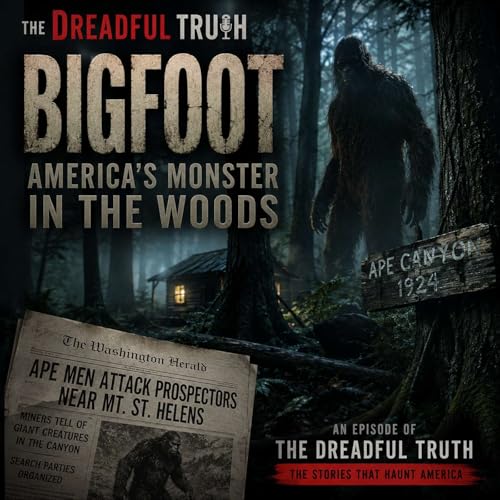
  • Bigfoot: America’s Monster in the Woods
    May 30 2026

    Before the internet. Before shaky cellphone videos. Before conspiracy forums and paranormal television…

    America already had a monster.

    Not hidden in castles.
    Not buried beneath ancient ruins.
    But standing somewhere beyond the tree line.

    In this chilling episode of The Dreadful Truth, Rudy Stankowitz descends into the psychological terror surrounding America’s most enduring wilderness legend: Bigfoot. Inspired by the haunting atmosphere of The Legend of Boggy Creek and backed by real newspaper accounts, this episode explores how generations of witnesses transformed an unexplained creature into a national obsession.

    From the Arkansas Wildman sightings of the 1800s…
    To the violent Ape Canyon encounter near Mount St. Helens…
    To the terror surrounding the Folk Monster in the swamps of Arkansas…

    This episode examines how fear spread not through proof — but through emotion, isolation, and dread.

    Why do stories of giant creatures in the woods continue surviving decade after decade?
    Why does the human nervous system become hyper-alert in deep wilderness?
    Why do partially seen figures terrify us more than visible threats?
    And why do even skeptics become uneasy alone in the forest after midnight?

    Blending psychological analysis, folklore, cinema history, wilderness fear, and real newspaper hysteria, this episode explores how Bigfoot became something larger than a creature.

    A mirror of America’s oldest fear:

    That somewhere beyond the reach of civilization…
    something may still be watching from the darkness.

    This is not an episode about proving Bigfoot exists.

    It is an episode about why the legend refuses to die.

    Turn the lights down.
    Put your headphones on.
    And don’t listen alone.

    Because once the woods begin breathing outside your window…
    your imagination may do the rest.

    And that… is the dreadful truth.

    Show More Show Less
    22 mins
  • Declassified UAP Files
    May 23 2026

    In this episode of The Dreadful Truth, host Rudy Dreadful digs through twenty-seven pages of newly released declassified U.S. government UFO and UAP files and asks the question nobody seems willing to answer honestly: Is this disclosure… or controlled uncertainty?

    From Cold War flying saucer investigations and FBI interview reports to modern military sensor encounters over the Persian Gulf, Greece, Syria, Iraq, and the East China Sea, Rudy breaks down what these documents actually say — and what they carefully avoid saying. The deeper he goes into the archive, the more one word keeps surfacing:

    Unresolved.

    This episode explores the shift in government language from outright ridicule to what Rudy calls “structured ambiguity.” No longer denying the existence of unidentified objects in restricted military airspace, the government now openly admits there are incidents they cannot comfortably explain away.

    Rudy examines:

    • The difference between “unidentified” and “extraterrestrial”
    • Why the most compelling cases are often the driest military reports
    • Orb sightings described in AARO files and why some are considered “compelling”
    • The psychology of uncertainty and public fear
    • Why massive redactions do not automatically equal alien coverups
    • Apollo mission transcripts involving strange objects seen in space
    • FBI UFO archives and what they actually represent
    • Why governments hate unanswered questions

    The episode also tears apart internet hysteria surrounding the release, challenging both hardcore skeptics and blind believers while focusing on what can actually be verified inside the documents themselves.

    If you expected easy answers, this episode is not for you.

    If you want a grounded, unsettling look at how governments handle unresolved phenomena, this may be one of the most disturbing conversations yet.

    Because maybe the frightening part isn’t aliens.

    Maybe the frightening part is that the people we assumed had answers… don’t.

    And that is the dreadful truth.

    #UAP #UFOFiles #Disclosure #AARO #TheDreadfulTruth #AlienFiles #GovernmentSecrets #UFOPodcast #ParanormalPodcast #DeclassifiedDocuments

    Show More Show Less
    13 mins
  • The Government Admitted the Unknown Exists… But Still Has No Answers
    May 16 2026

    Tonight’s episode dives deep into the modern evolution of the UAP conversation — not through conspiracy theories, but through official government documents, declassified Cold War records, NASA mission reports, congressional pressure, and the growing psychological effect of unresolved uncertainty. Rudy Dreadful traces the shift from ridicule and denial to permanent institutional acknowledgment, examining how agencies like A A R O, the National Archives, Congress, and the Department of Defense have quietly built an ongoing infrastructure around unidentified anomalous phenomena. From the 1953 Robertson Panel to the Gemini 4 astronaut sighting, from satellite flaring explanations to declassification bottlenecks, this episode explores the uncomfortable reality that the U.S. government is no longer denying the existence of unexplained cases — while simultaneously admitting it still lacks complete answers.

    The episode also examines the darker psychological side of disclosure culture. Rudy breaks down how prolonged uncertainty affects the human mind, why unresolved mysteries generate dread instead of fear, and how official acknowledgment without official resolution creates a low-level pressure that lingers beneath modern life. The story of Paul Bennewitz serves as a chilling warning about the intersection of secrecy, obsession, disinformation, and mental collapse, while the South Haven Park incident on Long Island demonstrates how folklore, government proximity, and missing answers combine to create modern American mythology. Throughout the episode, Rudy carefully separates documented fact from speculation, emphasizing where evidence exists — and where it does not.

    Featured topics include:

    • The 1953 Robertson Panel and CIA UFO investigations
    • A A R O’s explanations involving parallax, forced perspective, and satellite flaring
    • Record Group 615 and the National Archives UAP records system
    • Congressional demands for military UAP footage releases
    • The Gemini 4 astronaut sighting involving James McDivitt
    • The psychological impact of unresolved government disclosures
    • The Paul Bennewitz case and alleged intelligence manipulation
    • The South Haven Park UFO crash legend
    • Why uncertainty itself may be the most powerful force in the entire UAP debate

    This episode is not about proving extraterrestrials exist.

    It is about what happens when a government officially acknowledges persistent unknowns… while admitting the answers remain incomplete.

    And that may be far more psychologically unsettling.

    Show More Show Less
    43 mins
  • The Annabelle Effect - Proximity Possession, Contagion Theory
    May 6 2026

    There’s something deeply unsettling about a haunted object—not because of what it does, but because of what we believe it can do. This episode dives headfirst into that space between fact, folklore, and fear, using one of the most infamous objects in paranormal history as the anchor: Annabelle doll.

    We break down the real story behind Annabelle—not the Hollywood version, but the soft, childlike Raggedy Ann doll tied to disturbing accounts from the 1970s, investigated by Ed Warren and Lorraine Warren. Movement. Notes. Alleged harm. Not a ghost, they claimed—but something else. Something manipulating the object.

    Then we fast forward to today.

    Comedian Matt Rife and ghost hunter Elton Castee step into the legacy—not as owners, but as caretakers of the Warren collection, including Annabelle and hundreds of other artifacts. And from that? A new concept emerges:

    Proximity haunting.

    Raggedy Ann and Andy dolls placed near Annabelle. Left there. Thirty days. Then removed and sold as objects that have shared space with one of the most feared items in paranormal culture.

    So what are you really buying?

    Not possession.
    Not proof.
    But something far more powerful:

    The story.

    This episode breaks down the psychology behind it all:

    • The concept of contagion theory—the belief that objects inherit power through contact
    • Why humans assign meaning to proximity and environment
    • How fear, exclusivity, and ownership create a deeper emotional attachment
    • And how your brain begins scanning for patterns the moment that object enters your home

    Because here’s the uncomfortable truth:

    There is no verifiable evidence that these secondary dolls carry anything paranormal. Even Annabelle herself is widely regarded in academic circles as folklore.

    But that doesn’t make it harmless.

    Because something does transfer.

    Not energy.
    Not spirits.

    Belief.

    And belief is enough to change behavior, perception, and experience.

    So when the house goes quiet…
    And something shifts—just slightly…

    You won’t ask if something happened.

    You’ll ask:

    👉 Was it the doll?

    🎯 What You’ll Take Away

    • Why haunted objects hold psychological power—even without evidence
    • The difference between paranormal phenomena vs. perceived phenomena
    • How storytelling transforms ordinary objects into cultural artifacts
    • Why “The Annabelle Effect” is about the mind—not the doll

    ⚠️ Final Thought

    The danger was never in the object.

    It was always in the story.

    🔗 Explore for Yourself

    If curiosity gets the better of you…
    Visit: https://hauntedwarrenhouse.com/

    Just remember—

    If something feels off…

    Don’t call Rudy.

    🎧 Listen & Follow

    Catch The Dreadful Truth on all major platforms.
    New episodes drop weekly—usually when it’s still dark out.

    #TheDreadfulTruth #HauntedObjects #Annabelle #ParanormalPsychology #Fear

    Show More Show Less
    19 mins
  • You Don’t Leave Empty—the Lizzie Borden House
    Apr 29 2026

    Most investigations start at the house.

    This one didn’t.

    Before stepping inside the Lizzie Borden House, we went somewhere quieter first.

    The graves.

    No cameras.
    No questions.
    No attempt to provoke anything.

    Just acknowledgment.

    Because whether you believe the story or not…
    what happened here never separated itself from the place it left behind.

    And that matters more than people think.

    By the time you walk into a location like this,
    your brain isn’t neutral.

    It’s already working.

    Filling in gaps.
    Reconstructing moments.
    Turning fragments into something that feels complete.

    And that’s where the investigation actually begins.

    Not when something moves.

    Not when something responds.

    But when your awareness changes.

    Inside the house, nothing happens.

    No immediate reaction.
    No voice.
    No presence announcing itself.

    Just silence.

    And that silence doesn’t behave the way it should.

    Because your brain doesn’t accept empty space for long.

    It scans.
    It builds patterns.
    It creates meaning where there isn’t any.

    And when it can’t find something…

    it gives you something worse.

    We documented the rooms.

    The locations.

    The history tied to each space.

    Where Andrew Jackson Borden was found.
    Where Abby Borden was killed.

    Not as distant events.

    But as something your mind begins to replay… whether you want it to or not.

    We asked questions.

    We waited.

    Nothing.

    Until something did.

    A cat ball lit up.
    Movement where there shouldn’t have been any.

    But that’s not what stayed with us.

    Not really.

    Because at some point, everything gets turned off.

    No equipment.
    No voices.
    No distractions.

    Just the house.

    And that’s when it shifts.

    That moment where you stop asking:

    “Is something here?”

    And start asking:

    “Why does it feel like something knows I’m here?”

    This episode isn’t about proving anything.

    It’s about understanding what happens
    when your brain is placed in an environment it can’t fully explain.

    How quickly “nothing” stops feeling empty.

    And how easily your mind fills that space with something you can’t dismiss.

    We started at the grave out of respect.

    We ended inside the house…

    realizing something uncomfortable:

    You don’t walk into places like this to find something.

    You walk in…

    and the experience makes sure you don’t leave empty.

    ⚠️ Listener Advisory

    This episode explores psychological responses to silence, perception, and environmental awareness inside historically violent locations. Some listeners may experience heightened anxiety or unease.

    🧠 What This Episode Explores

    • Why your brain refuses to accept silence as “empty”
    • How context (history, environment, expectation) shapes perception
    • The moment awareness shifts from observation… to participation
    • Why you can feel a presence without seeing or hearing anything
    • The line between external phenomena and internal reconstruction

    🔗 Follow & Listen

    Listen on Apple Podcasts, Spotify, or wherever you get your podcasts.

    Follow Paranormal Recon for more investigations that don’t just ask what’s there

    but what it does to you.

    Show More Show Less
    13 mins