• The Everywhere Border: A podcast with Border Chronicle founders, Todd and Melissa
    Jul 2 2026

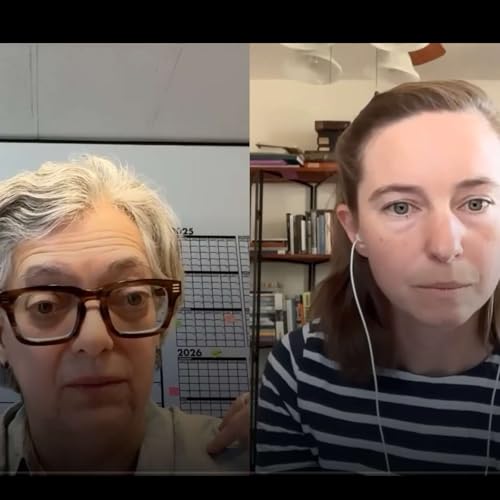
    Border Chronicle founders, Todd and Melissa, talk about how law enforcement surveillance, high-speed chases instigated by Border Patrol, unwarranted searches and seizures, and other heavy-handed policing that border communities have endured for decades has now moved into the interior of the country. They also discuss Todd’s upcoming book on climate change and the Rio Grande, and recent Border Chronicle community events in the borderlands —stay tuned for more in the Fall! And they talk about the Trump administration’s attempt to install 500 miles of buoy barriers on the Rio Grande, and walls that are currently being built through environmentally sensitive areas, sacred sites and areas where there has historically been little migration.

    Show More Show Less
    51 mins
  • The Term “Border Security” Is Completely Inaccurate: A Podcast with Jacques Servin
    Jun 11 2026

    This conversation, hosted by Todd Miller, about a great borderlands adobe brick building project is going great, until Jacques Servin—of the political performance artist trickster and activist troupe called the Yes Men—fails to grasp the meaning of the term "border security" — at least how it’s conveyed to the world by the high brass of the Department of Homeland Security. Though frustrating at first, this leads to a fruitful philosophical conversation and then a possibly paradigm-shifting one. Listen all the way to the end for a provocative proposal about next year’s Border Security Expo.

    Show More Show Less
    51 mins
  • Bringing the Border into Latin American Art: A Podcast with Gabriela Rangel
    Jun 2 2026

    Gabriela Rangel, director of Tucson’s Museum of Contemporary Art, was born and raised in Caracas, Venezuela. As a curator focusing on Latin American art, she’s worked at the Museum of Fine Arts in Houston, the Americas Society in New York City, and the Museo de Arte Latinoamericano de Buenos Aires. In the fall of 2025 she became the director of Tucson's Museum of Contemporary Art.

    In this podcast with Caroline Tracey, The Border Chronicle’s arts & culture editor, Rangel discusses how the concept of Latin American art" didn’t come from Latin America, the necessity for politics in art, and what it’s like living and working in the Sonoran Desert “This is a borderland city,” she says of Tucson. Of how the border figures into contemporary art, she adds: “Urgent matters in the repertoire of contemporary art are also crucial for the borderlands: water, ecosystems and immigration—these are issues that contemporary art has adopted in their concerns....Contemporary art is about what’s happening in the present.”

    Show More Show Less
    50 mins
  • Inside the Sentinel Surveillance Tower in Ciudad Juárez: A podcast with investigative journalist José Olivares
    May 14 2026

    José Olivares is an independent investigative journalist and audio producer who reports on immigration enforcement, U.S. operations in Latin America, and human rights. He is also the podcast editor for The Border Chronicle, and we’re lucky to have him on our team.

    In this episode, we discuss his recent investigation, “A Mexican Surveillance Giant You’ve Never Heard of Is Now Watching the U.S. Border,” conducted for the independent nonprofit outlets Rest of World and Type Investigations. José’s investigation focuses on the Torre Centinela, or Sentinel Tower, which is nearing completion in Ciudad Juárez, Chihuahua. This massive 20-story surveillance tower is truly dystopian and stands as the tallest structure in the region, overlooking both El Paso and Ciudad Juárez.

    José toured the tower and examined thousands of government records related to Seguritech, the corporation overseeing the project. He found that surveillance in the borderlands is rapidly growing, often with little oversight, and that intelligence from the Sentinel Tower is being shared among Texas and U.S. federal law enforcement agencies. In Ciudad Juárez, which has faced violence for the past two decades, residents are voluntarily connecting their home security cameras to the Sentinel system with the promise of increased safety. But is it working? Listen to the podcast to find out!

    Additionally, José explores the recent scandal involving two CIA agents who died during an anti-drug operation with state law enforcement in Chihuahua, which led to the resignation of the state’s attorney general.

    Listen to the Border Chronicle podcast, wherever you get your podcasts.

    Show More Show Less
    46 mins
  • Inside the “National Defense Areas”: A Podcast with Investigative Reporters Sonner Kehrt and David Roza
    Apr 30 2026

    In January 2025, the Trump administration declared a national emergency at the southern border and directed the military to take control of large expanses of the border, which include major cities like El Paso, McAllen, and Brownsville, and designate them as “National Defense Areas”. In a recent Border Chronicle investigation “A War Zone: Minus the War” with the nonprofit The War Horse, which serves military communities, we examined the impact this is having on border residents, the types of military surveillance and hardware being rolled out in the national defense zones, and the impact these zones are having on the military and migration at the border, including federal prosecutors attempting to charge migrants for trespassing.

    For this discussion, I joined Sonner Kehrt an investigative reporter with The War Horse, and David Roza, an independent journalist, who covers the U.S. military to talk about our collaboration, and catch you up on more recent military developments, including the Davis-Monthan Air Force base in Tucson hosting Space Force Guardians and Fort Huachuca near Sierra Vista, Arizona, which is developing a new mission for U.S. Space Force, whose somewhat bizarre official song— yes, this is real— you can listen to here.

    Show More Show Less
    1 hr and 13 mins
  • What’s Wrong with Mexico’s Right Wing? A Conversation with Alex González Ormerod
    Apr 16 2026

    When Alex González Ormerod, editor of the Mexico Political Economist, started researching his book about the Mexican right wing, he found an odd pattern: many of his interviewees didn’t identify as part of the Right. They called themselves liberals. But “liberal” was also the term used by Andrés Manuel López Obrador, then the country’s left-wing president, to describe himself. For González Ormerod, it was a problem that Mexico’s democracy didn’t encompass the full political spectrum. He went on to title his 2025 book La derecha no existe (pero ahí está): Guía para entender su fracaso y su futuro en México [The Right doesn’t exist (but it’s there): A guide for understanding its failure and its future in Mexico]. The book is in part a history of the Mexican Right’s failures, and in part an argument for why a recovery of the Right would benefit the country’s democracy. He contends that this is important even for those who consider themselves staunchly on the Left. In this podcast, Caroline Tracey speaks with Alex about the history of the PAN party, including its odd and sometimes unhappy marriage of Catholics and businessmen, and about his arguments concerning the future of democracy in Mexico.

    Show More Show Less
    1 hr and 4 mins
  • Running through Borders: A Podcast with Amy Juan
    Apr 9 2026

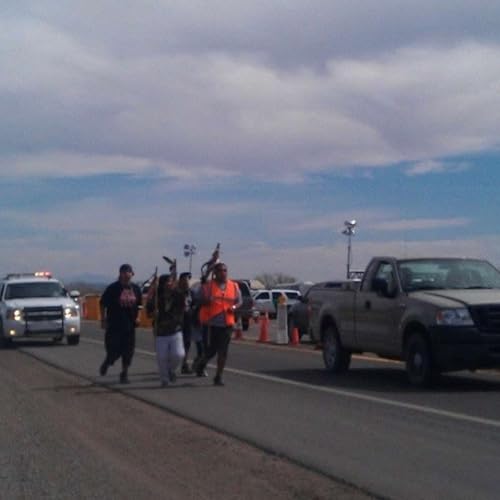
    Resistance can take many forms. One of them, as Amy Juan of the Tohono O’odham explains here, is for people to come together to run in unity, prayer, and witness across traditional O’odham land, crisscrossing the U.S.-Mexico border. The annual Unity Run has taken place since 1995 with the purpose of “reinstating the tradition of running and carrying prayers,” which “unites us in respectful observance of preserving and healing our history, language, and culture,” according to the Native American Advancement Foundation.

    Amy serves as the administrative manager of the San Xavier Co-op Farm. She was the first guest we interviewed on the Border Chronicle podcast, in September 2021. We also had an in-depth conversation with her after the Border Patrol’s killing of Tohono O’odham member Raymond Mattia. Conversations with Amy are always rich with insight and perspective, and this one is no exception.

    Amy says that the Unity Run, which took place in March, offers a good example of O’odham resilience:

    The way that we’re able to adapt to different things good or bad, when it comes to our responsibilities in carrying out these traditions and these ceremonies and different things, and making sure it continues because there are worries from our elders that we’re going far away from who we are. But when there are things like this, and we see there are little kids speaking the language, there are people still telling the stories, there are people who know the history. Those things are all important because they give us the strength we need to resist the border.

    This resistance may be directed, as Amy explains, against the possible construction of a physical border wall on the Nation. But its lessons can also be carried to any part of the country where the Border Patrol and ICE are operating.

    Show More Show Less
    1 hr and 19 mins
  • Telling the Stories of Urban Change in the Borderlands
    Mar 5 2026

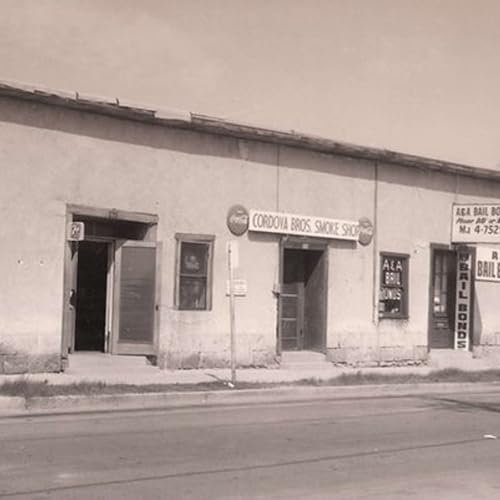
    For Lydia Otero, researching the history of the Southwest is personal and political. Growing up in Tucson, Arizona, their family frequented a place they called La Calle that was bustling with shops and pedestrians. The family did not own a car, so they walked there.


    Soon, the construction of I-10 through the city divided them from La Calle. Then, while Otero was living in Los Angeles working as an electrician and becoming active in LGBT+ organizing, La Calle was torn down as part of Tucson’s urban renewal initiative.


    Otero decided to become the person to tell these stories. They returned to Tucson to pursue a PhD in history at the University of Arizona, where they later worked as a professor of Mexican American studies. They are the author of four books, including: "La Calle, a history of urban renewal in Tucson"; "In the Shadow of the Freeway and L.A. Interchanges", both memoirs; and the new "Storied Property: María Cordova’s Casa", which tells the story of one woman’s resistance to urban renewal and her efforts to save what Otero calls “the most important house in Tucson.”


    For this episode of the Border Chronicle Podcast, reporter and editor Caroline Tracey is joined by Otero to discuss their life and work.

    This episode is a must-listen for anyone familiar with Tucson, Arizona and anyone interested in doing their own place-based historical research and memoir writing.

    Show More Show Less
    53 mins