• The Carter Ecosystem - Architecting the Future of Enterprise
    Jan 6 2026
    Reviewed by Dr. Reza Lankarani 🫆 , General SurgeonFounder | Surgical Pioneering Newsletter and Podcast Series Editorial Board Member | Genesis Journal of Surgery and MedicineMedical Advisory Board Member | AIGENELAB.COM An In-Depth Analysis of the Strategic and Technological Impact of Christopher Carter on Global Enterprise Software, Artificial Intelligence, and Sustainable InfrastructureThe global enterprise landscape is currently defined by a relentless drive toward digital transformation, a movement where legacy systems and modern cloud architectures must coexist to facilitate real-time decision-making. Central to the evolution of this ecosystem is Christopher Carter, a professional whose three-decade career serves as a blueprint for specialized entrepreneurship and technical innovation. As the founder of Approyo, Mugatu AI, and Charging Bunny, Carter has positioned himself at the nexus of several critical industry shifts: the migration of enterprise resource planning (ERP) systems to the cloud, the integration of predictive artificial intelligence within cybersecurity frameworks, and the decentralization of green energy through sustainable infrastructure. This report provides an exhaustive examination of Carter’s professional trajectory, the operational mechanics of his organizations, his contributions to technical literature, and the leadership philosophies that underpin his ventures in a rapidly shifting global economy.The Architectural Foundation: Education and Early Career TrajectoryThe professional narrative of Christopher Carter begins with a foundational commitment to the rigors of engineering and technology. His tenure at The Georgia Institute of Technology was the catalyst for his engagement with complex systems, providing the theoretical and practical groundwork required to navigate the high-stakes environment of enterprise software. Georgia Tech’s emphasis on technical precision and problem-solving became a defining characteristic of his subsequent career, particularly as he entered the SAP workforce during a period of significant growth for the German software giant. Following his graduation, Carter’s initial professional exposure was characterized by a blend of technical support and commercial operations. He worked within the SAP ecosystem before transitioning to a California-based startup, where he was tasked with managing day-to-day sales and marketing activities. This experience was instrumental in developing a holistic understanding of the technology sector; it required balancing the structural requirements of large-scale software with the agile, results-oriented demands of the venture-capital-backed startup world. The duality of this early career path—understanding both how technology is built and how it is sold—allowed Carter to move into multiple executive positions within the SAP ecosystem with a unique perspective on client needs and market gaps. Carter’s entrepreneurial journey was not a linear ascent but was informed by early ventures that provided essential lessons in both success and resilience. Before founding his current flagshiporganizations, he established an earlier business which he successfully scaled and eventually sold. However, this period of his life also included significant challenges, including the management of a company through bankruptcy. Far from being a deterrent, Carter characterizes the experience of bankruptcy as a formative period that sharpened his business instincts and fostered a level of resilience that would become a defining trait in his later career. This background underscores a broader entrepreneurial theme: the necessity of failure as a prerequisite for high-stakes success in the technology sector. Following the sale of his first company, Carter entered a brief period of retirement. This hiatus, however, was interrupted by the release of SAP HANA, a revolutionary in-memory database technology. Recognizing that HANA represented a fundamental shift in how data could be manipulated and utilized, Carter traveled to Germany to master the technology at its source. This deep dive into the technical core of SAP HANA provided the impetus for his return to the industry and the eventual founding of Approyo in December 2013.Approyo and the Specialization of SAP Cloud ServicesThe founding of Approyo was a strategic response to a specific market ineficiency: the broad but shallow approach of many IT consulting firms. While many providers sought to manage multiple ERP systems simultaneously, such as Oracle, Microsoft Dynamics, and ServiceNow, Carter envisioned a firm that committed solely to the SAP ecosystem. This specialization was designed to position Approyo as a "true partner" for enterprises, ofering a depth of expertise that generalist firms could not replicate.The Business Model of Targeted InnovationApproyo operates primarily as an SAP Managed Service Provider (MSP), focusing on cloud-based solutions, migrations, and continuous ...
    Show More Show Less
    5 mins
  • Top 2025 Surgery Articles Analysis by Surgical Pioneering
    Dec 29 2025
    Reviewed by Dr Reza Lankarani, General SurgeonFounder | Surgical Pioneering Newsletter and Podcast Series Editorial Board Member | Genesis Journal of Surgery and MedicineThese sources summarize prominent surgical research and academic analyses scheduled for publication in 2025, primarily from the JAMA Surgery and the British Journal of Surgery. The collection highlights technological advancements in the field, such as the use of novel fluorophores for nerve visualization and the efficacy of robotic-assisted procedures. Several clinical trials evaluate postoperative recovery strategies, comparing the performance of synthetic versus biological meshes and testing personalized prehabilitation programs for frail patients. Beyond clinical data, the documents explore historical perspectives on surgical tools, methodological guides for big-data research, and practical advice for surgeons seeking patents. Collectively, these articles establish new benchmarks for quality improvement and evidence-based standards across various minimally invasive and oncological specialties.Introduction: Question Everything You Think You Know About SurgeryMedicine is a field of constant evolution. What is considered standard practice one day can be challenged and overturned by new evidence the next. Long-held beliefs and "common sense" assumptions about what works best in the operating room are continuously put to the test by rigorous scientific research. It is through this process—the willingness to question, test, and adapt—that true progress is made.This article explores five of the most surprising, counter-intuitive, and impactful findings from top surgical journals in 2025. From the hidden risks of advanced robotics to the dramatic failure of a "natural" alternative, these studies challenge our assumptions and are actively changing the future of surgery.The Five Most Surprising Surgical Findings of 2025Finding 1: The 'Better' Robotic Surgery Has a Hidden Risk. The widespread perception of robot-assisted surgery is that it represents the safest, most advanced, and superior form of minimally invasive procedures. The precision and enhanced visualization offered by robotic platforms have made them an increasingly popular choice for a wide range of operations.However, a large international cohort study of 2,738 patients delivered a counter-intuitive finding: robot-assisted abdominal surgery was associated with a higher incidence of postoperative pulmonary complications compared to conventional laparoscopic surgery. The study identified the longer duration of the procedure under anesthesia as the primary driver of this increased risk.This finding provides a crucial piece of real-world evidence that challenges the assumed superiority of robotic platforms in every scenario. It doesn't negate the benefits of robotic surgery, but it underscores the critical importance of optimizing operative time and refining anesthetic and ventilation strategies during these longer procedures. This forces a more nuanced conversation about when and how robotic platforms should be used to ensure the best possible patient outcomes.Finding 2: The 'Natural' Choice for Hernia Repair Was a Dramatic FailureInguinal hernia repair is one of the most common surgical procedures performed worldwide. In recent years, the idea of using a "biologic" mesh derived from animal tissue has held an intuitive appeal. The logic was that a more natural, absorbable material might integrate better with the body and cause less long-term pain than a permanent synthetic mesh.The BIOLAP randomized clinical trial put this logic to a direct, head-to-head test with stunning results. In this trial, 491 patients received both mesh types and were followed closely. The study found that the biologic mesh offered no advantage in postoperative pain. More alarmingly, it resulted in a dramatically higher rate of hernia recurrence at the two-year mark—11.2% for patients with biologic mesh versus just 2.5% for those with synthetic mesh.The verdict from the medical community was decisive, as synthesized in the study's editorial commentary:These results decisively counter the hypothesized advantages of biologics, reinforcing that synthetic mesh remains the undisputed standard of care based on robust, head-to-head evidence.Finding 3: A Good Idea Isn't Enough—Execution Is EverythingThe concept of "prehabilitation" is both logical and well-intentioned: why not strengthen frail, older patients before a major operation to help them recover better afterward? This approach aims to build up a patient's physiological reserve to better withstand the stress of surgery.But does it work? The evidence from 2025 is mixed and reveals a crucial lesson. One rigorous, multicenter trial of a coach-supported, home-based program for frail older adults found that it failed to improve primary outcomes compared to usual care. In contrast, another trial that tested a personalized prehabilitation regimen found ...
    Show More Show Less
    13 mins
  • AI GeneLab Early Detection Chronic Disease
    Dec 20 2025
    Reviewed by Dr Reza Lankarani 🫆, General SurgeonFounder | Surgical Pioneering Newsletter and Podcast Series Editorial Board Member | Genesis Journal of Surgery and MedicineAI Gene Lab is an innovative medical technology initiative dedicated to enhancing the early detection of chronic illnesses through advanced artificial intelligence. By synthesizing clinical data, medical imaging, and patient lifestyle factors, the organization develops non-invasive screening tools for conditions like diabetes, heart disease, and various cancers. Their diverse portfolio features specialized software designed to predict health risks and suggest personalized treatment dosages, such as insulin levels. Led by experts in bioinformatics and data analysis, the team is currently working to validate these systems alongside clinical professionals to ensure accuracy. Ultimately, the project aims to establish a comprehensive digital health platform that streamlines diagnostics for providers and improves global patient outcomes. Through strategic partnerships, they seek to expand these predictive technologies into the broader realms of telemedicine and international healthcare.1. SummaryAI Gene Lab is an innovative organization focused on improving early detection of chronic and complex diseases through artificial intelligence. Their core mission is to empower healthcare through AI-driven predictive tools, thereby enhancing patient outcomes and easing pressures on healthcare systems. They achieve this by combining medical knowledge with AI and data analysis to provide non-invasive tools for timely diagnosis, informed treatment decisions, and meaningful insights for patients and providers. AI Gene Lab is actively seeking strategic partners, sponsors, and accelerator programs to further its product development, clinical collaborations, and navigate regulatory requirements, with an ultimate goal of global accessibility.2. Core Mission and PhilosophyAI Gene Lab identifies a critical challenge in healthcare: "Many serious conditions are often detected late, reducing treatment effectiveness." Their foundational philosophy is to address this by leveraging AI to facilitate "faster and more accurate risk assessments" through the integration of clinical, imaging, and lifestyle data. The ultimate aim is to "enhance patient outcomes and ease pressures on healthcare systems."3. Key Offerings: AI-Based Predictive ToolsAI Gene Lab's portfolio comprises several AI-based tools, developed and refined with clinical input. These tools are primarily intended for screening and risk assessment and are currently undergoing clinical validation.Diabetes Risk Predictor: This tool "Estimates diabetes risk using hybrid classical machine learning methods trained on established datasets and patient data, analyzing factors such as age, BMI, glucose, insulin, and blood pressure."Insulin Optimal Dose Predictor: Designed to support diabetes management, it "Provides personalized insulin dosing suggestions based on blood glucose, HbA1c, BMI, age, and other health indicators."Rheumatoid Arthritis Risk Tool: Utilizes "clinical symptoms and serological markers like RF and CRP to identify individuals at higher risk, aiding early specialist referral."Skin Cancer Detection AI: Analyzes "skin lesion images to highlight potential malignancies, supporting faster dermatological evaluation."Lumbar Spine Condition Detection: Interprets "MRI scans with AI to help diagnose spinal conditions more quickly, guiding timely treatment."Hybrid ECG AI+++: This comprehensive tool "Combines cardiovascular risk factors, AI-enhanced ECG data, and lifestyle inputs to assess heart disease risk and assist early intervention."4. Team and ExpertiseAI Gene Lab boasts an interdisciplinary team with expertise in computational biology, machine learning, and healthcare innovation. The organization is led by:Dr. Sargol Aminnezhad: A bioinformatics postdoctoral researcher at the University of Tehran.Ali Karami: A PhD candidate specializing in AI and data analysis at Bayreuth University, Germany.5. Future Vision and Strategic GoalsLooking forward, AI Gene Lab has ambitious plans for expansion and impact:Comprehensive Digital Health Platform: The organization aims to "develop a comprehensive digital health platform designed to assist healthcare professionals by integrating multiple disease screenings into a single, accessible system." This platform is intended to "support early detection and personalized care, helping to expand the reach of advanced digital health technologies."Global Accessibility: With the right support, AI Gene Lab plans to "extend our platform to telemedicine services, healthcare providers, and global health initiatives, making early disease detection more accessible and effective worldwide."Partnerships and Support: To achieve these goals, AI Gene Lab is actively "seeking strategic partners, sponsors, and accelerator programs to further product development, strengthen clinical ...
    Show More Show Less
    5 mins
  • Menopause Care Regulatory Issues Related Directly to Unqualified Corrupted OBGYN Physicians & Cooperations
    Dec 11 2025
    Authored by Dr Reza Lankarani, General SurgeonFounder | Surgical Pioneering Newsletter and Podcast Series Editorial Board Member | Genesis Journal of Surgery and MedicineThe 20-Year-Old Warning on Menopause Treatment Was Wrong: 4 Surprising Truths About the FDA’s Landmark Decision1.0 Introduction: The End of an Era of FearFor two decades, a single line in a drug's packaging insert shaped the health decisions of millions of women, often forcing them to endure debilitating menopausal symptoms out of fear. At the center of this concern was the FDA's "black box" warning—the strongest possible safety alert—on Hormone Replacement Therapy (HRT) products, which caused countless women and their doctors to avoid the treatment altogether.Now, in a major policy reversal, the U.S. Department of Health and Human Services (HHS) and the FDA have initiated the removal of these broad warnings. According to HHS Secretary Robert F. Kennedy Jr., the action is about "returning to evidence-based medicine" and correcting the record based on "gold-standard science." Here are the four most impactful takeaways from this landmark decision.2.0 Takeaway 1: The "Most Dangerous" Warning Was Based on Outdated ScienceA "Black Box" Warning is the FDA's strongest safety alert, designed to draw immediate attention to "serious, life-threatening, or potentially fatal adverse effects." The presence of this warning on HRT products signaled extreme danger, but the scientific basis for it was flawed.The warnings were largely based on a single study from the early 2000s, the Women's Health Initiative (WHI). Critically, this study involved older women and a hormone formulation that is no longer commonly used today. According to health officials, this led to a significant "distortion of risk" that was inappropriately generalized to the entire menopausal population.As a result, the FDA is now working with manufacturers to remove the following warnings from product labels:* Cardiovascular disease* Breast cancer* Probable dementia3.0 Takeaway 2: For HRT, Timing Is EverythingThe FDA is replacing a one-size-fits-all alarm with a more nuanced, evidence-based approach. The core scientific principle driving this new guidance is the "Timing Hypothesis," which posits that the effects of hormone therapy are heavily dependent on a woman's age and how soon she begins treatment after her last period.Experts now agree that starting HRT within this "optimal window" is the key factor that shifts the risk-benefit balance in a woman's favor. The direct, practical application of this hypothesis is the new official FDA labeled recommendation:Initiate systemic HRT within 10 years of menopause onset or before 60 years of age.4.0 Takeaway 3: Millions of Women Missed Out on Major Health BenefitsThe "climate of fear and misinformation" created by the outdated warnings had a profound real-world cost. As FDA Commissioner Marty Makary, M.D., M.P.H., stated, the consequences were far-reaching:millions of women have been denied the life-changing benefits of HRT due to a distortion of risk.According to "gold-standard science," the benefits for women who start HRT within the recommended window are significant. They include:* Reduction in All-Cause Mortality: Women may experience a lower risk of death from all causes.* Lower Risk of Cardiovascular Diseases: HRT is associated with a reduced risk of heart disease and stroke.* Reduced Risk of Bone Fractures: Timely HRT initiation helps protect bone density.* Lower Risk of Alzheimer's Disease: HRT is linked to a neuroprotective effect when initiated early.5.0 Takeaway 4: This Isn't a Blank Check—One Critical Warning RemainsThis policy change is a targeted correction, not a complete removal of all caution. The FDA is not seeking the removal of every warning associated with HRT, demonstrating a move toward a more precise understanding of risk.Specifically, the boxed warning for endometrial cancer on systemic estrogen-alone products will remain.This risk is clinically significant for women who still have a uterus. However, it is also preventable, as the risk is managed by adding progesterone to the treatment regimen. This isn't a contradiction; it's a validation of the new scientific approach. The goal isn't to declare HRT universally "safe," but to accurately define risk for specific patient profiles—the very definition of personalized medicine.6.0 Conclusion: A New Conversation About MenopauseThe FDA's decision is more than a simple label change; it's a formal repudiation of a two-decade-long public health narrative that left millions of women underserved. It signals an end to a fear-based policy and the beginning of a more nuanced approach to menopause care, aligning regulatory guidance with modern scientific consensus.As part of a broader commitment to advancing menopause care, the FDA is also expanding treatment options, approving a generic version of the common estrogen product Premarin and a new non-hormonal treatment ...
    Show More Show Less
    24 mins
  • Robotic Surgery Precision and Human Empathy
    Dec 8 2025

    Authored by Dr Reza Lankarani 🫆, General Surgeon

    Founder | Surgical Pioneering Newsletter and Podcast Series

    Editorial Board Member | Genesis Journal of Surgery and Medicine

    Robotics in Surgery: A Human-Centric Revolution

    - Summarize the core message: Robotics aren't replacing surgeons, but empowering them to achieve new heights in patient care, especially as virtual reality training makes robotic surgery more accessible to new generations of medical professionals.

    - Look ahead to the ethical considerations: equitable access to these advanced technologies, data privacy in a hyper-connected surgical environment, and the ongoing debate around the degree of robotic autonomy in critical decisions.

    - Conclude with a powerful vision: a future where the synergy of human expertise and robotic precision, augmented by cutting-edge training like virtual reality, truly elevates the standard of medical treatment for everyone.

    The Future of Surgical Synergy

    - Imagine the "dream team": surgeons leveraging robotic capabilities as advanced tools, not replacements, with AI acting as a sophisticated co-pilot providing real-time insights.

    - Explore emerging technologies: advanced haptic feedback allowing surgeons to "feel" tissue through robots, AI-powered diagnostics for pre-surgical planning, and personalized surgical pathways tailored to individual patient anatomy.

    - Discuss the evolving role of training: equipping future surgeons to master both manual dexterity and advanced robotic control, increasingly through virtual reality training simulations that replicate complex surgical scenarios.

    The Irreplaceable Human Element

    - Reassert the surgeon's ultimate role: critical judgment, adaptability to unexpected complications, ethical decision-making, and the crucial ability to interpret nuanced patient responses.

    - Showcase the "art" of surgery: the nuanced interpretation of patient data, intuition gained through years of experience, and compassionate communication that robots cannot replicate.

    - Emphasize the unique patient-surgeon bond: empathy, trust built through personal interaction, and the psychological comfort only a human can provide, even with advanced robotic tools.

    Beyond the Scalpel: What Robots Excel At

    - Unpack the "superpowers" of surgical robots: tremor elimination, 360-degree articulation, enhanced visualization, and even augmented reality overlays for critical data during surgery.

    - Dive into specific procedures transformed: prostatectomies, complex cardiac surgeries, and even micro-surgeries that were once impossible, all benefiting from robotic dexterity.

    - Highlight the data: How robotic assistance demonstrably improves surgical outcomes in measurable ways, showing clearer pathways to better patient care.

    The Dawn of Robotic Precision

    - Witness the incredible journey: from early, clunky prototypes to today's sleek surgical robots like the Da Vinci XI, now with enhanced haptic feedback.

    - Explore the immediate benefits: micron-level precision, reduced incisions, and faster patient recovery times, directly benefiting from advanced robotic capabilities.

    - Tease the "but": Are we losing something vital in this quest for mechanical perfection, or are we unlocking new human potential?

    In Summary: The optimal future is not a fully automated OR, but a collaborative cognitive ecosystem, where the surgeon's judgment, experience, and empathy are amplified by a robot's precision and an AI's analytical support. The goal is a synergistic partnership that maximizes patient safety, surgeon well-being, and healthcare system efficiency.

    To access additional details, please refer to the Surgical Pioneering Podcast Series application available at the following link:

    https://Surgicalpioneer.codeadx.me


    Get full access to Reza Lankarani at lankarani.substack.com/subscribe
    Show More Show Less
    12 mins
  • SynerFuse ULE: Pioneering the Future of Spine Surgery
    Dec 1 2025
    It's based on review by;Dr Reza Lankarani 🫆 , General SurgeonFounder | @Surgical Pioneering Newsletter and Podcast Series Editorial Board Member | @Genesis Journal of Surgery and Medicine--------------------------------------------------------------------------------1. Introduction: A Leader in Modern NeurosurgeryWith a distinguished career spanning 11 to 20 years since earning his medical degree from the University of Chicago's Pritzker School of Medicine, Dr. Rohan Lall has leveraged his extensive clinical expertise to address fundamental challenges in spine surgery. He is affiliated with M Health Fairview University of Minnesota Medical Center and M Health Fairview Southdale Hospital, and holds the strategic leadership role of Chief Medical Officer at SynerFuse, the company developing the innovative procedure bearing its name.Core Areas of Expertise• Robotic and Minimally Invasive Surgery• Complex Spinal Surgery (including conditions like spinal fusion, stenosis, and spondylosis)• Brain and Spinal Tumor Surgery• Skull Base and Pituitary Tumor SurgeryBeyond his exceptional clinical skills, Dr. Lall is an innovator who is actively involved in the development of new technologies, most notably his groundbreaking work on a new procedure to treat chronic back pain.2. The SynerFuse Innovation: A New Hope for Chronic Back Pain​🌟 Overview of the SynerFuse ULE™ Procedure​The SynerFuse ULE™ (Ultra Low Energy) Therapy is an innovative, integrated surgical approach designed to treat chronic low back and leg pain, which is often unaddressed by traditional spinal fusion alone. ​Integrated Solution: The patented procedure, formally known as Electric Transforaminal Lumbar Interbody Fusion™ (e-TLIF™), combines two treatments into a single surgery: ​Spinal Fusion (e.g., TLIF): To decompress, stabilize, and reconstruct the spine.​Neuromodulation (Direct Nerve Stimulation): To address residual neuropathic pain by altering how the nerve perceives pain. ​How it Works: During the spinal fusion surgery, the surgeon implants the fusion hardware and, in the same single incision, places multi-channel electrical leads onto the affected nerves (specifically targeting the Dorsal Root Ganglion - DRG, in some cases). These leads are connected to an implantable pulse generator (NeuroFuse® System). ​Goal: The primary goal is to provide preemptive, non-narcotic pain management immediately following spinal fusion, aiming to reduce chronic neuropathic pain and the need for long-term opioid use. Neuropathic pain can occur in up to 40-50% of patients after traditional spinal fusion, even if the fusion is successful. ​Dr. Rohan Lall's Role: Dr. Rohan Lall, a neurosurgeon, has been a key figure in the proof-of-concept study for this procedure at M Health Fairview/University of Minnesota, performing one of the first solo SynerFuse implants in a two-level spinal fusion patient. ​Current Status: The procedure has completed an initial proof-of-concept study to evaluate its safety and feasibility. The company is now designing and building the NeuroFuse® System in preparation for a larger pivotal clinical trial toward FDA approval. A significant challenge in spinal surgery is the chronic low back and leg pain that can persist even after a successful spinal fusion procedure. The SynerFuse procedure was developed to address this very problem, offering a new approach for patients whose discomfort continues after traditional surgeries.2.1. A Dual-Action ApproachThe SynerFuse® e-TLIF™ procedure, a form of Ultra Low Energy (ULE™) Therapy, is an innovative technique that combines two powerful therapies into a single, integrated treatment: conventional spinal fusion surgery and targeted nerve stimulation (a practice known as neuromodulation). The goal is to address pain at its source by fundamentally altering the nerve’s ability to transmit pain signals to the brain.2.2. Dr. Lall's Pioneering RoleDr. Lall has been central to the development and implementation of this new technology. His specific contributions are a testament to his leadership in the field:1. Served as an investigator for the SynerFuse Proof of Concept trial.2. Pioneered the e-TLIF procedure.3. Performed the world’s first solo SynerFuse e-TLIF procedure.4. Completed the first-ever 2-level procedure.2.3. Patient Impact and Future OutlookThis procedure represents a significant advancement in patient-centric care, although it is still in its early stages of evaluation.Patient Benefits & ExperienceCurrent Status & OutlookSmartphone Control: Patients can control nerve stimulation.Promising Initial Results: Early data shows significant benefit.Significant Pain Reduction: Reported by early trial participants.Limited Study Group: The procedure has been performed on a limited number of patients.Improved Quality of Life without Opioid Dependence.Long-Term Evaluation: Long-term effectiveness is still being actively studied.This pioneering procedure ...
    Show More Show Less
    13 mins
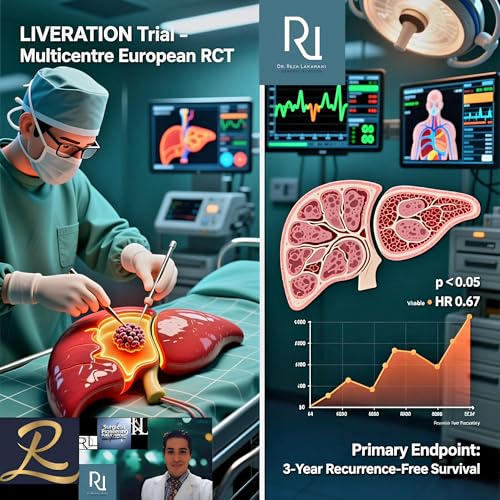
  • Liveration Trial: A Multicentre European Randomised Study on Radiofrequency Margin Coagulation and Its Impact on Oncological Outcomes Post Liver Surgery
    Nov 26 2025
    Reviewed by Dr Reza Lankarani, General SurgeonFounder | Surgical Pioneering Newsletter and Podcast Series Editorial Board Member | Genesis Journal of Surgery and Medicine- Published online: 13 October 2025 - Citation: Luque Villalobos E et al. BMJ Open 2025;15:e100518.1. OverviewThe LIVERATION trial is a prospective, international, multicentre, single-blind, parallel-group, randomised clinical trial (RCT) funded by the Horizon Europe Programme (Grant 101104360). It aims to determine whether additional margin coagulation (AMC)—using approved radiofrequency (RF) devices (e.g., Coolingbis®, Aquamantys®)—reduces local recurrence (LR) after liver resection for colorectal liver metastases (CRLM) and hepatocellular carcinoma (HCC).- Design: 1:1 randomisation across 24 centres in 7 European countries.- Sample size: 698 patients (518 CRLM, 180 HCC), powered to detect absolute reductions in LR of 6.9% (CRLM: 10.2% → 3.3%) and 15.5% (HCC: 20% → 4.5%).- Primary endpoint: Incidence of LR within 3 years, centrally reviewed on standardized imaging.- Secondary endpoints: Overall survival (OS), disease-free survival (DFS), cancer-specific survival, complications (Clavien-Dindo/CCI), and quality of life (EORTC QLQ-C30/HCC18).- Follow-up: 30/90 days, then annually up to 3 years.- Trial registration: NCT05492136.The trial builds on earlier retrospective work by the same group, notably Villamonte et al. (2022) , which reported reduced LR with AMC, and Quesada et al. (2017) and Sui et al. (2019) , showing promising signals for RF-assisted transection and Aquamantys®, respectively.--- 2. Critical Assessment: Strengths and Weaknesses ✅ Strengths ⚠️ Weaknesses / Limitations--- 3. Comparative Analysis with Recent LiteratureBelow is a comparison of key AMC/RF-related studies: - LR rate (%) by intervention type: - Conventional resection (historical): ~10–20% (CRLM), ~20% (HCC) 1,28 - RF-assisted transection (Quesada): ~6.7% (CRLM) - Aquamantys® margin treatment (Sui): ~7.6% (HCC) - AMC (Villamonte): ~7.5% (mixed) - LIVERATION (target): 3.3% (CRLM), 4.5% (HCC) — most ambitious reduction yet proposed. ✅ LIVERATION’s contribution: - First trial powered to detect clinically meaningful LR reduction. - First to include both CRLM and HCC under unified AMC hypothesis. - First to integrate PROs + health economics into core endpoints.--- 4. Final Commentary 🔬 Expert OpinionThe LIVERATION trial represents a landmark effort in surgical oncology. It addresses a long-standing clinical dilemma: What to do when achieving a wide resection margin (1 cm) is anatomically or physiologically impossible? Surgeons have intuitively applied RF to "sterilise" narrow margins—but until now, lacked level I evidence.If positive, LIVERATION could redefine R0 criteria, shifting focus from anatomic width to functional adequacy of the margin—potentially expanding resectability for borderline cases. 🔮 Future Directions- If AMC proves effective, next steps include: - Biomarker studies (e.g., ctDNA clearance post-AMC). - Integration with neoadjuvant systemic therapy. - Expansion to intraoperative ablation of satellite lesions.- If negative, it will prompt re-evaluation of RF’s biological mechanism—e.g., whether thermal depth is insufficient to eradicate microscopic extensions.--- 🌟 Plain-Language Summary for Patients & General Public "When liver cancer—or cancer that has spread to the liver from the colon—is removed by surgery, doctors aim to cut out not just the visible tumour, but also a rim of healthy tissue around it. This 'safety margin' helps prevent the cancer from coming back right where it was removed (called local recurrence). But sometimes, due to the tumour’s location near vital blood vessels or because the remaining liver would be too small, surgeons can’t safely leave a wide margin. This study tests a simple idea: after the tumour is removed, gently 'seal' the cut surface of the liver with a special tool that uses controlled heat (like a precise, safe microwave). Think of it as giving the edge an extra layer of protection. The goal is to see whether this extra step can lower the chance of the cancer returning at the surgery site—especially for patients where a wide margin isn’t possible. Over 690 patients across Europe are helping answer this question. If it works, this could become a new standard step in liver surgery—helping more patients stay cancer-free, without needing more complex operations."---To access additional details, please refer to the Surgical Pioneering Podcast Series application available at the following link:https://Surgicalpioneer.codeadx.me Get full access to Reza Lankarani at lankarani.substack.com/subscribe
    Show More Show Less
    10 mins
  • Laparoscopic Sleeve Gastrectomy Outcomes in Adolescents
    Nov 21 2025
    Reviewed by Dr Reza Lankarani, General SurgeonFounder | Surgical Pioneering Newsletter and Podcast SeriesEditorial Board Member | Genesis Journal of Surgery and MedicineSummaryThis document synthesizes findings from a five-year retrospective study on the long-term outcomes of Laparoscopic Sleeve Gastrectomy (LSG) in adolescents. The research confirms that LSG is a highly effective intervention, yielding substantial and sustained weight loss and significant resolution of metabolic comorbidities. However, the study highlights that a notable subset of patients (23.5%) experiences clinically significant weight regain (WR), a phenomenon linked to both anatomical and hormonal factors.The core mechanism investigated is the post-surgical trajectory of the incretin hormones GLP-1 and GIP. While all patients experience an initial beneficial surge in these hormones, this effect attenuates over time. In patients with WR, this hormonal decline is more pronounced and occurs earlier. The study demonstrates that a one-year course of the GLP-1 receptor agonist semaglutide can partially reverse WR, increasing mean excess weight loss from 34% to 68% in affected patients. Key indicators associated with WR include larger remnant gastric volumes and attenuated postprandial hormone responses. These findings underscore the potential for a more tailored post-LSG management approach, incorporating hormonal surveillance and timely pharmacological intervention to optimize long-term success.--------------------------------------------------------------------------------1. Study Overview and MethodologyThe research provides a comprehensive five-year analysis of adolescent outcomes following Laparoscopic Sleeve Gastrectomy (LSG), focusing on weight loss, hormonal changes, and the impact of pharmacological intervention for weight regain.* Objective: To evaluate the long-term weight and incretin hormone (GLP-1 and GIP) trajectories after LSG in adolescents and to assess the impact of adjunctive semaglutide therapy for patients experiencing weight regain.* Cohort Profile: The study included 264 adolescents who completed a five-year follow-up. * Mean Age: 15.04 ± 2.99 years * Sex Distribution: 73.86% female, 26.14% male * Mean Preoperative Weight: 132.8 ± 9.67 kg * Mean Preoperative BMI: 48.38 ± 6.95 kg/m²* Procedure and Follow-up: All patients underwent a standardized LSG procedure with antral resection. Postoperative evaluations, including anthropometric and hormonal measurements, were conducted annually for five years. The study maintained a high retention rate of 90.1%.* Weight Regain (WR) Definition: Clinically significant WR was defined as a weight gain of ≥10% from the nadir (lowest) postoperative weight, combined with less than 50% excess weight loss (%EWL) at 18 months post-surgery.* Pharmacological Intervention: 62 patients (23.48%) met the WR criteria. At the start of the third postoperative year (and upon reaching at least 18 years of age), they received a 12-month course of semaglutide, followed by a three-month tapering period.2. Core Findings: Weight Loss and Metabolic OutcomesLSG produced significant and sustained improvements in weight and metabolic health over the five-year period, although a pattern of peak weight loss followed by partial regain was observed.Weight Trajectory and Gastric VolumeWeight loss peaked at two years post-surgery, followed by a gradual and slight regain. Concurrently, the volume of the remnant stomach progressively increased over the five years.Comorbidity ResolutionThe procedure led to profound and statistically significant improvements in major obesity-related comorbidities, with benefits sustained and enhanced throughout the five-year follow-up.Comorbidity Preoperative Prevalence 5-Year PrevalenceType 2 Diabetes 36.36% 5.68%Hypertension 48.86% 6.82%Dyslipidemia 43.18% 4.55%Furthermore, mean HbA1c levels improved significantly, falling from a baseline of 7.12% to 5.36% at year five.3. The Role of Incretin Hormones (GLP-1 & GIP)The study provides novel insights into the hormonal adaptations following LSG and their association with weight management.* Overall Hormonal Response: The entire cohort exhibited a marked post-operative surge in both GLP-1 and GIP levels. This enhancement was highest during the first postoperative year, particularly at 30 and 60 minutes after a meal. Following this peak, the hormonal response gradually diminished over time, with levels approaching preoperative values by the fifth year.* Hormonal Patterns in Weight Regain: The subgroup of patients who experienced clinically significant WR demonstrated a similar initial hormonal surge. However, the subsequent decline in their GLP-1 and GIP levels was more pronounced and occurred earlier compared to patients who maintained their weight loss.* Comparative Analysis: A direct comparison between the WR and non-WR groups revealed that at year three, WR patients had significantly lower postprandial GLP-1 and GIP levels. ...
    Show More Show Less
    10 mins