• Listening in on Animals
    Jun 25 2026

    2026 UCLA Environmental Science grad Grace Miller joins LENS podcast producer Liv Slaby to discuss animal vocalizations, and why humans should listen. Drawing on her fieldwork across the Colombian Amazon, the Arctic Ocean, and the mangroves of Costa Rica, Miller walks listeners through the rich and often surprising world of bioacoustics—from fish that grunt and purr to complex beluga songs. Miller supplements her own experience and expertise by interviewing Todd Brinkman (wildlife ecologist), Kate Stafford (Associate Professor, Oregon State University Marine Mammal Institute), Ben Sullender (spatial ecologist, Audubon Alaska), and Morgan Ziegenhorn (acoustic ecologist). The conversation explores what is gained when we decenter visuality in the ways that we understand the species around us, and what is lost when anthropogenic noise drowns out more-than-human soundscapes.

    Music: “Concrete River” by Elori Saxl. Courtesy of Western Vinyl. Used by permission.

    Cover image: Grace Miller doing fieldwork in Alaska.

    Interviews provided by Audubon Alaska.

    Field Recordings:

    Yahuarcaca Lakes recordings provided by Marisol Valverde Montellano, Ph.D. candidate in Cornell’s Ecology and Evolutionary Biology Department.

    Arctic Ocean recordings provided by Kate Stafford from her research, obtained through Audubon Alaska.

    Crocodile and caiman recordings from Grace Miller’s research.

    Outboard engine and humpback whale song recording provided by NPS.

    Show More Show Less
    46 mins
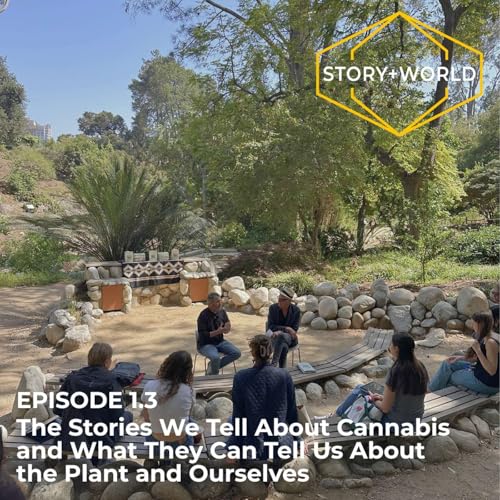
  • The Stories We Tell About Cannabis and What They Can Tell Us About the Plant and Ourselves
    May 20 2026

    Anthropologist and author Jeremy Narby joins Jon Christensen, Director of LENS, for a book talk recorded live in the UCLA Mathias Botanical Garden. Delving into Narby's new work, The Book of Cannabis: The History and Future of the Plant and the Drug, the conversation traces cannabis from its role as one of the world’s first domesticated plants (used for fiber, food, oil, and medicine), to the colonial and prohibitionist narratives that recast it as a dangerous and heavily politicized substance, to our current era of patchy liberalization and legalization worldwide. Narby and Christensen discuss how cannabis can play a role as an indicator species of its environment because of its ability to hyperaccumulate environmental contaminants. Their conversation also explores the plant’s future in an era of increasing potency, regulation, and commercialization, alongside a broader inquiry into plant sentience, agency, and narratives.

    Music: “Concrete River” by Elori Saxl. Courtesy of Western Vinyl. Used by permission.

    Show More Show Less
    45 mins
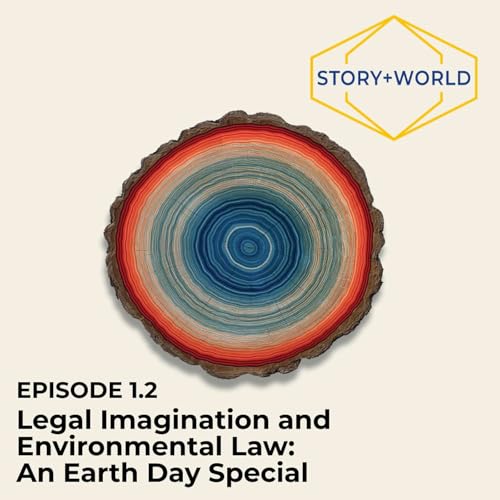
  • Legal Imagination and Environmental Law
    Apr 21 2026

    Alejandro Camacho (Professor of Law at UCLA) joins Jon Christensen (Director of LENS) to talk about his new book Lessons for a Warming Planet: A Vital History of US Environmental Law. Their conversation traces the history of US environmental law from the colonial period to the present and explores what practical lessons might be learned from this history that can help us understand and address today's challenges. Camacho identifies key turning points, from the rise of property law and resource extraction to the emergence of modern environmental regulation in the twentieth century. He reflects on how environmental law has become so contested in recent decades, and what kinds of legal imagination and policy innovation might be needed to confront climate change, environmental injustice, and new technological risks.

    Music: “Concrete River” by Elori Saxl. Courtesy of Western Vinyl. Used by permission.

    Cover image: Jonathan Fieber, «Klima Baumscheibe»

    Show More Show Less
    39 mins