Episodes

  • David Suzuki: David's Community Party
    Nov 28 2025

    An Invitation from David Suzuki to Connect, Commit, Compete, and Correct Our Way to Sustainability Within and Beyond Our Generation


    David Suzuki has spent a lifetime translating the living world for the rest of us, first as a young geneticist, then as a groundbreaking broadcaster, and later as a public advocate for ecological responsibility. In this rich and personal conversation, he looks back with the perspective of someone who has watched societies, institutions, and ecosystems evolve over more than 80 years.

    Suzuki speaks candidly with co-hosts Kai Chan and Sam Blackwell about the moments that shaped him: learning early lessons from internment camps in BC; discovering, through the Haida Nation, what it means to live in relationship with place; navigating the constraints of media and politics; and finding clarity in scientific insights like planetary boundaries. Through stories of risking his CBC career, of being mentored and mentoring others, of grassroots movements rising and fading, he paints a portrait of environmental change as both a systems problem and a deeply human one.

    The heart of this conversation emerges when Suzuki describes where he finds meaning today. It’s in communities coming together—from seniors taking to the streets on climate action to “Doug’s Winter Party” inspiring gatherings across North America. It’s in watching his grandchildren rediscover the magic of forests and shorelines. And it’s in the humble but profound act of trying: trying to care, trying to act, trying to help communities endure what comes next.

    Suzuki doesn't offer easy optimism, nor does he retreat into despair. Instead, he grounds hope in relationship: with the land, with one another, and with future generations who might yet inherit a world worth fighting for.


    Show More Show Less
    1 hr and 10 mins
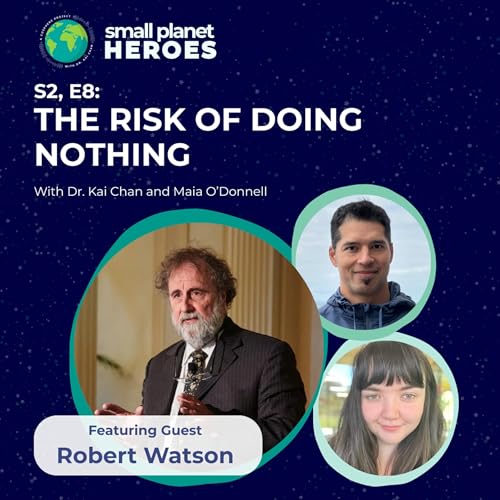
  • Bob Watson: The Risks of Doing Nothing
    Nov 26 2025

    Bob Watson Discusses Large-Scale Systems Transformation, His Life in Science Assessment, and the Need for Trust in an Anti-Science Era

    Global science assessment goes far beyond crunching numbers and tallying up abstract human impacts: it is about convincing the world to act. Recalling his life in leadership with co-hosts Kai Chan (professor and Canada Research Chair at UBC) and Maia O’Donnell (UBC graduate in soil science and producer of the Small Planet Heroes podcast), Robert (Bob) Watson narrates his path from early training in atmospheric chemistry to high-stakes positions at NASA, the White House, and chairing organizations like the Intergovernmental Panel on Climate Change (IPCC) and the Intergovernmental Science-Policy Platform on Biodiversity and Ecosystem Services (IPBES). Bob reveals how speaking up for the environment means rising above politics. Yet confronting so many unknowns, including corruption and intense disparities in power, access, and resources, is often at great personal cost.

    In the quest for transformative systems change, Bob reminds us that seeking a consensus while tackling massive problems means making sense of a lot of noise. Much of it is negative, even paralyzing. He asks us instead to answer, whether with our phones, wallets, or simply more open minds, the call for a more grounded, evidence-based, and mindful future for everyone.


    Show More Show Less
    1 hr
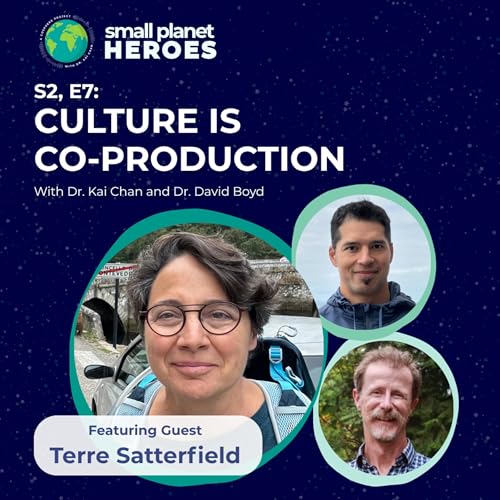
  • Terre Satterfield: Culture is a Co-Production
    Nov 17 2025

    Terre Satterfield Explores Queasy Questions, the Quest for Environmental Justice, and the Narrative Imperative in Ecosystems Services Research

    Queasy questions shake us. It’s that nervous strangeness of surveying the very limits of what we know. For Dr. Terre Satterfield, anthropologist and environmental social scientist, that queasiness has fueled a career bridging critical and constructive perspectives. In this conversation with UBC colleagues and co-hosts Kai Chan (professor and Canada Research Chair) and David R. Boyd (professor and legal expert on human rights and the environment), Terre unpacks ecological justice, cultural ecosystem services, and the value of stories in reshaping how we see culture, land, and justice itself.

    Across decades of research, mentorship, and collaboration (especially with Indigenous communities), she has shown that respect is non-negotiable, that stories are truths, and that futures worth striving for are co-produced. The trio reflects on the responsibilities of scholars and the power of empathy in navigating transformative change. The result is a deeply human conversation on how to listen, learn, and lead one another toward more just and livable futures.

    *Terre gratefully acknowledges the work of Nicole Kaechele, Ph.D. Candidate at IRES, for their collaborative work on compensation. Nicole’s research centers the revitalization of Indigenous legal processes and the negotiation of compensation agreements for historical losses (read more here).


    Keep up with Terre:

    UBC Profile

    LinkedIn


    Episode Transcript, with Annotations


    Show More Show Less
    1 hr and 6 mins
  • David Boyd: Nature’s Rights are Human Fights
    Nov 7 2025

    David R. Boyd on Levering Transformative Change for a Healthy Environment from a Global Legal Perspective


    In the coastal Wild West, when laws and justice do not align, the town can summon an environmental cowboy, someone able to negotiate a way out of the hair-trigger standoff to turn towards the sun. Leaving the Alberta Rockies behind in the rearview mirror of a Greyhound bus, lawyer, academic, and frontier spirit David R. Boyd has gone on to sheriff local, national, and international courts. While fulfilling mandates for governments and non-profits alike, he has also published several influential books, partnered with Indigenous and youth activists, and advocated tirelessly for the human right to a healthy environment.

    Breaking bread with fellow hosts and UBC colleagues Kai Chan (professor and Canada Research Chair) and Clare Price (graduate student in soundscapes and urban transformation), David reminds us there is always an impetus to stand up for what’s right for nature—and for us. Whether performing site visits in the imperiled South Pacific for the UN or explaining how investing in women and girls empowers everyone, David knows that paving the way for transformative policymaking is just one avenue to changing lives for good.

    Keep up with David:

    UBC Profile

    Google Scholar


    Annotated Transcript, with Links

    Show More Show Less
    1 hr and 9 mins
  • Ingrid Waldron: Our Bodies, Our Land, Our Laws
    Oct 31 2025

    Ingrid Waldron’s Road to Racial and Environmental Justice Through Community, Law, and Collective Action

    Growing up in Montreal, young Ingrid Waldron never imagined drafting what would become this country’s first environmental justice legislation. Bill C-226 acknowledged the historical roots and lived realities of environmental racism. Deeply committed to health equity, Ingrid’s research led to her 2018 book and the award-winning documentary There’s Something in the Water. Both stressed the need for everybody to have a voice in environmental decision-making, especially when the places we call home can make us sick.

    Speaking with co-hosts Kai Chan (professor and Canada Research Chair at UBC) and Nancy Kang (professor and Canada Research Chair at the University of Manitoba), Ingrid describes her ongoing drive to challenge interlocking systems of oppression. She highlights the inspiration provided on her career path by various resistance communities, especially activist women. Together, we explore the nexus of race, gender, health, and environment; how Indigenous and racialized communities have long been denied justice in Canada; and how this new law could seed real transformation.


    There’s Something in the Water: Environmental Racism in Indigenous & Black Communities (book)

    There’s Something in the Water (documentary)

    The ENRICH Project


    Annotated Transcript, with Links

    Show More Show Less
    1 hr and 9 mins
  • Eli Enns: We are All Treaty People
    Oct 24 2025

    Eli Enns On Indigenous Conservation and Bringing Balance Back

    Conservationist Eli Enns’ voice exudes warmth, irony, and a nuanced historical awareness of what it is to live in Canada (from kanata, the Haudenosaunee word for “village”) and be Canadian today. This lively conversation, accented by personal stories from his West Coast Indigenous heritage, tackles the fine balance between rights, laws, and responsibilities when undertaking ethical stewardship of traditional lands and waters everywhere.

    By viewing all inhabitants of present-day Canada as treaty people, Eli highlights the eternal invitation within “Hishuk-ish Tsa-wak,” or the Nuu-chah-nulth phrase describing the oneness of all living and non-living things. He explains to co-hosts Kai Chan (professor and Canada Research Chair at UBC) and Maia O’Donnell (UBC graduate in soil science and producer of the Small Planet Heroes podcast) that rising together means coming to terms with colonial history. The notion of inheritance far exceeds the legacy of trauma; reconciliation is paved with both humility and resistance; and respecting nature entails multi-dimensional healing work for individuals as well as the collective.


    ISAAK Olam

    We Rise Together: Achieving Pathway to Canada Target 1 through the creation of Indigenous Protected and Conserved Areas in the spirit and practice of reconciliation.

    Tla-O-Qui-Aht First Nation

    Follow Eli on LinkedIn

    Listen to Eli on the Emerging Environments podcast


    Annotated Transcript, with Links


    Show More Show Less
    1 hr and 10 mins
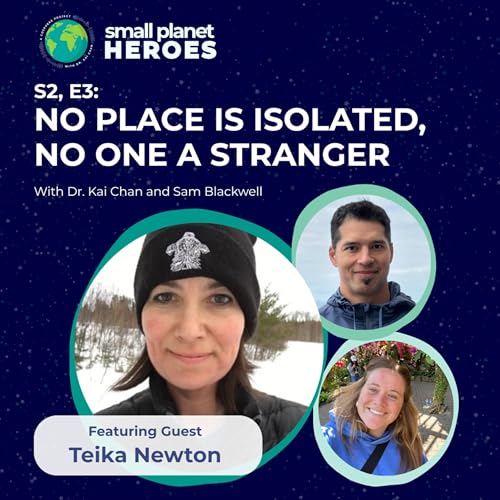
  • Teika Newton: No Place Is Isolated, No One a Stranger
    Oct 17 2025

    From a relatively isolated, “tech-less” childhood in small-town Ontario to the unglamorous frontlines of community-based environmental organizing, Teika Newton shows us the undeniable value of showing up. Whether bridging the work of researchers and activists, catalyzing multi-dimensional partnerships across disparate cultures and worldviews, or simply talking to strangers as a revolutionary act of love and trust, Teika proves how authentic relationships drive successful collaborations.

    Understanding that lasting change often happens slowly and behind the scenes, she discusses with co-hosts Kai Chan (professor and Canada Research Chair at UBC) and Sam Blackwell (UBC graduate student in urban birds, community-based science and human-nature relationships) how interconnectedness is a protean ethos, one that marries risk with responsibility and conviction with conscience. In viewing each person as an essential point of contact, Teika has transformed her modest beginnings into a living library of values that invite us all to narrate—as main characters—a shared, sustainable future.


    Connect further with Teika:

    LinkedIn

    Clean50 Award Recipient Page


    Annotated Transcript, with Links

    Show More Show Less
    1 hr and 3 mins
  • Suzanne Simard: Speaking for the Trees, Calling for Change
    Oct 10 2025

    Suzanne Simard revolutionized how we understand forests with her discovery of the “wood wide web,” the vast underground network that allows trees to communicate and cooperate. Her research showed the world that forests are not just collections of individuals but living communities bound together through resilience, resource sharing, and reciprocity.

    In this conversation with co-hosts Kai Chan (professor and Canada Research Chair at UBC) and Nancy Kang (professor and Canada Research Chair at the U of Manitoba), Suzanne shares stories from her scientific journey, the challenges of pushing against entrenched paradigms (including women’s roles in forestry), and the urgency of rethinking our relationship with the natural world. Along the way, she reflects on what forests can teach us about kinship, care, and commitment in a time of ecological crisis.


    https://suzannesimard.com/

    @SuzanneSimard: LinkedIn

    @drsuzannesimard: Instagram

    @drsuzannesimard.bsky.social: BlueSky

    @MotherTreeProject: YouTube


    Show More Show Less
    1 hr and 3 mins