Skin Anarchy cover art

Skin Anarchy

Skin Anarchy

By: Ekta et al.
Listen for free

Season's Savings | £0.99/mo for 3 months

£5.99/mo after 3 months - terms apply. Cancel monthly

Skin Anarchy is where beauty meets curiosity and science. Hosted by Dr. Ekta, this podcast dives deep into the behind-the-scenes world of beauty, uncovering the stories, trends, and innovations shaping skincare, makeup, haircare, fragrance, and more. Featuring candid conversations with industry pioneers, we explore the art and science behind beauty with passion and purpose. Join the revolution on Instagram @skincareanarchy and discover the beauty world like never before. (Not legal or medical advice, all views expressed are non-legal and non-medical opinions.)

https://skinanarchy.com/

© 2026 Skin Anarchy
Art Personal Development Personal Success Politics & Government
Episodes
  • The Art of Building Iconic Brands with Jon DiNapoli of JMD
    Oct 15 2026

    Send us Fan Mail


    Jon DiNapoli, founder of creative agency JMD and designer behind fragrances for Sabrina Carpenter, Billie Eilish, and Tommy Hilfiger, joins Skin Anarchy to unpack how a brand comes alive: where creative direction starts, why packaging now sells the product, and how to balance art, cost, and commerce.

    How did Jon DiNapoli get into beauty branding?

    Through a newspaper ad his mother circled. A graphic design graduate, he answered an Estee Lauder listing 27 years ago and was mentored by industry figure Catherine Walsh. "It's this one little push from mom that kind of catapulted this career in a direction that I'm still pushing in," he says, having worked under Walsh over 15 years before founding JMD.

    Where does creative direction for a brand start?

    With questions, not sketches. DiNapoli's first move is extracting everything he can before designing, because a brand only works if it is true to itself. "Anyone can put a brand out on the market, but it's not going to work unless it's authentic to that brand itself." A Marc Jacobs fragrance has to feel like Marc Jacobs, not like him.

    What white space led him to start JMD?

    The gap between creative talent and business know how. As a creative lead at Coty, DiNapoli sat in sales, PR, and financial meetings, learning what sells and how products get made. "There were many agencies that were amazing... but they didn't have that back end knowledge," so he built JMD to pair design with years of brand side experience.

    How important is sustainability in beauty packaging now?

    It is no longer optional. DiNapoli says clean and sustainable design has shifted from a differentiator to a baseline expectation. "It used to be you stand out if you're sustainable... now it's the price of doing business. If you're not, you fail." His team revisits even launched products, like a Clean Reserve cap moved to fully wooden construction.

    How do you design a brand that can grow?

    By building expansion in from the first bottle, so a single launch can become a franchise. With Sabrina Carpenter's Sweet Tooth, the pink chocolate bar bottle was designed to extend into flavors. "When she launched... the song Espresso, we quickly did an espresso fragrance," because the brand had legs to grow with the artist.

    What makes packaging rise above the noise?

    A clear hook and a story that reads instantly. DiNapoli treats packaging as art you want to display, and tests it ruthlessly: picture only the box on a shelf. "Is that gonna tell the story? Are they gonna know what we're trying to say? And if not, we're not doing our job right." The constant is balancing commerce against art.

    Why is packaging more important than ever?

    Because people now buy fragrance without smelling it. With digital retail and social media replacing the store counter, the bottle is the first and often only point of entry. "People are buying fragrances now without knowing what they smell like," DiNapoli says, which magnified the role of packaging.

    How do you balance packaging cost against the formula budget?

    By knowing the budget before designing anything. DiNapoli says nothing frustrates him more than a brief with no real budget, because beautiful work that runs triple the cost is pointless. "If they're three times over the budget, what's the point?" Experience lets him design within the right price world from the start.

    How does skincare branding differ from fragrance?

    Efficacy comes first, packaging second. For skincare, DiNapoli says the clinical result matters most, and the design must still tell the story without overshadowing the science. He points to the Italian brand Aquium, created by an oncologist for dry, cracked skin, where "the two came together," pairing a proven formula with elevated design.

    Listen to the full episode with Jon DiNapoli of JMD on Skin Anarchy, available wherever you get your podcasts.

    Learn more about JMD Creative

    Don’t forget to subscribe to Skin Anarchy on Apple Podcasts, Spotify, or your preferred platform.

    Reach out to us through email with any questions.

    Sign up for our newsletter!

    Shop all our episodes and products mentioned through our ShopMy Shelf!

    Support the show

    Show More Show Less
    40 mins
  • Cancer Treatment and the Skin Barrier with Dr. Barbara Paldus of Codex Labs
    Oct 12 2026
    Send us Fan MailDr. Barbara Paldus of Codex Labs joins Skin Anarchy to explain how cancer treatments affect the skin barrier and what gentle supportive care can look like. This episode is educational only, not medical advice, and everything here should be run by your oncology team first.What is the skin barrier?Not one wall, but a living defense system. Dr. Paldus describes five interconnected barriers: physical, chemical, microbial, immunological, and neurosensory. "We go from the physical to the chemical to the microbial to the immunological and to the neurosensory." Each one, she notes, affects the others.Why do cancer treatments affect the skin?Because treatments target rapidly dividing cells, and skin renews constantly. Chemotherapy, targeted therapy, immunotherapy, hormonal therapy, and radiation each hit renewing tissue differently. "Any tissue in your body that is continuously renewing itself, like your skin or your gut, will be affected," Paldus explains, which can slow repair, reduce oil, and disrupt the microbiome.What is radiation dermatitis?The skin reacting within the area exposed to radiation, from mild redness and dryness to burning, peeling, tenderness, or breakdown, usually building gradually over sessions. "It may not happen during your first treatment, but it can happen maybe on the second or the third one," Paldus says, stressing the radiation team must monitor it.What is hand foot syndrome?Redness, swelling, tingling, and pain on the palms and soles during certain treatments. Because hands and feet face the most friction, heat, and pressure, symptoms can disrupt everyday life. "They can interfere with walking, putting on your shoes, exercising, cooking," Paldus notes, advising patients to report it early.What skin symptoms during cancer treatment need urgent attentionSeveral warrant immediate care. Paldus lists rapidly spreading rashes, extensive blistering or peeling, severe pain, open or draining wounds, honey colored crusts, and fever or chills with a skin problem. "Any kind of swelling, especially facial swelling or lip and tongue swelling," plus trouble breathing, means emergency care.What does a gentle skincare routine look like during cancer treatment?As simple as possible: lukewarm water, brief showers, fragrance free cleansers that never leave skin tight, patting dry, and moisturizing within three minutes. "When you start cancer treatment, that is usually not the ideal time to experiment with multiple potent active ingredients." The keyword is monitor.Is "natural" skincare safe during cancer treatment?No, not by default. Paldus is direct that a natural label guarantees nothing, and that formulation matters more than any single word on a label. "Natural ingredients can irritate the skin, cause allergies, or interact with the treatment just as much as synthetic materials." She urges fragrance free products, patch testing on intact skin, and clearing any routine with the team.How should you manage itching during cancer treatment?Gently, and with a threshold for escalation. Mild dryness and itch can ease with moisturization, soft clothing, cool compresses, and short fingernails to limit scratching. "If it's persistent or intense, that can also be a reaction to medication," or a sign of deeper issues, Paldus cautions, meaning it needs medical evaluation.What is the one thing to remember about skin care during cancer treatment?That the skin is a system to support, not a surface to treat alone. Paldus frames supportive care as improving comfort and quality of life while staying coordinated with the oncology team. "The skin is a protective system, not a passive covering," and any worsening symptom should be assessed, never self treated.Listen to the full episode with Dr. Barbara Paldus on Skin Anarchy, available wherever you get your podcasts.Shop CODEX*This episode is educational and does not provide individual medical advice. Always consult a qualified healthcare professional regarding symptoms, skincare, diet, supplements, and treatment decisions.Don’t forget to subscribe to Skin Anarchy on Apple Podcasts, Spotify, or your preferred platform.Reach out to us through email with any questions.Sign up for our newsletter!Shop all our episodes and products mentioned through our ShopMy Shelf!*This is a sponsored collaborationSupport the show
    Show More Show Less
    35 mins
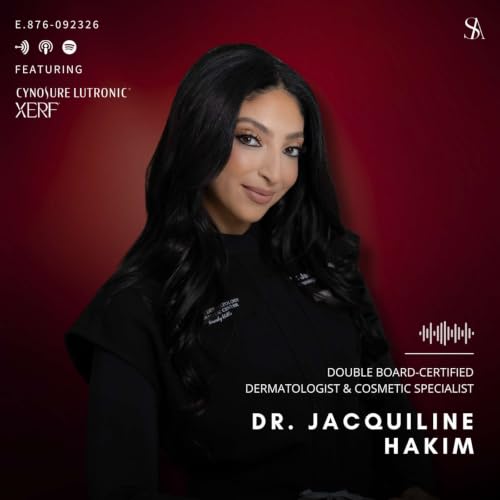
  • Precision Skin Tightening: Understanding XERF with Dr. Jacquiline Hakim
    Sep 23 2026

    Send us Fan Mail

    Double board-certified dermatologist and cosmetic specialist, Dr. Jacquiline Hakim, joins Skin Anarchy to explain what actually drives facial aging: bone loss, collagen decline, and the science of radiofrequency skin tightening, including why results take time and who to trust.

    Who is Dr. Jacquiline Hakim?

    A double board certified dermatologist and cosmetic specialist who leads Divina Dermatology in Beverly Hills. She frames aesthetics as a medical discipline first, not a trend. "It's still medicine. And I think that's such an important factor to hone in on," a lens that shapes her whole approach.

    Where does facial aging actually start?

    Deeper than the skin, at the bone. Aging happens across multiple tissue planes, with bone loss, the scaffolding, beginning in the 30s, followed by fat pads, connective tissue, and finally skin. "Aging starts all the way down to the bone." Collagen declines about 1 percent a year from the mid 20s.

    Why does your face change so suddenly in your 40s?

    Because of a sharp estrogen drop in perimenopause. Estrogen receptors in the skin help maintain collagen, so when estrogen falls, collagen does too, sometimes overnight. "I woke up one day and all of a sudden I saw this, and it can be that drastic," Hakim says, noting women can lose 30 to 40 percent of their collagen in this phase.

    How does radiofrequency work for the skin?

    By using heat and your own tissue to trigger repair. Radiofrequency delivers controlled heat that the tissue resists, setting off a collagen and elastin cascade plus some contraction for tightening. "You're creating a cascade that stimulates collagen and elastin," and modern devices heat precise layers rather than bulk heating the whole area.

    Is radiofrequency safe for skin of color?

    Yes, in trained hands and with modern cooling. The risk with melanin is post inflammatory hyperpigmentation if the wrong layer is overheated, but newer devices cool the surface as they work. "We say it's even like a colorblind treatment. It's safe for everyone," she says, crediting built in cooling for the leap in safety.

    What is XERF and what can you expect from it?

    A monopolar radiofrequency tightening device Hakim was among the first in the US to offer. It reaches multiple tissue depths at once and cools the skin with every pulse, making it safer and comfortable enough that patients fall asleep. "It's one of the safest that's currently on the market... doing multiple depths at the same time.

    How long until you see results from skin tightening?

    About two months, after an early preview. Any collagen stimulation, from energy or injectables, takes roughly two months to fully show. "It takes a true two months to see your actual endpoint," Hakim says, describing a honeymoon glow that fades before real results build. She starts most patients with two sessions.

    Why do the neck and hands age faster, and how should you treat them

    Because they have far fewer oil glands than the face, and people neglect them. Signs of aging often appear first on the neck and hands, yet most routines stop at the jaw. "Everything you do for your face you can do for your neck," she advises, extending skincare, sun protection, and treatments to both.

    When should you start aesthetic treatments, and who should you trust?

    Around the mid 20s, when collagen loss begins, and only with a qualified expert. Hakim stresses that good work is invisible and that dermatologists train for years specifically in noninvasive aesthetics. "You have to really have someone that you can trust that's going to be honest with you," including telling patients no when a trend will not age well.

    Listen to the full episode with Dr. Jacquiline Hakim on Skin Anarchy, available wherever you get your podcasts.

    Learn more about Cynosure Lutronic and XERF

    Don’t forget to subscribe to Skin Anarchy on Apple Podcasts, Spotify, or your preferred platform.

    Reach out to us through email with any questions.

    Sign up for our newsletter!

    Shop all our episodes and products mentioned through our ShopMy Shelf!

    *This is a sponsored collaboration

    Support the show

    Show More Show Less
    39 mins
adbl_web_anon_alc_button_suppression_t1
No reviews yet