Episodes

  • S.7 Ep.2: The Restoration Forester
    Feb 1 2026

    Foresters know degraded forests all too well. You’re out on a woods-walk with an enthusiastic landowner, but your eyes go straight to the poor growing stock, invasive plants, and eroded forest soils – the fingerprints of past degradation. Regardless, you set about the complex task of developing a prescription that will nudge this forest towards a brighter future. Foresters don’t always think of themselves as restorationists, but in many ways, the tools of silviculture are the tools of restoration. In this episode of SilviCast, we dive into the science and practice of forest restoration with John Stanturf, visiting professor at the Estonian University of Life Sciences and Senior Forest Restoration Specialist with InNovaSilva. With more than 30 years of experience researching forest restoration in both temperate and tropical forests around the world, John brings a global perspective to the question of what it means to restore a forest.

    Send us a text

    Show More Show Less
    1 hr and 6 mins
  • S.7 Ep.1: Morticulture
    Jan 1 2026

    A dead tree is not truly dead. As trees die, they become snags, downed logs, and eventually return to the soil as organic matter. Along this journey, they host a wide range of organisms and play essential roles in forest ecosystems. How foresters think about and manage dead trees can be just as important as how they manage living ones. In this episode of SilviCast, we explore the concept of morticulture - the intentional management of deadwood in forests. Join us for a conversation with Mark Harmon, professor emeritus in the Department of Forest Ecosystems and Society at Oregon State University. Dr. Harmon has spent decades researching tree mortality, wood decomposition, and the management of coarse woody debris in our forests.

    Send us a text

    To earn CEU/CFE credits, learn more, or interact with SilviCast, visit the uwsp.edu/SilviCast.

    Show More Show Less
    1 hr and 3 mins
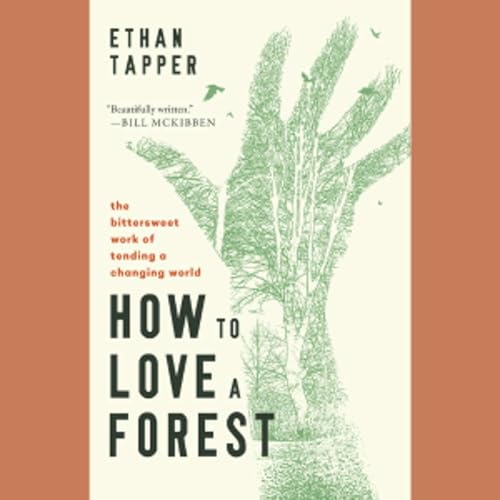
  • S.6 Ep.11: How To Love a Forest
    Dec 1 2025

    Sometime the hardest thing and the right thing are the same. It is true of relationships, and it is true of forests. In this episode, we talk with author Ethan Tapper about his new book, How to Love a Forest. A Vermont Forester, Ethan dives deep with us into what it means to love a forest as a landowner and a forester, and to work with those who may not see the potential in restoring their forest.

    Send us a text

    To earn CEU/CFE credits, learn more, or interact with SilviCast, visit the uwsp.edu/SilviCast.

    Show More Show Less
    1 hr and 1 min
  • S.6 Ep.10: Uneven by Design
    Oct 7 2025

    The legacy of the “cutover” has left much of the Lake States—and many other regions—with a dominance of even-aged forest stands. Today, both landowners and foresters increasingly consider converting these stands to uneven-aged management to achieve a range of ecological, economic, and aesthetic goals. However, the outcomes of these efforts—even after multiple stand entries—have sometimes fallen short of expectations. Significant silvicultural challenges remain in determining the most effective approaches for even- to uneven-aged conversion. To explore these challenges, we’re joined by Dr. Ralph Nyland, Distinguished Service Professor Emeritus of Silviculture at the SUNY College of Environmental Science and Forestry.

    Send us a text

    To earn CEU/CFE credits, learn more, or interact with SilviCast, visit the uwsp.edu/SilviCast.

    Show More Show Less
    50 mins
  • S.6 Ep.9: River Trees
    Sep 2 2025

    Restoring and reforesting floodplain forests is no small feat—these ecosystems are as fascinating as they are complex. While they face many of the same disturbances as upland forests, bottomland ecosystems are uniquely shaped by water. Adding to this challenge of hydrology are the profound impacts of levies, agriculture, dams, and other disturbances. In this episode of SilviCast, we dive deep into the world of bottomland forest restoration with insights from national experts at the 2025 Northeastern and Southern Forest and Conservation Nursery Meeting. Join us for an engaging panel discussion featuring Dan Dey (recently retired, USFS Northern Research Station), Andy Meier (Lead Forester, US Army Corps of Engineers – St. Paul District), and James Shelton (Manager, Arkansas Baucum State Nursery).

    Send us a text

    To earn CEU/CFE credits, learn more, or interact with SilviCast, visit the uwsp.edu/SilviCast.

    Show More Show Less
    57 mins
  • S.6 Ep. 8: Bird's Eye View
    Aug 1 2025

    Sometimes, a simple “silvicultural tweak” can make a big difference in achieving diverse forest management goals. The real challenge lies in knowing when—and how—to make those adjustments. To help with that, several states have created Forestry for the Birds guidebooks, offering practical strategies to enhance forest habitat for birds. In this episode of SilviCast, we’re joined by Christian Nelson, Lake States Coordinator for the Forest Stewards Guild, to discuss the newly released Forestry for Minnesota Birds guidebook and how it can support better habitat outcomes across the region.

    Photo Credit: Mark Schocken

    Send us a text

    To earn CEU/CFE credits, learn more, or interact with SilviCast, visit the uwsp.edu/SilviCast.

    Show More Show Less
    1 hr
  • S.6 Ep.7: Black Gold
    Jul 1 2025

    Eastern black walnut holds an almost legendary reputation as one of the most valuable timber species in central and eastern North America. A single, high-quality tree can fetch thousands of dollars—sometimes even influencing the outcome of an entire timber sale. With that level of interest, you’d think we’ve uncovered everything there is to know about this remarkable species. And while researchers and foresters have developed extensive knowledge around its silviculture and genetics, there’s still a lot to learn! In this episode of SilviCast, we delve into the silviculture of black walnut with Lenny Farlee, Extension Forester at Purdue University.

    Send us a text

    To earn CEU/CFE credits, learn more, or interact with SilviCast, visit the uwsp.edu/SilviCast.

    Show More Show Less
    1 hr and 9 mins
  • S.6 Ep.6: Landscape Change: Dynamic Forest Restoration Blocks
    Jun 1 2025

    Foresters are pretty good at stand-level silviculture. But what if we want to make changes to forest vegetation at a much larger scale? Silviculture at scale to impact landscape-level change is much trickier, whether that’s aiming for a target age-class distribution or meeting the broad habitat needs of birds. Where do we even begin? In walks the concept of Dynamic Forest Restoration Blocks, or the strategy of breaking up the landscape into manageable and biologically meaningful units where we can focus on specific forest management objectives. Join us on this episode as we talk with pioneers of this concept, Jeff Larkin, professor in the Department of Biology at Indiana University of Pennsylvania and Forest Bird Advisor with the American Bird Conservancy, and Dan Heggenstaller, North Central Regional Forester with the Pennsylvania Game Commission.

    Send us a text

    To earn CEU/CFE credits, learn more, or interact with SilviCast, visit the uwsp.edu/SilviCast.

    Show More Show Less
    1 hr and 2 mins