• #18: GLP-1s and your heart – What you need to know
    Jul 15 2026

    What you’ll learn:

    GLP-1 medications have transformed the conversation around weight loss, but their benefits may extend far beyond the number on the scale.

    In this episode, Dr. Lily Dastmalchi, a preventive cardiologist and obesity medicine specialist, discusses how GLP-1s can improve heart health, reduce the risk of heart attack and support long-term wellness. We also explore key risk factors for heart disease including obesity and menopause, who may benefit from treatment and why healthy lifestyle habits remain essential for success.

    Featuring:
    Lily Dastmalchi, DO, MA, FACC, FASPC, MSCP

    Cardiologist

    Inova Schar Heart and Vascular

    Key takeaways with chapter markers:

    • How GLP-1s improve heart health, from lowering blood pressure to A1C [1:55.895]
    • Who are typical heart patients [4:55.835]
    • What happens during a prevention screening [5:35.555]
    • Is taking a GLP-1 a lifelong commitment? [9:27.865]
    • Why GLP-1s aren’t a quick fix for weight loss [10:42.745]
    • How nutrition and exercise remain critical to long-term success [11:06.785]
    • What research shows about weight regain after stopping GLP-1 medications [13:31.015]
    • How GLP-1s impact brain chemistry and appetite regulation [14:55.505]
    • How oral GLP-1 medications may improve access to treatment [16:14.735]
    • Who are candidates for GLP-1 therapy [20:09.985]
    • Why preserving muscle mass through exercise is important during weight loss [22:19.595]

    FAQs:

    What are GLP-1 medications?

    GLP-1 medications mimic a naturally occurring hormone that helps regulate appetite, blood sugar and digestion. Some are approved for diabetes, while others are approved for chronic weight management and studies show other potential benefits.

    Are GLP-1 medications only for weight loss?

    No. Studies have shown that some GLP-1 medications can also help lower blood pressure, improve lipid disorders, reduce the risk of heart attack and stroke, and more.

    Am I a candidate for GLP-1 therapy?

    Eligibility depends on factors such as body mass index (BMI), weight-related health conditions, diabetes status and overall health. Talk to your healthcare provider to see if a GLP-1 is right for you.

    Show More Show Less
    25 mins
  • #17: Finding hope – rapid care for mental health crises
    Jun 17 2026

    What you’ll learn:

    If you or a loved one is experiencing a mental health crisis, finding the right care quickly can make all the difference.

    In this podcast, Rachel Bronsther, MD, division chief of psychiatry at Inova, discusses EmPATH – a specialized unit designed to provide rapid mental healthcare in a calming, therapeutic environment. Learn how this innovative approach is improving the experience for patients and families while connecting them to the support they need.

    Featured guest:

    Dr. Rachel Bronsther

    Division Chief of Psychiatry

    Inova

    Key takeaways with chapter markers:

    • Inova’s EmPATH unit (emergency psychiatry assessment, treatment and healing) provides dedicated care for mental health crises [0:11.07]
    • Calming, open environment, with less restrictions than a normal psychiatric unit [4:40.84]
    • Multiple therapy sessions to robust aftercare plans – what happens during an EmPATH visit [6:51.028]
    • EmPATH helps you get quicker access to follow-up care [9:59.288]
    • Partial hospitalization programs (PHP), intensive outpatient programs (IOP), and where EmPATH fits in [11:29.468]
    • How to access the EmPATH unit [12:00.54]
    • People who think they need help usually do – EmPATH meets you where you are [25:41.326]

    FAQs:


    What is EmPATH?

    EmPATH stands for emergency psychiatry assessment, treatment and healing. This innovative unit provides emergency care in a calming, therapeutic environment for adults ages 18+ who need observation-level care. EmPATH’s focus is on stabilizing, starting appropriate treatment, providing therapeutic interventions and connecting patients with ongoing outpatient mental healthcare and resources.

    How do I access EmPATH?

    Inova’s EmPATH unit is located near the Inova Fairfax Medical Campus emergency room (ER). Patients in crises should come to an Inova ER. From there, they may move to EmPATH.

    Are you or your child in crisis?

    Call, text or chat 988. It’s free, confidential and available 24/7/365. In an emergency, call 911 or go to the nearest ER.


    Show More Show Less
    17 mins
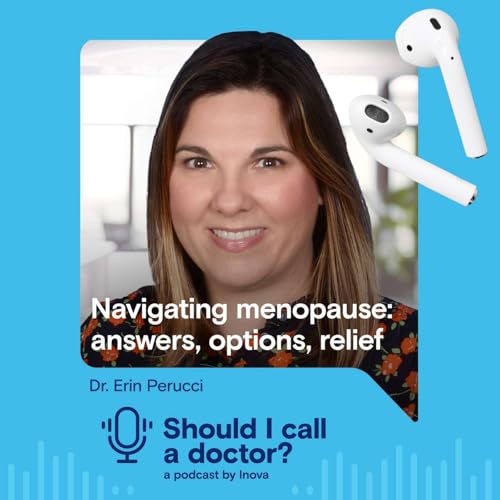
  • #16: Navigating menopause – answers, options, relief
    Apr 8 2026

    What you’ll learn:

    Night sweats, hot flashes, brain fog, cognition issues, sleep disturbances, joint aches and pains. Sound familiar? They’re all symptoms of perimenopause and menopause. Most women experience one or more, but there is relief. In this episode, Dr. Erin Perucci, OB/GYN, provides insights into symptoms and treatment options and reveals some surprising truths. Tune in for practical tips to help you navigate your changing hormones and get back to feeling like yourself again.

    Featured guest:

    Erin Perucci, MD, MSCP

    Obstetrics and Gynecology

    Inova Women’s Services

    Key takeaways and chapter markers:

    • Symptoms, night sweats to cognition issues [1:47]
    • How the Menopause Society governs science-based recommendations for care [2:55]
    • Assessing if you’re in perimenopause or menopause [5:37]
    • Why some symptoms, like heart palpitations, get overlooked [8:00]
    • Range of treatments, from lifestyle changes to newer medicine options [8:53]
    • What you need to know about supplements [10:36]
    • Nutrition and menopause [11:10]
    • Debunking old hormone therapy myths [11:44]
    • Different forms of hormone therapy, risks and benefits [15:16]
    • HRT patients can see a 60-80% reduction in symptoms in first six weeks [16:41]
    • When to seek care [17:17]

    FAQs:

    What is menopause?

    Menopause is the stage of life when a woman’s menstrual period has stopped permanently. Typically, after a menstrual period has not occurred for 12 consecutive months. This marks the end of her reproductive years. Perimenopause refers to the transitional phase leading up to menopause, during which hormonal changes occur and symptoms can start.

    How long does perimenopause last?

    Perimenopause can last for several years, typically four to eight, before menopause occurs.

    Is hormone replacement therapy (HRT) safe?

    HRT can be safe for many people. More recent research and newer types of HRT have led experts and the FDA to update their warnings. Like with any medication, it’s not a one-size-fits-all solution. There are risks and benefits based on your age and other health factors, and it’s important to discuss your options with your doctor.

    Show More Show Less
    21 mins
  • #15: Mental health check-in – kids and teens
    Mar 11 2026

    What you’ll learn:

    Is your child feeling overwhelmed by school, screens or a packed schedule? In this episode, Dr. Satish Shashidhara – division chief of child and adolescent psychiatry at Inova – shares expert insights on the most common challenges kids and teens face, from school and sports to relationships and high expectations. Learn how to support your child’s mental and social development, create an open line of communication, and recognize when they might need extra help. Tune in for practical tips to help you help your child navigate the challenges of growing up today.

    Featured guest:

    Dr. Satish Shashidhara

    Division Chief, Child and adolescent psychiatry

    Inova

    Key takeaways and chapter markers:

    • Lingering social effects of COVID-19 [5:35]
    • Being emotionally available, the best support parents can give [6:11]
    • How to set boundaries without resentment [7:23]
    • Opening lines of communication early [8:21]
    • Recognizing when additional support is needed [9:51]
    • Comprehensive outpatient support from Inova Keller Center [12:46]
    • Anxiety and depression, the most common issues [15:01]
    • Navigating the impacts of social media [26:52]
    • Top tips for parents, from giving yourself grace to open communication [33:18]

    FAQs:

    When and how should parents start conversations about mental health with their children?

    The earlier the better. Early conversation can help kids understand and manage their emotions as they grow and will help them build confidence to seek support when they need it.

    What mental health disorders can affect children?

    According to the National Institutes of Health, many mental health disorders can begin in childhood including anxiety disorders, attention-deficit/hyperactivity disorder (ADHD), depression and other mood disorders, eating disorders and post-traumatic stress disorders (PTSD).

    Are you or your child in crisis?

    If you’re thinking about suicide, are worried about a child or loved one, or would like emotional support, the Lifeline network is available 24/7 across the United States. The Lifeline is free and confidential.

    English: call 988

    Español: 1-888-628-9454

    Show More Show Less
    26 mins
  • #14: Sleep smarter – ABCs of ZZZs
    Jan 14 2026

    What you’ll learn:

    Getting a good night's sleep is super important for your health, helping your body and brain recharge. In this episode, we sit down with Dr. Eric Sklar, a board-certified neurologist who specializes in sleep and brain health. He breaks down what makes for great sleep and shares some easy tips to enhance your nightly routine for better rest. We also go over common sleep issues, like sleep apnea, and talk about sleep studies, the pros and cons of wearables and more. Tune in for practical advice and insights that can help you get those much-needed ZZZs.


    Featured guest:

    Dr. Eric Sklar

    Neurologist

    Medical Director

    Inova Sleep Disorders Program


    Key takeaways with chapter markers:

    • Why getting enough sleeps matters to your health [2:06]
    • The most common complaints related to sleep [6:16]
    • Sleep hygiene and why it matters [8:28]
    • Why insomnia is the most common sleep issue [14:47]
    • Tips for getting back to sleep in the middle of the night [17:24]
    • Common symptoms of sleep disorders, like sleep apnea [18:25]
    • Sleep studies and how they’re conducted [26:46]
    • The pros and cons of wearables [29:13]

    FAQs:


    How much sleep should I be getting?

    To ensure you are getting enough restorative sleep, aim for seven to nine hours per night and pay attention to how you feel during the day. If you often feel tired or have difficulty concentrating, consider adjusting your sleep habits or consult a healthcare professional for guidance.


    How can I improve my sleep quality?

    Practice good bedtime routines, such as sticking to a regular bedtime; relaxing 30-60 minutes before bed by reading and engaging in light stretching; avoiding all electronics while in bed, including screens; avoiding alcohol and caffeine before bed; and creating an environment conducive to sleep.


    What are common symptoms of sleep disorders?

    Daytime fatigue and sleepiness, low energy levels, waking up feeling tired, difficulty concentrating, irritability, personality changes, weight gain, reflux, and snoring are just some of the symptoms that can be the cause or result of a sleep disorder.

    Show More Show Less
    25 mins
  • #13: Brain health essentials – Alzheimer’s and dementia
    Dec 10 2025

    What you’ll learn:
    Get clear, practical guidance on Alzheimer’s and dementia – from early detection and treatment options to brain-health tips and caregiver support. In this episode, Inova’s Dr. Pauldurai, a cognitive behavioral neurologist, explains the differences between Alzheimer’s and other dementias, the latest treatments and the importance of early detection. Whether you're navigating your own health or caring for a loved one, this conversation offers support and insights for preventing and managing cognitive decline.

    Featured guest:

    Dr. Jennifer Pauldurai

    Neurologist

    Inova

    Key takeaways with chapter markers:

    • What is Alzheimer’s and how it differs from dementia [1:56]
    • How to tell the difference between normal forgetfulness and something more serious [7:28]
    • What does dementia care look like? [9:16]
    • Two new Alzheimer’s drugs, Leqembi and Kisunla™, slow progression when caught early [13:22]
    • Healthy eating and other steps you can take now to protect your brain health later [21:47]
    • The importance of vitamin D, B12 and magnesium for brain health [23:01]
    • Advice and resources for caregivers [24:48]

    FAQs


    What is Alzheimer’s disease?

    Alzheimer's disease is a progressive, neurodegenerative disease that occurs when nerve cells in the brain die. It is the most commonly diagnosed form of dementia. Symptoms include the loss of cognitive functioning, such as thinking, remembering and reasoning, and the loss of behavioral abilities.


    What causes Alzheimer’s?

    Scientists have made great progress in understanding Alzheimer’s in recent years. They don’t yet fully understand what causes the disease in most people but probable causes include age-related changes in the brain, along with genetic, health and lifestyle factors.


    Can Alzheimer’s be prevented?

    While Alzheimer’s disease cannot be definitively prevented, certain lifestyle changes may help reduce risk. A healthy diet, exercise, social engagement and mentally stimulating pursuits have all been associated with helping people stay healthy as they age and may help reduce risk of cognitive decline and Alzheimer’s.


    When should I see a doctor?

    When thinking problems or unusual behavior start to interfere with everyday activities, it’s time to talk to your doctor.

    Show More Show Less
    25 mins
  • #12: Finding lung cancer earlier – for smokers and nonsmokers
    Nov 12 2025

    What you’ll learn:

    Should smokers and nonsmokers be screened for lung cancer? Inova Schar Cancer’s Dr. Mahajan explains what you should know about lung cancer screening, your personal history and risk factors, and groundbreaking early detection and treatment options – so you can take charge of your health.

    Featured guest:

    Dr. Amit “Bobby” Mahajan,

    Medical Director, Interventional Pulmonology

    Inova Schar Cancer

    Key takeaways with chapter markers:

    • How age and smoking history guide screening [5:46-6:27]
    • Interventional pulmonology [3:31]
    • How lung cancer treatment is advancing [3:52]
    • Early-stage lung cancer does not have symptoms, making detection of lung nodules critical [4:35 – 5:13]
    • A growing number of nonsmokers are developing lung cancer. [6:59 – 7:18]
    • Those with EGFR gene mutations have a higher instance of developing lung cancer [7:30 – 8:08]
    • Those who have a family member who has had a nonsmoking lung cancer should also get screened [9:49 – 10:05]
    • Inova offers a low-cost screening option. [10:16 – 10:35]
    • In five years, over 10,000 incidental nodules were detected by Inova’s incidental lung nodule program. 1-2% were cancerous, the program helps diagnose more early stage lung cancer cases [13:30 – 15:33]
    • Mutation analysis is key to better treatment. There are seven or eight mutations that are really actionable [16:55 – 17:14]
    • Early-stage lung cancer can be treated with minimally invasive options, with exceptional survival rates. [18:02 – 18:10]
    • Inova’s incidental lung nodule detection program streamlines care and dramatically reduces the time between detection and treatment [25:55-27:47]

    FAQs

    What is lung cancer screening?

    Annual lung cancer screening uses low-dose computed tomography (LDCT) to detect cancer in its earliest, most treatable stage. LDCT technology generates cross-sectional images of the body, using less ionizing radiation than a conventional CT scan.

    Who should be screened for lung cancer?

    Annual lung cancer screening is recommended for adults ages 50 to 80 who have a 20 pack-year smoking history and currently smoke, or have quit within the past 15 years.

    Should I be screened if I have a family history of lung cancer?

    If you have a family history of lung cancer you should discuss your risk factors with your doctor to determine if screening is right for you. You can also take our online Lung Cancer Risk Assessment

    What are the benefits of lung cancer screening?

    Screening can detect lung cancer at an earlier stage when it is more treatable. Leading to higher survival rates and a better quality of life.

    Show More Show Less
    29 mins
  • #11: Innovating cancer screening – how breast cancer detection is evolving
    Oct 14 2025

    What you’ll learn

    Confused about when to start breast cancer screening, what breast density means, or whether you need genetic testing? Inova’s Dr. Kaltman explains risk, red-flags, and next steps—so you know which care to choose and how personalized risk assessments are reshaping early detection.


    Featured guest:

    Dr. Rebecca Kaltman

    Executive Director

    Inova Saville Cancer Screening and Prevention Center

    ________________________

    Key takeaways with chapter markers

    • How age, family history (maternal & paternal), and red flags guide screening (13:50)
    • What dense breasts mean and when to add supplemental imaging (19:06)
    • When to consider genetic counseling/testing and how group sessions work (5:06)
    • Where primary care fits for lifestyle/metabolic risk and referrals (8:21)
    • Imaging choices (mammogram, MRI, ultrasound, contrast-enhanced) (10:04)
    • Mobile screening (23:45)
    • Multi-cancer blood test clinical trial at Inova (24:52)

    ________________________

    FAQs

    When should most women start screening?
    Most begin at age 40, but earlier for higher-risk patients (often 10 years before the youngest family diagnosis). Ask your Primary Care doctor/OB-GYN for a formal risk assessment.

    Do dense breasts change my screening plan?
    Possibly. Dense tissue can mask findings on mammography; your clinician may recommend supplemental imaging (e.g., MRI; ultrasound or contrast-enhanced mammography when appropriate).

    Who should consider genetic counseling/testing?
    Anyone with strong family history (maternal or paternal), early cancers, or unknown history. Testing now uses multi-gene panels and is far more accessible than in the past.

    Are self-breast exams still recommended?
    Be breast-aware and know your normal, but routine self-exams alone are not enough. Report new changes (lump, nipple retraction, rash, contour change).

    Can lifestyle changes reduce risk?
    Yes—weight, activity, and nutrition matter. Primary care can connect you with dietitians/health coaching and, when needed, medical weight-loss support.

    Show More Show Less
    26 mins